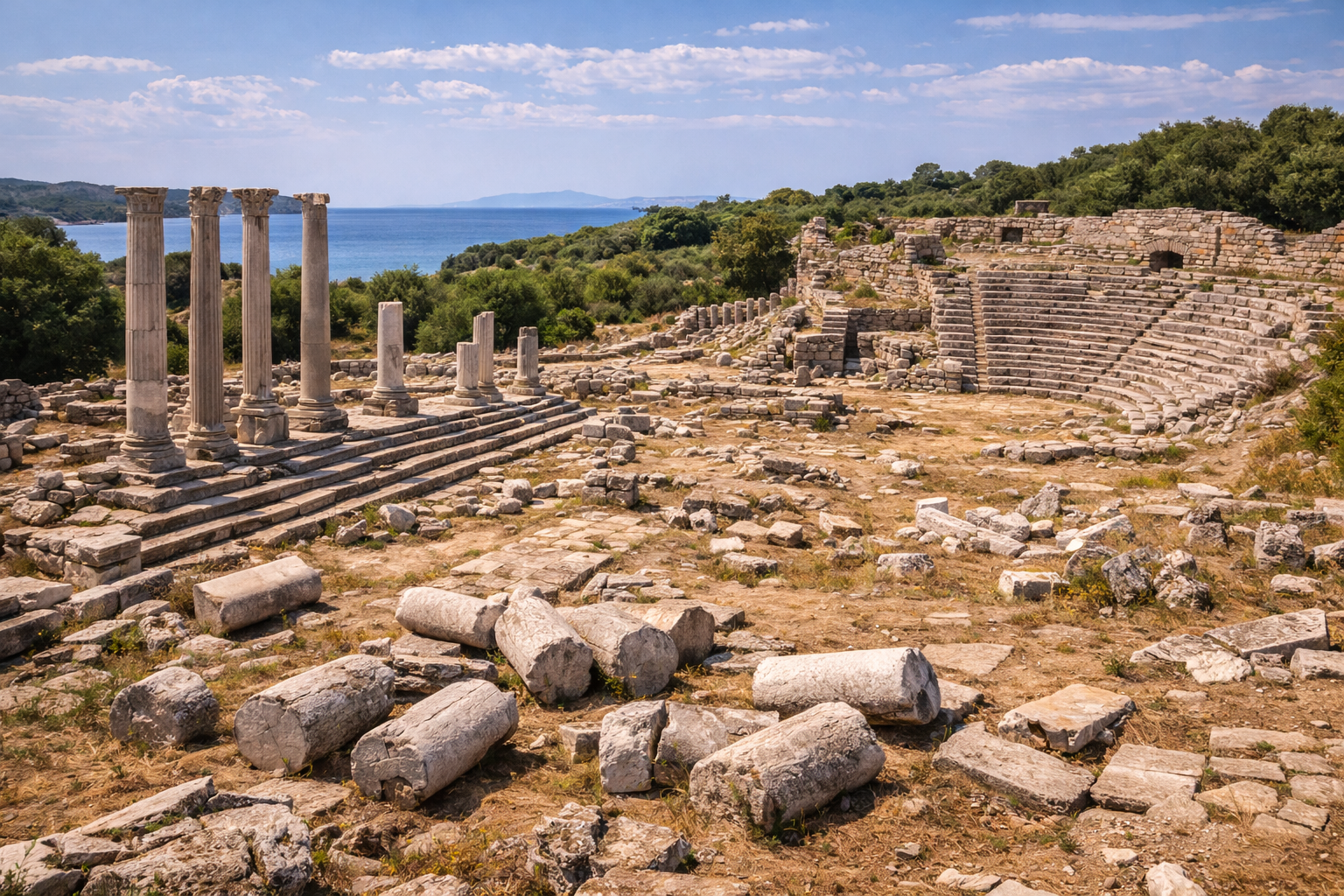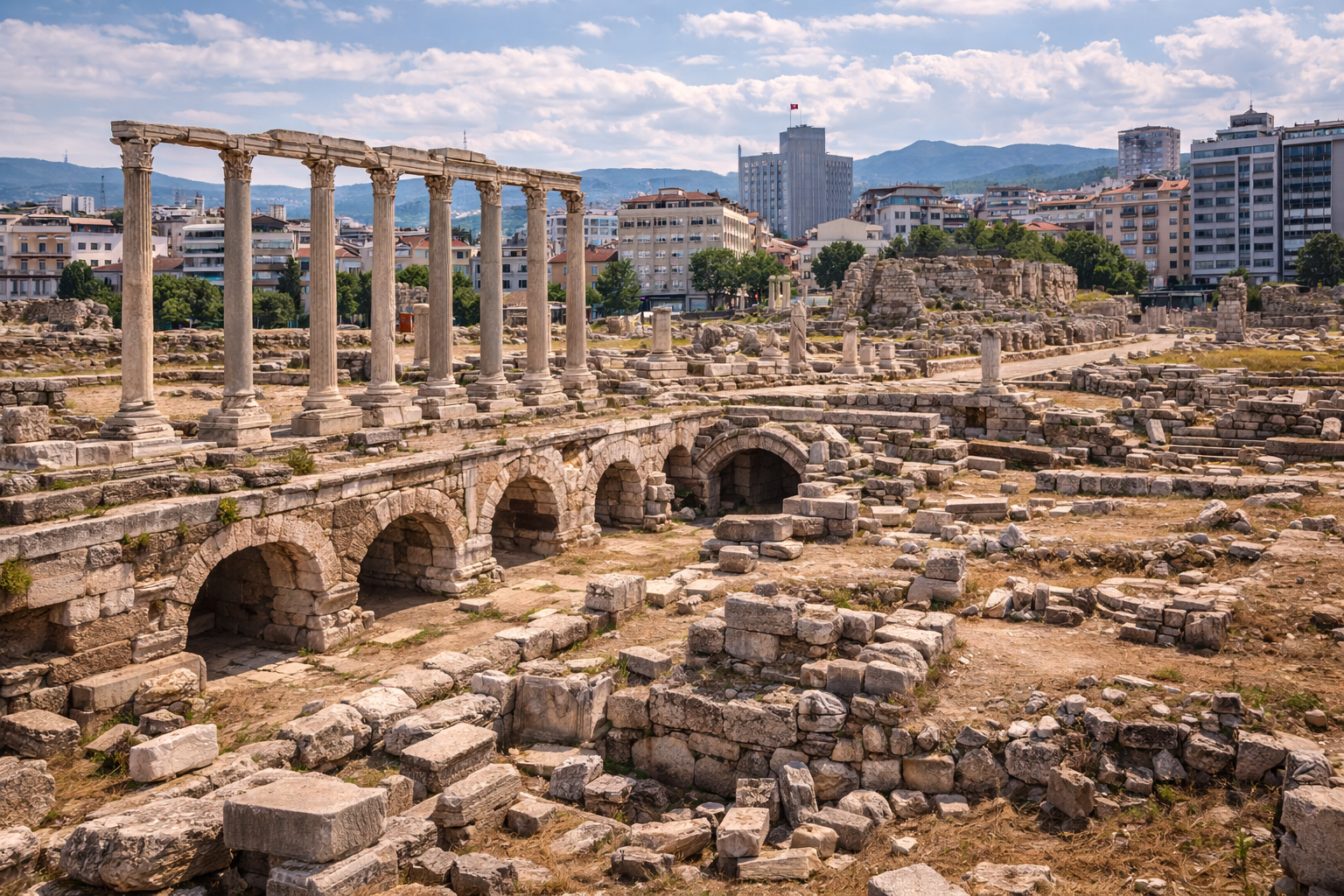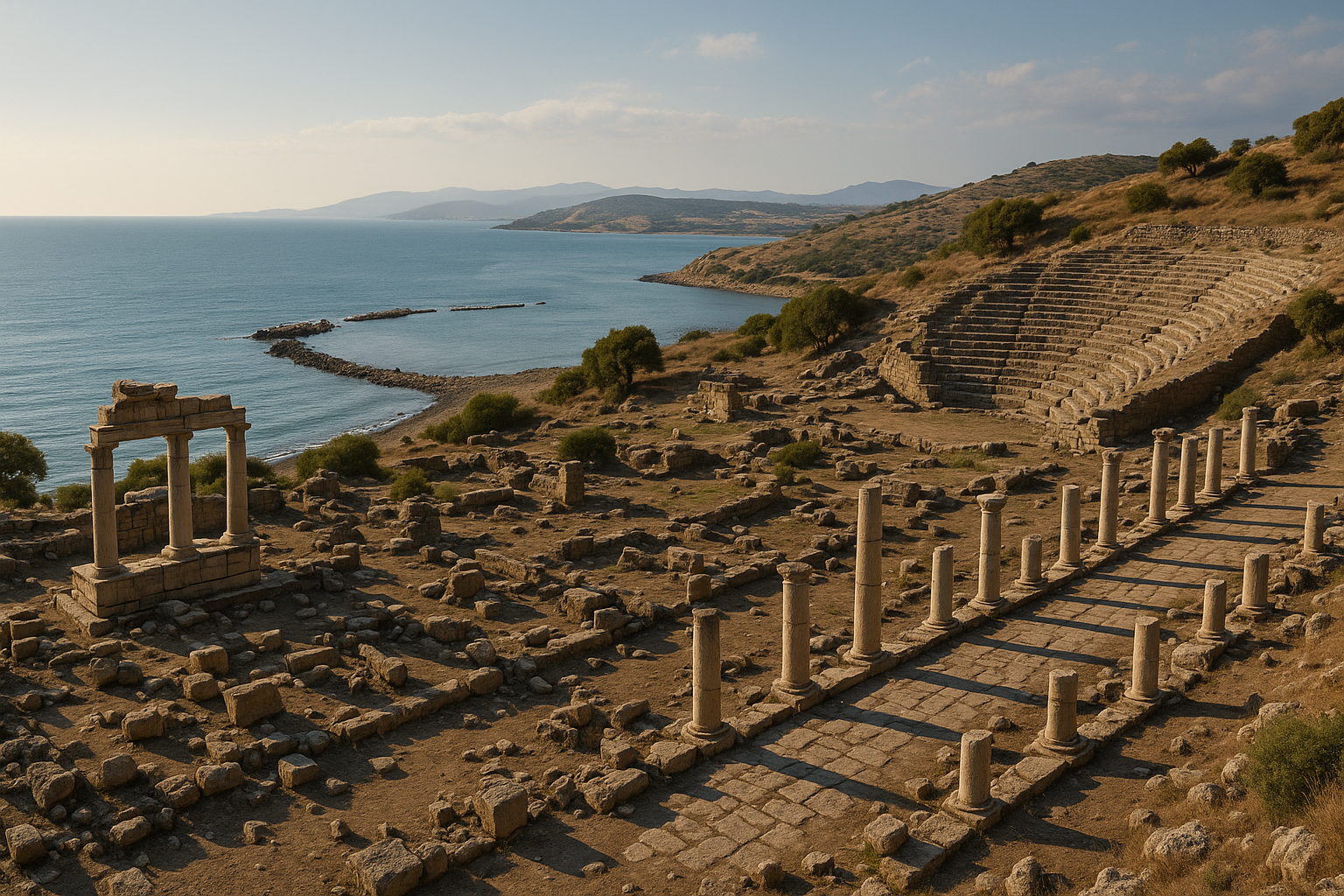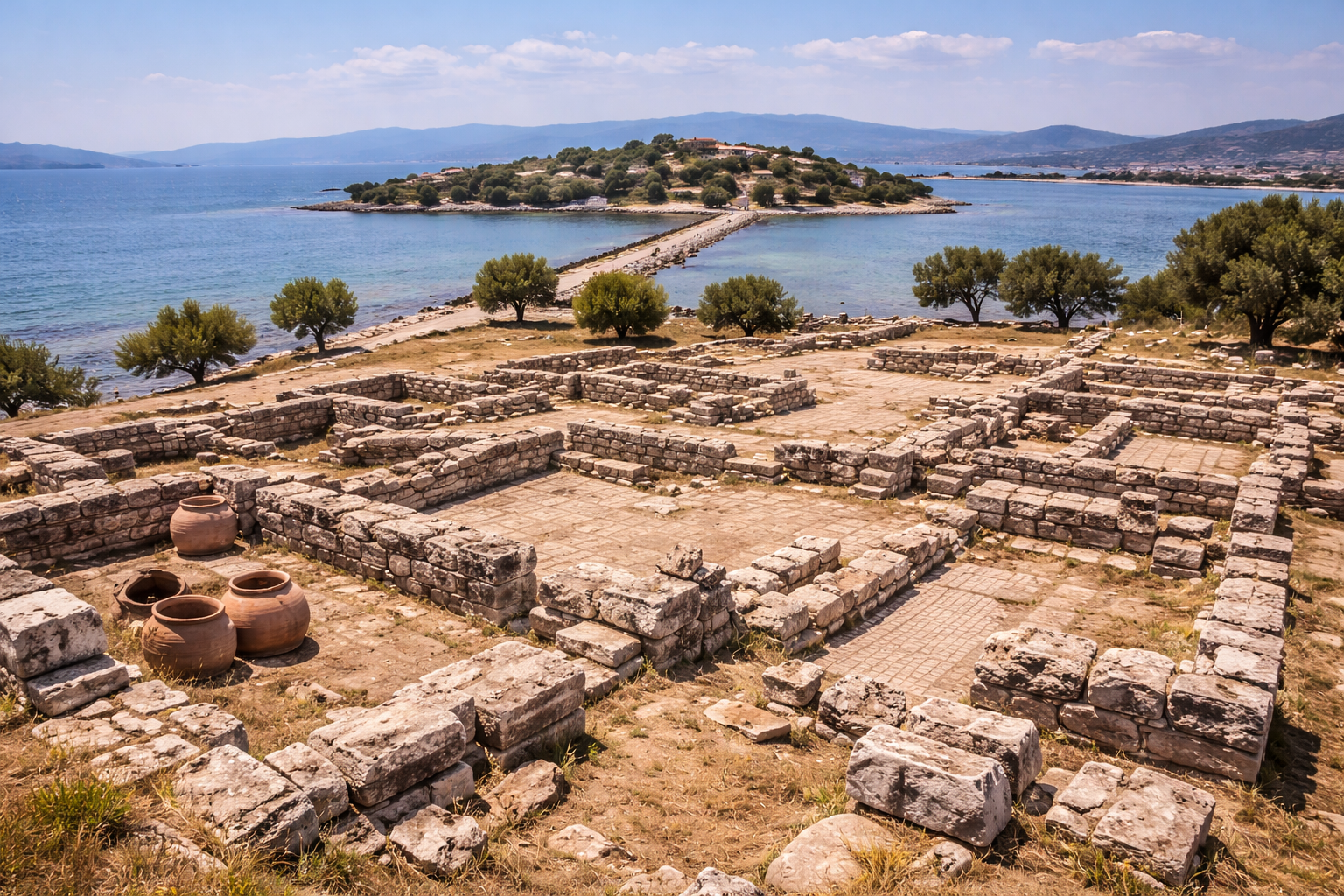
كلازوميناي (وتُكتب أيضًا Clazomenae) كانت إحدى المدن الاثنتي عشرة للتحالف الأيوني، وتقع على الساحل الشمالي لشبه جزيرة أورلا-تشيشمه في وسط خليج إزمير. امتدّ إقليم المدينة من المستوطنة البرّية في ليمان تبه عبر تلال آيييلديز وجانكورتاران وصولًا إلى جزيرة كارانتينا البحرية، التي أصبحت المركز المحصّن للمدينة الكلاسيكية. تشتهر كلازوميناي عالميًا بوصفها مسقط رأس الفيلسوف ما قبل السقراطي أناكساغوراس (نحو 510-428 ق.م)، ومركز إنتاج توابيت كلازوميناي الفخارية المزخرفة الشهيرة، وموقع أقدم ورشة معروفة لزيت الزيتون في الأناضول، يعود تاريخها إلى القرن السادس ق.م. ومع طبقات أثرية تمتدّ إلى 4000 ق.م في ليمان تبه، يوثّق الموقع أكثر من ستّة آلاف عام من الاستيطان البشري المتواصل على الساحل الإيجي.
جدول المحتويات
- لماذا تُعدّ كلازوميناي مهمة
- الجغرافيا والإطار
- الجدول الزمني التاريخي
- المعالم والمنشآت الرئيسية
- الأعمال الأثرية
- معلومات الزائر
- الأسئلة الشائعة
- المصادر والمراجع
لماذا تُعدّ كلازوميناي مهمة
-
مسقط رأس أناكساغوراس: وُلد الفيلسوف أناكساغوراس الكلازوميني (نحو 510-428 ق.م) هنا. قدّم مفهوم النوس (Nous) (العقل الكوني) بوصفه المبدأ المنظِّم للكون، وكان أوّل من فسّر سبب الكسوف والخسوف تفسيرًا صحيحًا. انتقل لاحقًا إلى أثينا، حيث أصبح معلّم بريكليس وشخصية مركزية في عصر التنوير الإغريقي.
-
التوابيت المزخرفة: أنتجت كلازوميناي سلسلة مميّزة من التوابيت الفخارية المزخرفة يعود تاريخها إلى ما بين 630 و500 ق.م، وتُعتبر أرقى الأمثلة الباقية على التصوير الأيوني العتيق (الأركي). تتميّز هذه التوابيت الطينية الكبيرة بمشاهد ميثولوجية مفصّلة ومعارك ومواكب وأفاريز حيوانية مرسومة بألوان متعدّدة، وتُعرض في كبرى متاحف العالم بما في ذلك المتحف البريطاني واللوفر ومتحف إزمير الأثري.
-
أقدم ورشة لزيت الزيتون في الأناضول: منشأة إنتاج زيت الزيتون التي نُقّبت بالكامل في كلازوميناي، والتي يعود تاريخها إلى الربع الثالث من القرن السادس ق.م، هي أقدم ورشة معروفة لإنتاج زيت الزيتون على نطاق صناعي في الأناضول. التقنية المسترجعة من هذه الورشة -- وهي مكبس بنظام الرافعة والأثقال -- هي المثال الوحيد الباقي من نوعه في مدينة إغريقية قديمة، وتسبق بقرنين على الأقلّ أقدم المكابس المؤرَّخة بأمان في اليونان. ويثبت ذلك أنّ طرق العصر التي لا تزال مستخدمة حتى اليوم طُوّرت أوّل ما طُوّرت في هذه المنطقة قبل 2,600 عام.
-
ريادة في التاريخ المالي: يسجّل أرسطو أنّ أهل كلازوميناي كانوا روّادًا ماليّين: نظّموا شراء القمح على نطاق المدينة بأكملها عبر استخدام زيت الزيتون ضمانًا، مع ربط مدفوعات الفائدة بقيمة الزيت -- وهو أحد أقدم الأمثلة الموثَّقة على الائتمان القائم على السلع في تاريخ الاقتصاد.
-
ستّة آلاف عام من الاستيطان في ليمان تبه: يحفظ تلّ ليمان تبه، الذي يُعدّ جزءًا من إقليم كلازوميناي، طبقات استيطانية متواصلة منذ نحو 4000 ق.م حتى الفترة الكلاسيكية، ممّا يجعله أحد أطول المستوطنات الساحلية عمرًا في حوض بحر إيجة.
-
مستوطنة ما قبل التاريخ المغمورة: كشف البحث الأثري تحت الماء أمام ليمان تبه عن مستوطنة مغمورة من العصر البرونزي المبكّر ذات عمارة حجرية تحت سطح البحر -- وهي إحدى أقدم المواقع الأثرية المعروفة تحت الماء في شرق المتوسط.
الجغرافيا والإطار
تحتلّ كلازوميناي مشهدًا ساحليًا على الشاطئ الشمالي لشبه جزيرة أورلا-تشيشمه، على بُعد نحو 35 كم غرب مركز مدينة إزمير. ينقسم الموقع بين منطقتين رئيسيتين:
ليمان تبه (تلّ المرفأ): المستوطنة البرّية الأصلية الواقعة في حيّ إسكله بأورلا، وهي تلّ منخفض يقع مباشرة على خطّ الساحل. كشفت التنقيبات هنا عن طبقات من العصر الكالكوليتي (نحو 4000 ق.م) والعصر البرونزي والعصر الحديدي، فضلًا عن البقايا الأيونية الكلاسيكية. جعل موقع التلّ على مرفأ طبيعي منه نقطة استراتيجية للتجارة البحرية طوال ما قبل التاريخ. حُدّد الموقع وقُدّم إلى العالم الأكاديمي لأوّل مرّة على يد عالم الآثار التركي الشهير إكرم آكورغال عام 1950.
جزيرة كارانتينا: تقع قبالة الساحل مباشرة، وأصبحت هذه الجزيرة الصغيرة المركز الحضري الرئيسي لكلازوميناي خلال القرن الخامس ق.م، حين انتقل إليها السكّان للفرار من الضغط العسكري الفارسي أثناء الثورة الأيونية. ويربط الجزيرة بالبرّ الرئيسي جسر مرصوف مغمور بطول 400 متر -- يُنسب تقليديًا إلى الإسكندر الأكبر ولكن يُفهم الآن على أنّه بناء من العصر الهلنستي. حقّق علماء الآثار تحت الماء من جامعة كوتش في هذا الجسر الذي لا يزال مرئيًا جزئيًا تحت سطح الماء.
يتميّز المشهد المحيط بتلال منخفضة تلفحها الشمس تكسوها بساتين الزيتون وشجيرات الماكي، تتخلّلها خلجان صغيرة صالحة لرسوّ السفن القديمة. وفّر خليج إزمير مصايد سمكية غنيّة وطريقًا بحريًا محميًا يربط كلازوميناي بجيرانها الأيونيين إريثراي وتيوس وفوكايا.
المناخ نموذجي للبحر المتوسط: صيف حارّ وجافّ، وشتاء معتدل ممطر. ويجعل تفاعل النسائم البرّية والبحرية شبه الجزيرة أكثر اعتدالًا من الوديان الداخلية. تبلغ درجات الحرارة الصيفية المتوسّطة 30-33 درجة مئوية، بينما يكون الشتاء معتدلًا بنحو 8-12 درجة مئوية مع أمطار معتدلة.
الأساس الجيولوجي لشبه الجزيرة يتكوّن في الغالب من الحجر الجيري والشيست، ممّا يوفّر مواد البناء والتضاريس الصخرية التي شكّلت أنماط الاستيطان. خلقت الموارد البحرية الوفيرة لخليج إزمير، مقترنةً بالسفوح الخصبة المنتجة للزيتون، الأسس الاقتصادية التي عضدت كلازوميناي على مدى آلاف السنين.
الجدول الزمني التاريخي
عصر ما قبل التاريخ (4000-1000 ق.م)
تُظهر الأدلّة الأثرية من ليمان تبه استيطانًا متواصلًا منذ العصر الكالكوليتي (نحو 4000 ق.م) عبر العصر البرونزي. يحفظ الموقع عمارة من الطوب اللبن، وفخارًا مزخرفًا، وأدلّة على المعدنية المبكّرة. خلال العصر البرونزي المتأخّر (المحدَّد بأنّه النصف الثاني من الألفية الثانية ق.م)، كانت للمستوطنة الساحلية على الأرجح اتصالات تجارية مع العالم الميسيني وربّما الإمبراطورية الحيثية. أضاف اكتشاف مستوطنة مغمورة من العصر البرونزي المبكّر أمام ليمان تبه بُعدًا بحريًا لفهم هذا المجتمع ما قبل التاريخي، مُثبتًا أنّ ارتفاع مستويات البحر قد طمر جزءًا من المستوطنة القديمة.
الانتقال إلى العصر الحديدي (1000-700 ق.م)
يُوثَّق الانتقال من العصر البرونزي إلى العصر الحديدي في ليمان تبه من خلال التغيّرات في أساليب الفخار والتقنيات المعمارية. شهدت هذه الفترة وصول مستوطنين إغريق أيونيين اندمجوا مع السكّان الحاليين لإنشاء بوليس (مدينة-دولة) كلازوميناي. انضمّت المدينة إلى التحالف الأيوني بوصفها إحدى مدنه الاثنتي عشرة الأعضاء، مُشاركةً في الروابط الثقافية والدينية التي وصلت المجتمعات الأيونية على طول الساحل الأناضولي الغربي.
العصر العتيق (الأركي) (القرنان السابع-السادس ق.م)
برزت كلازوميناي بوصفها بوليس أيونية مزدهرة بحلول القرن السابع ق.م، مدفوعةً بالتجارة البحرية وإنتاج زيت الزيتون وصناعة الخزف. اشتهرت المدينة بمنتجين صُدّرا إلى أرجاء البحر المتوسط:
-
التوابيت الفخارية المزخرفة: أُنتجت بين نحو 630 و500 ق.م، وهذه التوابيت الطينية المزخرفة بإتقان فريدة لكلازوميناي وتمثّل ذروة التصوير الأيوني العتيق. تتضمّن المشاهد سباقات العربات والمعارك الميثولوجية والمواكب الجنائزية وأبا الهول وأفاريز الحيوانات المصوَّرة بالأصباغ السوداء والحمراء والبيضاء. أُنتجت التوابيت في ورش متخصّصة نُقّبت جزئيًا بقاياها من الأفران وحفر تحضير الطين.
-
الفخار الأسود الأشكال: بالإضافة إلى التوابيت، كانت كلازوميناي مركزًا مهمًا لإنتاج الفخار الأيوني الأسود الأشكال. صدّرت ورش الفخار في المدينة أوانيَ مزخرفة في جميع أنحاء حوض البحر المتوسط، مساهمةً في نشر الأساليب الفنية الأيونية.
-
زيت الزيتون: تُظهر ورشة زيت الزيتون من القرن السادس ق.م المنقَّبة الإنتاجَ على نطاق صناعي باستخدام أحدث تقنيات العصر للعصر. ويكشف سرد أرسطو عن استخدام أهل كلازوميناي زيت الزيتون ضمانًا ماليًا لشراء القمح عن التطوّر الاقتصادي للمدينة.
وُلد الفيلسوف أناكساغوراس في كلازوميناي نحو 510 ق.م. هاجر لاحقًا إلى أثينا، حيث جعلت أفكاره الثورية حول طبيعة المادة والأجرام السماوية منه واحدًا من أكثر المفكّرين ما قبل السقراطيين تأثيرًا. كانت نظريته في أنّ القمر يعكس ضوء الشمس وأنّ الكسوف يحدث بسبب ظلّ القمر على الأرض ذات بصيرة لافتة. وقد اتُّهم في النهاية في أثينا بالتجديف بسبب ادّعائه أنّ الشمس حجر ساخن -- وهي إحدى أقدم المحاكمات المعروفة بسبب أفكار علمية.
العصر الفارسي (546-334 ق.م)
في عام 546 ق.م، سقطت المملكة الليدية في يد الإمبراطورية الأخمينية الفارسية، وخضعت المدن الأيونية بما فيها كلازوميناي للسيطرة الفارسية. خلال الثورة الأيونية (499-493 ق.م)، نقل كثير من أهل كلازوميناي مساكنهم من المستوطنة البرّية المكشوفة في ليمان تبه إلى جزيرة كارانتينا الأكثر دفاعًا، التي أصبحت النواة المحصّنة للمدينة. غيّر هذا النقل الاستراتيجي طابع كلازوميناي الحضري تغييرًا جذريًا، محوِّلًا إيّاها من مستوطنة برّية إلى حصن جزري.
بعد فشل الثورة ونهب الفرس للمدن الأيونية، أعادت كلازوميناي البناء وحافظت على استقلال هشّ ضمن الإمبراطورية الفارسية. شاركت المدينة في العصبة الديلية بعد الحروب الفارسية، دافعةً جزية سنوية لأثينا. تُشير سجلّات التقييم من قوائم الجزية الأثينية إلى أنّ مساهمات كلازوميناي تذبذبت، عاكسةً ثروات المدينة المتغيّرة خلال القرن الخامس ق.م.
العصر الهلنستي (334-133 ق.م)
حين اجتاح الإسكندر الأكبر غرب الأناضول في 334 ق.م، تحرّرت كلازوميناي من الحكم الفارسي. ويرتبط بناء (أو إعادة بناء) الجسر المرصوف بطول 400 متر الذي يربط جزيرة كارانتينا بالبرّ الرئيسي بهذه الفترة، إذ مكّن من تنقّل البضائع والناس بسهولة بين المدينة الجزرية ومحيطها الزراعي.
خلال صراعات الديادوخي (خلفاء الإسكندر)، انتقلت كلازوميناي بين السيطرة السلوقية والأتالية قبل أن تقع تحت نفوذ مملكة برغامون. حافظت المدينة على أهمّيتها بوصفها مركزًا إقليميًا، رغم أنّها وُضعت في الظلّ تدريجيًا بفعل القوّة المتنامية لإزمير (سميرنا الحديثة).
العصران الروماني والمتأخّر (133 ق.م - العصر البيزنطي)
بعد وصية مملكة برغامون لروما في 133 ق.م، أصبحت كلازوميناي جزءًا من مقاطعة آسيا الرومانية. واصلت المدينة عملها بوصفها ميناءً ومركزًا زراعيًا ثانويًا لكنّها تراجعت تدريجيًا في الأهمية مقارنةً بالبروز المتنامي لإزمير (سميرنا). تُشير الأدلّة الأثرية المحدودة من العصرين الروماني والبيزنطي إلى استيطان مستمرّ وإن كان مخفَّضًا. وقد استُوعب إقليم المدينة في النهاية في النطاق الإداري لإزمير مع تطوّر التسلسل الهرمي الحضري الروماني والبيزنطي.
المعالم والمنشآت الرئيسية
ورشة زيت الزيتون
تُعدّ ورشة زيت الزيتون من القرن السادس ق.م واحدة من أهمّ الاكتشافات الأثرية الصناعية في شرق المتوسط. كشفت التنقيبات عن أحجار العصر، وأحواض التجميع، والبيثوي (الجرار الخزفية الكبيرة) للتخزين، والبنية التحتية المرتبطة بها التي تُظهر سلسلة إنتاج كاملة من سحق الزيتون إلى تخزين الزيت. تتميّز المنشأة بـمكبس بنظام الرافعة والأثقال، وهو المثال الوحيد الباقي من مدينة إغريقية قديمة، ويسبق بقرنين على الأقلّ أقدم المكابس المؤرَّخة بأمان في اليونان. التقنية مطابقة تقريبًا للطرق التقليدية التي لا تزال تُمارَس في ريف الأناضول، ممّا يؤكّد الاستمرارية المذهلة لتقنيات إنتاج زيت الزيتون على مدى 2,600 عام.
منطقة إنتاج التوابيت المزخرفة
بينما عُثر على توابيت فردية في مناطق المقابر حول المدينة، حُدّدت جزئيًا منطقة الإنتاج التي صُنعت فيها هذه الأشياء الشهيرة من خلال بقايا الأفران وحفر تحضير الطين. تمثّل التوابيت نفسها -- التي يتراوح طولها عادة بين 1.5 و2 متر، والمصنوعة من طين محلّي خشن، والمزخرفة قبل الحرق -- شكلًا فنيًا كلازومينيًا مميّزًا أثّر في زخرفة الخزف عبر بحر إيجة العتيق. يستند البرنامج الأيقوني للتوابيت إلى ذخيرة ميثولوجية إغريقية مشتركة، لكنّه يفسّرها بحساسية أيونية مميّزة، مستخدمًا تركيبات لونية حيوية وتأليفات سردية تختلف عن الأساليب الأتيكية والكورنثية المعاصرة.
الجسر المرصوف المغمور
الجسر المرصوف بطول نحو 400 متر الذي يربط جزيرة كارانتينا بالبرّ الرئيسي مغمور في معظمه اليوم. وثّقت المسوحات الأثرية تحت الماء التي أجراها مركز أبحاث الحضارات الأناضولية في جامعة كوتش (ANAMED/KUDAR) بناءه الحجري، الذي يجسّد التاريخ المركّب للمنطقة من العصر الهلنستي إلى العصور اللاحقة. وتظهر أجزاء من الجسر عند انخفاض منسوب المياه. استخدمت تقنية البناء كتلًا حجرية كبيرة موضوعة مباشرة على قاع البحر، مُنشئةً طريقًا بعرض يكفي لمرور العربات بين الجزيرة والبرّ الرئيسي.
طبقات استيطان ليمان تبه
يحتوي تلّ ليمان تبه على طبقات مرتّبة من نحو 4000 ق.م حتى الفترة الكلاسيكية. تشمل المعالم المرئية أساسات جدران الطوب اللبن، ومناطق التخزين، وآثار النشاط المعدني من العصر البرونزي. تُعدّ الطبقات ما قبل التاريخية من بين أهمّ السلاسل الكالكوليتية والبرونزية على الساحل الإيجي لتركيا. ويوفّر التسلسل الطبقي سجلًا متواصلًا للتغيّر الثقافي والابتكار التكنولوجي وشبكات التفاعل التي تمتدّ على أكثر من أربعة آلاف عام.
مستوطنة العصر البرونزي المبكّر المغمورة
أمام ليمان تبه، كشفت التنقيبات تحت الماء عن مستوطنة مغمورة من العصر البرونزي المبكّر ذات جدران حجرية وهياكل سكنية باتت الآن تحت سطح البحر. يُثبت هذا الاكتشاف أنّ الساحل القديم كان أبعد بكثير ممّا هو عليه الشاطئ الحديث، وأنّ ارتفاع مستويات البحر منذ العصر البرونزي قد أغرق أجزاءً من المستوطنة. الموقع تحت الماء هو أحد أقدم المواقع الأثرية المغمورة المعروفة في شرق المتوسط.
حوض البريرانتيريون عمره 2,500 عام
في عام 2022، كشفت التنقيبات عن حوض بريرانتيريون مذهل (حوض غسل طقسي) يعود تاريخه إلى 2,500 عام ويرجع إلى القرن السادس ق.م. زُيّنت قدم الحوض وقاعدته بـمخلوقات ميثولوجية ومشاهد سباق العربات، ممّا يجعله أحد أرقى أمثلة الأعمال الحجرية الزخرفية من العصر العتيق التي عُثر عليها في أيونيا. كان البريرانتيريون يقف عند مدخل الحَرَم المقدّس، حيث كان المتعبّدون يتطهّرون طقسيًا قبل دخول منطقة المعبد.
أسوار المدينة والبنية التحتية للمرفأ
تظهر بقايا أسوار التحصينات من العصرين الكلاسيكي والهلنستي على جزيرة كارانتينا. وفّر المرفأ الطبيعي للجزيرة مرسىً محميًا لأسطول المدينة التجاري والبحري. شُيّدت الجدران الدفاعية باستخدام مزيج من تقنيات البناء المضلَّع والأشلر، عاكسةً تقاليد الهندسة العسكرية في القرنين الخامس والرابع ق.م.
الأعمال الأثرية
الاستكشافات المبكّرة
يعود الاهتمام الأثري المنهجي الأوّل بكلازوميناي إلى القرن التاسع عشر، عندما حدّد الرحّالة والآثاريون الأوروبيون الموقع وبدؤوا توثيق البقايا المرئية. نُقلت عدّة توابيت مزخرفة إلى المتاحف الأوروبية خلال هذه الفترة، مؤسِّسةً سمعة كلازوميناي الدولية كمركز للفنّ العتيق.
أوّل تنقيب علمي (1921-1922)
أُجري أوّل تنقيب علمي رسمي في كلازوميناي عامَي 1921 و1922 على يد عالم الآثار اليوناني ج. ب. أويكونوموس. أسّست هذه الحملات المبكّرة الطبقات الأساسية وحدّدت بقايا معمارية رئيسية في الموقع.
تحديد إكرم آكورغال (1950)
حدّد عالم الآثار التركي الرائد إكرم آكورغال ليمان تبه وقدّمه إلى العالم الأكاديمي في عام 1950، مدركًا أهمّيته بوصفه مستوطنة متعدّدة الفترات ذات اتصالات مباشرة بمدينة كلازوميناي القديمة.
التنقيبات الحديثة في ليمان تبه
بدأت حفائر التنقيب في ليمان تبه على يد غوفن باكير عام 1979. ومن عام 1980 فصاعدًا، استمرّت التنقيبات العلمية واسعة النطاق تحت إدارة حياة إركانال، بالتعاون مع متحف إزمير الأثري وجامعة أنقرة. ركّزت هذه التنقيبات على الطبقات ما قبل التاريخية والبروتو-تاريخية، كاشفةً عن سلاسل العصر الكالكوليتي والبرونزي والحديدي المبكّر التي توثّق الانتقال من المستوطنة الساحلية ما قبل التاريخية إلى البوليس الأيونية.
مشروع تنقيبات كلازوميناي (2007 حتى الآن)
منذ عام 2007، يقود الأستاذ الدكتور ياشار إركان إرسوي تنقيبات كلازوميناي. تشمل الاكتشافات الرئيسية ورشة زيت الزيتون، وأدلّة إنتاج التوابيت، والبريرانتيريون، والمنشآت السكنية والتجارية. تستمرّ التنقيبات الجارية في صقل تسلسل الموقع الزمني والكشف عن جوانب جديدة من الحياة الحضرية الأيونية.
الآثار تحت الماء
تمّ التحقيق في الجسر المرصوف المغمور من خلال حملات المسح تحت الماء، أبرزها على يد فريق KUDAR في جامعة كوتش، الذي وثّق تقنيات البناء والمراحل التاريخية لهذه البنية البحرية الفريدة. وبالإضافة إلى ذلك، كشفت التنقيبات تحت الماء أمام ليمان تبه عن مستوطنة العصر البرونزي المبكّر المغمورة، مضيفةً بُعدًا بحريًا حاسمًا للسجلّ الأثري للموقع.
الاكتشافات الرئيسية والمقتنيات المتحفية
تُعرض توابيت كلازوميناي المزخرفة في المتحف البريطاني (لندن)، واللوفر (باريس)، ومتحف إزمير الأثري، وعدّة مجموعات دولية أخرى. القطع من التنقيبات الحديثة، بما فيها الفخار والتماثيل الصغيرة والعملات والشظايا المعمارية، تُحفظ في الأساس في متحف إزمير الأثري ومتحف أورلا المحلّي. يعكس انتشار المجموعة عبر المؤسّسات الدولية الأهمّية التاريخية لكلازوميناي وممارسات جمع الآثار في القرن التاسع عشر التي شتّتت تراثها الثقافي.
الأبحاث الآثاروبوتانية
ألقت الدراسات الآثاروبوتانية الأخيرة لبقايا النباتات من كلازوميناي في العصر الحديدي الضوء على أنماط الإنتاج الريفي واستخدام الأراضي، كاشفةً الاستراتيجيات الزراعية التي عضدت المجتمع القديم. تُثبت هذه الدراسات أهمّية زراعة الزيتون وإنتاج الحبوب وزراعة الكروم في الاقتصاد الكلازوميني، موفّرةً صورة دقيقة عن العلاقة بين المركز الحضري ومحيطه الزراعي.
معلومات الزائر
كيفية الوصول
تقع كلازوميناي ضمن بلدة أورلا، على بُعد نحو 35 كم غرب مركز إزمير. من إزمير، اتّبع طريق تشيشمه السريع (O-32) وانعطف عند مخرج أورلا. يقع تلّ ليمان تبه قرب حيّ أورلا إسكله (المرفأ)، بينما تظهر جزيرة كارانتينا قبالة الساحل مباشرة. تستغرق القيادة من إزمير نحو 35-45 دقيقة. تعمل الحافلات الصغيرة العامّة (دولموش) بانتظام بين إزمير وأورلا.
أفضل وقت للزيارة
يوفّر الربيع (مارس-مايو) والخريف (سبتمبر-نوفمبر) ظروفًا مثالية. يوفّر الموقع الساحلي نسائم منعشة حتى في الصيف، رغم أنّ يوليو-أغسطس قد يكون حارًا جدًا مع درجات حرارة تصل إلى 35 درجة مئوية. الزيارات الشتوية ممكنة؛ يجعل المناخ الساحلي المعتدل الموقع متاحًا على مدار العام، رغم احتمال هطول أمطار عرضية بين نوفمبر ومارس.
المدّة
خصّص ساعة إلى ساعتين لزيارة مناطق التنقيب الرئيسية. إذا جمعت ذلك بالمشي على طول الساحل لمشاهدة بقايا الجسر المرصوف وجزيرة كارانتينا، فاحسب ساعتين إلى ثلاث ساعات. تستطيع زيارة مشتركة مع مركز بلدة أورلا، بما في ذلك صالات عرضها الفنية ومطاعمها على الواجهة البحرية، أن تملأ نصف يوم ممتع.
ما يجب إحضاره
أحذية مشي مريحة، وواقي شمس، وماء. التضاريس مستوية في الغالب أو ذات تموّجات لطيفة قرب ليمان تبه، لكنّها قد تكون غير مستوية في مناطق التنقيب. النظّارات المكبّرة مفيدة لمشاهدة جزيرة كارانتينا من الشاطئ.
الدمج مع مواقع أخرى
تقترن كلازوميناي طبيعيًا بزيارة بلدة أورلا الساحرة نفسها، المعروفة بكرومها وصالات عرضها الفنية ومطاعم المأكولات البحرية. تشمل المواقع القديمة الأخرى القريبة إريثراي (إلديري، على بُعد نحو 40 كم غربًا في شبه جزيرة تشيشمه) وتيوس (سيغاجيك، على بُعد نحو 50 كم جنوب غرب). أصبح درب نبيذ أورلا يحظى بشعبية متزايدة، مع عدّة مصانع نبيذ بوتيك تقدّم التذوّق على طول الطرق التي تمرّ عبر المشهد القديم.
إمكانية الوصول
منطقة ليمان تبه مستوية نسبيًا ويسهل الوصول إليها. جزيرة كارانتينا ليست مفتوحة عمومًا للزيارات العامة لأنّها تضمّ منشأة مستشفى. لا يُمكن مراقبة الجسر المرصوف إلّا من الشاطئ أو بواسطة قارب.
التحالف الأيوني ودور كلازوميناي
كانت كلازوميناي إحدى المدن الاثنتي عشرة للتحالف الأيوني (الدوديكابوليس)، وهو اتحاد ديني وسياسي للمدن-الدول الإغريقية على الساحل الغربي للأناضول. والأعضاء الآخرون هم:
- ميليتوس -- أقوى المدن الأيونية، مشهورة بالفلسفة والاستعمار
- أفسس -- اشتهرت بمعبد أرتميس، إحدى عجائب الدنيا السبع
- فوكايا -- قوّة بحرية واستعمارية كبرى
- كولوفون -- المدينة الأمّ للوحي في كلاروس
- تيوس -- معروفة بمعبد ديونيسوس
- إريثراي -- على شبه جزيرة تشيشمه، قرب إلديري الحديثة
- بريينه -- مشهورة بمخطّطها الشبكي الهيبودامي
- ميوس -- أصغر الأعضاء
- ليبيدوس -- مدينة ساحلية صغيرة
- ساموس -- بوليس جزرية ذات قوّة بحرية كبرى
- خيوس -- جزيرة مشهورة بالنبيذ والمستكة
تقاسم أعضاء التحالف روابط دينية محورها حَرَم البانيونيون على سفوح جبل ميكال (قرب غوزجملي الحديثة). وهنا، احتفل الأيونيون بمهرجان البانيونيا تكريمًا لبوسيدون هيليكونيوس. أرسلت كلّ مدينة عضو وفودًا وأضاحي إلى هذا التجمّع السنوي، الذي كان بمثابة مهرجان ديني ومنتدى للمناقشة الدبلوماسية في آن.
أعطى موقع كلازوميناي على خليج إزمير لها دورًا بحريًا استراتيجيًا ضمن التحالف. سيطرت المدينة على الممرّات البحرية بين الخليج الداخلي وبحر إيجة المفتوح، وعمل مرفؤها في جزيرة كارانتينا محطّة للسفن المتنقّلة بين المدن الأيونية الشمالية (فوكايا، إريثراي) والأعضاء الجنوبيين (تيوس، كولوفون، أفسس).
كان مفهوم الهوية الأيونية محوريًا في فهم هذه المدن لذاتها. ورغم استقلالها السياسي وتنافسها المتكرّر، تقاسمت المدن الأيونية لهجة مشتركة وممارسات دينية وتراثًا ميثولوجيًا يعود بأصولها إلى أثينا والهجرة الأيونية الأسطورية.
أناكساغوراس: الفلسفة المولودة في كلازوميناي
تستحقّ التركة الفلسفية لكلازوميناي اهتمامًا خاصًا. كان أناكساغوراس (نحو 510-428 ق.م) من أكثر مفكّري الفترة ما قبل السقراطية أصالة، ووضعت أفكاره الأساس لتطوّرات لاحقة في الفلسفة الطبيعية والعلم.
الإسهامات الفلسفية الرئيسية:
-
النوس (العقل/الذكاء): اقترح أناكساغوراس أنّ الكون كان في الأصل مزيجًا فوضويًا من المواد القابلة للقسمة إلى ما لا نهاية. وقد بادر ذكاء كوني أسماه النوس بإحداث دوران في هذا المزيج، ممّا تسبّب في الفصل والتنظيم. كانت هذه واحدة من أوّل المحاولات لتفسير النظام الكوني من خلال مبدأ تنظيمي غير مادي.
-
علم الفلك: فسّر بشكل صحيح أنّ القمر يعكس ضوء الشمس بدلًا من توليده. وفهم أنّ كسوف الشمس يحدث بسبب مرور القمر بين الأرض والشمس. واقترح أنّ الشمس كتلة من المعدن الأحمر المتوهّج أكبر من شبه جزيرة البيلوبونيز -- وهو ادّعاء جذري أدّى في نهاية المطاف إلى محاكمته.
-
نظرية المادة: نظريته في أنّ "كلّ شيء يحتوي على جزء من كلّ شيء" استبقت جوانب من الكيمياء والفيزياء الحديثة. جادل بأنّ المادة قابلة للقسمة إلى ما لا نهاية وأنّ التغيير الظاهر هو في الحقيقة إعادة ترتيب للمكوّنات الأساسية.
الحياة في أثينا: بعد انتقاله إلى أثينا (نحو 480 ق.م)، أصبح أناكساغوراس جزءًا من الدائرة الفكرية حول بريكليس. أثّر في الفكر الأثيني لعقود، وكان من بين تلاميذه أرخيلاوس (معلّم سقراط) وربّما يوربيديس. أسفرت محاكمته بتهمة التجديف (asebeia) -- التي كانت على الأرجح بدافع من أعداء بريكليس السياسيين -- عن نفيه إلى لامبساكوس، حيث عاش حتى وفاته.
التراث: كرّم أهل لامبساكوس أناكساغوراس بنصب عام وعطلة سنوية لأطفال المدارس. وظلّت مسقط رأسه، كلازوميناي، فخورة بابنها الشهير: استمرّت العلاقة بين المدينة والفيلسوف كجزء من هوية المجتمع طوال العصور القديمة.
توابيت كلازوميناي: الفنّ العتيق في أرقى صوره
تشكّل التوابيت الفخارية المزخرفة لكلازوميناي أهمّ مجموعة من التصوير الأيوني العتيق الباقية من العصور القديمة. ولأنّه لم تبقَ أيّ لوحات أيونية أو جدارية، توفّر هذه التوابيت دليلنا المباشر الوحيد على تقاليد التصوير التي ازدهرت في المدن الأيونية الغنية خلال القرنين السابع والسادس ق.م.
تقنية الإنتاج:
صُنعت التوابيت من طين محلّي خشن، شُكّلت إلى توابيت مستطيلة كبيرة بطول نحو 1.5-2.0 متر. قبل الحرق، طُليت الأسطح الخارجية بطبقة بيضاء من الزلق ثمّ زُخرفت بمشاهد مفصّلة باستخدام أصباغ سوداء وحمراء وبنّية وبيضاء. أُجري التصوير باليد الحرّة من قبل فنّانين ماهرين عملوا ضمن الأعراف الأيقونية المعمول بها مع إدخال تنوّعات إبداعية فردية أيضًا.
المواضيع الأيقونية:
تشمل المشاهد المرسومة على توابيت كلازوميناي:
- مواكب العربات والسباقات
- مشاهد المعارك بين المحاربين بالدروع والرماح
- السرديات الميثولوجية بما فيها مشاهد من دورة طروادة
- أفاريز الحيوانات التي تظهر فيها الأسود وأبا الهول والخنازير والغزلان
- المواكب الجنائزية (مشاهد البروتيسيس)
- الحدود الهندسية والزهرية التي تؤطّر اللوحات السردية
المجموعات المتحفية:
تُحفظ مجموعات رئيسية من توابيت كلازوميناي في:
- المتحف البريطاني، لندن -- بما في ذلك عدّة أمثلة كاملة
- متحف اللوفر، باريس -- مع شظايا وقطع كاملة
- متحف إزمير الأثري -- أشمل مجموعة تركية
- مجموعة برلين للقطع الأثرية القديمة -- شظايا وإعادة بناء
- متحف إسطنبول الأثري -- أمثلة مختارة
يعكس تشتّت هذه التوابيت عبر المتاحف الأوروبية تجارة الآثار في القرن التاسع عشر، التي أزالت كثيرًا من القطع من تركيا قبل سنّ قوانين حماية التراث الحديثة.
الأسئلة الشائعة
من هو أناكساغوراس ولماذا هو مهم؟
كان أناكساغوراس الكلازوميني (نحو 510-428 ق.م) فيلسوفًا ما قبل سقراطي اقترح أنّ الكون يحكمه ذكاء كوني أسماه النوس (العقل). فسّر بشكل صحيح أنّ كسوف الشمس يحدث بسبب مرور القمر بين الأرض والشمس، وأنّ القمر يعكس ضوء الشمس بدلًا من توليده. انتقل إلى أثينا حيث أصبح المرشد الفكري لـبريكليس وأثّر في تطوّر الفكر العلمي الأثيني. اعتُبرت أفكاره جذرية وحوكم في النهاية بتهمة التجديف -- وهي إحدى أقدم المحاكمات المعروفة بسبب الهرطقة العلمية. حُكم عليه بالنفي وقضى سنواته الأخيرة في لامبساكوس.
ما هي توابيت كلازوميناي المزخرفة؟
هي توابيت فخارية كبيرة (بطول نحو 1.5-2 متر) أُنتجت حصرًا في كلازوميناي بين نحو 630 و500 ق.م. زُيّنت أسطحها الخارجية بمشاهد ميثولوجية ومعارك وأفاريز حيوانية وأنماط هندسية قبل الحرق. وهي تمثّل أرقى الأمثلة الباقية على التصوير الأيوني العتيق وتوجد في كبرى المتاحف بما فيها المتحف البريطاني واللوفر. توقّف إنتاج هذه التوابيت نحو 500 ق.م، ربّما بسبب الاضطرابات الناجمة عن الثورة الأيونية والهيمنة الفارسية.
هل يمكنني رؤية ورشة زيت الزيتون؟
بقايا ورشة زيت الزيتون من القرن السادس ق.م المنقَّبة جزء من الموقع الأثري وقد تكون مرئية بحسب ظروف التنقيب والحفظ الحالية. تتميّز هذه المنشأة بالمكبس الوحيد الباقي بنظام الرافعة والأثقال من مدينة إغريقية قديمة. تحقّق من بلدية أورلا أو من مديرية إزمير للثقافة والسياحة للحصول على معلومات الوصول الحالية.
هل جزيرة كارانتينا مفتوحة للزائرين؟
تضمّ جزيرة كارانتينا حاليًا منشأة مستشفى (كانت سابقًا مستشفى لأمراض العظام) وهي عمومًا غير مفتوحة للزائرين العاديين. يمكن مشاهدة الجزيرة والجسر المرصوف المغمور من شاطئ البرّ الرئيسي في أورلا إسكله. تمرّ جولات القوارب أحيانًا قريبة من الجزيرة.
ما أهمّية المستوطنة المغمورة؟
توفّر المستوطنة المغمورة من العصر البرونزي المبكّر أمام ليمان تبه دليلًا على أنّ الساحل القديم كان يمتدّ أبعد ممّا هو عليه اليوم. أغرق ارتفاع مستويات البحر منذ العصر البرونزي أجزاءً من المستوطنة، ممّا يجعلها إحدى أقدم المواقع الأثرية المعروفة تحت الماء في شرق المتوسط ويوفّر رؤى فريدة حول حياة الساحل ما قبل التاريخية.
كيف ترتبط كلازوميناي بتاريخ زيت الزيتون؟
تُعدّ ورشة زيت الزيتون من القرن السادس ق.م في كلازوميناي أقدم منشأة معروفة لإنتاج زيت الزيتون على نطاق صناعي في الأناضول وتحتوي على أقدم مكبس مؤرَّخ بأمان من العالم الإغريقي القديم. تسبق تقنية العصر الموجودة هنا بقرنين على الأقلّ أقدم المكابس التالية التي عُثر عليها في اليونان القارية. سجّل أرسطو أيضًا أنّ أهل كلازوميناي كانوا روّادًا في الائتمان القائم على السلع باستخدام زيت الزيتون ضمانًا لشراء القمح.
أين تُعرض أفضل القطع الأثرية؟
أهمّ قطع كلازوميناي موزّعة عبر عدّة متاحف: متحف إزمير الأثري (التوابيت والفخار وقطع التنقيب)، والمتحف البريطاني في لندن، واللوفر في باريس (التوابيت المزخرفة). يضمّ متحف منطقة أورلا أيضًا اكتشافات محلّية. توفّر زيارة متحف إزمير الأثري قبل أو بعد الموقع سياقًا ممتازًا لفهم القطع الأثرية في موقعها الأصلي.
ما هو دور كلازوميناي في التحالف الأيوني؟
كانت كلازوميناي إحدى المدن الاثنتي عشرة للتحالف الأيوني (الدوديكابوليس)، إلى جانب ميليتوس وأفسس وفوكايا وكولوفون وتيوس وإريثراي وبريينه وميوس وليبيدوس وساموس وخيوس. تقاسم أعضاء التحالف روابط دينية محورها حَرَم البانيونيون وتعاونوا في شؤون الدفاع المشترك والدبلوماسية. أعطى موقع كلازوميناي على خليج إزمير لها دورًا بحريًا استراتيجيًا ضمن التحالف.
القياسات المعمارية والأرقام الرئيسية
| المعلَم | القياس / التفصيل |
|---|---|
| مدّة استيطان تلّ ليمان تبه | نحو 4000 ق.م -- الفترة الكلاسيكية (~4,000+ سنة) |
| طول جسر جزيرة كارانتينا المرصوف | نحو 400 م |
| الطول النموذجي للتابوت | 1.5--2.0 م |
| وزن التابوت (الأمثلة الكبيرة) | نحو 2 طن (التابوت + الغطاء معًا) |
| تاريخ ورشة زيت الزيتون | الربع الثالث من القرن السادس ق.م |
| نوع المكبس | مكبس بنظام الرافعة والأثقال (أقدم مؤرَّخ بأمان في العالم الإغريقي) |
| عمر البريرانتيريون عند الاكتشاف (2022) | نحو 2,500 عام |
| عمق المستوطنة المغمورة | تحت سطح البحر الحديث (العصر البرونزي المبكّر) |
| المسافة من مركز إزمير | نحو 35 كم غربًا |
| بناء التحصينات | مزيج من تقنيات البناء المضلَّع والأشلر |
| فترة إنتاج التوابيت | نحو 630--500 ق.م (نحو 130 عامًا) |
الأدلّة النقدية
كانت كلازوميناي إحدى أقدم المدن في أيونيا التي سكّت العملة، وتمتدّ نقودها عبر عدّة قرون ومعادن، عاكسةً وضع المدينة الاقتصادي والسياسي المتطوّر.
تصنيف العملات
| الفترة | الفئة | المعدن | الوجه | الظهر |
|---|---|---|---|---|
| نحو 500--400 ق.م | ديوبول | فضة | مقدّمة خنزير مجنّح متّجه يمينًا | مربّع تجويفي رباعي مع حرف "K" |
| نحو 480--400 ق.م | أوبول | فضة | مقدّمة خنزير مجنّح | مربّع تجويفي |
| نحو 400--360 ق.م | درخمة، ديدر خمة | فضة | رأس أبولو أو أثينا | بجعة أو كبش |
| نحو 387--300 ق.م | ستاتر | ذهب | مقدّمة خنزير مجنّح (علامة الضرب) | أنماط إسكندرية |
| نحو 380--300 ق.م | AE11، AE17، AE18 | برونز | رأس أثينا (خوذة ثلاثية العرف، 3/4 وجه) | كبش يمشي يمينًا، نقش KΛAZOME/NIΩN |
| نحو 160 ق.م | تتراد رخمة | فضة | أنماط البورتريه الهلنستية | رأس كبش أو مقدّمة كبش |
الخنزير المجنّح هو أقدم وأبرز شعار مدني كلازوميني. يظهر كعلامة ضرب على الستاترات الذهبية المسكوكة في ظلّ نظام عملة الإسكندر الأكبر، ممّا يؤكّد أنّ كلازوميناي شغّلت دار سكّ معتمدة خلال أواخر القرن الرابع ق.م. أصبح الكبش -- إمّا ماشيًا أو راقدًا أو على شكل رأس -- النوع المهيمن في ظهور الإصدارات البرونزية من القرن الرابع فصاعدًا، مقترنًا في الغالب بوجه يحمل رأس أثينا ترتدي خوذة ثلاثية العرف. تظهر أسماء قُضاة مثل نيمفودوروس على بعض الإصدارات البرونزية، موفّرةً دليلًا بروسوبوغرافيًا على الإداريّين المدنيين للمدينة.
دُرست نقود كلازوميناي الفضية الهلنستية على يد علماء بمن فيهم نيكوليه-بيير، الذي وضّح عمله على الدرخمات والتترادرخمات الفضية الإطار الزمني للسكّ الكلازوميني خلال القرنين الثالث والثاني المضطربَين سياسيًا، حين تنقّلت المدينة بين المجالات السلوقية والأتالية والرومانية.
تسلسل التنقيب والاكتشافات الرئيسية
يمتدّ التحقيق الأثري في كلازوميناي على أكثر من قرن، مع عدّة مراحل متميّزة كشفت تدريجيًا عن أهمّية المدينة.
| السنة (السنوات) | الحدث | المدير / الفريق |
|---|---|---|
| القرن التاسع عشر | علماء آثار أوروبيون ينقلون التوابيت المزخرفة إلى لندن وباريس وبرلين | جامعون متنوّعون |
| 1921--1922 | أوّل تنقيب علمي رسمي | ج. ب. أويكونوموس |
| 1950 | تحديد ليمان تبه كجزء من إقليم كلازوميناي | إكرم آكورغال |
| 1979 | بدء حفائر التنقيب في ليمان تبه | غوفن باكير |
| 1980--الحاضر | تنقيبات واسعة النطاق في ليمان تبه | حياة إركانال (جامعة أنقرة + متحف إزمير) |
| 1992 | دمج ليمان تبه في مشروع تنقيب وأبحاث منطقة إزمير (IRERP) | جامعة أنقرة |
| 2000--2007 | تنقيبات تحت الماء في ليمان تبه / مرفأ كلازوميناي | جامعة أنقرة + جامعة حيفا (مشروع مشترك) |
| 2007--الحاضر | مشروع تنقيبات كلازوميناي (التركيز على جزيرة كارانتينا) | الأستاذ الدكتور ياشار إركان إرسوي |
| 2022 | اكتشاف البريرانتيريون الذي يبلغ عمره 2,500 عام | الأستاذ الدكتور ياشار إركان إرسوي |
كان المشروع التركي-الإسرائيلي المشترك تحت الماء (2000--2007) بين جامعة أنقرة وجامعة حيفا مهمًا بشكل خاصّ، إذ وثّق ليس فقط الجسر المرصوف المغمور بل أيضًا البنية التحتية للمرفأ وطبقات مستوطنة العصر البرونزي المبكّر المغمورة أمام ليمان تبه. مثّل هذا التعاون إحدى أوّل الشراكات الأثرية الدولية الكبرى تحت الماء في موقع تركي إيجي.
شبكات التجارة وصادرات الخزف
امتدّ النطاق الاقتصادي لكلازوميناي إلى ما هو أبعد بكثير من خليج إزمير. يوفّر توزيع توابيت كلازوميناي المزخرفة والفخار الأسود الأشكال عبر البحر المتوسط خريطة لشبكات تجارة المدينة خلال العصر العتيق.
توزيع التوابيت: وُثّقت توابيت كاملة أو شظايا كبيرة في مجموعات تمتدّ من لندن (المتحف البريطاني) وباريس (اللوفر) إلى برلين (مجموعة القطع الأثرية القديمة) وإسطنبول (متحف إسطنبول الأثري) وإزمير (المتحف الأثري). مثال معروف بشكل خاصّ في المتحف البريطاني، تمّ الاستحواذ عليه في أواخر القرن التاسع عشر، يزن نحو 2 طن مع غطائه ويصوّر مشاهد حرب وسباق عربات وصيد. وفي متحف المتروبوليتان للفنون في نيويورك، تحفظ شظية حافة تابوت (نحو 19 × 93 × 213 سم) مشهد معركة مع أربعة جنود مشاة يتصادمون فوق محارب ساقط، يحيط بهم شكل مجنّح وعربة، مع قنطور وحوريّة بحرية تقفان على جوانب الحافة فوق أسدين يهاجمان خنزيرًا.
صادرات الفخار الأسود الأشكال: عُثر على أوانٍ كلازومينية أيونية سوداء الأشكال في مواقع عبر شرق المتوسط، بما فيها اليونان وجنوب إيطاليا ومصر وساحل البحر الأسود. تتميّز هذه الأواني عن الإنتاج الأتيكي والكورنثي باستخدام نسيج طيني أفتح، وألوان مميّزة، ودمج زخارف زخرفية أيونية مثل اللوتسات المستطيلة وأنماط الأشعّة.
تجارة زيت الزيتون: يوثّق سرد أرسطو عن استفادة أهل كلازوميناي من زيت الزيتون كضمان مالي لشراء القمح ليس مجرّد معاملة واحدة بل تكاملًا منهجيًا للإنتاج الزراعي مع التمويل التجاري بين المدن. تشير شظايا أمفورا النقل المسترجعة من ليمان تبه إلى أنّ زيت الزيتون الكلازوميني كان يُشحن في حاويات خزفية موحّدة، بما يتّسق مع عمليات التصدير واسعة النطاق خلال القرنين السادس والخامس ق.م.
المصادر والمراجع
- Wikipedia -- Klazomenai
- Visit Izmir -- Klazomenai Ancient City
- Izmir Directorate of Culture and Tourism -- Klazomenai (Urla)
- Turkish Museums -- Izmir Klazomenai Archaeological Site
- Koc University KUDAR -- The Hellenistic-era Causeway at Klazomenai
- GeziBilen -- Klazomenai Ancient City Olive Workshop
- Archiqoo -- Klazomenai
- LikeCesme -- Klazomenai Ancient City
- Perseus Digital Library -- Klazomenai (Princeton Encyclopedia of Classical Sites)
- Ancient Pages -- 2,500-Year-Old Ritual Wash Basin at Klazomenai
- Springer Nature -- Rural Production and Land Use at Iron Age Clazomenae, Ionia (Vegetation History and Archaeobotany, 2026)