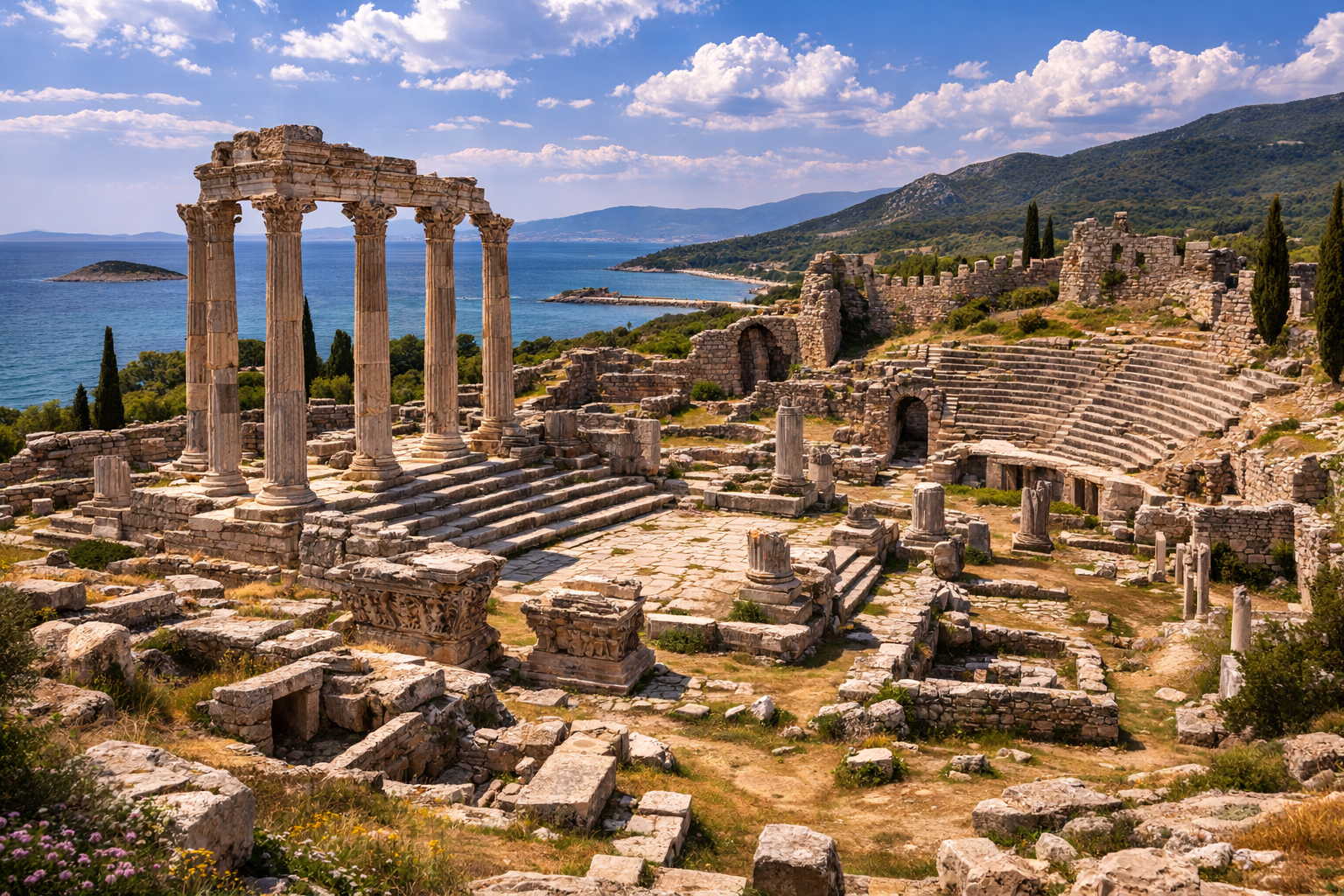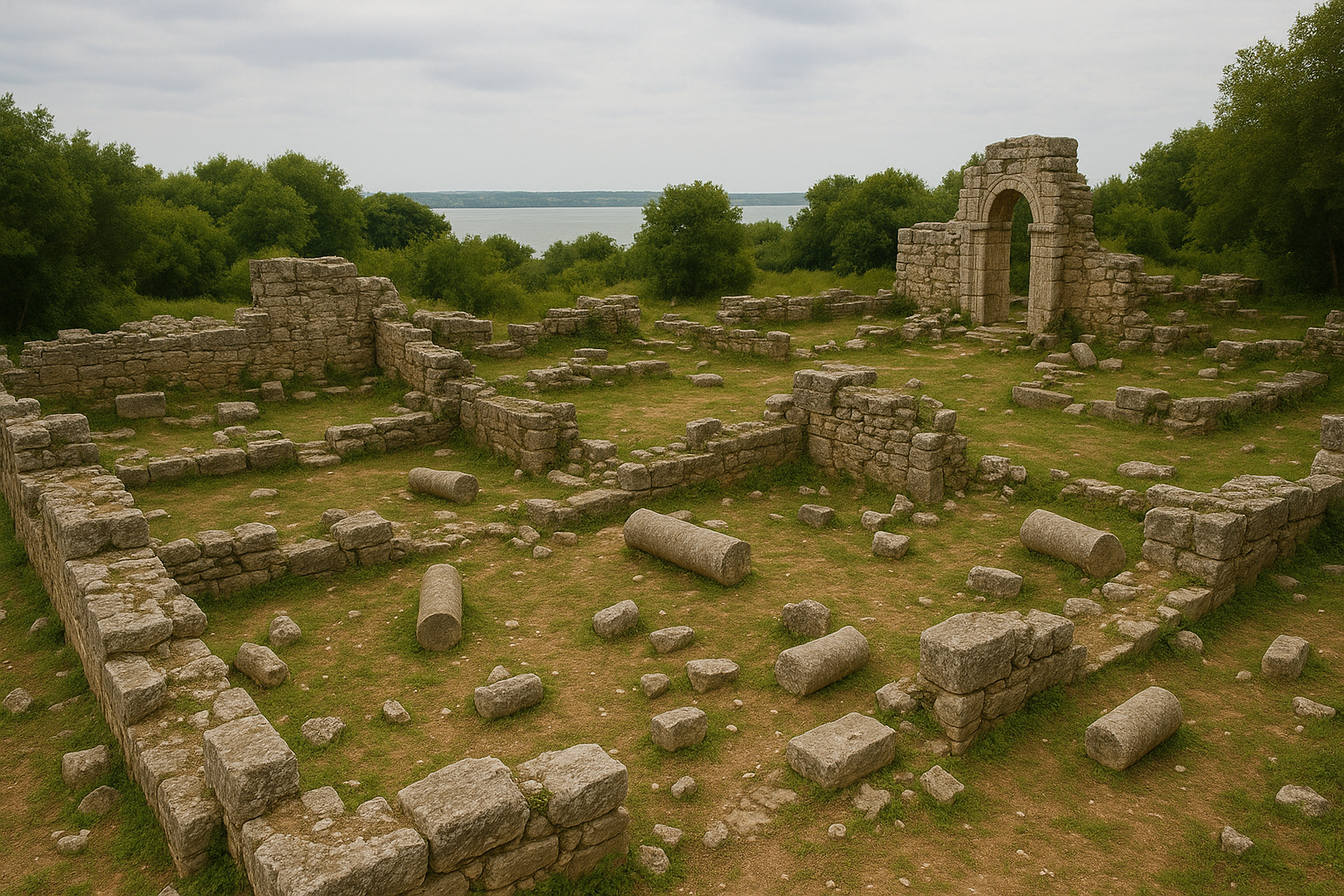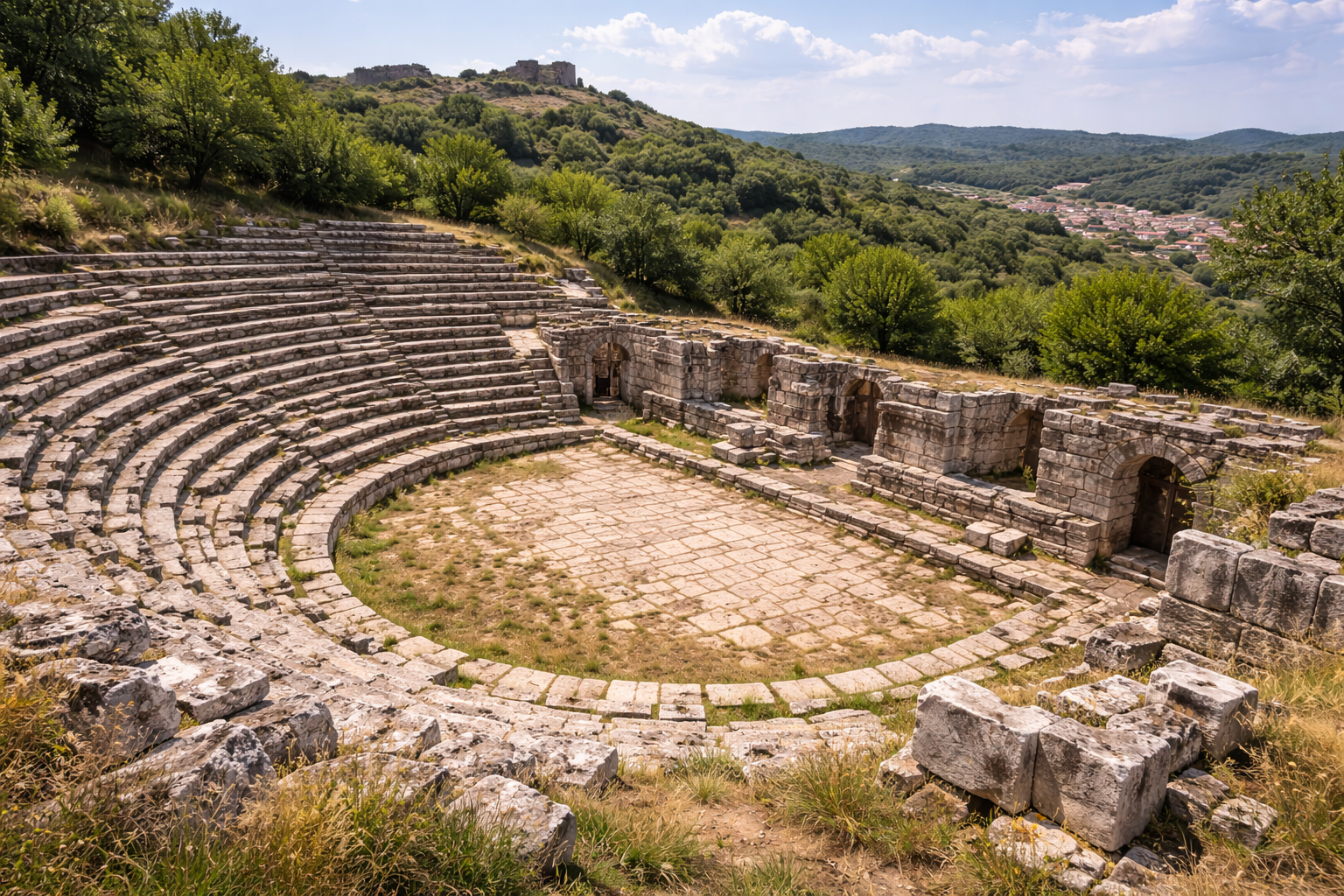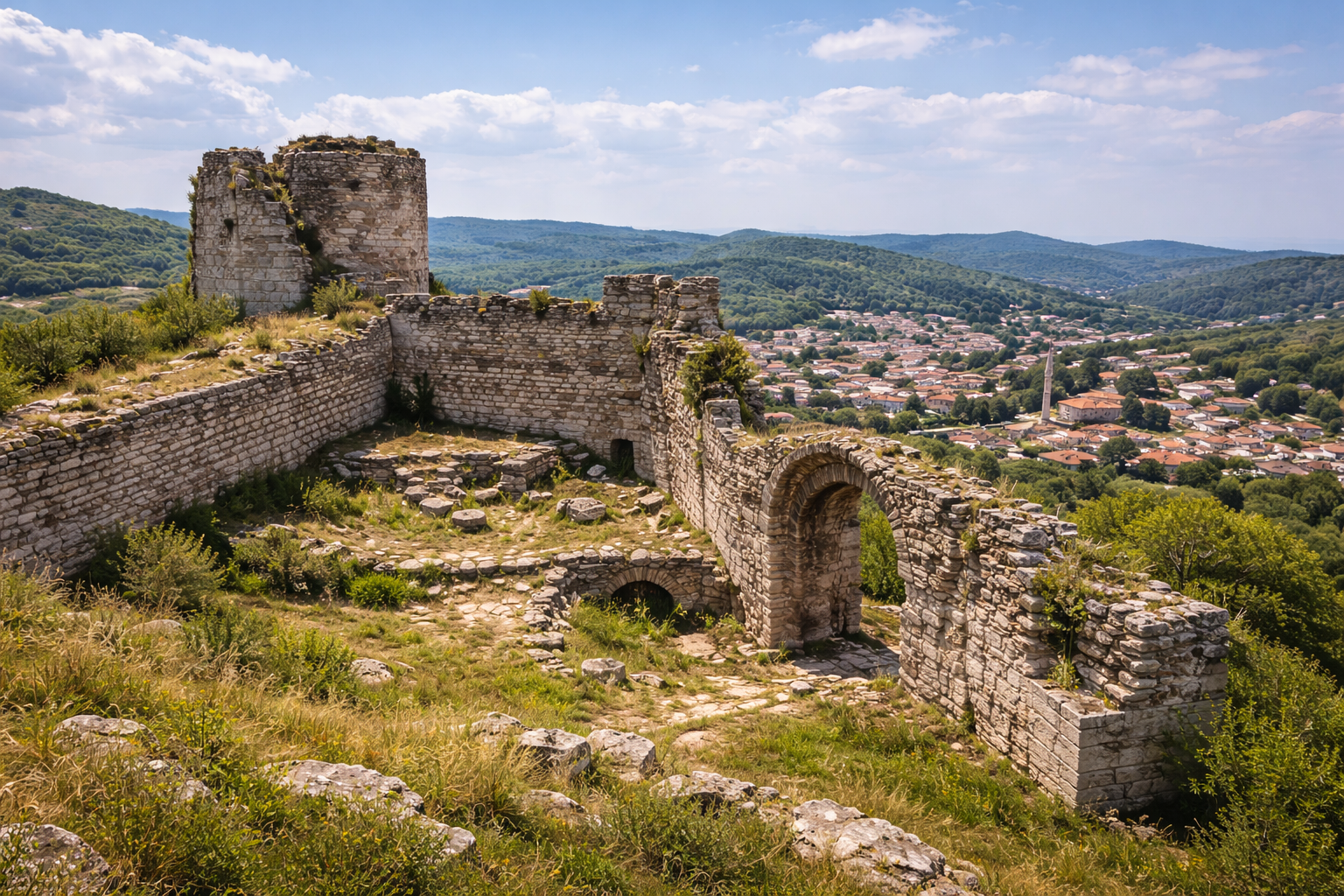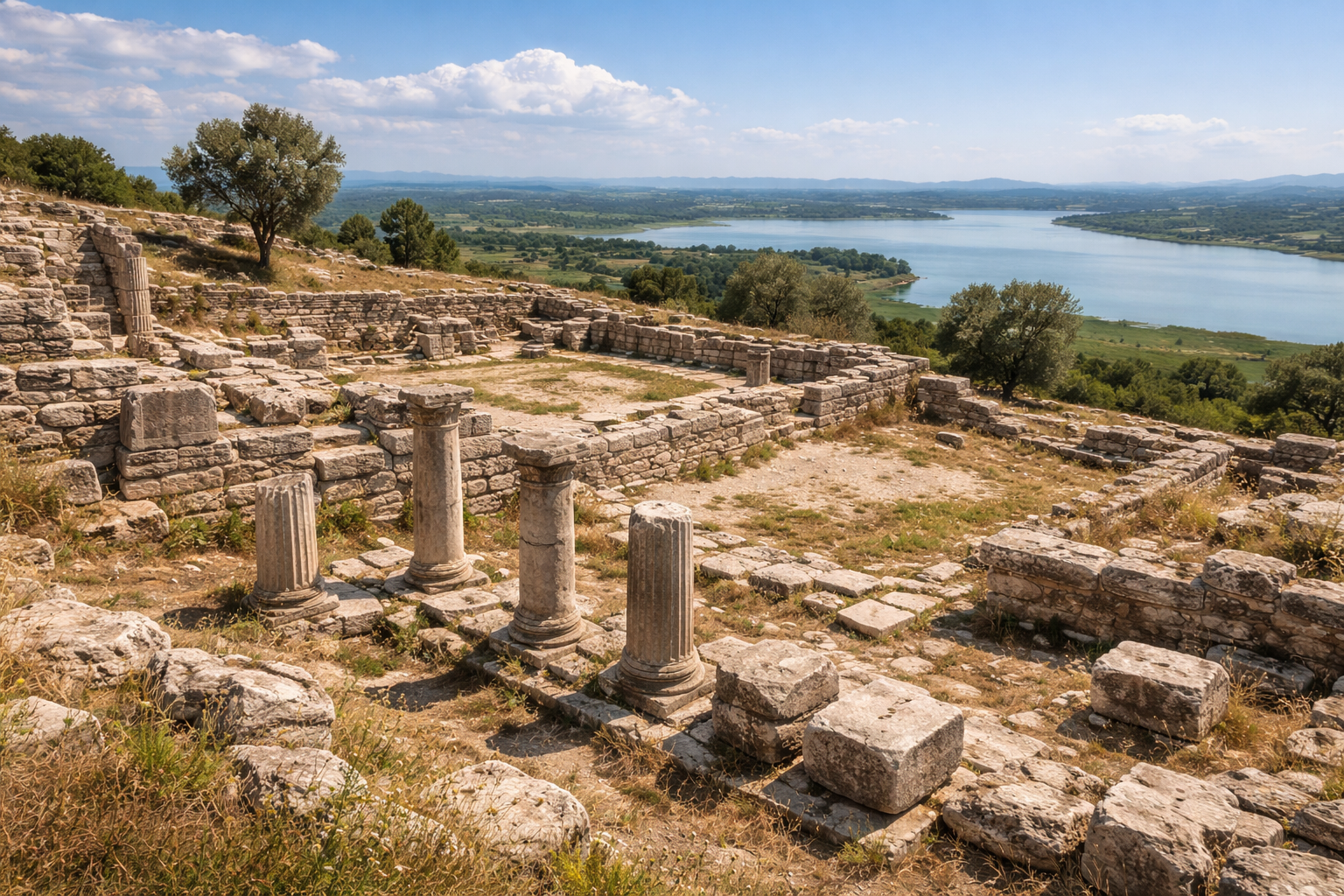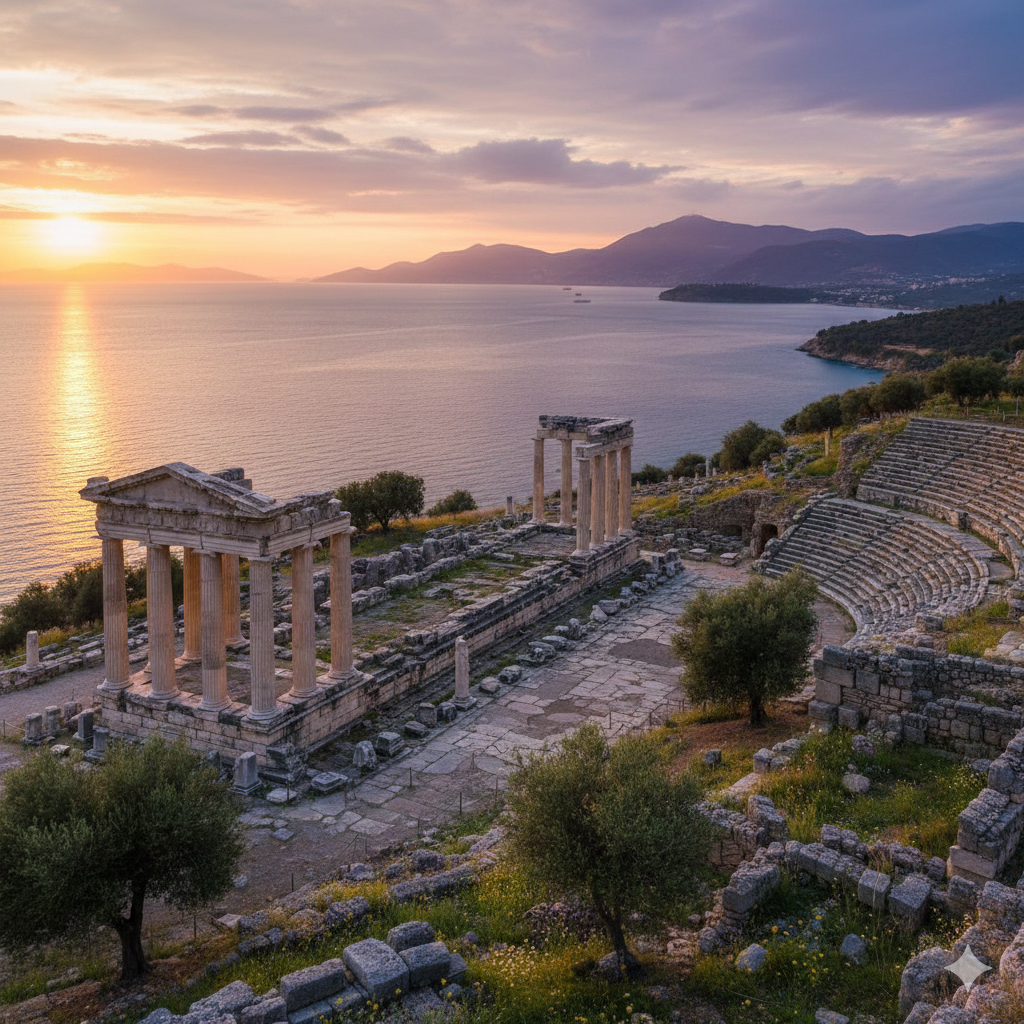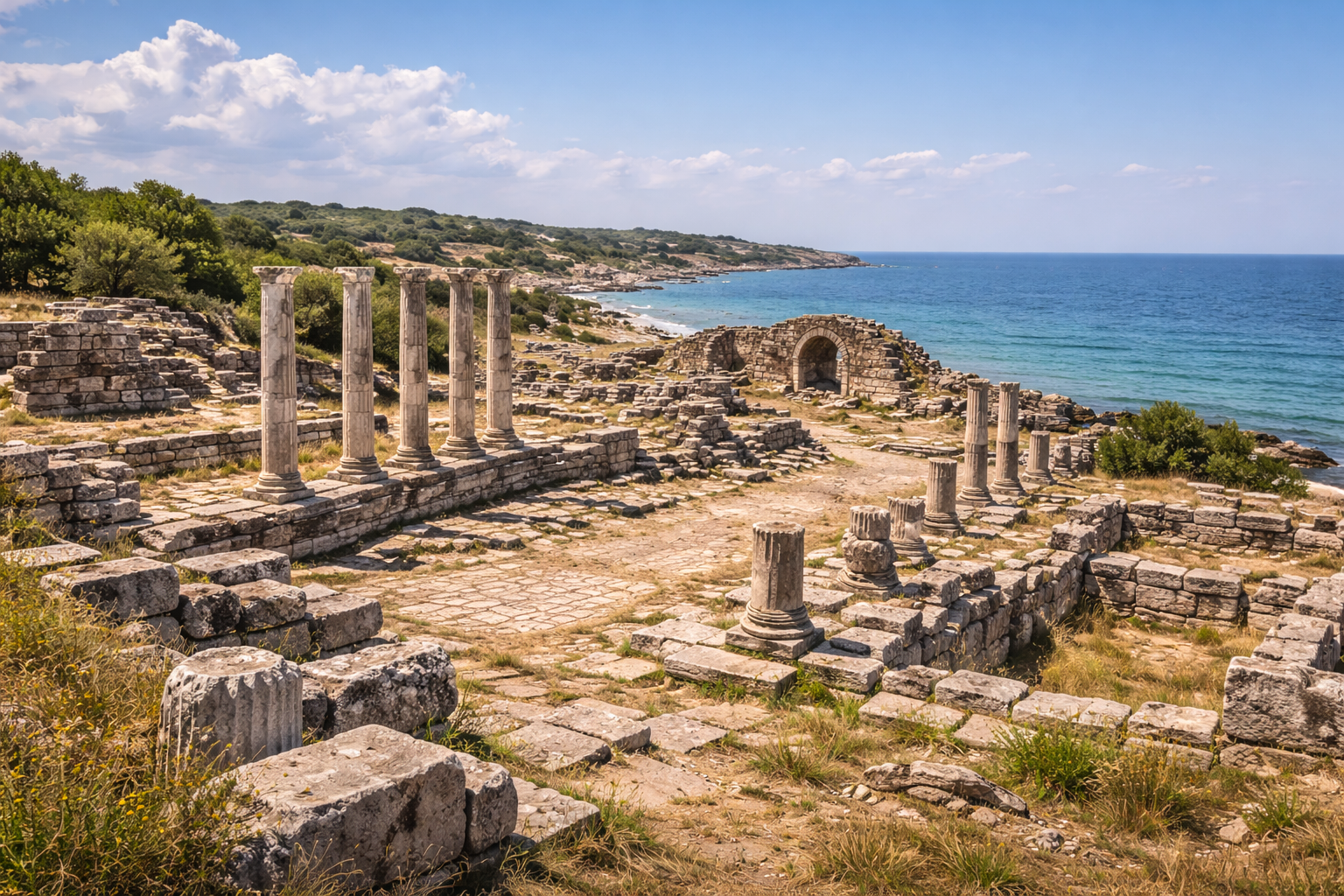
Perinthos, later renamed Heraclea, was one of the most powerful ancient cities on the northern shore of the Sea of Marmara (Propontis). Founded as a Samian colony in 602 BC, it grew into a major commercial hub that at times rivaled Byzantium itself. Located in modern Marmara Ereglisi in Tekirdag Province, the city withstood a famous siege by Philip II of Macedon in 340 BC, served as the capital of the Roman province of Europa, and became one of the earliest and most important Christian metropolitan sees in the Byzantine world. Recent excavations led by Prof. Dr. Zeynep Kocel Erdem since 2021 have uncovered the largest theater in Thrace (90 x 130 meters), along with baths, temples, agora remains, and extensive city walls. As of the latest reports, approximately one quarter of the theater structure has been excavated, with ongoing work planned to reveal the complete monument.
- Why Perinthos-Heraclea Matters
- Geography and Setting
- Historical Timeline
- Major Monuments
- Coinage and Economy
- Archaeological Work
- Visitor Information
- Frequently Asked Questions
- Sources and Further Reading
Why Perinthos-Heraclea Matters
-
A Samian colony that outshone Byzantium. For centuries, Perinthos was commercially more important than its neighbor Byzantium. Its strategic location at the junction of major Marmara sea routes made it a center of wealth and political influence throughout the classical period. According to the historian Procopius, it had been the most important city in the province of Europa before Constantinople rose to prominence.
-
Heroic resistance to Philip II. The 340 BC siege by Philip II of Macedon is one of the best-documented military events in Thracian history. The city's successful defense, aided by Persian and Athenian support, demonstrated its military strength and diplomatic reach, and contributed to the events leading to the Battle of Chaeronea in 338 BC. The defense of Perinthos became a celebrated case study in ancient military history.
-
Capital of Roman Europa. As the administrative capital of the Roman province of Europa, Perinthos (renamed Heraclea around AD 300) governed a large territory including the city that would become Constantinople. Its metropolitan bishop held authority over Byzantium's own church before the latter's elevation to patriarchal status, and the Metropolitan of Heraclea retained the extraordinary privilege of ordaining the Patriarch of Constantinople for centuries.
-
The largest theater in Thrace. The recently excavated theater, measuring 90 by 130 meters, is the largest known performance structure in the entire Thrace region, testifying to the city's cultural ambitions and population size during the Roman period. Its estimated capacity of 10,000-15,000 spectators places it among the major theaters of the ancient Mediterranean world.
-
Continuous occupation from 602 BC to the present. Unlike many ancient cities that were abandoned, Marmara Ereglisi has been continuously inhabited from its founding to modern times, creating an extraordinary layered urban record spanning over 2,600 years. This continuity presents both a remarkable historical narrative and significant archaeological challenges.
-
One of the most extensive ancient coin series. Perinthos produced coins from the Archaic period through the Roman Imperial era, creating one of the most comprehensive numismatic records of any Thracian city. These coins document deities, festivals, architectural features, and political events across nearly a millennium.
Geography and Setting
Perinthos-Heraclea occupies a prominent headland on the northern coast of the Sea of Marmara, approximately 100 km west of Istanbul. The ancient city was built on a steep, rocky peninsula that juts southward into the sea, providing natural harbor facilities on both its eastern and western flanks.
The terrain rises sharply from the waterfront, with the ancient acropolis at the highest point commanding panoramic views of the Marmara. This elevated, easily defensible position was central to the city's ability to withstand sieges -- most famously Philip II's attack in 340 BC, when the steep terrain and strong walls made direct assault nearly impossible. Ancient sources describe how the houses of Perinthos rose up the hillside like steps in an amphitheater, and when one defensive line was breached, the defenders simply barricaded the next row of houses.
The city's position along the Via Egnatia -- the great Roman trunk road connecting the Adriatic to the Bosphorus -- placed it at a critical crossroads of land and sea routes. All traffic moving between the Balkans and Asia Minor passed through or near Perinthos, generating continuous commercial revenue from tolls, harbor fees, and trade.
The surrounding hinterland consists of fertile agricultural land stretching northward toward the Thracian interior. The Ergene River basin to the north provided additional agricultural resources and connected the city to overland trade routes linking the Aegean to the Black Sea. The Marmara fisheries, renowned in antiquity for their abundance, provided another major economic resource.
Coordinates: Approximately 40.97 N, 27.95 E
Elevation: The acropolis rises to approximately 50-60 meters above sea level; the harbor area is at sea level.
Climate: Mediterranean-transitional; warm, dry summers and cool, moderately wet winters. Coastal breezes moderate summer temperatures. Average summer highs reach 28-30 C, while winter lows rarely drop below 3-4 C. The mild maritime climate made Perinthos an attractive location year-round.
Modern context: Today Marmara Ereglisi is a district of Tekirdag Province with a population of approximately 12,000. The ancient ruins lie beneath and around the modern town center, making excavation a complex urban planning challenge. Every construction project in the town has the potential to uncover -- or damage -- archaeological remains.
Historical Timeline
Foundation and Archaic Period (602 -- 480 BC)
Perinthos was founded in 602 BC by colonists from Samos, one of the major Ionian Greek islands. The choice of location was strategic: the headland offered excellent natural defenses, good harbors on two sides, and a position astride the main shipping lanes of the Propontis.
The colony quickly prospered through maritime trade, becoming one of the wealthiest Greek cities on the Thracian coast. Relations with the indigenous Thracian population were complex, involving both trade partnerships and occasional conflict. The Thracian hinterland provided grain, timber, metals, and slaves, all of which Perinthos traded onward to the Greek world.
The city's early coinage, which began in the late 6th century BC, featured images that reflected its maritime economy and religious life. Samos, the mother city, maintained cultural connections with the colony for generations, including shared religious festivals and artistic traditions.
Before the Persian period, the city suffered a devastating attack by the Thracian Paeonians, which Herodotus records in his Histories as a significant military event.
Persian Domination and the Delian League (480 -- 340 BC)
During the Persian Wars, Perinthos fell under Achaemenid influence as part of the Persian satrapy of Thrace. The city's strategic position on the Propontis made it valuable to Persian imperial communications and military logistics.
After the Greek victories at Salamis and Plataea, the city regained autonomy and joined the Delian League under Athenian leadership. The tribute lists from the mid-5th century BC show Perinthos among the paying members of the alliance, though its exact assessment varied over time.
The city minted its own coinage featuring the head of a goddess (possibly Hera, from whom the later name Heraclea may derive, or Persephone) and various reverse types including a horse and rider. These coins are among the finest examples of Greek numismatic art from Thrace and have been catalogued extensively by the Corpus Nummorum project.
The Siege by Philip II (340 BC)
The most celebrated event in Perinthos' history was its successful resistance to Philip II of Macedon in 340 BC. Philip besieged the city as part of his campaign to secure control over the Thracian coast and the Bosphorus straits, intending to cut Athens' vital grain supply route from the Black Sea.
The siege was a major military operation: Philip deployed siege towers up to 80 feet tall (among the tallest recorded in ancient warfare), battering rams, sappers, and a large army estimated at 30,000 men. He divided his forces into rotating assault units that attacked in shifts, keeping continuous pressure on the defenders day and night -- an innovative tactic that anticipated later Hellenistic siege warfare.
However, the city's steep terrain, strong fortifications, and determined defenders made progress extremely difficult. The houses of Perinthos were built rising up the hillside like steps in an amphitheater, and when one wall was breached, defenders simply barricaded the next row of houses, creating an improvised defense in depth.
Crucially, Perinthos received military and material support from both Persia (under the Great King, who sent orders to his western satraps to assist) and Athens, which dispatched a naval force to keep the harbor open. The Byzantines also sent soldiers and supplies, recognizing that Perinthos' fall would leave them next in line.
After prolonged fighting, Philip recognized that the siege was unsustainable and withdrew, turning his attention to nearby Byzantium (which also successfully resisted). The defense of Perinthos became a celebrated example of urban resilience in ancient military history, described in detail by Diodorus Siculus (Book XVI) and referenced by subsequent military writers.
Hellenistic Period (340 -- 146 BC)
After Alexander the Great's conquests, Perinthos passed through the hands of various Hellenistic successor kingdoms, including the Ptolemaic, Seleucid, and Antigonid dynasties. The city maintained its commercial importance and continued to mint coinage.
The Celts (Galatians) attacked Thrace in the early 3rd century BC, and Perinthos likely faced threats from these incursions. The urban fabric expanded during this period with new public buildings, including the foundations of what would later become the monumental theater.
Roman Period (146 BC -- AD 330)
Under Roman rule, Perinthos became the capital of the province of Europa (also called Thracia Europa), one of the administrative divisions of Roman Thrace. The city was renamed Heraclea around AD 300, though both names continued in use for centuries.
The Romans invested heavily in public infrastructure:
- Construction of the monumental theater (90 x 130 m), the largest in Thrace
- Building of public baths on a grand scale, with multiple complexes serving different neighborhoods
- Erection of temples to various deities including those honored on the city's coinage
- Laying out of the agora (marketplace and civic center) with colonnaded stoas
- Strengthening and extension of the city walls to accommodate the expanded population
- Construction of an aqueduct system to bring water from highland sources to the north
Emperor Trajan (r. 98-117) showed particular favor to the city, which adopted the additional honorific name Ulpia in reference to Trajan's family name. Emperor Septimius Severus (r. 193-211) also favored the city, and some of its most elaborate coinage dates to his reign, depicting local temples and festival scenes.
Emperor Justinian I (r. 527-565) later restored the aqueducts and a palace complex, demonstrating the city's continued importance in the early Byzantine period.
The city served as an important staging point for Roman military campaigns in the Balkans. Its harbor received troops, supplies, and imperial visitors traveling between Rome and the eastern provinces.
Early Christian and Byzantine Period (AD 330 -- 1453)
As capital of Europa, Heraclea was the metropolitan see with ecclesiastical authority over all bishoprics in the province -- including, initially, the bishopric of Byzantium. When Byzantium was elevated to Constantinople in AD 330, the political relationship shifted, but Heraclea retained significant religious prestige.
According to tradition, Christianity was brought to Heraclea during the Apostolic Age. The city's metropolitan bishops played important roles in early church councils and ecclesiastical politics. The Metropolitan of Heraclea had the extraordinary privilege of ordaining the Patriarch of Constantinople, a right that endured for centuries and underscored the ancient see's historically superior status.
A Late Antique basilica, discovered in 1992, provides archaeological evidence for the city's early Christian heritage. The excavated sections, including the atrium, measure approximately 51 x 24 meters. Coins of Emperor Anastasius I (491-518) found at the site suggest construction in the late 5th to early 6th century. The church may have been destroyed by Avar raids in 591 and subsequently rebuilt by Emperor Maurice (r. 582-602), illustrating the cycles of destruction and renewal that characterized Byzantine frontier cities.
Throughout the Byzantine period, Heraclea remained strategically important, controlling the western approaches to Constantinople along the Marmara coast. The city endured multiple invasions by Bulgars, Avars, Slavs, and Crusaders, each time rebuilding within its ancient walls.
In the Fourth Crusade (1204), the city suffered significantly when the Crusaders sacked Constantinople and established Latin states throughout the region.
Ottoman Period and Modern Era (1453 -- present)
After the Ottoman conquest, the city became known as Eregli (from Heraclea), eventually becoming Marmara Ereglisi to distinguish it from other Turkish cities of the same name (Karadeniz Ereglisi and Konya Ereglisi). The modern town continues to occupy the ancient site, meaning that much of the archaeological heritage lies beneath the current urban fabric.
During the Ottoman period, the town served as a modest port and agricultural center. Many ancient building materials -- columns, inscribed blocks, marble elements -- were reused in Ottoman-period structures, creating a palimpsest of civilizations visible in walls and foundations throughout the modern town.
Major Monuments
The Great Theater
The most impressive surviving monument is the theater, with dimensions of 90 meters wide by 130 meters long. This makes it the largest known theater in Thrace and one of the larger theaters in the ancient Mediterranean world, comparable in scale to the great theaters of Ephesus and Miletus. The theater was carved into the natural slope of the headland, taking advantage of the steep terrain. Its cavea (seating area) could accommodate an estimated 10,000-15,000 spectators for dramatic performances, musical contests, and public assemblies. Stage reliefs and sculptures carved in marble have been recovered from the theater complex during ongoing excavations. As of recent reports, approximately one quarter of the structure has been exposed, with the steps and seating rows gradually emerging from centuries of accumulated soil and construction debris.
City Walls and Fortifications
The ancient fortification system extended around the entire headland, with sections dating from the Hellenistic period through the Byzantine era. The walls were particularly formidable on the landward (northern) side, where they had to compensate for less natural protection. Philip II's inability to breach these walls in 340 BC testifies to their engineering quality. Multiple construction phases are visible in the surviving sections, with different masonry techniques reflecting repairs and extensions across centuries. The walls represent one of the most complete defensive circuits surviving from ancient Thrace.
The Agora
The civic center of Perinthos-Heraclea included a large agora serving as marketplace, meeting place, and administrative center. Archaeological evidence suggests it was lined with colonnaded stoas and contained temples, altars, and public inscriptions. The agora was the commercial heart of a city that controlled major Marmara trade routes and hosted thriving markets for goods from across the ancient world.
Public Baths
Roman-era bath complexes have been identified at multiple locations within the site, reflecting the standard amenities expected of a provincial capital. These baths served both hygienic and social functions, operating as gathering places for the urban population. The baths would have included the typical Roman sequence of frigidarium (cold room), tepidarium (warm room), and caldarium (hot room), along with exercise areas and socializing spaces.
Temples
Multiple temple foundations have been documented, though the specific deities honored have not all been identified. The city's coinage suggests cults to Hera, Herakles, Demeter, Apollo, Homonoia (Concord), and Tyche (Fortune), among others. A sacred cave or grotto associated with religious ritual has also been noted in historical sources. The Neokoros title on imperial coins indicates the city's role as a warden of the provincial imperial cult.
The Late Antique Basilica
Discovered in 1992, this early Christian church provides physical evidence for the city's important role as a metropolitan see. The basilica measures approximately 51 x 24 meters including the atrium. Coins of Anastasius I provide a terminus post quem for the construction. Its destruction and reconstruction episode (possibly linked to the 591 Avar raid and Emperor Maurice's patronage) illustrates the challenges and resilience of Byzantine urban life on the empire's European frontier.
Aqueduct System
The water supply infrastructure, originally built during the Roman period and restored by Emperor Justinian, brought fresh water from highland sources to the north. Sections of the aqueduct are still traceable in the landscape surrounding modern Marmara Ereglisi. The aqueduct's length and engineering testify to the city's large population and its need for reliable freshwater delivery to supply baths, fountains, and domestic use.
Coinage and Economy
Perinthos produced one of the most extensive coin series of any Thracian city, spanning from the Archaic period through the Roman Imperial era. The Corpus Nummorum project has catalogued the city's coin typology in detail, making it one of the best-documented numismatic corpora from the ancient Balkans.
Key features of the coinage include:
- Archaic coins (late 6th-5th century BC) with incuse designs characteristic of early Greek minting
- Classical coins featuring goddess heads (Hera or Persephone) and horse-and-rider reverses, among the finest Greek numismatic art from Thrace
- Imperial coins from the reigns of Augustus through Gallienus, featuring the emperor on the obverse and local deities, temples, or festival scenes on the reverse
- Neokoros titles on coins advertising the city's role as a provincial temple warden for the imperial cult, a prestigious honor competed for among provincial cities
The city's wealth derived from:
- Maritime trade along the Propontis shipping lanes connecting the Aegean to the Black Sea
- Agricultural produce from the fertile Thracian hinterland, particularly grain
- Transit tolls on the Via Egnatia overland traffic
- Fisheries in the Marmara, which were renowned in antiquity for their quality and abundance
- Stone quarrying from local sources used for construction throughout the region
Archaeological Work
Early Explorations
European travelers and scholars documented visible remains at Marmara Ereglisi from the 18th century onward. The site's identification with ancient Perinthos/Heraclea was established through literary sources (Herodotus, Strabo, Pliny, Procopius) and epigraphic evidence. French numismatist Ernest Babelon and other 19th-century scholars studied the city's coin series extensively, laying the groundwork for modern numismatic research.
The 1992 Basilica Discovery
The discovery of the Late Antique basilica in 1992 was a major event that renewed scholarly interest in the site. The church's stratigraphy provided dating evidence for the Avar destruction horizon and the subsequent Maurician rebuilding. The atrium and nave sections were excavated, revealing mosaic floors and architectural decoration that confirmed the building's metropolitan church status.
Modern Excavations (2021 -- present)
Systematic archaeological excavations began in 2021 under the direction of Prof. Dr. Zeynep Kocel Erdem. These ongoing excavations have focused on:
- Uncovering and documenting the theater, including its seating, stage building, and surrounding infrastructure -- with approximately one quarter exposed so far
- Mapping the city wall circuit and identifying construction phases from Hellenistic to Byzantine periods
- Investigating the agora area and associated civic buildings
- Recording finds of ceramics, glass, metal objects, coins, and architectural sculpture spanning the Roman, Byzantine, and Ottoman periods
- Documenting stage reliefs and sculptures on marble from the theater complex
- Conducting geophysical surveys (ground-penetrating radar and resistivity) to map unexcavated structures beneath the modern town
The excavations are supported by the Turkish Ministry of Culture and Tourism and have attracted significant academic and media attention, as the theater discovery in particular has rewritten understanding of urban scale in ancient Thrace.
Conservation Challenges
The primary challenge at Perinthos-Heraclea is that the ancient city lies largely beneath the modern town of Marmara Ereglisi. Excavation opportunities are limited by modern construction, infrastructure, and private property. This "living city" condition means that archaeological work must be carefully coordinated with municipal planning. Every construction project in the town center has the potential to uncover (or damage) ancient remains, requiring constant monitoring by the museum directorate. Given the theater's enormous size, completing the full excavation will require many more years of sustained effort.
Visitor Information
Getting There
- By car from Istanbul: Approximately 2 hours via the E-5/D100 highway westward through Tekirdag. The D100 runs directly through Marmara Ereglisi.
- By car from Edirne: Approximately 2.5 hours via the E-84 and D100.
- By bus: Regular intercity bus services connect Istanbul and Tekirdag; local minibuses (dolmus) continue to Marmara Ereglisi.
- By sea: No regular ferry service currently, but the harbor area is accessible. Historically, the city's dual harbors were its lifeline.
What to See
- The theater excavation area (check access with local museum directorate, as this is an active excavation)
- Visible fortification wall sections along the western and southern edges of the old town
- Architectural fragments and inscriptions reused in later Ottoman-period buildings throughout the town -- a visible palimpsest of civilizations
- The general headland topography, which conveys the strategic setting that made the 340 BC defense possible
- The harbor areas on both east and west sides of the peninsula
- The basilica site (access may depend on ongoing conservation work)
Best Time to Visit
- Spring (April -- June) and Autumn (September -- November): most comfortable temperatures and best light for photography.
- Summer: warm but manageable with coastal breezes; the Marmara coast is pleasant for combining archaeology with seaside relaxation.
- Winter: quieter but may be windy and wet; fewer visitors allow more contemplative exploration.
Estimated Visit Duration
Allow 2 to 4 hours to walk the visible remains, explore the headland, and appreciate the harbor setting. Combine with a meal at a local fish restaurant on the waterfront for the full experience. The town is small enough to explore on foot.
Combining with Other Sites
- Tekirdag city center: Provincial museum with regional archaeological collections (30 km east)
- Heraclea ancient road network: Traces of the Roman Via Egnatia branch running through the area
- Thracian vineyards: The Tekirdag region is one of Turkey's important wine-producing areas, with several wineries open for tastings
- Raklice (ancient Rhaedestus): Nearby ancient settlement along the Marmara coast
- Istanbul: The metropolis is only 2 hours east, making Marmara Ereglisi a feasible day trip
Frequently Asked Questions
Why does the city have two names?
The city was founded as Perinthos in 602 BC and renamed Heraclea around AD 300, possibly in honor of Hercules (Herakles), who was one of the major deities worshipped in the city. Both names were used simultaneously for centuries. The modern Turkish name Ereglisi derives from Heraclea through medieval Greek pronunciation shifts.
Was Perinthos really more important than Byzantium?
For much of the classical and early Roman periods, yes. Perinthos was commercially busier, politically more prominent, and ecclesiastically superior to Byzantium. The Metropolitan of Heraclea even had the right to ordain the Patriarch of Constantinople. This only changed fundamentally after Constantine refounded Byzantium as Constantinople in AD 330, shifting the balance of power permanently.
How large was the population?
Population estimates for ancient cities are uncertain, but the size of the theater (capacity estimated at 10,000-15,000) and the extent of the city walls suggest a population of perhaps 30,000-50,000 during the Roman peak. The basilica's scale (51 x 24 m) also implies a substantial Christian congregation. These numbers would have made Perinthos one of the largest cities in ancient Thrace.
Can I see the theater today?
The theater is being actively excavated, with approximately one quarter of the structure now exposed. Access conditions depend on the current excavation season. Contact the Tekirdag Museum Directorate or the excavation team for current visiting arrangements. Even from the surrounding streets, the scale of the excavated cavea is impressive.
What happened to the theater reliefs?
Marble reliefs and sculptures from the theater stage building have been recovered during excavations. They are being studied, conserved, and will eventually be displayed, likely in a local or regional museum context.
Is the ancient harbor still functional?
The ancient harbor basins are no longer in use as commercial ports, but the general harbor geography is still recognizable. Modern Marmara Ereglisi has a small fishing harbor in approximately the same location as the ancient western harbor, providing a tangible link to the city's maritime past.
How does Perinthos relate to the Via Egnatia?
The Via Egnatia was the great Roman road connecting the Adriatic coast (modern Albania) to Byzantium/Constantinople, stretching over 1,000 km. Perinthos was a key station along its eastern section, where it met the Marmara coast route. This position at the junction of land and sea highways was central to the city's prosperity and made it one of the most important stops on the most important road in the Roman East.
Architectural Measurements and Key Figures
| Feature | Measurement / Detail |
|---|---|
| Theatre dimensions | 140 x 110 m (comparable to Ephesus theatre) |
| Theatre estimated capacity | 10,000--15,000 spectators |
| Basilica dimensions (incl. atrium) | approximately 51 x 24 m |
| City walls circuit | traceable around entire headland |
| Acropolis elevation | approximately 50--60 m above sea level |
| Foundation date | 602 BC |
| Distance from Istanbul | approximately 100 km |
| Distance from Edirne | approximately 170 km |
| Siege tower height (Philip II, 340 BC) | up to 80 feet (approximately 24 m) |
| Philip II's army estimate | approximately 30,000 men |
| Modern town population | approximately 12,000 |
Numismatic Evidence
The coinage of Perinthos constitutes one of the most comprehensive numismatic records of any Thracian city, spanning from the late Archaic period through the late Roman Empire -- a minting history of nearly a millennium. The foundational scholarly work on this corpus was published by Edith Schonert-Geiss in 1965 (pp. 28--32), and the Corpus Nummorum online project has since catalogued the full typology with detailed photographic documentation.
Coin Series by Period
| Period | Metal | Typical Obverse | Typical Reverse | Notes |
|---|---|---|---|---|
| Late 6th--5th c. BC | Silver | Incuse designs | Various | Earliest issues, archaic style |
| 5th--4th c. BC (Classical) | Silver | Head of goddess (Hera or Persephone) | Horse and rider | Among finest Thracian Greek numismatic art |
| 4th--3rd c. BC (Hellenistic) | Bronze | Head of Heracles | Club, lion skin | Reflecting Macedonian influence |
| 1st c. BC--3rd c. AD (Imperial) | Bronze | Imperial portrait | Local deities, temples, festivals | Extensive series under Augustus through Gallienus |
| Septimius Severus (193--211) | Bronze | Emperor bust | Neokoros temple, ship types | Most elaborate coinage; neokoros title first appears |
| Severus Alexander | Bronze | Emperor bust | Mythological scenes (Dionysus, Ariadne) | Diverse reverse iconography |
The Neokoros Title
After supporting Septimius Severus in his successful campaign against the rival emperor Pescennius Niger in 196 AD, Perinthos was awarded the prestigious Neokoros title -- designating the city as an official guardian of a provincial temple dedicated to the imperial cult. This honor appeared prominently on the city's coinage in two forms: as an image of the Neokoros temple standing alone, and as a miniature temple carried by the city goddess (Tyche) on coin reverses.
The Neokoros distinction was fiercely competed for among provincial cities, and its award to Perinthos confirmed the city's political loyalty and continued importance within the Roman provincial hierarchy. The Corpus Nummorum catalogue records multiple coin types displaying the Neokoros temple under various emperors after Severus, including types CN_Type2473, CN_Type2475, CN_Type2477, CN_Type2487, and CN_Type2548 showing ships on the reverse -- imagery that connected the city's naval tradition to its imperial cult role.
Underwater Harbor Discovery (2024--2025)
One of the most significant recent discoveries at Perinthos has been the identification of submerged harbor structures in the eastern (commercial) port area. Excavations led by Prof. Dr. Zeynep Kocel Erdem expanded to include underwater archaeological surveys that revealed:
- Sarcophagi and stone blocks scattered on the seabed, indicating that portions of the ancient waterfront had subsided beneath the waves over centuries due to tectonic activity and coastal erosion
- A harbor structure detected in the eastern port zone, corresponding to what ancient sources describe as the city's commercial harbor (as distinct from the western military harbor)
- A shipwreck at 60 metres depth, discovered using a remotely operated vehicle (ROV) equipped with sensors and ground-penetrating radar
- Architectural fragments including column sections and worked stone blocks on the seabed, suggesting that monumental buildings near the waterfront collapsed into the harbor basin during one or more of the city's devastating earthquakes
The underwater discoveries raise significant new questions about the original extent of Perinthos's harbor infrastructure and the degree to which tectonic subsidence has altered the city's coastal geography since antiquity. Future excavation seasons are expected to focus more heavily on underwater research, with the potential to reveal port installations, warehouse foundations, and additional shipwrecks.
The Siege of 340 BC: A Military Analysis
The defense of Perinthos against Philip II of Macedon stands as one of the most detailed siege accounts from the 4th century BC, recorded primarily by Diodorus Siculus (Book XVI). Beyond the narrative of heroic resistance, the siege provides specific tactical and technical data:
- Siege towers: Philip deployed towers up to 80 feet tall (approximately 24 metres), among the tallest siege engines documented in Classical-era warfare. These towers allowed attackers to fire down upon defenders on the walls and to deploy boarding bridges onto the ramparts.
- Rotating assault units: Philip organized his army into multiple assault divisions that attacked in shifts, maintaining continuous pressure day and night. This innovation -- rotating fresh troops into battle while exhausted units rested -- anticipated later Hellenistic siege techniques and demonstrated Philip's organizational sophistication.
- Defense in depth: The city's terraced hillside geography created a natural defense-in-depth system. When Philip's forces breached an outer wall section, defenders barricaded the next row of houses, converting the ascending urban terrain into successive defensive lines.
- Coalition support: The defense succeeded in part because of external aid from Persia (the Great King ordered his western satraps to send supplies and troops), Athens (which dispatched a naval force to keep the harbor open for resupply), and Byzantium (which sent soldiers and materiel, recognizing that its own survival depended on Perinthos holding out).
The siege's failure was a significant strategic setback for Philip. It demonstrated the limits of Macedonian siege capability against well-fortified cities with external maritime supply lines -- a lesson that would influence siege warfare doctrine throughout the Hellenistic period.
Sources and Further Reading
- Wikipedia, "Perinthus." Link
- Wikipedia, "Siege of Perinthus." Link
- The Byzantine Legacy, "Herakleia." Link
- Livius.org, "Perinthus (Marmara Ereglisi)." Link
- Anatolian Archaeology, "Perinthos Ancient City with the largest theater in Thrace." Link
- Arkeonews, "Theater of Perinthos Ancient City to be unearthed." Link
- Hurriyet Daily News, "A quarter of Perinthos' ancient theater unveiled." Link
- Hurriyet Daily News, "Theater emerges as works continue in Perinthos." Link
- Perinthos Excavation Project Official Website. Link
- ToposText, "Perinthos (Thrace)." Link
- Corpus Nummorum, "Coin Typology of Perinthos." Link
- Kultur Portali, "Perinthos Antik Kenti." Link
- Diodorus Siculus, Bibliotheca Historica, Book XVI (siege of Perinthos)
- Procopius, De Aedificiis (Justinian's restorations)