Perperene

Highland Retreat of the Pergamene Kings

23 min read

Perperene (also known as Theodosioupolis in the Byzantine era) is an ancient Mysian city perched on the Kozak Plateau, approximately 25 km north of Pergamon (modern Bergama). Renowned in antiquity for its copper mines and exceptional vineyards, Perperene served as a summer highland retreat for the rulers of the Kingdom of Pergamon. Its coins, stamped with grape clusters and the head of Apollo, testify to a prosperous community whose Perperenian wine was praised by the celebrated physician Galen in the 2nd century AD. The city's strategic control of mountain passes, its role in the Attalid economic sphere, and its later transformation into the Byzantine bishopric of Theodosioupolis give it a layered significance that spans over a millennium of Anatolian history.

  1. Why Perperene Matters
  2. Geography and Setting
  3. Historical Timeline
  4. Major Monuments and Ruins
  5. Archaeological Work
  6. Visitor Information
  7. Frequently Asked Questions
  8. Sources and Further Reading

Why Perperene Matters

  1. Wine Heritage of Antiquity. Perperene was one of the foremost wine-producing settlements in the ancient Caicus (Bakirçay) Valley. Galen, the personal physician of Emperor Marcus Aurelius, specifically praised Perperenian wine for its quality and medicinal properties, noting that it was among the best in the entire region of western Anatolia. The grape-cluster motif on the city's coins confirms viticulture as a central economic activity stretching back to at least the 4th century BC.

  2. Strategic Highland Position. Situated on the Kozak Plateau at roughly 500-700 m elevation, Perperene controlled mountain passes and overland routes linking the interior of Mysia to the Aegean coast. This made it a natural summer retreat for Pergamene royalty escaping the lowland heat and malaria-prone marshlands of the Bakirçay plain.

  3. Copper Mining Economy. Ancient sources, including Strabo's Geography (Book XIII), note that the vicinity of Perperene contained copper mines. The extraction and trade of copper supplemented the agricultural economy and linked the city to broader Mediterranean metal-trade networks that connected Anatolia with the Aegean islands and mainland Greece.

  4. Dionysos Worship and Festive Culture. The association between Perperene and the cult of Dionysos, god of wine and festivity, is reinforced by numismatic evidence and the agricultural landscape. This religious-economic connection parallels other wine-producing cities in western Anatolia, such as Nysa and Teos, where Dionysos cults were similarly prominent.

  5. Byzantine Continuity. The renaming of the city to Theodosioupolis during the late Roman or early Byzantine period indicates continued settlement and administrative relevance well into the Christian era. A pagan temple was likely converted into a church, and the city served as an episcopal see -- evidence that highland communities retained their importance even as the political center of gravity shifted.

  6. A Window into Pergamene Hinterland Life. While Pergamon itself is one of the best-studied Hellenistic cities, its satellite settlements like Perperene remain largely unexplored. Studying Perperene provides a rare opportunity to understand rural and semi-urban life in the Attalid kingdom, including agricultural production, mining, and the relationship between a capital city and its resource-providing hinterland.

Geography and Setting

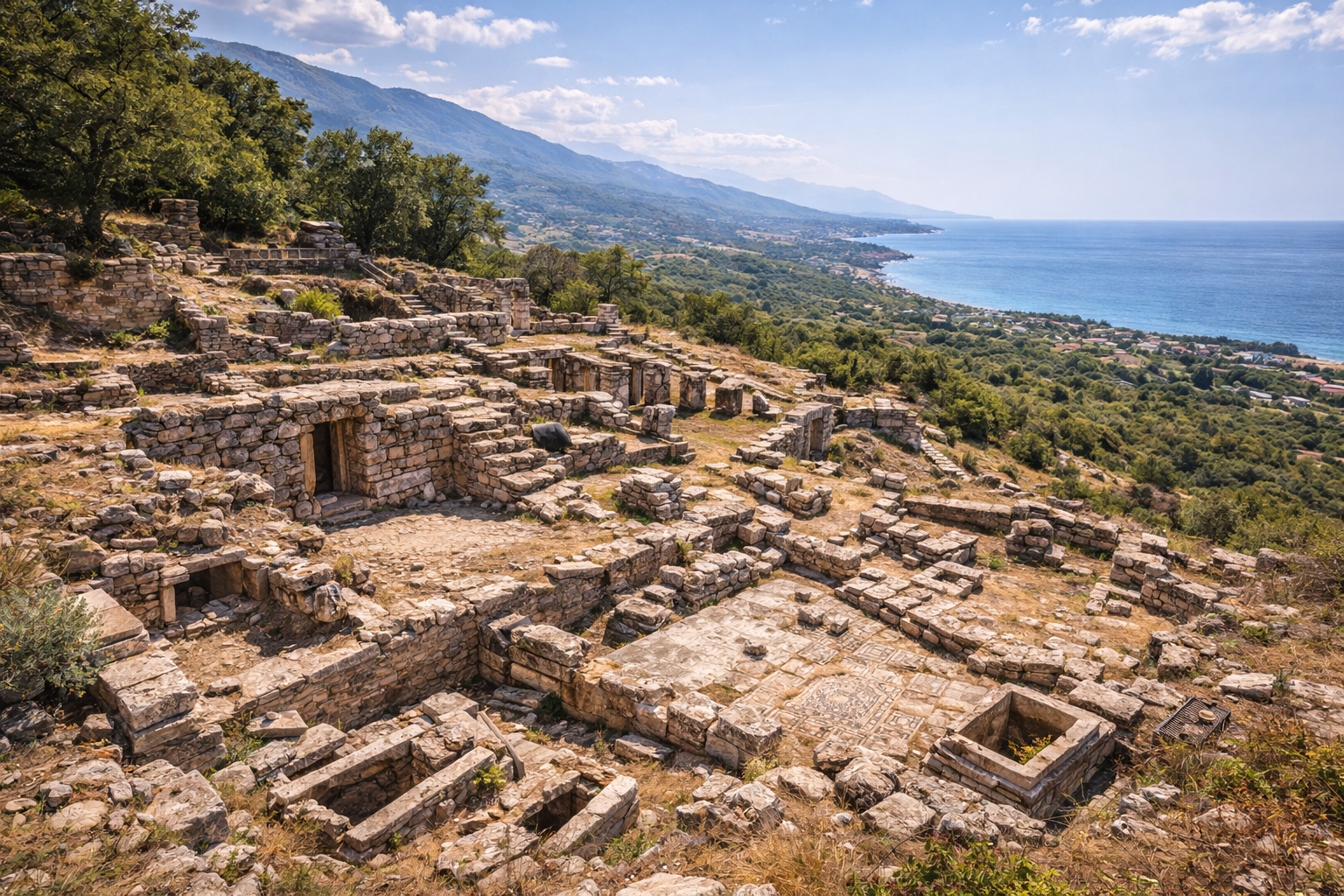
Perperene is located on the Kozak Plateau, a highland region of pine forests and granite outcrops northwest of Bergama in Izmir Province. The plateau sits between 500 and 800 meters above sea level, offering cooler temperatures than the surrounding lowlands of the Bakirçay (ancient Caicus) river valley.

The city's ruins lie near the modern village of Asagibey (formerly associated with the Kozak region). The terrain is characterized by:

  • Pine-forested hillsides that now conceal much of the ancient urban fabric beneath a thick canopy of Turkish red pine (Pinus brutia) and stone pine (Pinus pinea)
  • Granite bedrock that provided building material for walls, foundations, and monumental construction throughout antiquity
  • Mountain streams fed by seasonal rainfall and snowmelt, supporting agriculture, small-scale irrigation, and the water needs of the settlement
  • Panoramic views toward the Bakirçay plain to the south, with Pergamon visible on clear days as a distant acropolis silhouette

The Kozak Plateau is famous today for its pine nuts (çam fistigi), a tradition of highland agriculture that may echo ancient land-use patterns. The region's microclimate, with warm days and cool nights during the growing season, was ideal for the cultivation of wine grapes in antiquity. Modern studies of the plateau's botanical diversity have identified species consistent with ancient Mediterranean agricultural regimes, including wild grapevine varieties.

The geology of the Kozak Plateau is dominated by Kozak granodiorite, a plutonic rock formation that gave the ancient builders excellent construction material. The same geological formations contain the copper-bearing veins that sustained Perperene's mining economy. Geochemical surveys have confirmed the presence of chalcopyrite and malachite deposits in the broader Kozak region, consistent with ancient accounts of copper extraction.

Access from Pergamon followed ancient tracks through the mountain passes, a journey of perhaps half a day on foot or several hours by mule. This relative proximity made Perperene a practical seasonal retreat while still offering altitude-driven relief from summer heat. The route likely passed through the Yuntdag foothills before ascending to the plateau proper, following stream valleys that provided water along the way.

The surrounding landscape supported not only viticulture and copper mining but also livestock grazing, timber harvesting, and the collection of aromatic resins -- all resources that connected Perperene to the wider economy of the Pergamene kingdom.

Historical Timeline

Pre-Hellenistic Period (before 3rd century BC)

  • The Kozak Plateau shows evidence of habitation going back to at least the Early Bronze Age, though Perperene itself enters written records during the Hellenistic period.
  • The name "Perperene" is likely of pre-Greek, possibly Anatolian (Luwian or Mysian) origin, suggesting indigenous settlement before Greek colonization. Linguists have proposed connections to Luwian root words, though no definitive etymology has been established.
  • The plateau's natural resources -- copper, timber, water, and fertile highland soils -- would have attracted settlement well before the historical period.
  • Scattered surface pottery from the Early and Middle Bronze Ages has been noted in surveys of the broader Kozak region, though direct attribution to Perperene requires further excavation.

Hellenistic Period (3rd-2nd century BC)

  • Under the Kingdom of Pergamon (Attalid dynasty, 282-133 BC), Perperene functioned as a highland satellite settlement within the kingdom's administrative and economic orbit.
  • The Attalid kings, particularly Eumenes II (r. 197-159 BC) and Attalos II (r. 159-138 BC), expanded Pergamon's territorial control into the surrounding highlands, including the Kozak Plateau. Perperene's copper and wine became integrated into the kingdom's sophisticated economic system.
  • The Attalid administration was known for its efficient management of royal lands and resources. Perperene likely contributed agricultural surplus and mineral resources to the Pergamene treasury, which funded the great building programs visible on the Pergamon acropolis today.
  • The earliest known coins of Perperene date to circa 386-330 BC, featuring a laureate head of Apollo on the obverse and grape clusters on the reverse, struck in bronze (AE Chalkus). These coins circulated primarily in the local and regional economy.
  • The choice of Apollo as a coin deity may reflect the city's association with both agricultural abundance (Apollo as a god of pastoral prosperity) and cultural sophistication within the Hellenistic Greek framework.

Roman Period (133 BC - 4th century AD)

  • After the last Attalid king Attalos III bequeathed his kingdom to Rome in 133 BC, Perperene became part of the Roman province of Asia. The transition appears to have been relatively smooth, with the city continuing its agricultural and mining activities under Roman administration.
  • The city continued to mint semi-autonomous coinage under Roman rule, with issues from the reign of Antoninus Pius (AD 138-161) showing a helmeted head of Athena alongside the traditional grape motif. This dual imagery suggests both military and agricultural identity.
  • Galen of Pergamon (AD 129-216), one of the most influential physicians in history, praised the wines of Perperene in his medical writings, noting their suitability for therapeutic use. In On the Properties of Foodstuffs, Galen discusses how different wines from the Pergamon region have varying medicinal qualities, with Perperenian wine being particularly commended for its balance and moderate strength.
  • The city maintained modest prosperity as an agricultural and mining community throughout the Roman imperial period, benefiting from the Pax Romana that facilitated regional trade.
  • Roman-period infrastructure improvements may have included road upgrades connecting Perperene more effectively to the Pergamon lowlands, though specific Roman road remains have not been documented at the site.

Byzantine Period (4th-12th century AD)

  • The city was renamed Theodosioupolis, likely in honor of Emperor Theodosius I (r. 379-395) or Theodosius II (r. 408-450). This renaming placed Perperene within the administrative hierarchy of the Byzantine provincial system.
  • A pagan temple was converted into a Byzantine church, reflecting the Christianization of the region. The reuse of pagan religious architecture for Christian worship was a widespread practice across Anatolia during the 4th-6th centuries.
  • The city functioned as an episcopal see (bishopric), indicating continued administrative importance within the ecclesiastical hierarchy of the Byzantine Empire. Bishops of Theodosioupolis are attested in church council records.
  • Fortification walls from this period survive, suggesting the need for defense during periods of instability, particularly during Arab raids in the 7th-8th centuries and later Turkish incursions.
  • Settlement on the plateau gradually diminished as political and economic centers shifted toward the coast and toward Constantinople. By the late medieval period, the highland settlement had contracted significantly.

Ottoman Period and Later

  • Following Turkish conquest of the region, the Kozak Plateau became part of Ottoman administrative territory. The ancient ruins were gradually incorporated into the rural landscape, with local villagers using ancient building stones for construction.
  • The plateau's pine nut economy developed during the Ottoman period and continues to the present day, providing a major livelihood for Kozak communities.

Major Monuments and Ruins

Theatre

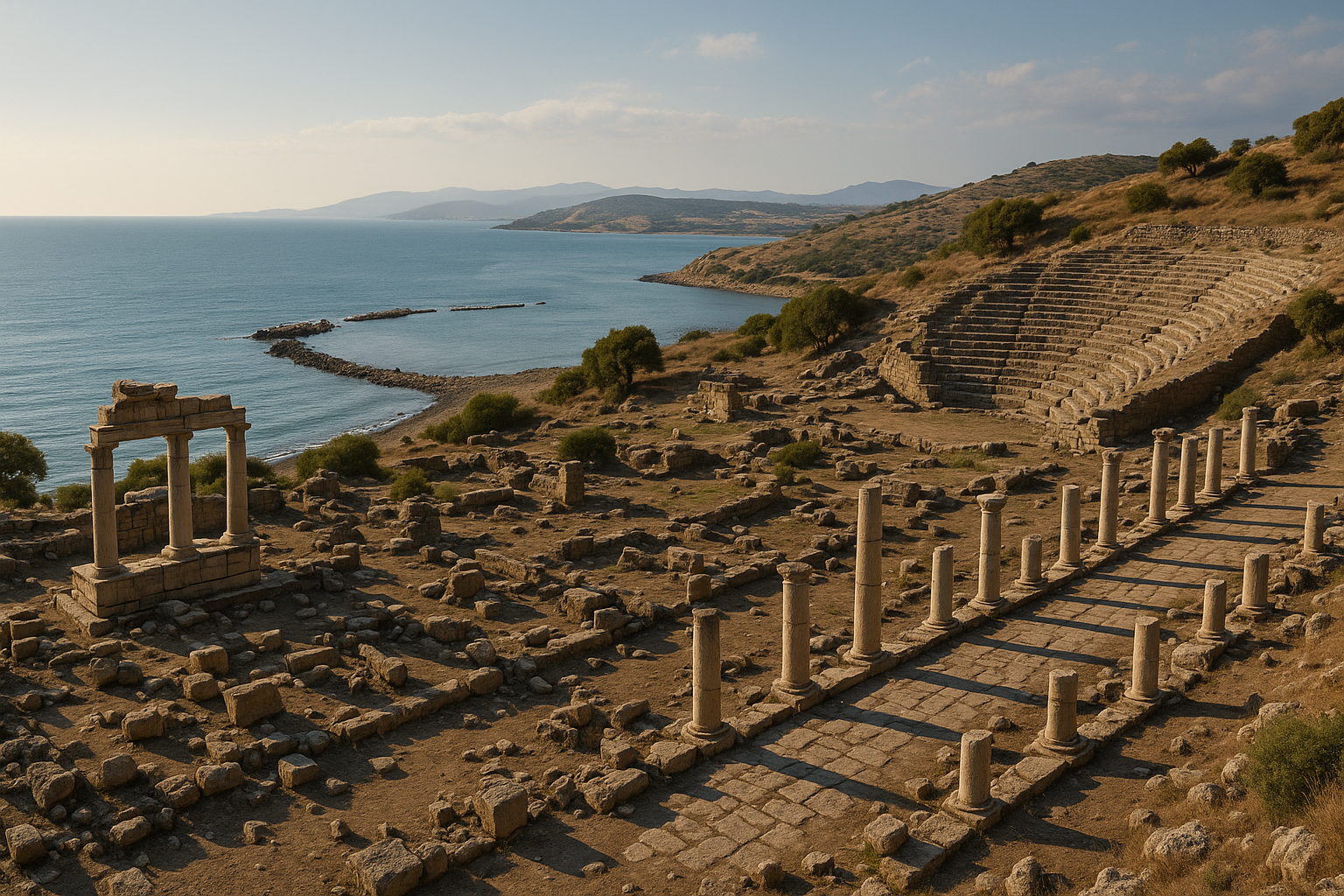
The remains of a small Hellenistic theatre have been identified on a natural slope, oriented to take advantage of the hillside for seating (cavea). The structure is modest in scale compared to the grand theatre of Pergamon (which seated 10,000), consistent with Perperene's role as a secondary settlement. Visible features include:

  • Partially preserved seating rows carved from or set upon the natural rock
  • The outline of an orchestra area at the base
  • Scattered architectural blocks from the scene building (skene)
  • The theatre's orientation suggests it faced roughly south, offering spectators views across the hillside toward the distant valley

Theatres in smaller Hellenistic settlements served both entertainment and civic assembly functions, and Perperene's theatre likely hosted religious festivals connected to the cult of Dionysos, consistent with the city's viticultural identity.

Temple / Byzantine Church

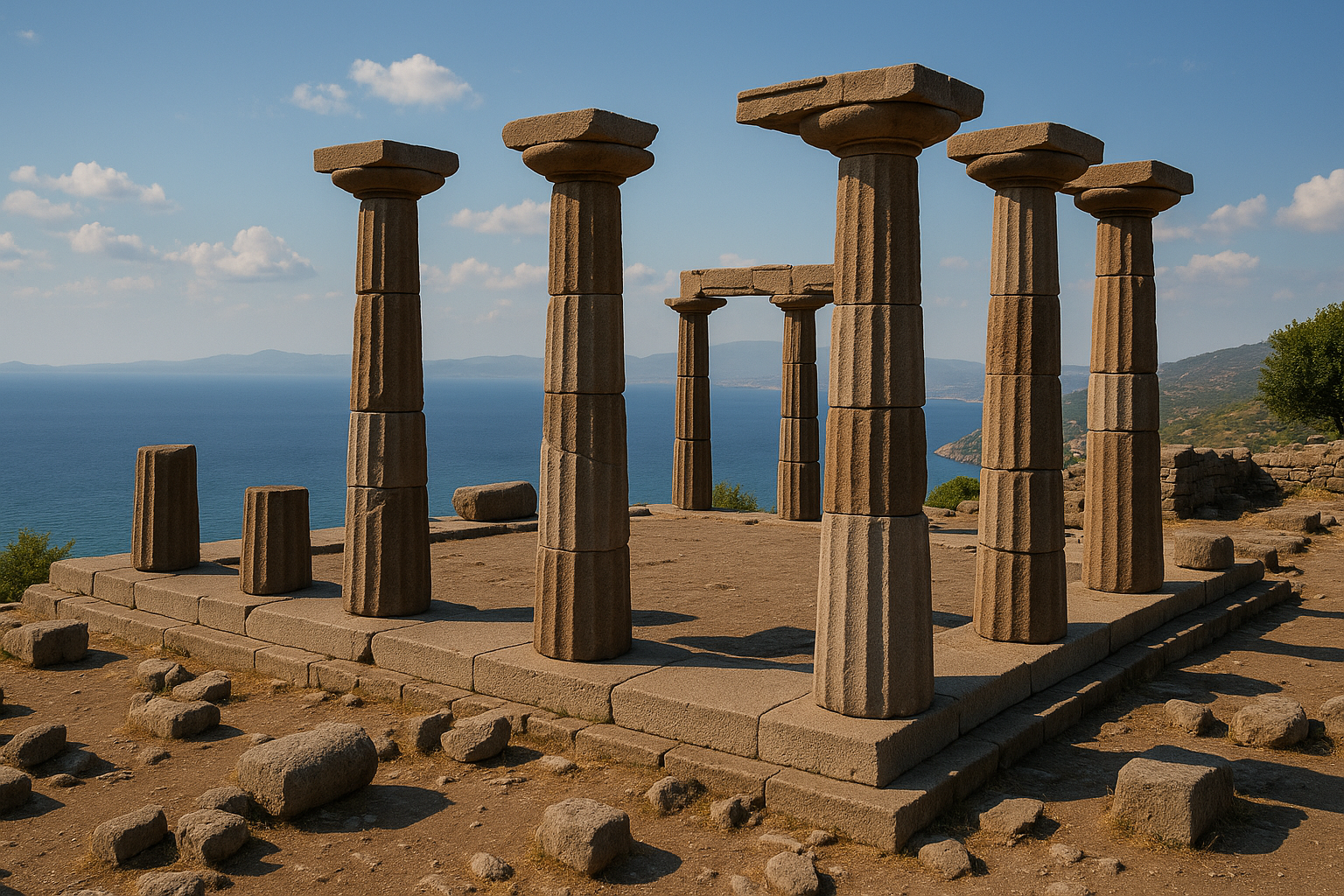
Archaeological evidence points to a temple foundation, possibly dedicated to Apollo or Dionysos, that was later converted into a Byzantine church. This transformation is a common pattern throughout Anatolia, representing the physical manifestation of religious change. Visible remains include:

  • Foundation walls showing two distinct construction phases (Hellenistic original and Byzantine modification)
  • Reused architectural elements (spolia) from the Hellenistic period incorporated into later Byzantine masonry, including column drums and carved blocks
  • Fragments of carved stone that may belong to temple entablature or church decoration
  • A possible apse structure added during the Christian conversion

The temple's original dedication remains uncertain, but the city's strong associations with both Apollo (coin imagery) and Dionysos (wine culture) suggest one of these deities as the most likely patron.

City Walls

The most prominent surviving feature is the circuit of fortification walls, primarily dating to the Byzantine period but possibly incorporating Hellenistic foundations. Key characteristics include:

  • Roughly coursed masonry using local granite blocks, with some sections showing more careful ashlar work
  • Stretches of wall traceable along the plateau's natural defensive contours, following ridgelines and cliff edges
  • At least one identifiable gate section with flanking wall thickenings
  • Evidence of repair and rebuilding across multiple centuries, with different mortar types and stone-cutting techniques visible in cross-section
  • Estimated original circuit length of several hundred meters, enclosing the primary settlement area

Agora Area

A relatively flat area in the center of the settlement has been tentatively identified as the agora (public marketplace and civic center). Surface finds include:

  • Pottery sherds from the Hellenistic through Byzantine periods, indicating continuous use
  • Architectural fragments including column drums, bases, and Corinthian-style capital fragments
  • The general layout suggests a modest but functional civic space, perhaps 40-60 meters in its longest dimension
  • The agora would have served as the primary gathering place for commerce, civic life, and religious processions

Cisterns and Water Management

Several rock-cut cisterns have been documented, reflecting the highland settlement's need to manage water resources during dry summer months. These hydraulic installations demonstrate practical engineering adapted to the plateau's seasonal water availability:

  • Cisterns carved directly into the granite bedrock with plastered interiors to prevent seepage
  • Some cisterns are connected to channel systems that directed rainwater runoff into storage
  • The water management infrastructure was essential for supporting a permanent population on the plateau, where surface water is limited during summer

Necropolis

Burial areas have been noted in the vicinity of the settlement, though systematic investigation of the necropolis has not been conducted. Surface evidence suggests:

  • Rock-cut tombs in the surrounding hillsides
  • Scattered sarcophagus fragments
  • The necropolis areas likely extended along the approaches to the city, following standard ancient practice

Archaeological Work

Perperene has not been the subject of large-scale systematic excavation. Knowledge of the site derives primarily from:

  • 19th-century surveys by European travelers and geographers who documented visible ruins and recorded inscriptions during their explorations of the Pergamon hinterland. These early visitors provided the first modern descriptions of the site, noting walls, column fragments, and inscribed stones.

  • Numismatic studies that have catalogued the city's coin types, providing evidence for dating, economic activity, and religious affiliations. The WildWinds database records multiple coin types from Perperene spanning the 4th century BC to the 2nd century AD. These coins are the primary chronological anchors for the site's history.

  • Academic research on the Kozak Plateau, including a 2023 study by M. Tozan published in Olba (vol. 31, pp. 381-400) titled "The Kozak Plateau in Antiquity: Toponyms, Routes and Natural Resources," which analyzes Perperene's role within the broader highland settlement network. This study contextualizes Perperene within a system of plateau settlements that exploited the highlands' mineral and agricultural resources.

  • Surface surveys conducted by Turkish archaeological teams that have mapped the extent of visible remains without conducting deep excavation. These surveys have established the approximate boundaries of the settlement and identified the major monument locations.

  • Geological and geochemical surveys of the Kozak Plateau that have confirmed the presence of copper-bearing mineral deposits consistent with ancient accounts of mining activity.

The site remains largely unexcavated, which means significant archaeological potential exists beneath the surface. The forest cover that now blankets the plateau both protects the ruins from agricultural disturbance and makes them more difficult to survey comprehensively. Future systematic excavation could reveal details about Hellenistic provincial architecture, Roman-period economic activities, and the process of Christianization in the Byzantine highlands.

The lack of excavation also means that Perperene is one of the best-preserved unexcavated Hellenistic satellite sites in the Pergamon region, making it a candidate for future research that could significantly advance understanding of the Attalid kingdom's rural economy.

Visitor Information

Getting There

Perperene is located in the Kozak Plateau region, accessible from Bergama by road heading northwest. The drive from Bergama town center takes approximately 30-40 minutes via the Kozak road. The ruins are near Asagibey village (also written as Asagibey Koyu). Local roads may be unpaved in the final stretch, requiring a vehicle with reasonable ground clearance.

From Izmir, Bergama is approximately 110 km north (about 1.5 hours by car). From the Izmir-Canakkale highway, exit at the Bergama junction and follow signs to the town center, then proceed northwest toward the Kozak Plateau.

Best Time to Visit

  • Spring (April-June): Wildflowers bloom across the plateau; temperatures are mild and comfortable for hiking. The pine forests are at their most fragrant, and the landscape is green from winter rains.
  • Autumn (September-November): Pleasant weather, golden light, and pine nut harvest season add to the atmosphere. Local villages are active with the harvest, and visitors can purchase fresh pine nuts.
  • Summer: The plateau is significantly cooler than the lowlands around Bergama (typically 5-10 degrees lower), making it a refuge from coastal heat -- much as it was in antiquity. Even so, midday sun can be strong.
  • Winter: Snow is possible at higher elevations; access roads may be challenging. The site is generally less accessible but offers solitude and dramatic winter landscapes.

What to Expect

  • The site is not formally organized as a tourist attraction. There are no ticket booths, signage, or dedicated parking areas.
  • Ruins are scattered across a forested area and require some exploration to locate. A sense of adventure and willingness to walk through forest paths is essential.
  • The experience is best suited for visitors who enjoy off-the-beaten-path archaeological sites and nature walks. This is not a manicured museum site but rather an encounter with history in its natural, overgrown state.
  • Allow 1.5 to 3 hours for a thorough visit, including walking time through the forest.
  • Bring a local contact or GPS coordinates if possible, as the ruins are not well signposted from the main roads.

Practical Tips

  • Wear sturdy hiking shoes with good grip; the terrain is uneven and often covered with pine needles that can be slippery.
  • Bring water and sun protection, as there are no facilities on site.
  • A GPS device or downloaded offline map is recommended, as signage is minimal.
  • Watch for ticks during spring and summer months in forested areas.
  • Combine with a visit to Pergamon (Bergama) for a full-day historical excursion that contextualizes Perperene within the broader Attalid kingdom.
  • The Kozak Plateau villages offer local pine nut products, honey, and simple village restaurants (koyleri) serving traditional Aegean cuisine.
  • Photography is excellent in morning and late afternoon light, when the granite ruins glow against the dark pine forest backdrop.

Nearby Attractions

  • Pergamon Acropolis and Asklepion (UNESCO World Heritage Site), 25 km south -- the monumental Hellenistic capital that was Perperene's overlord
  • Kozak Plateau pine forests for hiking, mountain biking, and nature walks
  • Bergama Archaeological Museum for context on regional finds, including artifacts from the Pergamon excavations
  • Allianoi ancient thermal baths (partially submerged by Yortanli Dam)
  • Kozak village handicrafts -- the plateau villages are known for pine nut processing and traditional stone architecture

Frequently Asked Questions

What was Perperene famous for in antiquity?

Perperene was best known for its wine production and copper mines. The city's coins consistently featured grape clusters, and the physician Galen specifically praised Perperenian wine for its quality and medicinal properties. The Kozak Plateau's elevation and microclimate created ideal conditions for viticulture, with warm days and cool nights that enhanced grape flavor development.

Why was the city renamed Theodosioupolis?

During the Byzantine period, many cities in Anatolia were renamed to honor emperors or Christian figures. Perperene was renamed Theodosioupolis, likely in honor of Emperor Theodosius I (r. 379-395) or Theodosius II (r. 408-450), reflecting the city's continued importance in the early Christian administrative network and the broader imperial practice of commemorating rulers through urban naming.

Is Perperene connected to Pergamon?

Yes, Perperene served as a highland satellite of the Kingdom of Pergamon. The Attalid dynasty controlled the surrounding region, and the city functioned as both an economic resource center (copper, wine, timber) and a seasonal retreat from the heat of the lowlands. The relationship between Pergamon and Perperene exemplifies how Hellenistic kingdoms organized their territory into a network of interdependent settlements.

Can I visit Perperene without a guide?

Yes, but the site is unexcavated and lacks signage. A self-guided visit is possible if you have a general sense of the ruins' location near Asagibey village and bring GPS coordinates or a detailed map. For a more informed experience, consider hiring a local guide from Bergama who knows the Kozak Plateau, or contact the Bergama Museum for recommendations.

How does Perperene compare to Pergamon?

Perperene is vastly smaller and less monumental than Pergamon. While Pergamon was one of the greatest cities of the Hellenistic world with a library that rivaled Alexandria's, Perperene was a modest highland town. The appeal lies in its undiscovered atmosphere, forest setting, and the absence of crowds -- a stark contrast to the well-visited Pergamon Acropolis. Visitors who have seen Pergamon can gain a much richer understanding of the Attalid world by also visiting one of its satellite settlements.

What coins did Perperene produce?

The earliest known coins (ca. 386-330 BC) are bronze chalkoi featuring a laureate head of Apollo on the obverse and a grape cluster on the reverse. Later semi-autonomous issues under Roman rule (2nd century AD) show a helmeted Athena alongside the grape motif, reflecting both continuity in the agricultural identity and evolving civic symbolism under Roman cultural influence.

Is there any connection between ancient wine production and modern agriculture on the Kozak Plateau?

While commercial viticulture is no longer a major activity on the Kozak Plateau, the region's agricultural tradition continues through pine nut harvesting, olive cultivation, and small-scale farming. The microclimate that once favored wine grapes now supports the stone pine forests that produce Turkey's premium pine nuts. Some local families maintain small grape arbors, a vestige of a tradition that may trace back to antiquity.

Are there any inscriptions found at Perperene?

A small number of inscriptions have been recorded by 19th-century travelers and in subsequent surveys, primarily in Greek. These inscriptions provide evidence for the city's civic organization, religious dedications, and the names of local officials. However, the epigraphic record is limited compared to better-excavated sites in the region.

Architectural Measurements and Key Figures

FeatureMeasurement / Detail
Elevation of site500--700 m above sea level (Kozak Plateau)
Distance from PergamonApproximately 25 km north
Theatre typeSmall Hellenistic, hillside cavea
Agora (estimated)40--60 m in longest dimension
Fortification walls (estimated circuit)Several hundred metres
Cistern constructionRock-cut into granodiorite bedrock, plastered interiors
Bedrock geologyKozak granodiorite (plutonic igneous rock)
Copper-bearing minerals confirmedChalcopyrite (CuFeS2), malachite (Cu2CO3(OH)2)

Numismatic Evidence

Perperene's coinage provides the most precise chronological framework for the city's history. The definitive catalogue of Perperene's coins was published by Barth and Stauber in Epigraphica Anatolica 23 (1994), pp. 59--82, under the title "Die Munzen von Perperene."

PeriodDenominationObverseReverseReference
c. 386--330 BCAE Chalkous (bronze, ~13 mm)Laureate head of Apollo, rightGrape cluster on stem, PERPERHNIΩNBMC 2; SNG France 2309; Barth-Stauber 62.10e
c. 386--330 BCAE Chalkous (variant)Laureate head of Apollo, rightGrape cluster, PER or PERPESNG France 2308
AD 138--161 (Antoninus Pius)AE Semi-autonomous (~13 mm)Helmeted head of Athena right, with aegis on chestGrape cluster motifImperial Provincial coinage

The shift from Apollo to Athena on later issues reflects the evolving civic identity of Perperene under Roman administration. The consistent retention of the grape motif across all periods underscores that viticulture remained the defining economic activity of the city for at least five centuries.

Perperene's coins circulated primarily within the local and regional economy of the Caicus (Bakirçay) Valley. No silver denominations are known, which is consistent with the city's status as a secondary settlement within the Pergamene economic sphere rather than an independent mint of major commercial significance.

Galen's Testimony on Perperenian Wine

Galen of Pergamon (AD 129--c. 216), author of the monumental De Alimentorum Facultatibus (On the Properties of Foodstuffs), provides the most important ancient literary testimony about Perperene. In this pharmacological treatise, Galen systematically evaluated the wines of the Pergamon region for their therapeutic properties, classifying them by place of origin, strength, and suitability for different medical conditions.

Galen's classification of Perperenian wine placed it among the superior regional vintages, noting its moderate strength and balanced character -- qualities that made it appropriate for convalescent patients and for everyday consumption by those following his dietary recommendations. His endorsement was not merely literary; as the personal physician of Emperor Marcus Aurelius (r. 161--180), Galen's opinions carried enormous weight throughout the Roman medical establishment.

The broader context of Galen's wine evaluations reveals a sophisticated ancient oenological landscape across western Anatolia. He compared wines from the Pergamon hinterland with those of other Aegean and eastern Mediterranean regions, placing the Caicus Valley wines in a competitive position with vintages from Lesbos, Chios, and the Italian peninsula.

The Attalid Hinterland Economy

Perperene's relationship with Pergamon exemplifies the economic organization of the Attalid kingdom, which was noted in antiquity for its efficient management of royal estates and resource extraction. The kingdom of Pergamon (282--133 BC) administered its territory through a centralized system that allocated different economic functions to different settlements:

  • Pergamon (capital): Administrative, cultural, and religious centre; major consumer of agricultural surplus and raw materials
  • Perperene (highland satellite): Supplier of wine, copper ore, timber, and livestock products; seasonal retreat for elites
  • Coastal settlements: Maritime trade and fisheries

The Attalid treasury, which funded the great library, the Altar of Zeus, and the monumental terraced architecture of the Pergamon acropolis, relied on revenue streams from satellite settlements like Perperene. The copper extracted from the Kozak Plateau's chalcopyrite deposits would have been processed locally or at Pergamon and entered Mediterranean trade networks connecting Anatolia with the Aegean islands, mainland Greece, and beyond.

Modern geological surveys of the Kozak region have confirmed multiple copper-mineralization zones consistent with ancient descriptions. The granodiorite bedrock that dominates the plateau contains copper-bearing veins typically associated with late-stage magmatic-hydrothermal processes. These deposits, while modest by modern industrial standards, were significant for ancient extraction using surface mining and shallow-shaft techniques.

Epigraphic Record and Civic Organization

A small number of Greek-language inscriptions have been documented at Perperene by 19th-century European travelers and in subsequent archaeological surveys. While the epigraphic corpus is modest compared to major excavated cities in the region, the inscriptions provide important evidence for:

  • Civic magistracies: Named officials attested on inscribed stones indicate that Perperene maintained formal civic institutions consistent with Hellenistic and Roman municipal governance, including elected magistrates and a city council (boule)
  • Religious dedications: Votive inscriptions confirm cult activity at the site, though the specific deities honoured are not always identifiable from fragmentary texts
  • Funerary formulae: Gravestone inscriptions from the necropolis areas follow regional patterns common across western Anatolia, providing evidence of naming conventions and family structures

The epigraphic evidence, combined with the numismatic record (coins) and the literary testimony of Galen and Strabo, provides three independent lines of evidence for Perperene's civic life, economic activities, and cultural integration within the broader Greek-speaking world of western Anatolia from the 4th century BC through the Roman Imperial period.

Sources and Further Reading

  • Tozan, M. "The Kozak Plateau in Antiquity: Toponyms, Routes and Natural Resources." Olba 31 (2023): 381-400. Academia.edu
  • WildWinds Ancient Coins Database -- Mysia, Perperene. WildWinds
  • Strabo, Geography, Book XIII -- references to Mysian settlements, copper mines, and the economic geography of the Caicus Valley.
  • Galen, On the Properties of Foodstuffs -- references to wines of the Pergamon region and their medicinal qualities.
  • Wikipedia -- Perperene
  • Pergamon and its Multi-Layered Cultural Landscape -- UNESCO
  • Bergama District -- Visit Izmir
  • Hansen, E. The Attalids of Pergamon. Cornell University Press, 1971.
  • Allen, R.E. The Attalid Kingdom: A Constitutional History. Oxford, 1983.
  • Radt, W. Pergamon: Geschichte und Bauten einer antiken Metropole. Darmstadt, 1999.
Share

Location Information

Latitude:39.266817
Longitude:26.973875
Open in Google Maps