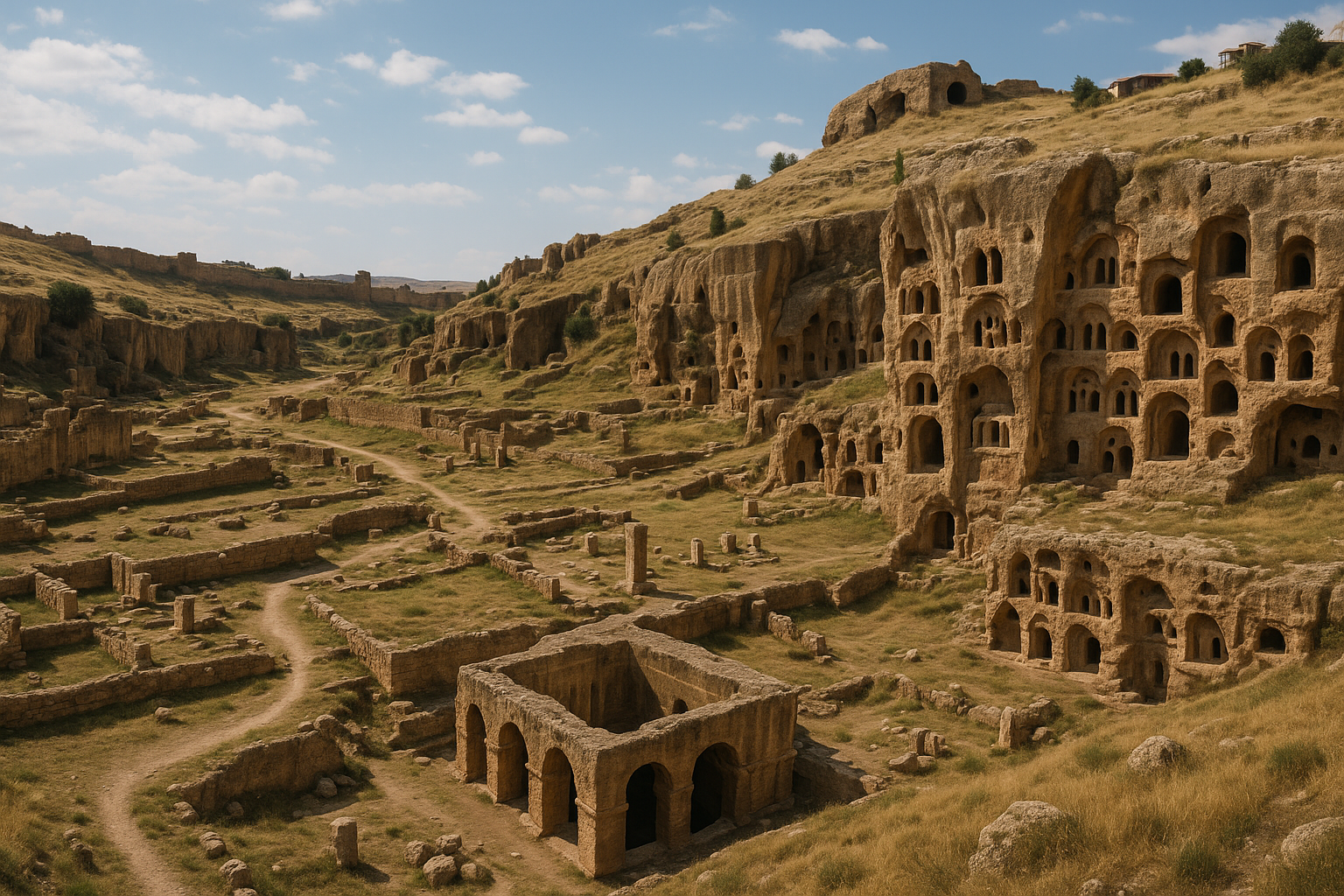
Дара, известная также как Анастасиополис и позднее Иустиниана Нова, — один из самых впечатляющих позднеантичных городов-крепостей Ближнего Востока. Основанная в 505 году н. э. византийским императором Анастасием I для защиты восточной границы империи от Сасанидской Персидской империи, она находится всего в 18 км от древнего Нисибиса (современный Нусайбин) и лишь в 5 км от бывшей римско-персидской границы. Часто называемая «Эфесом Месопотамии» за масштаб и качество руин, Дара сохраняет массивные городские стены, монументальные подземные цистерны, многоуровневый высеченный в скале некрополь и остатки развитой гидротехнической системы, не уступавшей ничему в тогдашнем средиземноморском мире.
Содержание
- Почему Дара важна
- География и расположение
- Историческая хронология
- Главные памятники
- Археологические работы
- Информация для посетителей
- Часто задаваемые вопросы
- Источники и дополнительное чтение
Почему Дара важна
-
Целенаправленно построенный военный мегаполис. В отличие от большинства древних городов, выраставших органически на протяжении веков, Дара была спланирована и построена в одну кампанию как полноценный гарнизонный город — стены, казармы, цистерны, церкви и бани, всё спроектировано с нуля.
-
Место великой победы Велизария. Битва при Даре (530 год н. э.), в которой молодой полководец Велизарий разбил численно превосходящие сасанидские силы благодаря новаторской траншейной тактике, была одной из важнейших римских военных побед за столетие и поворотным моментом в римско-персидских отношениях.
-
Инженерное чудо поздней античности. Водная инфраструктура Дары — включая плотину, отводившую реку Кордес, цистерны, вмещавшие более 10 000 кубических метров воды, и обширную подземную дренажную систему, — представляет одни из самых амбициозных гидротехнических сооружений VI века.
-
Драматический скальный некрополь. Многоуровневые гробницы, высеченные в известняковых утёсах у входа в город, охватывают период с VI по XIV век и дают яркий разрез изменяющихся погребальных традиций сквозь византийский, арабский и тюркский периоды.
-
Прозвище «Эфес Месопотамии». Сам масштаб и качество сохранности руин в полузасушливом месопотамском ландшафте принесли Даре это яркое сравнение, привлекающее всё больше внимания посетителей.
География и расположение
Дара расположена в районе Артуклу в провинции Мардин, в юго-восточном углу Турции, примерно в 30 км к юго-востоку от центра города Мардин. Современная деревня Огуз (ранее называвшаяся Дара) занимает часть древнего памятника.
| Особенность | Подробности |
|---|---|
| Координаты | 37,18° с. ш., 40,96° в. д. |
| Высота | ~750 м над уровнем моря |
| Расстояние до Нисибиса (Нусайбина) | 18 км к востоку |
| Расстояние до персидской границы | ~5 км (исторически) |
| Ближайший город | Мардин (примерно 30 км к северо-западу) |
| Ближайший аэропорт | Аэропорт Мардин (примерно 50 км) |
| Регион | Верхняя Месопотамия (Тур-Абдин) |
Ландшафт характеризуется полузасушливыми известняковыми холмами, прорезанными сезонными водотоками. Памятник был построен на трёх холмах, причём цитадель занимала наивысшую точку. Река Кордес (приток, проходящий через памятник) была одновременно ресурсом и инженерным вызовом — её отвод и управление стали центральными в замысле города.
Климат отличается крайне жарким, сухим летом (температура регулярно превышает 40 °C) и прохладными зимами. Эта суровая среда делает весну и осень идеальными сезонами для посещения.
Историческая хронология
Основание Анастасием I (505–507 гг. н. э.)
После разрушительной войны с Сасанидской Персией (502–506 гг. н. э.) император Анастасий I (правил в 491–518 гг.) осознал необходимость крупной крепости, чтобы закрепить месопотамскую границу Рима. Существовавший пограничный город Нисибис был уступлен Персии в 363 году н. э., оставив опасный пробел в римской обороне.
В 505 году н. э., пока персидский царь Кавад I был отвлечён войнами на востоке, Анастасий приказал построить новый укреплённый город у деревни Дара. Были собраны каменщики и рабочие со всей Месопотамии, и строительство шло с чрезвычайной поспешностью. Город был наделён:
- Массивными двойными стенами, окружавшими примерно 60 гектаров
- Цитаделью на самом высоком холме
- Казармами для постоянного гарнизона
- Складами для военных припасов
- Общественной баней и водными цистернами
- Церквами для гарнизона и гражданского населения
Новый город получил имя Анастасиополис в честь своего основателя и стал резиденцией дукса Месопотамии (военного командующего Месопотамии).
Перестройка при Юстиниане I (527–565 гг. н. э.)
По свидетельству историка Прокопия, поспешное первоначальное строительство привело к появлению стен низкого качества, быстро разрушавшихся в суровом климате. Император Юстиниан I (правил в 527–565 гг.) предпринял масштабную программу перестройки:
- Внутренние стены были надстроены на дополнительный этаж, удвоив их высоту примерно до 20 метров (66 футов).
- Башни были укреплены и подняты до трёх этажей, достигнув около 35 метров в высоту.
- Вокруг стен был выкопан наполненный водой ров.
- Река Кордес была отведена плотиной для снабжения города и лишения воды осаждающих врагов.
- Были построены дополнительные цистерны, церкви и гражданские здания.
Город был переименован в Иустиниану Нову в честь Юстиниана.
Битва при Даре (530 г. н. э.)
Самое знаменитое событие в истории Дары, битва при Даре, произошла в июне 530 года между византийскими силами численностью около 25 000 под командованием молодого полководца Велизария (около 25 лет) и сасанидской армией численностью примерно 40 000–50 000 под командованием Фируза (Перозеса).
Велизарий применил блестящее тактическое новшество: он приказал выкопать серию траншей перед городскими стенами, расположенных по схеме, направлявшей персидскую конницу в зоны поражения, оставляя при этом промежутки для римских контратак. Византийская тяжёлая конница и союзные гуннские всадники использовали эти промежутки с разрушительным эффектом.
Результатом стала решительная римская победа — первое крупное поражение Персии почти за столетие. Битва утвердила репутацию Велизария и влияла на римско-персидскую дипломатию ещё многие годы.
Осады и конфликты (540–604 гг. н. э.)
Стратегическое значение Дары делало её повторяющейся целью:
- 540 г. н. э.: Вторжение Хосрова I в Сирию обошло Дару, но дестабилизировало границу.
- 544 г. н. э.: Персы осадили Дару, но не смогли её взять.
- 573 г. н. э.: После долгой осады персы захватили Дару — разрушительный удар по римской пограничной обороне.
- 591 г. н. э.: Город был возвращён Риму в рамках мирного договора.
- 604 г. н. э.: Дара снова перешла из рук в руки во время возобновлённого конфликта.
Каждая осада вызывала ремонт и модификации укреплений, создавая многослойную археологическую летопись.
Арабское завоевание и упадок (с 639 г. н. э.)
В 639 году н. э. арабские мусульманские силы захватили Дару во время ранних исламских завоеваний. Утратив значение военного звена между двумя империями, стратегическая важность города быстро убывала. Заселение продолжалось в уменьшенном масштабе, но великая военная инфраструктура больше не поддерживалась.
В последующие века памятник служил местным сельскохозяйственным общинам. Высеченные в скале гробницы продолжали принимать погребения вплоть до XIV века, показывая, что некоторая форма поселения сохранялась ещё долго после того, как военная роль крепости закончилась.
Главные памятники
Городские стены
Двойная система стен Дары простиралась по периметру примерно на 4 км, окружая площадь около 60 гектаров на трёх холмах. При Юстиниане внутренняя стена достигала ~20 м в высоту, а башни поднимались до ~35 м — что делало их одними из наиболее грозных укреплений в мире VI века. Значительные участки нижних рядов сохранились, давая мощное представление об изначальном масштабе.
Великая цистерна (Цистерна-темница)
Самое впечатляющее сохранившееся сооружение Дары — это подземная цистерна, пещероподобная высеченная в скале камера высотой примерно 15 метров с водной ёмкостью, оцениваемой более чем в 10 000 кубических метров. Это примерно на 6 метров выше знаменитой стамбульской Базилики Цистерны (Еребатан Сарныджи).
Цистерна была высечена из живого известнякового скального основания и включает:
- Массивные опорные столбы, поднимающиеся из заполненного водой пола
- Арочное сводчатое перекрытие, охватывающее потолок
- Водные каналы, соединяющиеся с более широкой гидравлической сетью
- Свидетельства штукатурной гидроизоляции на внутренних стенах
Цистерна служила как стратегическим водным резервом во время осад, так и ежедневным источником снабжения гарнизона и гражданского населения.
Плотина и гидравлическая система
Одним из наиболее амбициозных вмешательств Юстиниана было строительство плотины для отвода реки Кордес в водную систему города. Эта плотина:
- Контролировала наводнения во время сезонных дождей
- Направляла воду в цистерны и распределительные каналы
- Лишала осаждающие армии доступа к воде
- Питала мельницы и мастерские внутри стен
Инженерное решение сопоставимо с современными ему римскими инфраструктурными проектами по масштабу и сложности.
Высеченный в скале некрополь
У входа в памятник стоит самая визуально драматичная особенность Дары: многоуровневый некрополь, высеченный в вертикальных известняковых утёсах. Гробницы расположены на трёх уровнях и охватывают необычайный временной диапазон с VI по XIV век:
- Самые ранние гробницы (VI век): Сложные высеченные в скале камеры с арочными входами, некоторые с резными крестами и христианской иконографией. Они наиболее впечатляющие архитектурно.
- Гробницы среднего периода: Более простые скальные ниши, отражающие меняющиеся погребальные традиции арабского и раннетюркского периодов.
- Поздние гробницы (вплоть до XIV века): Каменные саркофаги и простые ямные погребения, указывающие на продолжавшееся использование некрополя долго после военного упадка города.
Считается, что рельефные резьбы на некоторых фасадах гробниц символизируют христианскую веру в воскресение.
Церкви
В пределах стен были выявлены несколько церковных оснований, отражающих роль Дары как христианского гарнизонного города. К ним относятся:
- Большая базилика возле цитадели, вероятно, главная гарнизонная церковь.
- Меньшие приходские церкви, обслуживавшие разные кварталы города.
- Свидетельства позднего обращения в мечеть в некоторых сооружениях в исламский период.
Цитадель
Самый высокий из трёх холмов сохраняет основания цитадели — последней оборонительной позиции. С вершины цитадели видна вся обнесённая стенами территория, а также открываются командные виды в сторону Нисибиса (Нусайбина) на восток — направления, откуда обычно приходили персидские атаки.
Казармы и военная инфраструктура
Как целенаправленно построенный гарнизонный город, Дара содержала обширные военные кварталы:
- Блоки казарм для постоянного гарнизона
- Арсеналы и продовольственные склады
- Конюшни для кавалерийских лошадей
- Тренировочные площадки внутри стен
Хотя в основном сведённые к фундаментам, эти сооружения раскрывают систематическое военное планирование, стоявшее за замыслом города.
Археологические работы
В последние десятилетия Дара была предметом всё возрастающего археологического внимания. Ключевые исследовательские вехи включают:
- Обследования начала XX века: Западные учёные задокументировали видимые руины, особенно стены и некрополь, утвердив значимость памятника.
- Турецкие раскопочные кампании (2000-е — настоящее время): Систематические раскопки сосредоточились на расчистке и документировании цистерн, некрополя и линий стен. Великая цистерна была частично расчищена и открыта для ограниченного посещения.
- Картирование гидравлической системы: Исследователи проследили плотину, водные каналы и соединения цистерн, раскрывая полный масштаб инженерной программы Юстиниана.
- Консервация и управление памятником: Ведутся работы по развитию инфраструктуры для посетителей при сохранении хрупких известняковых сооружений.
Памятник находится в ведении Дирекции музея Мардина и Министерства культуры и туризма Турецкой Республики. Раскопки продолжаются ежегодно, и каждый сезон открываются новые участки.
Информация для посетителей
Как добраться
- На машине: Из центра Мардина двигайтесь на юго-восток по дороге на Нусайбин примерно 30 км. Памятник обозначен указателями возле деревни Огуз.
- Из Нусайбина: Двигайтесь на запад примерно 18 км по той же дороге.
- Общественным транспортом: Микроавтобусы между Мардином и Нусайбином проходят рядом с памятником; попросите высадить вас на повороте к Даре.
На месте
| Практическая деталь | Информация |
|---|---|
| Входная плата | Уточняйте текущий статус в Дирекции музея Мардина |
| Часы работы | Обычно световой день; проверяйте на месте |
| Расчётная длительность визита | 2–3 часа для тщательного осмотра |
| Рельеф | Каменистая, неровная поверхность; прочная обувь необходима |
| Климат | Очень жарко летом (40 °C+); берите достаточно воды |
| Тень | Очень ограничена; шляпа и солнцезащита необходимы |
| Удобства | Базовые; ближайшие полноценные услуги в Мардине |
Рекомендуемый маршрут
- Начните с некрополя — самого драматичного визуального введения в памятник, расположенного у въезда в деревню.
- Войдите в обнесённую стенами территорию и идите к великой цистерне. Если доступно, спуститесь, чтобы увидеть подземную камеру.
- Поднимитесь к цитадели для командных видов на весь памятник и месопотамский ландшафт.
- Проследите контур стены на участках, где укрепления лучше всего сохранились.
- Посетите церковные фундаменты и отметьте переход от христианского к исламскому использованию.
- Закончите в зоне плотины (если доступно), чтобы понять гидравлическую инженерию.
Лучшее время для посещения
- Весна (март–май): Идеальная температура, зелёный ландшафт, полевые цветы.
- Осень (сентябрь–ноябрь): Комфортное тепло, ясное небо.
- Лето: Опасно жарко; посещать только ранним утром или поздним вечером, если вообще.
- Зима: Прохладно и временами влажно; мало посетителей; атмосферно.
Совмещённые визиты
Дара естественно сочетается с другими памятниками региона Мардин:
- Старый город Мардин (30 км к северо-западу): Впечатляющий город на вершине холма с артукидской архитектурой, каменными домами и панорамными видами.
- Нусайбин (древний Нисибис) (18 км к востоку): Бывший римский пограничный город; церковь Святого Иакова и мечеть Зейнела Абидина.
- Мидьят (60 км к северо-востоку): Исторический сирийский христианский город с характерной архитектурой.
- Монастырь Дейрулзафаран (близ Мардина): Один из старейших действующих монастырей в мире.
- Хасанкейф (130 км к северу): Древний город на Тигре (частично затоплен плотиной Илысу; уточняйте текущий статус).
Часто задаваемые вопросы
Почему была построена Дара?
Дара была построена как целенаправленно созданная пограничная крепость для заполнения оборонительного пробела после того, как Рим потерял Нисибис в пользу Персии в 363 году н. э. Император Анастасий I приказал её построить в 505 году н. э., чтобы закрепить восточную границу против сасанидских атак.
Что значит прозвище «Эфес Месопотамии»?
Сравнение отражает масштаб и качество сохранности руин Дары — её массивные стены, подземные цистерны и высеченный в скале некрополь столь же впечатляющи в Месопотамии, как руины Эфеса на эгейском побережье.
Что произошло в битве при Даре?
В 530 году н. э. молодой полководец Велизарий командовал византийскими силами численностью около 25 000 против сасанидской армии численностью около 40 000–50 000. Используя новаторскую траншейную тактику и скоординированные кавалерийские контратаки, Велизарий одержал решительную победу — первое крупное поражение Рима над Персией почти за столетие.
Насколько велика великая цистерна?
Цистерна примерно 15 метров в высоту с расчётной вместимостью более 10 000 кубических метров воды. Она высечена в живой скале и примерно на 6 метров выше Базилики Цистерны в Стамбуле.
Безопасно ли посещать Дару?
Регион Мардин в целом безопасен для туризма. Однако, как и при любом путешествии по юго-восточной Турции, перед визитом проверяйте текущие официальные туристические рекомендации и местные условия. Сам памятник имеет неровный каменистый рельеф, поэтому физическая осторожность оправдана.
Насколько стары гробницы в некрополе?
Самые ранние гробницы датируются VI веком н. э. (одновременны самой крепости), тогда как самые поздние захоронения — XIV века, охватывая примерно 800 лет непрерывного использования сквозь византийский, арабский и тюркский периоды.
Измерения укреплений: подробное обследование
Недавние археологические обследования и раскопки уточнили размерные данные оборонительных сооружений Дары за пределами литературных описаний Прокопия:
| Особенность | Измерение | Источник / Метод |
|---|---|---|
| Общий периметр стены | ~4 км | Обследование; ~2,8 км прослеживается на поверхности |
| Толщина стены (средняя) | 3,70–3,80 м | Поперечный разрез при раскопках |
| Высота внутренней стены (юстиниановская фаза) | ~20 м (66 футов) по проекту; 15 м максимум сохранившейся | Прокопий; полевые измерения |
| Высота башен (юстиниановская фаза) | ~35 м (три этажа) по проекту | Прокопий, De Aedificiis II |
| Количество башен на контуре стены | 28 задокументировано | Обследование внутренней и внешней систем стен |
| Обнесённая стенами площадь | ~60 гектаров на трёх холмах | Топографическое обследование |
| Ширина рва | Переменная; заполнен водой при Юстиниане | Прокопий; данные раскопок |
Расхождение между описанной Прокопием высотой стены в 29 метров и измеренным сохранившимся максимумом в 15 метров значительно: оно отражает как литературную склонность преувеличивать имперские достижения, так и накопленные эффекты 1500 лет выветривания, землетрясений и растаскивания камня в суровом полузасушливом климате.
Комплекс цистерн: инженерные характеристики
Водная инфраструктура Дары состоит не из одной, а из нескольких цистернных единиц, каждая из которых выполняет особую функцию в системе гарнизонного снабжения:
| Цистерна | Размеры | Ёмкость | Метод строительства |
|---|---|---|---|
| Великая цистерна («Темница») | ~15 м высота потолка | ~10 000 м3 | Высечена в живом известняке; арочное сводчатое перекрытие |
| Параллельная ячеистая цистерна | 10 ячеек, каждая 50 м длиной × 4 м шириной × 18 м высотой | ~14 500 м3 в сумме | Высечена в скале с разделительными стенами |
| Вторичная цистерна | Меньшая камера | ~1 500 м3 | Высечена в скале; соединена с распределительными каналами |
Десятиячеистая параллельная цистерна — особенно сложное инженерное решение: разделяя массивный водный резерв на параллельные отсеки, система позволяла осушать отдельные ячейки для очистки или ремонта, не опустошая всё снабжение. Совокупная ёмкость цистерн Дары — превышающая 25 000 кубических метров — была бы достаточна, чтобы поддерживать гарнизон в 15 000–25 000 солдат и гражданских в течение нескольких месяцев в условиях осады.
Внутренние стены цистерн сохраняют следы гидравлической штукатурной гидроизоляции — римской инженерной техники, использовавшей известь, смешанную с молотой керамикой, для создания непроницаемой поверхности. Водные каналы, соединяющие цистерны с плотиной и распределительной сетью, можно проследить в скальном основании.
Агора и ремесленный квартал
Раскопки в зоне агоры выявили торговую и ремесленную инфраструктуру гарнизонного города:
| Тип сооружения | Количество | Размеры | Находки |
|---|---|---|---|
| Мастерские | 9 | ~5 × 5 м каждая (квадратный план) | Шлак от металлообработки, свидетельства производства керамики |
| Мастерские-жилища | 6 | Переменные; мастерская с пристроенными жилыми помещениями | Бытовая керамика, инструменты, личные вещи |
| Общинные погребальные отложения | — | В зоне некрополя | Извлечено более 2000 фрагментов скелетов |
Сочетания мастерская-жилище предполагают, что гражданское ремесленное население Дары жило рядом со своими рабочими местами — практичное устройство в укреплённом городе, где пространство внутри стен было в дефиците. Свидетельства металлообработки согласуются с ремонтом и производством оружия — ожидаемой деятельностью в военном гарнизоне.
Арочная плотина: гидравлическое новшество
Плотина Юстиниана через реку Кордес — одна из самых ранних задокументированных арочных плотин в истории инженерии. Её конструкция решала множество одновременных задач:
| Функция | Инженерное решение |
|---|---|
| Защита от наводнений | Плотина сдерживала сезонные потоки, ранее повреждавшие город |
| Водоснабжение | Канал отводил речной поток в систему цистерн и распределения |
| Лишение осаждающих воды | Контролируемый доступ к воде лишал снабжения осаждающие армии |
| Промышленное использование | Давление воды питало мельницы и мастерские внутри стен |
Арочная форма плотины — изгибаясь вверх по течению, чтобы передавать давление воды на скальные опоры — представляет продвижение по сравнению с более простыми гравитационными плотинами и демонстрирует, что позднеантичные инженеры понимали структурные преимущества изогнутых профилей плотин. Это помещает плотину Дары среди пионерских примеров технологии арочных плотин, предшествуя широкому распространению этой техники в средневековой и раннеевропейской инженерии.
Битва при Даре: боевой порядок (530 г. н. э.)
Следующая таблица реконструирует приблизительное расположение сил на основе рассказа Прокопия (История войн, книга I):
| Позиция | Византийские силы | Командующий | Персидские силы | Командующий |
|---|---|---|---|---|
| Центр | Пехота и спешившаяся конница за траншеями | Велизарий / Гермоген | Основной пехотный корпус | Перозес (Фируз) |
| Левый фланг | Конница | Бузес и Фарас | Кавалерийское крыло | Персидский младший командир |
| Правый фланг | Конница | Суника и Айган | Кавалерийское крыло | Баресман |
| Фланговый резерв | Гуннские союзные конные лучники | Гуннские вожди | — | — |
| Тыл / стены | Городской гарнизон, лучники на стенах | Командир гарнизона | — | — |
Общие силы: Византийские ~25 000 против персидских ~40 000–50 000. Потери: Персы ~8 000 убитых; византийские потери значительно легче. Битва показала, что численное превосходство можно преодолеть подготовкой местности (траншеи), координацией родов войск (пехота держит, конница контратакует) и использованием союзной кочевой конницы для фланговых манёвров.
Источники и дополнительное чтение
- Wikipedia -- Dara (Mesopotamia)
- Wikipedia -- Battle of Dara
- Turkish Archaeological News -- Dara
- Turkish Museums -- Mardin Dara Archaeological Site
- Museum of Wander -- Dara Ancient City
- Sailingstone Travel -- Dara Ancient City
- Columbia University MCID -- Dara
- Прокопий -- De Aedificiis (О постройках), книга 2 (об укреплении Дары Юстинианом)
- Прокопий -- История войн, книга 1 (о битве при Даре)
- Whitby, M. -- "Procopius and the Development of Roman Defences in Upper Mesopotamia" (BAR, 1986)
Велизарий и искусство позднеантичной войны
Битва при Даре (530 г. н. э.) изучается в военных академиях по сей день как мастер-класс по оборонительному тактическому новшеству. Понимание подхода Велизария углубляет любой визит на памятник:
Стратегический контекст
К 530 году Рим и Персия безрезультатно воевали десятилетиями. Римская полевая армия в Месопотамии уступала сасанидам по численности конницы. Велизарий, назначенный magister militum per Orientem (Магистр воинов Востока) в исключительно молодом возрасте около 25 лет, должен был компенсировать персидское численное превосходство тактической изобретательностью.
Система траншей
Велизарий приказал выкопать серию взаимосвязанных траншей на равнине перед стенами Дары. Траншеи были расположены в крестообразной схеме, которая:
- Разрушала натиск персидских кавалерийских атак
- Направляла вражеские силы в зоны поражения, где римские лучники и пехота имели преимущество
- Оставляла намеренные промежутки, заманивавшие персидские части в подготовленные засадные позиции
- Позволяла римской коннице контратаковать через промежутки в критические моменты
Роль союзной конницы
Велизарий разместил гуннских союзных всадников на флангах, где их мобильность и стрельба из лука могли использовать беспорядок, вызванный системой траншей. Когда персидская конница приходила в беспорядок в траншейном лабиринте, гунны наносили удар с флангов с разрушительным эффектом.
Исход
Персы потеряли около 8000 убитыми и ещё больше пленными. Победа стала первым крупным поражением Рима над Персией почти за столетие, восстановив римский престиж на восточной границе и положив начало легендарной карьере Велизария.
Идя по равнине перед стенами Дары, посетители всё ещё могут оценить топографию, которой воспользовался Велизарий — плоскую землю, идеальную для конницы, стены, обеспечивающие надёжную тыловую позицию, и узкие подходы, которые система траншей превратила в зону уничтожения.
Водная инженерия Дары в контексте
Гидравлическая инфраструктура Дары заслуживает сравнения с другими великими водно-инженерными проектами поздней античности:
| Система | Местоположение | Дата | Ёмкость / Масштаб |
|---|---|---|---|
| Великая цистерна Дары | Мардин, Турция | VI век н. э. | ~10 000 м3, 15 м высоты |
| Базилика Цистерна (Еребатан) | Стамбул, Турция | VI век н. э. | ~80 000 м3, 9 м высоты |
| Цистерна Бинбирдирек | Стамбул, Турция | IV/VI век н. э. | ~40 000+ м3 |
| Римские цистерны в Карфагене | Тунис | II век н. э. | ~50 000+ м3 |
| Плотина и отвод Дары | Мардин, Турция | VI век н. э. | Полный отвод реки |
Хотя цистерна Дары меньше по объёму, чем великие цистерны Стамбула, она выше (15 м против 9 м у Базилики Цистерны) и высечена из живой скалы, а не построена с колоннами и кирпичными сводами. Плотина, отводившая реку Кордес, представляет совершенно иной класс инженерии — управление действующим водотоком одновременно для снабжения и лишения врага.
Интегрированный характер водной системы Дары — плотина, канал, цистерна, распределительная сеть и дренаж — делает её одним из наиболее полных сохранившихся примеров позднеантичного военно-гидравлического планирования.
Жизнь на границе
Дара была не просто крепостью — это был живой город, где тысячи солдат и гражданских сосуществовали на самой опасной границе империи:
- Гарнизонная жизнь: Здесь были размещены солдаты limitanei (пограничные войска) и comitatenses (полевая армия), поддерживавшие готовность против персидской атаки. Их казармы, столовые и тренировочные площадки заполняли большую часть обнесённой стенами территории.
- Гражданское население: Город населяли купцы, ремесленники, духовенство и их семьи. Рынки снабжали как гарнизон, так и гражданские нужды.
- Религиозное разнообразие: Как византийский город, Дара содержала православные христианские церкви, но более широкий регион (Тур-Абдин) был домом для сирийских христианских общин с их собственными отличительными богословскими традициями.
- Дипломатическая функция: Как резиденция дукса Месопотамии, Дара служила площадкой для дипломатических переговоров с персидскими посланниками, делая её точкой культурного контакта между империями.
- Экономическая деятельность: Потребность гарнизона в припасах порождала значительную местную экономическую деятельность: земледелие, животноводство, металлообработка и текстильное производство — всё служило военному спросу.
Глоссарий ключевых терминов
| Термин | Определение |
|---|---|
| Анастасиополис | Изначальное имя Дары, в честь императора Анастасия I |
| Иустиниана Нова | Переименована при императоре Юстиниане I |
| Дукс Месопотамии | Римский военный командующий месопотамской границы |
| Сасаниды | Персидская династия (224–651 гг. н. э.), правившая Ираном и Месопотамией |
| Limitanei | Римские пограничные гарнизонные войска |
| Comitatenses | Римские мобильные полевые армейские части |
| Цистерна | Подземная камера для хранения воды |
| Некрополь | Кладбище; буквально «город мёртвых» |
| Прокопий | Византийский историк (ок. 500–565 гг. н. э.), задокументировавший историю Дары |
| Велизарий | Византийский полководец (ок. 505–565 гг. н. э.), выигравший битву при Даре |