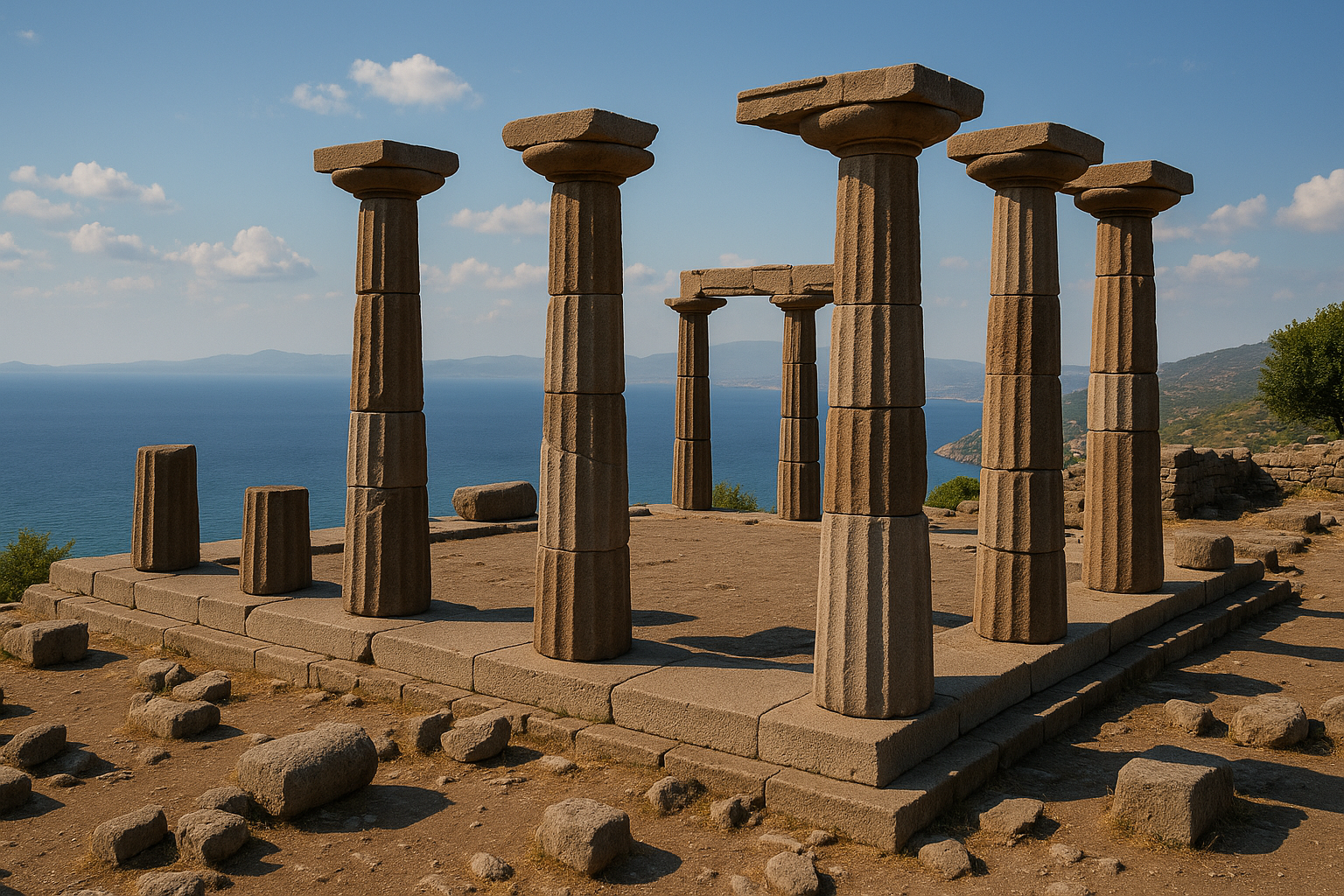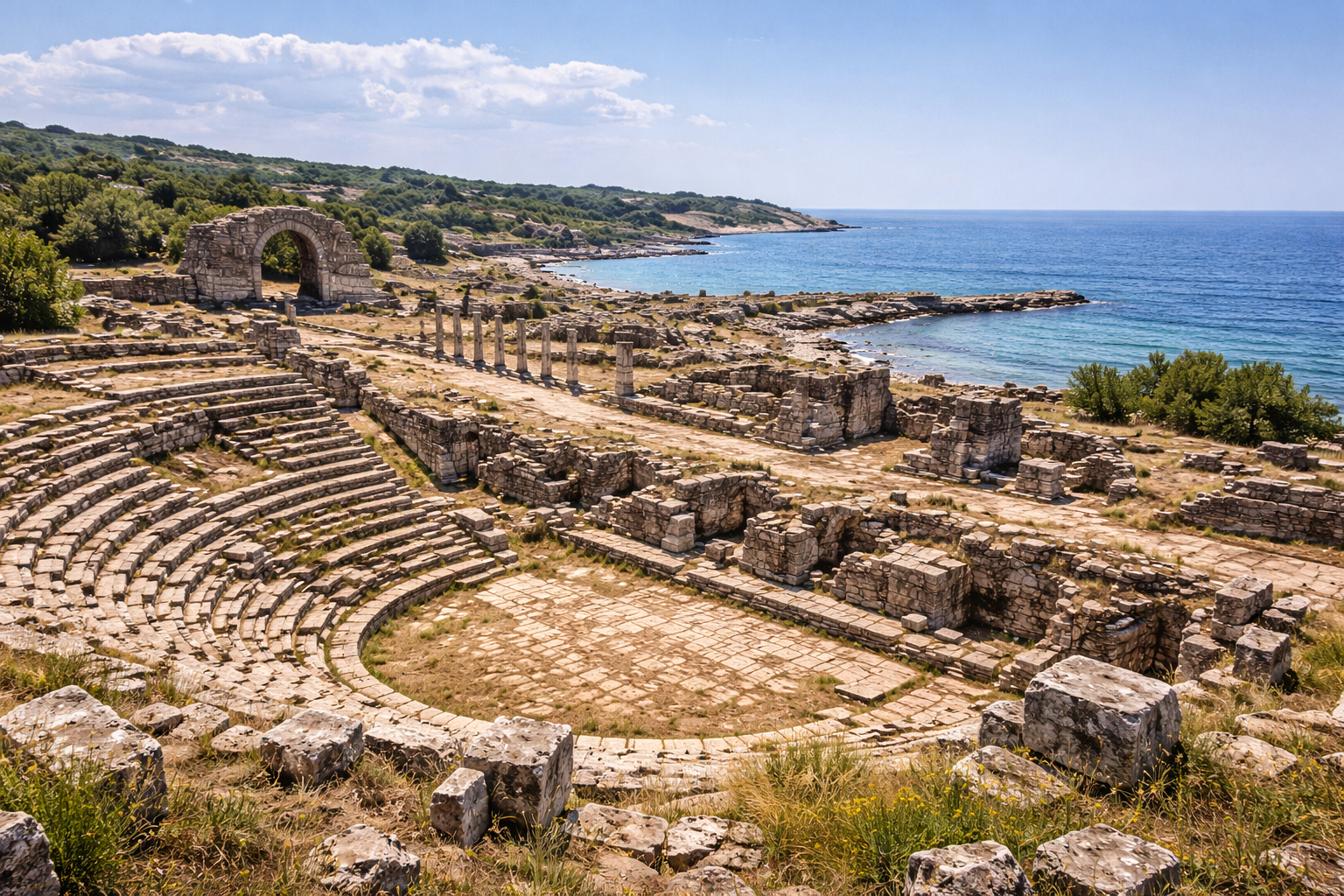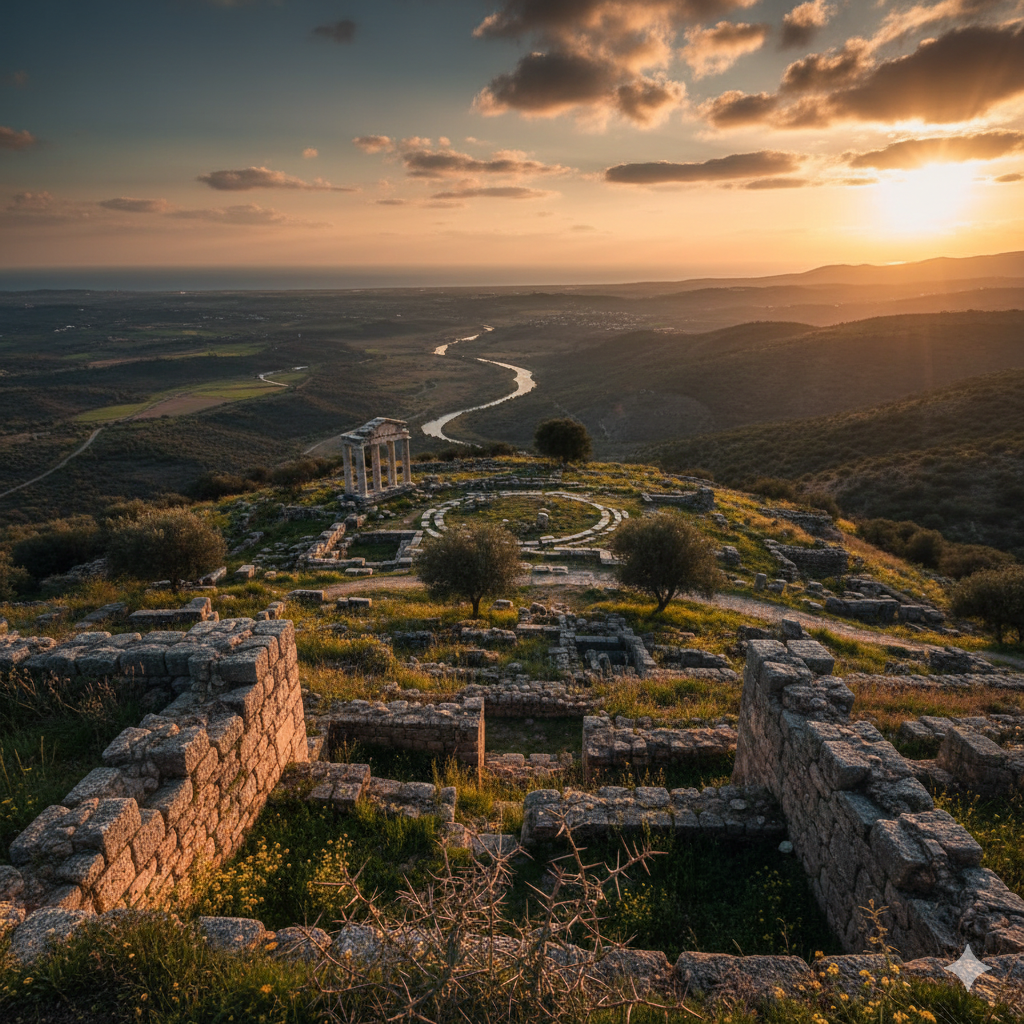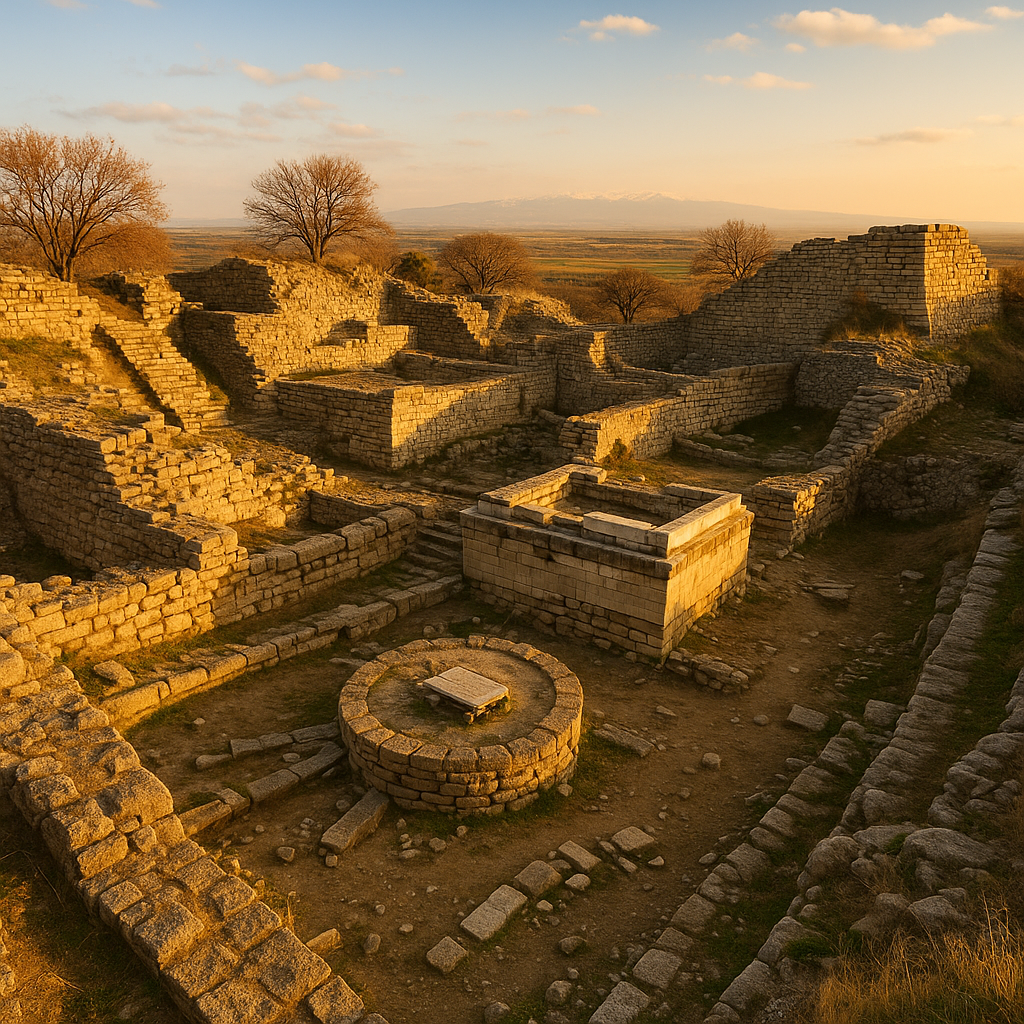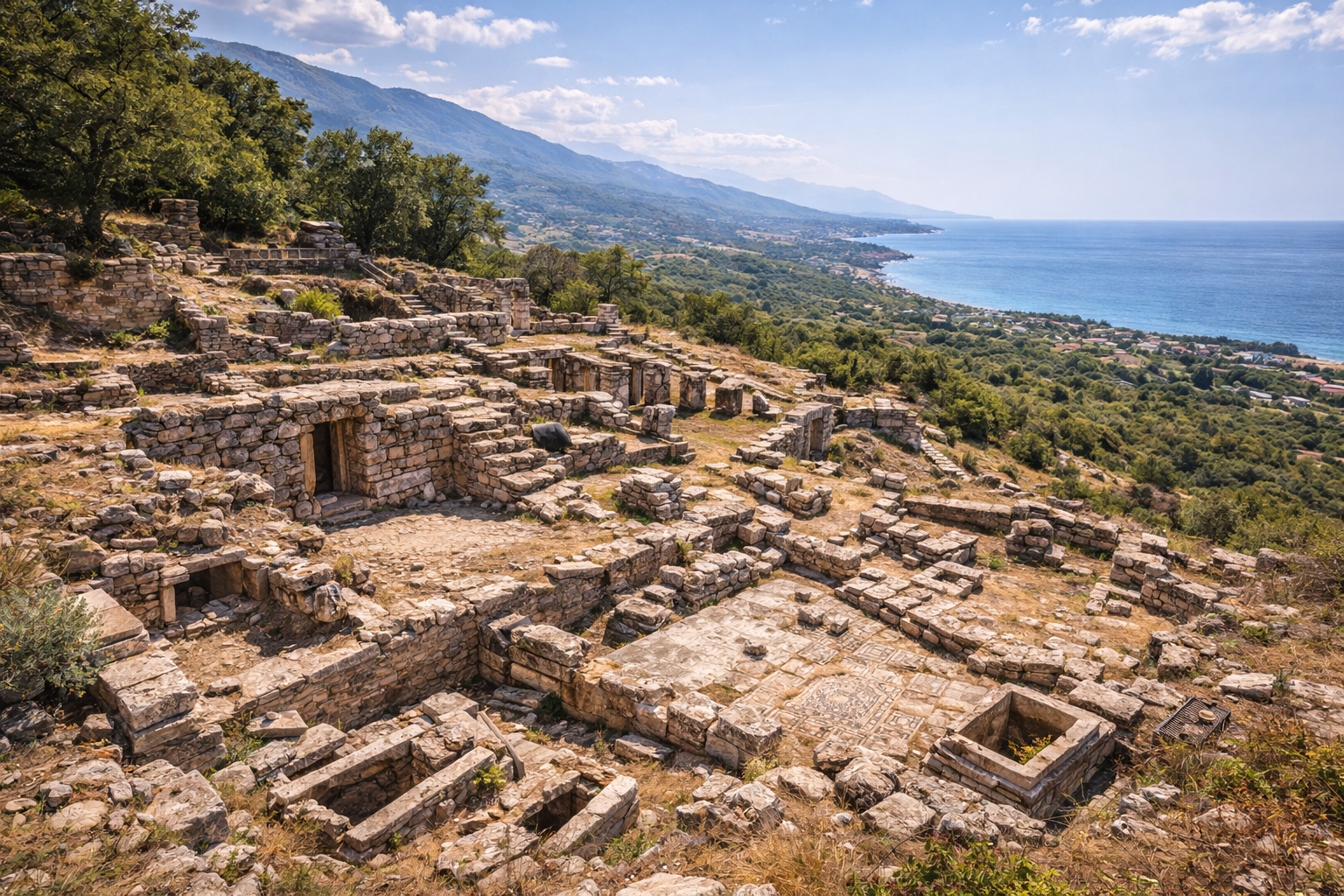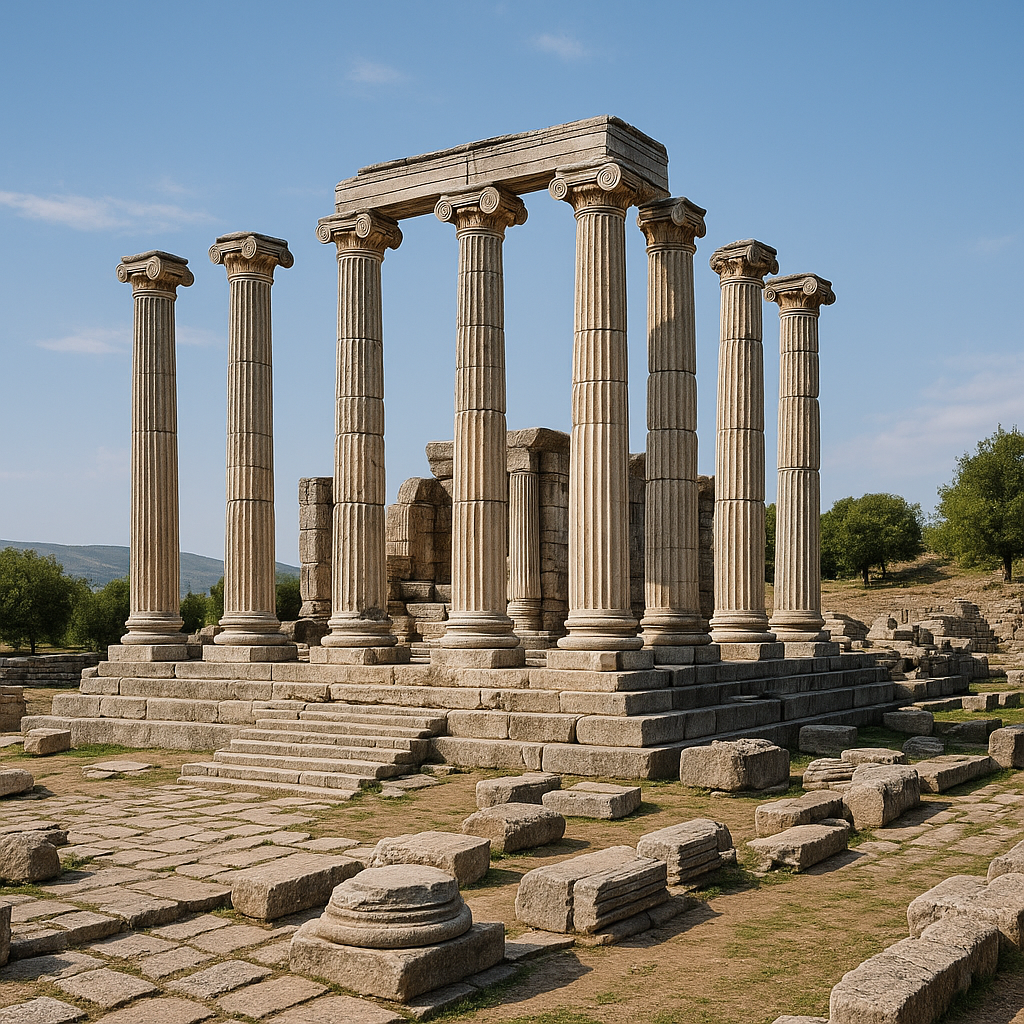
معبد أبولو سمينثيوس (السمينثيون) يقع في قرية غولبينار، منطقة أيواجيك في محافظة تشاناقالي، على الساحل الإيجي الشمالي الغربي لتركيا. وهو أحد أهم الأضرحة الهلنستية في منطقة الترواد القديمة. اللقب سمينثيوس -- ويعني "سيد الفئران" -- يشير إلى دور أبولو كحامي ضد القوارض الناقلة للطاعون، عبادة جذورها تمتد إلى الألفية الثانية ق.م. المعبد نفسه، الذي بُني نحو 150 ق.م بالطراز الأيوني pseudodipteral، يحتفل بـنقوش الإفريز السردية التي تصور مشاهد من إلياذة هوميروس، مما يجعله تقاطعًا استثنائيًا بين الدين والعمارة والأدب الملحمي. الضريح مدرج في القائمة المؤقتة لليونسكو منذ 2014، اعترافًا بقيمته الثقافية العالمية المتميزة.
جدول المحتويات
- لماذا يُعدّ أبولو سمينثيوس مهمًا
- الجغرافيا والموقع
- الخط الزمني التاريخي
- أبرز الآثار
- عبادة أبولو سمينثيوس
- إفريز الإلياذة
- الأعمال الأثرية
- معلومات الزائر
- الأسئلة الشائعة
- المصادر وقراءات إضافية
لماذا يُعدّ أبولو سمينثيوس مهمًا
-
مشهد افتتاحي للأدب الغربي: يُستحضر السمينثيون مباشرة في الكتاب الأول من إلياذة هوميروس (نحو القرن 8 ق.م). يصلي الكاهن الطروادي خريسيس إلى "أبولو سمينثيوس" لمعاقبة اليونانيين بالطاعون لرفضهم إعادة ابنته خريسيس. هذا يجعل الضريح أحد المواقع القديمة القليلة المذكورة صراحة في أقدم عمل باقٍ للأدب الغربي.
-
لقب عبادة فريد: أبولو سمينثيوس ("سيد الفئران") هو المثال المعروف الوحيد لعبادة أبولو المرتبطة بالفئران في الأناضول. الطبيعة الوقائية لهذه العبادة -- استحضار أبولو لطرد الفئران الناقلة للطاعون -- تعكس مخاوف زراعية قديمة ومُؤكدة بتماثيل الفئران النذرية المكتشفة خلال الحفريات.
-
تحفة العمارة الهلنستية: المعبد، المؤرخ بنحو 150 ق.م، يتبع التخطيط pseudodipteral المنسوب إلى المهندس الثوري هيرموجينيس من برييني. يخلق هذا التخطيط الانطباع البصري بصف عمدي مزدوج بينما يترك مساحة إضافية حول الـ cella الداخلية، منتجًا تأثيرًا من الخفة والأناقة المكانية أثرت على تصميم المعبد الروماني لقرون.
-
نقوش إفريز الإلياذة: صوّر الإفريز المنحوت الذي يمتد على طول الجزء الخارجي للمعبد مشاهد دراماتيكية من دورة حرب طروادة. تم استرداد حوالي 24 مترًا فقط من الإفريز المقدر بـ 120 مترًا، لكن هذه الشظايا تشكل بعضًا من أرقى المنحوتات السردية من الحقبة الهلنستية في الأناضول. الجمع بين الموضوعات الأدبية الملحمية والنحت المعماري فريد تقريبًا بين المعابد الهلنستية الباقية.
-
عصور ما قبل التاريخ الكالكوليتية: كشفت الحفريات تحت الضريح عن مستوطنة كالكوليتية مؤرخة بين 5200 و4800 ق.م، مما يدل على أن هذا الموقع كان موقعًا سكنيًا مهمًا قبل وقت طويل من الحقبة اليونانية، مع أكثر من سبعة آلاف عام من الوجود البشري في نفس المكان.
-
القائمة المؤقتة لليونسكو: أُضيف السمينثيون إلى قائمة تركيا المؤقتة للتراث العالمي لليونسكو في 2014 (المرجع 6242)، اعترافًا بقيمته الثقافية المتميزة كضريح يربط الملحمة الهوميرية والممارسة الدينية الفريدة والابتكار المعماري الهلنستي.
الجغرافيا والموقع
يقع الضريح في منطقة ساحلية خصبة بالقرب من قرية غولبينار، على بعد نحو 25 km جنوب غرب أيواجيك ونحو 75 km جنوب وسط مدينة تشاناقالي. يحتل الموقع تضاريس مائلة بلطف بالقرب من ساحل بحر إيجة، مع إطلالات نحو جزيرة ليسبوس (ميديلي) في الأيام الصافية.
السياق الساحلي والزراعي
كانت المستوطنة القديمة لـهاماكسيتوس (المدينة المرتبطة بالضريح) مجتمع مرفأ صغير. وفر موقع الضريح إمكانية الوصول عن طريق الطرق البرية والبحرية، مما يجعله وجهة حج طبيعية للمجتمعات في جميع أنحاء الترواد وجزر شمال شرق بحر إيجة. تتميز المنطقة المحيطة ببساتين الزيتون والشجيرات المتوسطية، متوافقة مع العبادة الزراعية لأبولو سمينثيوس كحامي للحصاد ضد آفات القوارض. حتى اليوم، تحافظ قرية غولبينار على طابعها الزراعي، مع إنتاج زيت الزيتون كمعيشتها الأساسية.
المناظر الأثرية للترواد
يقع السمينثيون داخل المنطقة الأوسع لـالترواد (المنطقة المحيطة بطروادة القديمة)، مما يجعله جزءًا من مناظر أثرية كثيفة بشكل ملحوظ. في غضون قيادة لمدة ساعتين من المعبد، يمكن للزوار الوصول إلى:
- طروادة (Truva): نحو 60 km شمالًا، المدينة الأسطورية لحرب طروادة وموقع تراث عالمي لليونسكو.
- الإسكندرية تروآس: نحو 20 km شمال شرق، مدينة ميناء هلنستية رومانية رئيسية بحمامات ضخمة وأسوار مدينة.
- آسوس (بهرامكالي): نحو 40 km جنوب شرق، مدينة يونانية أركاييكية بأكروبوليس دراماتيكي يطل على بحر إيجة.
- نياندريا: مستوطنة يونانية مبكرة في التلال شرق غولبينار.
يجعل تركيز المواقع القديمة هذا الترواد الجنوبية الغربية إحدى أغنى المناطق الأثرية في شرق البحر المتوسط.
الخط الزمني التاريخي
الحقبة الكالكوليتية (نحو 5200--4800 ق.م)
كشفت الحفريات تحت الضريح عن مستوطنة كالكوليتية مهمة، بما في ذلك الأدوات الحجرية والفخار وبقايا السكن وحفر الأعمدة وحفر التخزين. دفع هذا الاكتشاف التاريخ البشري للموقع إلى الوراء أكثر من سبعة آلاف عام، مما يدل على أن الموقع جذب الاستيطان قبل وقت طويل من وصول المستعمرين اليونانيين. على الأرجح جذبت الينابيع الطبيعية والتربة الساحلية الخصبة هذه المجتمعات الزراعية المبكرة.
العصر البرونزي وأصول العبادة المبكرة (نحو 2000--1200 ق.م)
وفقًا للتقاليد الأدبية القديمة، جُلبت عبادة أبولو سمينثيوس إلى الترواد من قبل المهاجرين من كريت نحو عام 2000 ق.م. يُقال إن الكاهن كرينيس أسس العبادة بعد أن قضمت الفئران الأشرطة الجلدية لدروع المحاربين الأعداء، التي فُسرت على أنها تدخل إلهي من أبولو. في حين أن الأدلة الأثرية المباشرة على نشاط العبادة في العصر البرونزي في هذا الموقع المحدد محدودة، فإن قدم لقب سمينثيوس مدعوم بالإشارات الهوميرية والتقاليد الإقليمية. كانت الترواد منطقة رئيسية للتفاعل بين الحضارات الأناضولية والإيجية خلال العصر البرونزي المتأخر.
الحقبتان الأركاييكية والكلاسيكية (نحو 700--330 ق.م)
يظهر السمينثيون في إلياذة هوميروس (مؤلفة نحو القرن 8 ق.م) كضريح مُنشأ. خلال الحقبة الكلاسيكية، كانت هاماكسيتوس -- المستوطنة المرتبطة -- جزءًا من المناظر السياسية الأوسع للترواد، مرت عبر فترات السيطرة الفارسية والعضوية في الرابطة الديلية (التحالف الأثيني) والحكم الذاتي المحلي. حافظ الضريح على وظيفته الدينية طوال هذه التغيرات السياسية، يعمل كمركز حج إقليمي. تظهر العملات المسكوكة في هاماكسيتوس خلال هذه الفترة أحيانًا أبولو مع فأر عند قدميه، مما يؤكد الأيقونوغرافيا البصرية للعبادة.
الحقبة الهلنستية (نحو 330--30 ق.م)
مرحلة البناء الرئيسية. نحو 150 ق.م، بُني المعبد الأيوني الكبير، يتبع التخطيط pseudodipteral المرتبط بهيرموجينيس من برييني، أكثر مهندسي العصر الهلنستي ابتكارًا. نُحتت نقوش الإفريز التي تصور مشاهد الإلياذة خلال هذه الفترة، وزُيّن الضريح بالأروقة والمذبح والمباني المساعدة. تلقى البناء على الأرجح رعاية من إحدى الممالك الخلف، ربما الأتاليون من بيرغامون، الذين سيطروا على الكثير من الترواد خلال هذه الفترة. كان البرنامج النحتي الطموح للمعبد -- بإفريزه السردي البالغ 120 مترًا -- من بين أكثر المخططات الزخرفية تفصيلاً لأي معبد هلنستي في الأناضول.
الحقبة الرومانية (30 ق.م -- نحو 400 م)
استمر الضريح في العمل تحت الحكم الروماني. احتلت الترواد مكانة خاصة في الذاكرة الثقافية الرومانية بسبب ارتباطها بالأصول الطروادية التي ادعتها روما (عبر إينياس). ربما ضمن هذا الاتصال استمرار الرعاية الإمبراطورية للضريح. قبر روماني تم اكتشافه عام 2023 بالقرب من مجمع الضريح يؤكد الاستخدام المستمر للموقع للأغراض الاحتفالية والدفنية حتى الحقبة الإمبراطورية. تطورت مستوطنة هاماكسيتوس كبلدة رومانية صغيرة ببنيتها التحتية المدنية الخاصة.
العصور القديمة المتأخرة والهجر (نحو 400--600 م)
مثل العديد من الأضرحة الوثنية، سقط السمينثيون من الاستخدام خلال تنصير الإمبراطورية الرومانية في القرنين 4-5 الميلادي. تم استخراج الموقع جزئيًا لمواد البناء في القرون اللاحقة، وأُزيلت العديد من أعمدة المعبد والأعضاء المعمارية. ومع ذلك، نجت منصة المعبد وأجزاء كبيرة من الهيكل بسبب موقع الموقع النائي نسبيًا.
دور الضريح في مجتمع الترواد
كان السمينثيون أكثر بكثير من مكان للعبادة. بصفته ثاني أهم ضريح في منطقة الترواد، كان يعمل كـمركز اجتماعي واقتصادي وثقافي للمجتمعات المحيطة. خلال المهرجانات الكبرى، كان الحجاج والتجار من جميع أنحاء الترواد وجزر شمال شرق بحر إيجة وربما خارجها يتجمعون في الضريح، مما يخلق سوقًا مؤقتًا وتجمعًا اجتماعيًا. كانت تضحيات الحيوانات في المذبح متبوعة بالولائم الجماعية، مما يعزز الروابط بين المجتمعات. كما أعطى دور الضريح كوسيط بين البشر والإلهي للكهنوته نفوذًا سياسيًا كبيرًا في الشؤون الإقليمية. يمكن فهم الاستثمار في بناء المعبد الضخم نحو عام 150 ق.م كبيان للطموح المدني من قبل المجتمعات التي مولته.
أبرز الآثار
معبد أبولو سمينثيوس
محور الضريح. الميزات المعمارية الرئيسية:
- الطراز: الترتيب الأيوني، التخطيط pseudodipteral -- ابتكار تصميمي يرتب صفًا واحدًا من الأعمدة المنفصلة حول الـ cella ولكنه يترك مساحة الصف الثاني (الداخلي) فارغة، مما يخلق ممرًا مغطى واسعًا بشكل غير عادي
- الأبعاد: نحو 40 × 23 مترًا عند مستوى الـ stylobate
- الأعمدة: 8 أعمدة على الجبهة (octastyle) و14 على الجوانب، يبلغ ارتفاعها أصلاً نحو 10 m. يخلق ترتيب pseudodipteral مساحة ممر واسعة بشكل غير عادي حول الـ cella
- المادة: الجرانيت المحلي للأعمدة والأنديزيت/الرخام للعناصر الزخرفية
- الإفريز: امتد إفريز الإلياذة على طول الجدران العلوية للجزء الخارجي للـ cella، يمتد أصلاً نحو 120 مترًا في الطول الإجمالي
- الحالة الحالية: أُعيد تشييد عدة أعمدة خلال الترميم. منصة المعبد (stylobate)، وقواعد الأعمدة، وأقسام جدارية كبيرة مرئية. هيكل سقف وقائي حديث يغطي منطقة المعبد الرئيسية، يوفر الظل والحماية من الطقس للعناصر المعمارية الباقية. شظايا الإفريز معروضة في الموقع وفي متحف تشاناقالي الأثري
المذبح
يقع شرق المعبد، كما هو معتاد في تصميم الضريح اليوناني. خدم المذبح كموقع رئيسي لتضحية الحيوانات -- العمل الطقسي المركزي للدين اليوناني. تشير أبعاد المذبح إلى أنه يمكن أن يستوعب التضحيات الجماعية الكبرى خلال فترات المهرجانات.
الأروقة والـ Stoa
ممرات معمدة تحيط بحرم المعبد، توفر مساحة محمية للزوار والحجاج والقرابين النذرية. ساعدت هذه الهياكل على تحديد الـ temenos المقدس (حدود الضريح) وخلقت إطارًا معماريًا رسميًا للمعبد ضمن المناظر الطبيعية. قدمت الممرات المظللة للأروقة ملجأ خلال أشهر الصيف الحارة وعملت أيضًا كمناطق عرض للهدايا النذرية خلال فترات المهرجانات.
الينبوع المقدس
ينبوع بالقرب من الضريح معروف منذ العصور القديمة. في عبادة أبولو، كانت المياه تحمل قوة تطهيرية، وربما لعب هذا الينبوع دورًا مركزيًا في احتفالات التطهير (lustration). كما خدم ماء الينبوع احتياجات المياه اليومية للضريح والمستوطنة المحيطة. كانت الينابيع المقدسة المماثلة جزءًا لا يتجزأ من ممارسة العبادة في أضرحة أبولو الأخرى، بما في ذلك ديديما وكلاروس.
المقبرة
تقع مقبرة (jبانة) شمال غرب المعبد. كشفت الحفريات في هذه المنطقة عن قبور من فترات مختلفة، بما في ذلك دفن عمره 1700 عام وقبر روماني ضخم عمره 2000 عام تم اكتشافه عام 2023 من قبل علماء الآثار من جامعة تشاناقالي أونسكيز مارت. تشير هذه المكتشفات إلى أن منطقة الضريح خدمت كمنطقة دفن للنخب المحلية عبر قرون متعددة.
بقايا الاستيطان الكالكوليتي
مرئية في الأقسام المنقبة تحت مستوى الضريح، بما في ذلك حفر الأعمدة وحفر التخزين وشظايا الفخار المبكر والأدوات الحجرية. توفر هذه البقايا نافذة ستراتيغرافية نادرة على أكثر من سبعة آلاف عام من النشاط البشري في موقع واحد. على الأرجح أن سكان الكالكوليتي عاشوا من خلال الزراعة وصيد الأسماك، مستفيدين من التربة الساحلية الخصبة ومصادر المياه الطبيعية في المنطقة.
عبادة أبولو سمينثيوس
اللقب سمينثيوس مشتق من كلمة سمينثوس، التي تعني "فأر" في لهجة قد ترتبط باللغات الكريتية أو ما قبل اليونانية. تعكس العبادة وظيفة دينية وقائية (لتجنب الشر):
- حماية زراعية: كانت الفئران والجرذان مدمرة لمخازن الحبوب في العصور القديمة. من خلال عبادة أبولو باسم "سيد الفئران"، سعى المزارعون إلى الحماية الإلهية لمحاصيلهم. جعل اقتصاد الترواد المنتج للحبوب التحكم في القوارض مصدر قلق وجودي.
- ارتباط بالطاعون: يصف افتتاح الإلياذة أبولو سمينثيوس وهو يرسل الطاعون على الجيش اليوناني. يعكس هذا الفهم القديم بأن القوارض والمرض مرتبطان -- بصيرة دقيقة بشكل ملحوظ نظرًا لعلم الأوبئة الحديث.
- أسطورة التأسيس: وفقًا للكاتب القديم إيليان، تأسست العبادة عندما قضمت الفئران الأشرطة الجلدية لأقواس المحاربين الأعداء، مما أدى إلى هزيمتهم. فسر الكاهن المحلي كرينيس هذا على أنه تدخل أبولو وأنشأ العبادة شكرًا.
- الأدلة النذرية: كشفت الحفريات في السمينثيون عن تماثيل فئران صغيرة قُدمت كنذور، تؤكد مركزية ارتباط الفأر في ممارسة العبادة. هذه الفئران من التيراكوتا والبرونز من بين أكثر القرابين النذرية تميزًا من أي ضريح يوناني.
- الأيقونوغرافيا: تصور العملات والتماثيل القديمة من المنطقة أحيانًا أبولو مع فأر عند قدميه، مما يعزز الهوية البصرية لهذه العبادة الفريدة. تظهر نسخة شهيرة من العصر الروماني للتمثال الطقسي أبولو يدوس على فأر.
- تقليد حي: بشكل ملحوظ، لا تزال الفئران تسكن الموقع اليوم وتُعتبر صلة حية بالعبادة القديمة. يلتقي بها الزوار بشكل متكرر بين الأطلال، والمجتمع المحلي يعتبر وجودها جزءًا من تراث الضريح.
اعتُبر السمينثيون ثاني أهم ضريح في الترواد، بعد معبد أثينا في طروادة نفسها.
إفريز الإلياذة
الإفريز المنحوت هو الميزة الفنية الأكثر احتفاءً بالمعبد وأحد أرقى الأمثلة الباقية على النحت السردي الهلنستي في الأناضول.
الحجم والتصميم
امتد الإفريز أصلاً على طول الجدران العلوية الخارجية للـ cella لطول إجمالي مقدر بنحو 120 مترًا. هذا جعله أحد أطول الأفاريز السردية المتواصلة لأي معبد هلنستي. تم استرداد حوالي 24 مترًا فقط من ألواح الإغاثة من خلال التنقيب -- نحو 20% من الأصل.
المشاهد المحددة
تصور الشظايا المستردة حلقات من دورة حرب طروادة، بما في ذلك:
- مشاهد المعارك بين المحاربين اليونانيين والطروادين، مع تكوينات ديناميكية تظهر القتال، والمحاربين الساقطين، والتدخل الإلهي
- مواكب الجنازات والحداد على الأبطال
- مشاهد المجلس الإلهي والتفاعل بين الآلهة والبشر
- مشاهد قتال العربات مع تصوير مفصل للخيول والمعدات
الجودة الفنية
جودة النحت عالية بشكل استثنائي، مع تكوينات ديناميكية وتصوير مفصل للدروع والملابس وتعبيرات الوجه. أظهر النحاتون إتقان الأسلوب الهلنستي "الباروكي"، مع وضعيات دراماتيكية، ونحت إغاثة عميق، وتعبيرية عاطفية. يقارن مؤرخو الفن الجودة بإفريز مذبح بيرغامون الشهير (المذبح الكبير لزيوس)، مما يشير إلى أن نحاتي السمينثيون ربما تم تدريبهم في ورش عمل مماثلة.
العرض والحفظ
ألواح الإفريز المستردة معروضة في الموقع تحت هيكل السقف الواقي وفي متحف تشاناقالي الأثري. على الأرجح أن 80% المتبقية من الإفريز تقع مدفونة تحت أجزاء غير منقبة من الموقع أو أُزيلت في العصور القديمة والفترات اللاحقة لإعادة الاستخدام. تستمر إمكانية اكتشاف شظايا إضافية للإفريز في مواسم التنقيب المستقبلية في جعل السمينثيون توقعًا أثريًا مثيرًا.
الأعمال الأثرية
فرانك كالفيرت (1866)
الدبلوماسي الأمريكي البريطاني وعالم الآثار الرائد -- نفس الشخصية التي حددت لأول مرة طروادة في حصارلق -- أجرى التحقيقات الأولية في موقع السمينثيون عام 1866، تسجيل المكتشفات السطحية وتحديد موقع المعبد. وضع عمل كالفيرت الأساس للتنقيب المنهجي المستقبلي.
كوشكون أوزغونيل وجامعة أنقرة (1980--2019)
أُجريت الحفريات المنهجية منذ 1980 تحت إشراف الأستاذ كوشكون أوزغونيل من جامعة أنقرة. هذا المشروع الطويل الأمد:
- كشف عن منصة المعبد والأعمدة والعناصر المعمارية الكبيرة
- استرد ووثق شظايا الإفريز التي تصور مشاهد الإلياذة
- نقّب عن الاستيطان الكالكوليتي تحت الضريح
- أعاد عدة أعمدة إلى مواقعها الأصلية
- أنشأ منطقة عرض في الموقع بسقف واقي فوق المعبد الرئيسي
- رسم خرائط لمحيط الضريح الأوسع بما في ذلك الأروقة والمذبح
داوود كابلان وجامعة أوندوكوز مايس (2020--حتى الآن)
منذ 2020، استمرت الحفريات تحت إشراف داوود كابلان من جامعة أوندوكوز مايس (OMU)، سامسون. فريق التنقيب الجديد:
- اكتشف قبرًا رومانيًا ضخمًا عمره 2000 عام بالقرب من الضريح عام 2023
- استمر العمل على منطقة المقبرة شمال غرب المعبد
- وسّع التوثيق للموقع باستخدام طرق التسجيل الرقمي الحديثة
- حافظ على صيانة العناصر المعمارية المكشوفة سابقًا
تنقيب السمينثيون هو أحد أطول المشاريع الأثرية المستمرة المتواصلة في تركيا، تمتد على أكثر من أربعة عقود وفريقين مؤسسيين، وقد غيرت فهم العمارة الدينية الهلنستية في الترواد.
معلومات الزائر
كيفية الوصول
- من أيواجيك: نحو 25 km غربًا، نحو 30 دقيقة بالسيارة. اتبع اللافتات نحو غولبينار.
- من تشاناقالي: نحو 75 km جنوبًا، نحو 1.5 ساعة بالسيارة عبر طريق أيواجيك.
- من طروادة: نحو 60 km جنوبًا، نحو ساعة بالسيارة. يصنع رحلة يومية مشتركة ممتازة.
- من آسوس: نحو 40 km شمال غرب، نحو 50 دقيقة.
الموقع محدد بلافتات جيدة من أيواجيك والطريق الساحلي.
الساعات والقبول
- مفتوح يوميًا. الساعات عادة 08:30--19:00 في الصيف (أبريل--أكتوبر)، 08:30--17:00 في الشتاء (نوفمبر--مارس).
- تحقق من الموقع الرسمي لوزارة الثقافة والسياحة أو المتاحف التركية لساعات العمل الحالية.
- بطاقة المتحف تركيا مقبولة، مما يجعلها قيمة ممتازة عند الجمع بين المواقع القريبة.
- تذكرة دخول فردية متاحة لمن ليس لديهم بطاقة المتحف.
الوقت المطلوب
- الحد الأدنى: 45 دقيقة إلى ساعة (منطقة المعبد فقط)
- موصى به: 1.5--2.5 ساعة (الضريح الكامل مع القراءة التفسيرية والفحص الدقيق لشظايا الإفريز)
- زيارة مشتركة: قرّن مع الإسكندرية تروآس (20 km) لجدول أعمال نصف يوم، أو أضف آسوس لجولة يوم كامل في الترواد
أفضل المواسم
- الربيع (أبريل--مايو): طقس معتدل، مناظر طبيعية خضراء، أزهار برية في بساتين الزيتون المحيطة. يمكن القول إنه أفضل وقت للزيارة.
- الخريف (سبتمبر--أكتوبر): درجات حرارة مريحة، ضوء ممتاز للتصوير، موسم حصاد الزيتون
- الصيف: حار؛ زر في الصباح الباكر أو في وقت متأخر بعد الظهر لتجنب حرارة منتصف النهار. يوفر السقف الواقي فوق المعبد ظلًا مرحبًا به.
- الشتاء: هادئ وجوي؛ تحقق من الساعات قبل الزيارة. يستقبل الموقع زوارًا قليلين جدًا في الشتاء، يقدم تجربة تأملية.
نصائح عملية
- ارتدِ أحذية مشي مريحة؛ الموقع مسطح في الغالب لكنه يتضمن أسطحًا حجرية غير مستوية حول منصة المعبد.
- السقف الواقي في الموقع يغطي منطقة المعبد الرئيسية، يوفر ظلًا وحماية من المطر.
- احضر معك الماء في الصيف. هناك ظل محدود خارج المنطقة المغطاة.
- اللوحات الإعلامية في الموقع توفر سياقًا جيدًا باللغتين التركية والإنجليزية، لكن دليل إقليمي أو بحث ما قبل الزيارة يثري التجربة بشكل كبير.
- هذا الموقع أقل ازدحامًا بكثير من طروادة، يقدم زيارة أثرية أكثر تأملًا وحميمية.
- التصوير مسموح به في جميع أنحاء الموقع. تخلق المنطقة المغطاة ظروف إضاءة صعبة؛ كاميرا بأداء جيد في الإضاءة المنخفضة مفيدة.
- ابحث عن الفئران المقيمة بين الأطلال -- تُعتبر صلة حية بالعبادة القديمة وهي ميزة ساحرة للزيارة.
- قرية غولبينار القريبة بها مقاهي وحوانيت أساسية. لمرافق أكثر شمولاً، عُد إلى أيواجيك.
الجمع مع مواقع الترواد الأخرى
السمينثيون مثالي للجمع مع مواقع أثرية أخرى في الترواد لجدول أعمال شامل:
- خيار نصف يوم: السمينثيون + الإسكندرية تروآس (على بعد 20 km)
- خيار يوم كامل: طروادة + السمينثيون + الإسكندرية تروآس (يغطي المواقع الرئيسية للترواد)
- خيار موسع: أضف آسوس (بهرامكالي) لاستكشاف الترواد لمدة يومين
الأسئلة الشائعة
ماذا يعني "سمينثيوس"؟
يعني "سيد الفئران" أو "رب الفئران". يشير إلى دور أبولو كحامي ضد القوارض الناقلة للطاعون. على الأرجح نشأت العبادة في المجتمعات الزراعية حيث هددت الفئران مخازن الحبوب. قد تكون كلمة سمينثوس مشتقة من لهجة ما قبل اليونانية أو كريتية.
هل هذا الموقع متصل بالإلياذة؟
نعم، مباشرة. يتميز الكتاب الأول من إلياذة هوميروس بالكاهن خريسيس وهو يصلي إلى "أبولو سمينثيوس" في هذا الضريح. يتوسل الكاهن إلى أبولو لمعاقبة اليونانيين بالطاعون لرفضهم إعادة ابنته الأسيرة خريسيس. تصور نقوش الإفريز للمعبد أيضًا مشاهد من سرد حرب طروادة، تخلق نصبًا ماديًا للقصيدة الملحمية.
من صمم المعبد؟
اسم المهندس غير معروف بيقين. يتبع التخطيط pseudodipteral المبادئ المنسوبة إلى هيرموجينيس من برييني، المهندس الهلنستي الأكثر تأثيرًا، الذي يُعزى إليه تطوير هذا التخطيط المبتكر للمعبد. كان مصمم المعبد على الأرجح متابعًا أو طالبًا لهيرموجينيس يعمل نحو 150 ق.م، ربما تحت رعاية الملوك الأتاليين في بيرغامون.
كيف يرتبط هذا الموقع بطروادة؟
السمينثيون على بعد نحو 60 km جنوب طروادة وينتمي إلى نفس المنطقة القديمة (الترواد). كان ثاني أهم ضريح في الترواد بعد معبد أثينا في طروادة. يمكن للزوار إلى طروادة الجمع بسهولة بين الموقعين في جدول أعمال يوم كامل في الترواد.
هل هناك متحف في الموقع؟
يحتوي الموقع على منطقة عرض في الهواء الطلق مع عناصر معمارية مستردة وشظايا الإفريز ولوحات إعلامية تحت هيكل سقف واقٍ حديث. كما تُعرض المكتشفات المهمة في متحف تشاناقالي الأثري في عاصمة المحافظة. العرض في الموقع منظم جيدًا ويوفر سياقًا ممتازًا لفهم المظهر الأصلي للمعبد.
هل هناك بالفعل فئران في الموقع؟
نعم. لوحظت الفئران تعيش بين الأطلال وتُعتبر من قبل علماء الآثار والسكان المحليين على حد سواء صلة حية ساحرة بعبادة أبولو سمينثيوس القديمة. أفادت Hurriyet Daily News أن الفئران ترحب بالزوار بانتظام في الموقع، مما يضيف بُعدًا غير متوقع للتجربة الأثرية.
لماذا الموقع على القائمة المؤقتة لليونسكو؟
أُضيف السمينثيون إلى القائمة المؤقتة لتركيا لليونسكو عام 2014 (المرجع 6242) بسبب مزيجه من الأهمية الدينية الفريدة (معبد أبولو الوحيد لعبادة الفئران)، واتصاله بإلياذة هوميروس، وعمارته الهلنستية المبتكرة، وإفريزه السردي الاستثنائي، والستراتيغرافيا الأثرية العميقة الممتدة إلى الحقبة الكالكوليتية.
ما هو التخطيط pseudodipteral ولماذا كان ثوريًا؟
التخطيط pseudodipteral هو ابتكار معماري منسوب إلى المهندس الهلنستي هيرموجينيس من برييني (نشط نحو 200--150 ق.م). في المعبد dipteral القياسي، يحيط صفان من الأعمدة بالـ cella الداخلية (الغرفة المقدسة المغلقة). في الترتيب pseudodipteral، يُحذف الصف الداخلي من الأعمدة، لكن الصف الخارجي يبقى عند المسافة الأوسع لمعبد dipteral. هذا يخلق ممرًا (ambulatory) واسعًا بشكل غير عادي حول الـ cella -- ضعف عرض الشرفة العادية للمعبد تقريبًا. التأثير هو شعور بالاتساع والخفة الذي كان موضع إعجاب على نطاق واسع في العصور القديمة. السمينثيون أحد أرقى الأمثلة الباقية لهذا النوع من التخطيط، إلى جانب معبد أرتميس ليوكوفرييني في ماغنيسيا أد ميياندروم (تحفة هيرموجينيس) ومعبد ديونيسوس في تيوس. تم تبني التخطيط pseudodipteral لاحقًا من قبل المهندسين الرومان وأثر على تصميم المعبد لقرون.
كيف يقارن السمينثيون بمواقع الترواد الأخرى مثل طروادة وآسوس؟
المواقع الثلاثة تكمل بعضها البعض بشكل جميل. طروادة (موقع تراث عالمي لليونسكو) تقدم التل الأثري الطبقي بتسع مستويات استيطان تمتد لـ 3000 عام والوزن العاطفي لأسطورة حرب طروادة. آسوس تتميز بأكروبوليس دراماتيكي على قمة تل بمعبد دوري محفوظ جيدًا وإطلالات شاملة على بحر إيجة. السمينثيون يقدم أكثر مجمعات الأضرحة الهلنستية اكتمالًا الباقية في الترواد، بعمارته المبتكرة وإفريز الإلياذة وعبادة الفأر الفريدة. في حين تستقطب طروادة أكبر الحشود، يوفر السمينثيون تجربة أكثر حميمية وعلمية تكافئ الزوار الذين يقدرون التاريخ المعماري والديني.
ما هي العلاقة بين السمينثيون والإسكندرية تروآس؟
الإسكندرية تروآس، الواقعة على بعد نحو 20 km شمال شرق السمينثيون، كانت مدينة ميناء هلنستية ورومانية رئيسية أسسها أنتيغونوس الأول نحو 310 ق.م وأعاد ليسيماخوس تسميتها لاحقًا تكريمًا للإسكندر الأكبر. في حين أن السمينثيون خدم بشكل أساسي كضريح ديني، كانت الإسكندرية تروآس ميناء حضريًا مزدحمًا بالحمامات والمدرسة والأغورا وأسوار المدينة الضخمة. كانت الموقعان متصلتين بشبكة الطرق القديمة للترواد، ومن المرجح أن الحجاج الذين زاروا السمينثيون مروا عبر الإسكندرية تروآس. تُظهر المواقع معًا جانبين مختلفين جدًا من الحياة القديمة في الترواد: الطقوس المقدسة في السمينثيون والتجارة الحضرية في الإسكندرية تروآس.
ما هي المواد المستخدمة لبناء المعبد؟
استخدم المعبد مزيجًا من المواد التي تعكس الموارد الإقليمية. صُنعت الأعمدة من الجرانيت المحلي، صخر ناري متين تم استخراجه من الصخور بالقرب من الموقع. نُحتت العناصر الزخرفية -- بما في ذلك التيجان والأكتاف وألواح إفريز الإلياذة -- من الرخام والأنديزيت، حجارة أرفع حبيبية مناسبة للعمل النحتي المفصل. هذا المزيج من الجرانيت النفعي للعناصر الهيكلية والرخام للعناصر الزخرفية نموذجي للمعابد الهلنستية في غرب الأناضول، حيث كان الجرانيت المحلي وفيرًا لكن الرخام كان يحتاج إلى استيراد من محاجر في جزر بروكونسوس (مرمرة) أو من المحاجر الرئيسية للترواد نفسها.
هل كانت هناك معابد أخرى لأبولو سمينثيوس في العالم القديم؟
في حين أن سمينثيوس كلقب لأبولو يظهر في المصادر الأدبية من عدة مواقع في العالم اليوناني -- بما في ذلك جزيرة رودس وبلدة خريسي في الترواد -- فإن السمينثيون في غولبينار هو المعبد الضخم المعروف الوحيد المكرس تحديدًا لأبولو سمينثيوس الذي تم تحديده أثريًا والتنقيب عنه. هذا يجعله فريدًا بين الأضرحة اليونانية الباقية. ربما كانت الأضرحة الصغيرة أو مواقع العبادة التي تستحضر أبولو سمينثيوس موجودة في أماكن أخرى، لكن لم تحقق أي منها الحجم المعماري والتفصيل النحتي لضريح غولبينار.
القياسات المعمارية والأرقام الرئيسية
| الميزة | القياس / التفاصيل |
|---|---|
| أبعاد stylobate المعبد | 40.27 × 22.40 m |
| ترتيب الأعمدة | 8 عبر الجبهة (octastyle)، 14 على الجوانب |
| ارتفاع العمود الأصلي | نحو 10 m |
| ارتفاع الإفريز فوق الـ architrave | 0.80 m |
| إجمالي طول الإفريز (تقديري) | نحو 120 m |
| الإفريز المستردة حتى الآن | نحو 24 m (~20% من الإجمالي) |
| ارتفاع التمثال الطقسي (Scopas) | نحو 5 m (أكثر من 16 قدمًا) |
| نوع تخطيط المعبد | أيوني pseudodipteral |
| تاريخ البناء | نحو 150 ق.م |
| تاريخ الاستيطان الكالكوليتي | نحو 5200--4800 ق.م |
| مادة العمود | الجرانيت المحلي |
| مادة العنصر الزخرفي | رخام وأنديزيت |
| مرجع القائمة المؤقتة لليونسكو | 6242 (مدرج 2014) |
التمثال الطقسي لـ Scopas of Paros
ضم المعبد أحد أكثر التماثيل الطقسية احتفاءً في العالم الهلنستي: شخصية ضخمة لـأبولو سمينثيوس نحتها سكوباس من باروس، أحد أعظم أربعة نحاتين في القرن الرابع ق.م (إلى جانب براكسيتيليس وليسيبوس وليوكاريس). صور التمثال أبولو واقفًا وقدمه اليمنى موضوعة على فأر -- يجسد بصريًا لقبه كـ"سيد الفئران".
وقف التمثال الأصلي بارتفاع نحو 5 m (أكثر من 16 قدمًا). تم استرداد شظايا من العمل الضخم خلال التنقيب، ويمكن إعادة بناء مظهر التمثال من:
- أنواع العملات القديمة: تصور عملات هاماكسيتوس والإسكندرية تروآس اللاحقة باستمرار أبولو واقفًا بقدم واحدة على فأر، يرتدي عباءات متدفقة وغالبًا ما يحمل قوسًا أو قيثارة. توفر هذه الصور العملاتية السجل البصري الأكثر موثوقية لوضع التمثال الطقسي وصفاته.
- نسخة رخامية من العصر الروماني: تظهر نسخة رومانية معروفة أبولو يدوس على فأر صغير تحت قدمه اليمنى، يرتدي تونيكا طويلة مع جعبة على كتفه. هذه النسخة، التي تعكس أسلوب سكوباس، تؤكد الأوصاف الأدبية.
- شظايا الإفريز: بعض ألواح الإغاثة من المعبد نفسه تشير إلى أيقونوغرافيا التمثال الطقسي.
كان سكوباس من باروس نشطًا في منتصف القرن الرابع ق.م، معروفًا بمساهماته في البرنامج النحتي لـضريح هاليكارناسوس (إحدى عجائب الدنيا السبع القديمة). تكليفه بتمثال أبولو سمينثيوس يشير إلى أن ضريح السمينثيون امتلك موارد وهيبة كبيرة حتى قبل بناء المعبد الهلنستي الحالي نحو 150 ق.م.
الأدلة العملاتية
توفر العملات المرتبطة بالسمينثيون سجلًا عملاتيًا مستمرًا يمتد لأكثر من ستة قرون، يوثق الأهمية الدائمة للعبادة.
| الحقبة | السلطة المُصدرة | الوصف |
|---|---|---|
| القرن 4 ق.م | هاماكسيتوس (دار سك مدنية) | أنواع فضية وبرونزية مبكرة تتميز بأبولو مع فأر عند القدمين |
| القرن 3 ق.م | هاماكسيتوس (سلسلة موسعة) | أنواع أبولو سمينثيوس أكثر تفصيلًا، تروج لهيبة الضريح |
| نحو 310 ق.م فصاعدًا | الإسكندرية تروآس (بعد synoikism) | استمرت أنواع أبولو سمينثيوس بعد دمج هاماكسيتوس في الإسكندرية تروآس |
| القرن 1--3 م | الإسكندرية تروآس (إقليم روماني) | وجوه أمامية للصور الإمبراطورية مع أنواع خلفية لأبولو سمينثيوس |
| عهد غاليينوس (260--268 م) | الإسكندرية تروآس (الإصدارات النهائية) | آخر العملات المعروفة التي تصور أبولو سمينثيوس |
بعد أن تم synoecized مدينة هاماكسيتوس (دُمجت) في مدينة الإسكندرية تروآس المؤسسة حديثًا (نحو 310 ق.م)، تم نقل صورة أبولو سمينثيوس إلى دار السك الإسكندرية. تُظهر هذه الاستمرارية العملاتية أن العبادة احتفظت بأهميتها الإقليمية تحت الترتيب السياسي الجديد. خدمت العملات وظائف مزدوجة: كأدوات اقتصادية وكإعلانات محمولة للضريح، تشجع الحج والقرابين النذرية من جميع أنحاء الترواد وخارجها.
بقاء أنواع عملات أبولو سمينثيوس خلال الفترة الإمبراطورية الرومانية، طوال الطريق حتى عهد غاليينوس (260--268 م)، يمثل أكثر من 600 عام من التقليد العملاتي المستمر لصورة عبادة واحدة -- مدى طويل بشكل استثنائي لأي نوع عملة إقليمية.
التسلسل الزمني للتنقيب: من كالفيرت إلى الحاضر
| السنة (السنوات) | المدير / المؤسسة | الأنشطة الرئيسية |
|---|---|---|
| 1866 | فرانك كالفيرت | التعريف الأولي وتسجيل المكتشفات السطحية |
| 1971--1973 | متحف تشاناقالي الأثري | أول تنقيب منهجي لمنطقة المعبد |
| 1980--2019 | الأستاذ كوشكون أوزغونيل، جامعة أنقرة | تنقيب طويل الأمد: منصة المعبد، الأعمدة، استرداد الإفريز، الطبقات الكالكوليتية، استعادة الأعمدة، تركيب السقف الواقي |
| 2004 | فريق جامعة أنقرة | اكتشاف الاستيطان الكالكوليتي تحت الضريح (النصف الأول من الألفية الخامسة ق.م) |
| 2020--حتى الآن | داوود كابلان، جامعة أوندوكوز مايس (OMU) | استمرار الحفريات: اكتشاف القبر الروماني (2023)، عمل المقبرة، التوثيق الرقمي |
| 2023 | فريق OMU | اكتشاف قبر روماني ضخم عمره 2000 عام مع أكثر من 10 مدافن (بالغين وأطفال) |
فرانك كالفيرت (1828--1908)، الدبلوماسي الأمريكي البريطاني الذي يُذكر بشكل أفضل كالرجل الذي حدد لأول مرة طروادة في حصارلق قبل حفريات هاينريش شليمان الشهيرة، كان أيضًا مسؤولًا عن التعرف الأثري الأولي على السمينثيون عام 1866. توثق دفاتر ومراسلات كالفيرت مسحه لمنطقة المعبد واعترافه بأهميته ضمن المناظر الأثرية الأوسع للترواد.
اكتشاف عام 2004 للبقايا الكالكوليتية تحت الضريح كان نتيجة معلَم، دفع تاريخ احتلال الموقع إلى النصف الأول من الألفية الخامسة ق.م -- أكثر من ألفية قبل أقدم الإشارات الأدبية لأبولو سمينثيوس. تُظهر هذه الأدلة الستراتيغرافية أن موقع الضريح لم يُختار بالصدفة بل لأنه كان مكانًا مهمًا للاستيطان البشري لآلاف السنين قبل الحقبة اليونانية.
اكتشاف القبر الروماني عام 2023 من قبل فريق جامعة أوندوكوز مايس كشف عن دفن ضخم يحتوي على أكثر من 10 مدافن فردية، بما في ذلك بقايا هياكل عظمية للبالغين والأطفال. يشير قرب القبر من الضريح إلى أنه كان موقع دفن مرموقًا للنخب المحلية التي حافظت على روابطها بالعبادة طوال الفترة الإمبراطورية الرومانية.
المصادر وقراءات إضافية
- UNESCO Tentative List -- Sanctuary of Apollo Smintheion
- Turkish Museums -- Canakkale Apollon Smintheion
- Turkish Archaeological News -- Gulpinar (Apollon Smintheion)
- Cultural Inventory -- Temple of Apollon Smintheus
- Ondokuz Mayis University -- Apollon Smintheion Excavations
- Archaeology Magazine -- Roman Tomb at Apollon Smintheus Sanctuary
- Anatolian Archaeology -- 2,000-Year-Old Tomb at Apollo Smintheus
- Hurriyet Daily News -- Mice Welcome Visitors at Temple
- Turkiye Today -- Ancient Tomb at Apollo Smintheion Sanctuary
- Wikipedia -- Temple of Apollo Smintheus