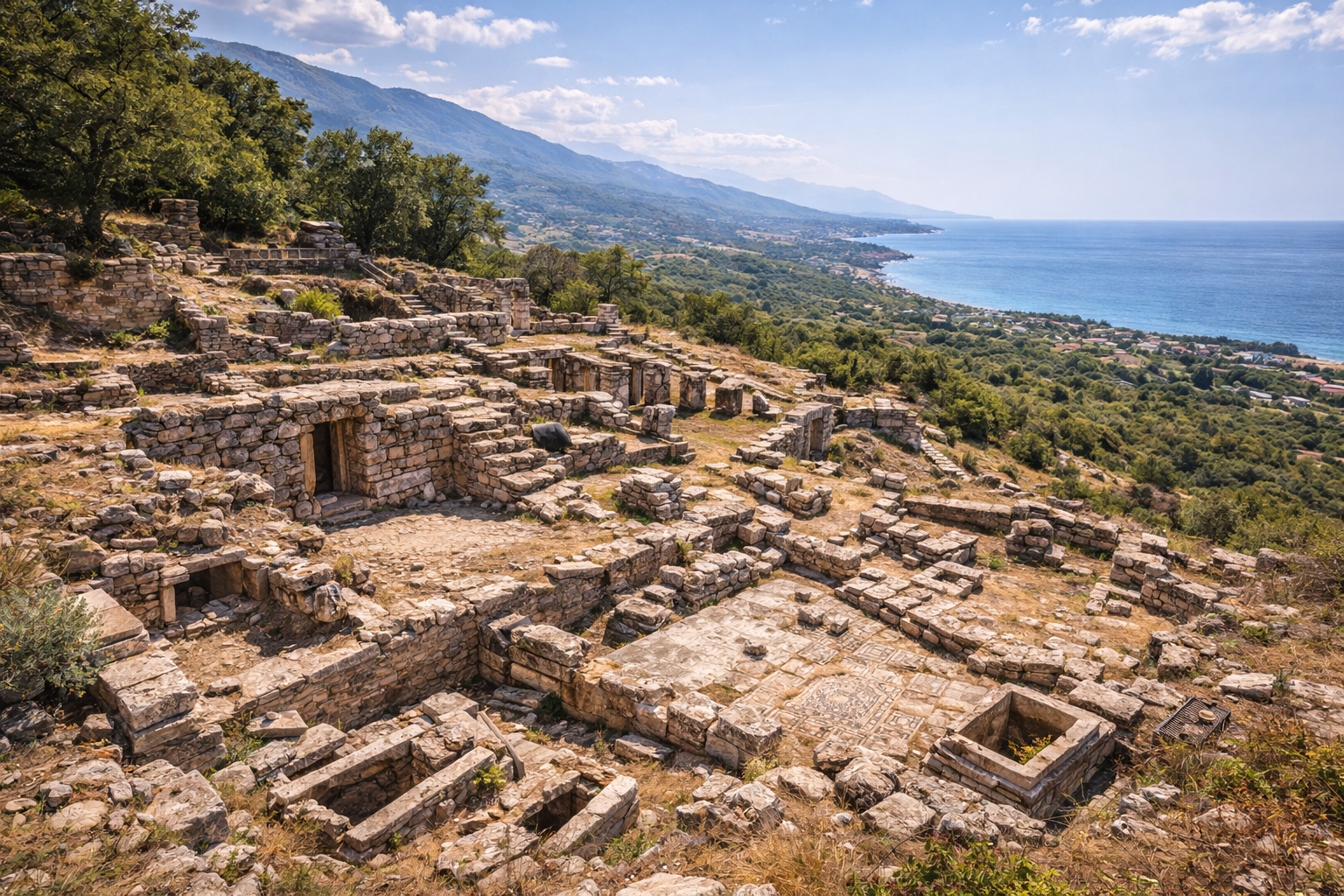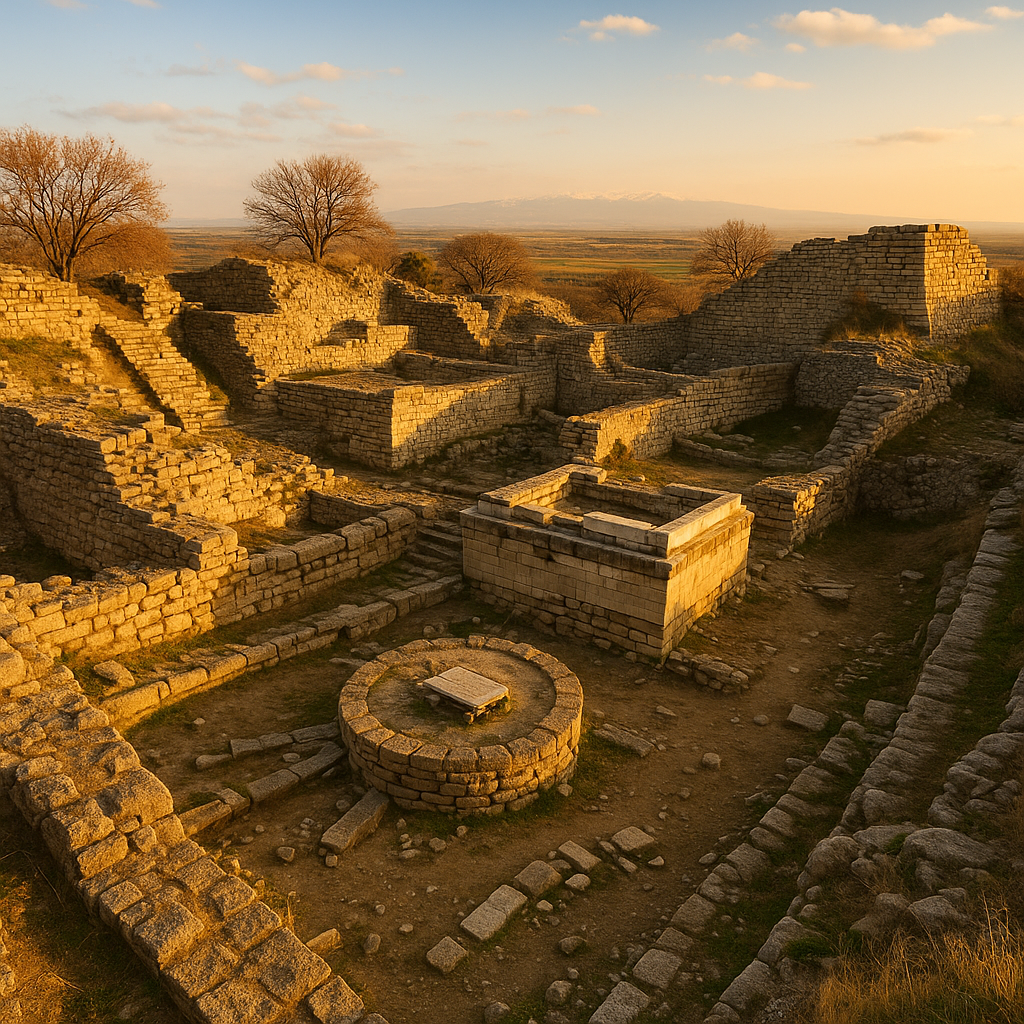
Troja to nie jedno miasto, lecz wiele — dziewięć głównych osad nawarstwionych w jednym niskim kopcu na Równinie Trojańskiej w Hisarlık, we wsi Tevfikiye w prowincji Çanakkale w północno-zachodniej Turcji. Od skromnej cytadeli z wczesnej epoki brązu, założonej około 3000 r. p.n.e., poprzez bogate, otoczone murami miasta trzeciego i drugiego tysiąclecia, aż po greckie polis Ilion, rzymską civitas sacra Augusta i powolny bizantyjski zmierzch po 500 r. n.e. — kopiec ten zachował niemal pięć tysięcy lat ciągłej pamięci ludzkiej w około szesnastu metrach nawarstwień kulturowych. Wykopany kontrowersyjną metodą przez Heinricha Schliemanna od 1870 r., udoskonalony przez Wilhelma Dörpfelda, usystematyzowany przez Amerykanina Carla Blegena w latach 30. XX w. i radykalnie zreinterpretowany przez tybingeński zespół Manfreda Korfmanna po 1988 r. — który odkrył rozległe dolne miasto wokół cytadeli — Troja stała się centrum każdego wielkiego sporu w archeologii klasycznej. Tabliczki hetyckie nazywają to miejsce Wilusa i wymieniają króla Alaksandu, imiona, które ze zdumiewającą precyzją prowadzą ku homeryckim formom Wilios/Ilios i Parys/Aleksandros; Iliada i Odyseja tu właśnie zapuszczają korzenie; a świat rzymski wywodził swój rodowód od trojańskich uchodźców za pośrednictwem Eneidy Wergiliusza. Wpisana na Listę UNESCO w 1998 r., od 2018 r. sąsiaduje z Muzeum Troi w Tevfikiye. To, co odwiedzający widzi dziś, to krajobraz stratygraficzny: rampy i mury z ciosowego kamienia z epoki brązu, hellenistyczna świątynia Ateny, rzymskie odejon i radny dom oraz bruzda wykopu Schliemanna przecinająca je wszystkie.
Spis treści
- Dlaczego Troja jest ważna
- Geografia i otoczenie
- Oś czasu historii
- Główne zabytki
- Prace archeologiczne
- Homer i wojna trojańska
- Wilusa w źródłach hetyckich
- Liczby i wymiary
- Informacje dla odwiedzających
- Często zadawane pytania
- Źródła i dalsza lektura
Dlaczego Troja jest ważna
Stratygraficzna biblioteka epoki brązu. Niewiele miejsc na ziemi skupia tak wiele ciągłej historii ludzkości na tak małej powierzchni. Kopiec w Hisarlık kryje dziewięć głównych warstw osadnictwa i około czterdziestu sześciu subfaz, nawarstwionych na szesnastu metrach nawarstwień kulturowych. Spacer po stanowisku nie jest więc zwiedzaniem jednego miasta, lecz pionową podróżą przez pięć tysiącleci — od małych, obwarowanych osad Troi I po rzymskie ulice Ilium.
Zawiasy między literaturą a archeologią. Troja to miejsce, gdzie zachodnia literatura po raz pierwszy spotyka się z łopatą. Iliada Homera była przez wieki traktowana jako poezja; wykopaliska Schliemanna od 1870 r. zamieniły literacką lokalizację w problem stratygraficzny. Spór o to, czy za poematem kryje się prawdziwa wojna — i której spalonej warstwie ją przypisać — ukształtował sposób, w jaki współczesny świat rozumie związek między mitem a materialnym dowodem.
Węzeł na Dardanelach. Troja leży przy południowym wejściu do cieśniny łączącej Morze Egejskie z Morzem Marmara, a dalej z Morzem Czarnym. Kto kontrolował ten korytarz, kontrolował morski szlak, którym płynęło zboże z Morza Czarnego, anatolijskie metale i egejska ceramika. Bogactwo Troi, jej mury i kolejne zniszczenia — wszystko to wynika z jej geograficznego położenia. Ten sam przesmyk sprawiał, że Troja warta była walki w epoce brązu, czynił Ilion miastem świętym dla Rzymian i z powrotem przemienił Dardanele w strategiczne pole bitwy w 1915 r.
Stolica dyplomatyczna zwana Wilusa. Hetyckie tabliczki klinowe z Hattusa wymieniają królestwo zwane Wilusa w północno-zachodniej Anatolii i nazywają króla Alaksandu, który zawarł traktat z hetyckim Wielkim Królem Muwattalim II w XIII w. p.n.e. Łańcuch językowy Wilusa → Wilios → Ilios — i Alaksandu → Aleksandros (Parys) — łączy bezpośrednio archiwum z epoki brązu ze światem Homera.
Obiekt Światowego Dziedzictwa UNESCO. Wpisana w 1998 r. na podstawie kryteriów (ii), (iii) i (vi), Troja jest uznana zarówno za głębię archeologiczną, jak i za ogromny wpływ związanej z nią literatury na europejską sztukę, dramat i tożsamość od starożytności do dziś.
Laboratorium historii archeologii. Niszczący centralny wykop Schliemanna, rysunki architektoniczne Dörpfelda, dyscyplina stratygraficzna Blegena, magnetometria Korfmanna i obecna współpraca tybingeńsko-çanakkalska śledzą w jednym miejscu pełny rozwój metod wykopaliskowych. Troja jest badana nie tylko jako starożytne miasto, ale i jako podręcznik nowoczesnej archeologii. Każde kolejne pokolenie badaczy odcisnęło swój ślad na kopcu, a spacer po stanowisku to jednocześnie marsz przez 150 lat zmieniającej się praktyki archeologicznej i przez 5000 lat starożytnego zasiedlenia.
Żywy projekt badawczy. Wykopaliska nie dobiegły końca. Prace trwają pod kierunkiem Ernsta Pernicka (Tybinga) i Rüstema Aslana (Çanakkale Onsekiz Mart Üniversitesi), a nowe sezony każdego lata przynoszą odkrycia w warstwach zniszczenia późnej epoki brązu, w dolnym mieście i w rzymskich budynkach publicznych. Troja jest jednym z nielicznych klasycznych stanowisk, gdzie znaczące nowe dowody wciąż pojawiają się każdego roku.
Geografia i otoczenie
Kopiec w Hisarlık
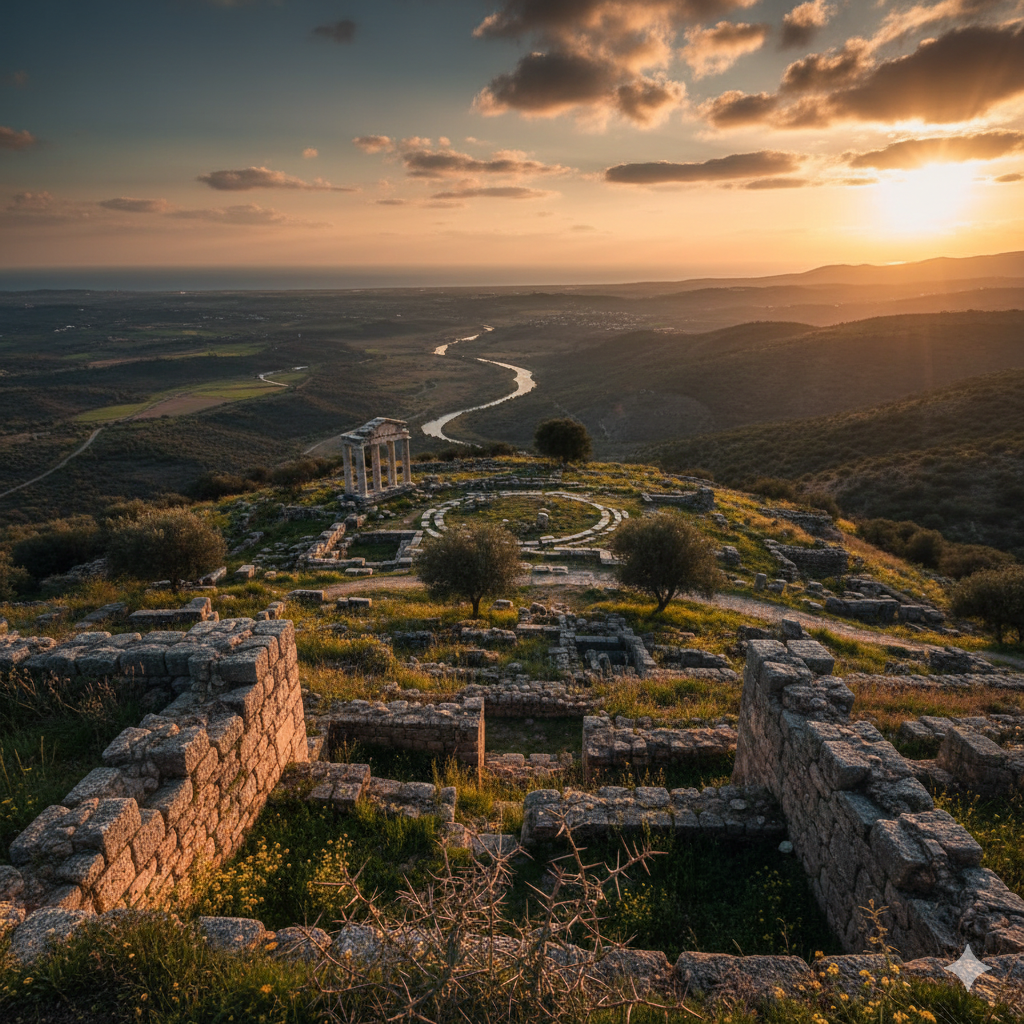
Starożytne miasto zajmuje niski, owalny kopiec zwany Hisarlık (po turecku „miejsce fortecy"), wznoszący się około trzydziestu metrów ponad aluwialną równinę. Sam kopiec jest sztuczny — narosły z nagromadzonych szczątków pięciu tysięcy lat zasiedlenia. Powierzchnia cytadeli jest niewielka (w najszerszym miejscu około dwustu metrów), lecz w późnej epoce brązu miasto rozciągało się znacznie poza mury, tworząc dolne miasto o powierzchni około trzydziestu hektarów, odkryte przez zespół Korfmanna w latach 90. XX w.
Dardanele
Troja leży około czterech do pięciu kilometrów w głąb lądu od obecnego brzegu Dardaneli — wąskiej cieśniny, którą Grecy nazywali Hellespontem. Ten korytarz wodny — długości około sześćdziesięciu kilometrów, miejscami szeroki na mniej niż 1,5 kilometra — łączy Morze Egejskie z Morzem Marmara, a przez Bosfor z Morzem Czarnym. Prądy w cieśninie płyną silnie na południe, a latem przeważające wiatry północne utrudniają żeglugę starożytnym statkom. Okręty często musiały czekać przy południowym wejściu na sprzyjające warunki — to jeden ze strukturalnych powodów bogactwa Troi.
Skamander i równina
Równinę na północ i zachód od kopca odwadniają dwie rzeki dobrze znane czytelnikom Homera:
- Skamander (dziś Karamenderes), wypływający z góry Ida i płynący na północny zachód ku Dardanelom.
- Simoeis (dziś Dümrek Çayı), łączący się ze Skamandrem na Równinie Trojańskiej.
W Iliadzie obóz grecki leży na brzegu Hellespontu, Trojanie bronią murów na kopcu, a armie spotykają się na płaskim terenie między nimi. Geografia opisana w poemacie zaskakująco dobrze odpowiada prawdziwemu krajobrazowi widocznemu z cytadeli.
Zniknięta linia brzegowa
Fundamentalny fakt dla każdego odwiedzającego: brzeg morski w epoce brązu był znacznie bliżej Troi niż obecne wybrzeże. Geologiczne odwierty rdzeniowe i badania osadów wzdłuż dolnego biegu Skamandra wskazują, że w trzecim i drugim tysiącleciu p.n.e. morze sięgało podnóża kopca, a zatoka zapewniała warunki portowe po stronie północno-zachodniej. Delta stale się powiększała, przesuwając wybrzeże o kilka kilometrów i zamieniając dawną linię brzegową w pola uprawne. Dzisiejsza „Równina Trojańska" to w znacznej mierze aluwialny twór ostatnich trzech tysięcy lat.
Rekonstrukcja linii brzegowej z epoki brązu jest dziełem geomorfologów, palinologów i paleoekologów związanych z projektami Korfmanna i jego następców. Pionierskie badania Johna C. Krafta i jego współpracowników z University of Delaware, publikowane od lat 80. XX w., wykorzystały rdzenie wiercone w nowoczesnej równinie do identyfikacji starożytnych osadów brzegowych, koryt rzecznych i mułów bagiennych. Ich wniosek: zatoka z epoki brązu sięgała na mniej więcej kilometr od cytadeli od strony północno-zachodniej, a mniejsze zatoczki zbliżały się do kopca z innych kierunków. Port Troi VI/VIIa leżał w tej zatoce; grecka flota z Iliady, jeśli w ogóle istniała, byłaby wyciągnięta na jej brzegach.
Stopniowe zamulanie zatoki przez ostatnie trzy tysiące lat skutecznie odsunęło Troję od morza. W czasach hellenistycznych miasto leżało już kilka kilometrów od otwartej wody; w epoce rzymskiej — jeszcze dalej; dziś morze nie jest widoczne z cytadeli, choć w pogodny dzień można dostrzec w oddali blask Dardaneli. To zamulenie wyjaśnia też, dlaczego miasto rzymskie miało mniejsze znaczenie handlowe niż jego poprzednik z epoki brązu: w czasach Ilium strategiczny punkt duszenia Hellespontu nie był już skutecznie kontrolowany z Hisarlık.
Klimat
Troada cieszy się klimatem śródziemnomorskim złagodzonym przez morskie bryzy. Lata są ciepłe i suche, z temperaturami dziennymi regularnie między 28 a 35 °C w lipcu i sierpniu. Zimy są łagodne i mokre; mróz na wybrzeżu jest rzadkością. Wiosna pokrywa równinę kwiatami i jest — podobnie jak jesień — najlepszą porą na wizytę. Meltem — wiatr egejski — wieje latem z północy przez cieśninę — ten sam wiatr, który w greckim micie zatrzymał flotę Agamemnona w Aulidzie.
Szersza Troada
Zaplecze Troi stanowi Troada — falista półwysep ograniczony Morzem Egejskim od zachodu, Dardanelami od północy i Zatoką Edremit od południa. Góra Ida (dziś Kaz Dağı) wznosi się ponad 1700 metrów na południu regionu. Troada kryła inne znaczące starożytne miasta — Aleksandria Troadę, Assos, Sigeion, Lampsakos, Świątynię Apollina Sminthosa w Chryse (dziś Gülpınar) — z których wiele uznawało Ilion za swoje centrum kulturalne, zwłaszcza po hellenistycznym założeniu Koinon Ateny Ilias.
Góra Ida jest miejscem o mitologicznym rezonansie. W Iliadzie Zeus obserwuje walki na Równinie Trojańskiej ze szczytu Idy; sąd Parysa (konkurs piękności między Herą, Ateną i Afrodytą, który zapoczątkował wojnę) odbywa się na jej zboczach; bogini Afrodyta jest związana z górą Ida w archaicznych greckich hymnach. Dziś góra jest parkiem narodowym, z cedrami, jodłami i lasami sosnowymi na wyższych zboczach, źródłami mineralnymi u podnóża i szlakami trekkingowymi prowadzącymi przez pejzaże niewiele zmienione od starożytności.
Troada była w klasycznej starożytności regionem niezwykłej różnorodności kulturowej. Greccy osadnicy eolscy kolonizowali wybrzeże co najmniej od VIII w. p.n.e., zakładając takie miasta jak Sigeion, Achilleion i Larisa. Wnętrze półwyspu pozostawało w znacznej mierze anatolijskie pod względem języka i kultury, z ciągłością od substratu epoki brązu. Położenie półwyspu nad Hellespontem czyniło go skrzyżowaniem dróg dla armii — perskich, macedońskich, galatyjskich, rzymskich, a ostatecznie osmańskich — i regionem, gdzie spotykały się różne światy kulturowe.
Oś czasu historii
Troja I (ok. 3000–2550 p.n.e.)
Najwcześniejsza osada w Hisarlık była małą obwarowaną wsią zamkniętą w obszarze może pół hektara. Jej mieszkańcy wznosili obronne mury kamienne o grubości do 3,5 metra i mieszkali w długich, wąskich domach typu megaron — prostokątny rzut z gankiem i centralnym paleniskiem, który stał się kanoniczną anatolijsko-egejską formą domu. Ceramika jest ciemna, polerowana i ręcznie formowana. Potwierdzono obróbkę miedzi. Troja I uczestniczyła już w sieciach handlowych obejmujących północne Morze Egejskie, mimo skromnych rozmiarów, i była kilkakrotnie niszczona (i odbudowywana) w ciągu swojego pięciowiekowego życia.
Wykopaliska ujawniły co najmniej dziesięć subfaz Troi I, zaznaczonych kolejnymi epizodami budowania, pożarów i odbudowy na tym samym planie. Najwcześniejsze domy to proste jednoizbowe budowle; w środkowych fazach pojawiają się kamienne fundamenty i nadbudówki z drewna i gliny. Mur obronny wzniesiono z drobnych kamieni układanych na zaprawie glinianej, z wewnętrznymi przyporami i co najmniej jedną bramą flankowaną przez wieże. Poza murem leżała niewielka osada z lżej zbudowanych domów, być może zamieszkałych przez mniej uprzywilejowaną warstwę. Znaleziska obejmują proste figurki terakotowe, narzędzia z kości, kamienne siekiery i obsydianowe ostrza importowane z egejskiej wyspy Melos — dowód, że nawet w tak wczesnym okresie Troja leżała na sieci handlowej sięgającej przez morze.
Ceramika Troi I należy do szerszej sfery kulturowej wczesnej epoki brązu, obejmującej północne Morze Egejskie i zachodnie wybrzeże Anatolii. Paralele występują w Poliochni na Lemnos, w Thermi na Lesbos i na stanowiskach wzdłuż wybrzeża Troady. To jeden z powodów, dla których Troja jest uznawana, nawet w swoim najwcześniejszym stadium, za uczestniczkę połączonego świata nadmorskiego, a nie izolowaną wioskę.
Troja II (ok. 2550–2300 p.n.e.)
Osada rozszerzyła się na większy, obwarowany taras otoczony imponującymi murami z brukowaną kamienną rampą przy bramie południowo-zachodniej, która nadal jest jedną z najchętniej fotografowanych cech stanowiska. Za murami wznosiły się monumentalne megara, jedno z nich długości około dwudziestu metrów, które Schliemann interpretował jako pałace. W tej właśnie warstwie Schliemann znalazł skarb złotych, srebrnych i miedzianych przedmiotów, błędnie nazwany przez niego „Skarbem Priama" — w rzeczywistości o około tysiąc lat za stary, by należeć do homeryckiego króla. Troja II została zniszczona przez gwałtowny pożar około 2300 r. p.n.e. Bogactwo tej fazy i samo złoto świadczą o mieście czerpiącym zyski z kontroli handlu między Morzem Egejskim a ziemiami Morza Marmara i Morza Czarnego.
Cytadela Troi II jest pierwszym poziomem, na którym stanowisko można bez przesady opisać jako miasto. Mury otaczają około dziewięciu tysięcy metrów kwadratowych; brama jest monumentalna, a brukowana rampa prowadzi ku niej między wysuwającymi się bastionami. Największy megaron, budynek IIA, otwiera się na północ przez ganek na wewnętrzny dziedziniec, z główną salą o szerokości około dziesięciu metrów i paleniskiem pośrodku. Pomocnicze megara są rozmieszczone równolegle w tym samym kompleksie dziedzińcowym, co sugeruje skoordynowany układ pałacowy.
Skarb znaleziony w maju 1873 r. zawierał według opublikowanego inwentarza Schliemanna około 8830 przedmiotów: dwa złote diademy o niezwykłej delikatności, złotą wazę z dziobkiem, sześćdziesiąt kolczyków, niemal dziewięć tysięcy małych złotych pierścieni i paciorków, srebrne naczynia, miedziane bronie i elektrum czary. Skarb był spakowany w tym, co wygląda na naczynie miedziane, być może złożone pospiesznie w chwili zniszczenia miasta. Mniejsze skarby o podobnym charakterze — znane jako Skarby A–R w systemie literowym Schliemanna — znaleziono w pobliżu w tej samej warstwie. Razem stanowią jeden z najbogatszych zbiorów metalurgii wczesnej epoki brązu kiedykolwiek odkrytych w świecie egejskim, a złoto, srebro i cyna świadczą o dalekosiężnym handlu surowymi metalami przez tysiące kilometrów.
Pożar, który zakończył Troję II, był intensywny. Mury były osmalone, nadbudówki z gliny ociekły do wewnątrz, a złote skarby pozostały na miejscu — co sugeruje, że mieszkańcy albo uciekli w panice, albo zginęli. Następna osada, Troja III, została zbudowana na ruinach, lecz z mniejszymi ambicjami.
Troja III–V (ok. 2300–1750 p.n.e.)
Trzy „środkowe" poziomy wykazują ciągłość osadnictwa raczej niż załamanie, lecz budynki są skromniejsze, a miasto sprawia wrażenie mniej zamożnego niż Troja II. Plany domów stają się gęstsze, z mniejszymi pomieszczeniami. Typy ceramiki ewoluują ku formom toczonym na kole. Między tymi fazami nie ma żadnego znaczącego horyzontu zniszczenia; raczej długi rytm odbudowy i stopniowych zmian. Są to warstwy najmniej widoczne dziś na stanowisku, zaciśnięte w stratygrafii.
Pięć wieków obejmowanych przez Troję III, IV i V odpowiada szerszemu regionalnemu wzorcowi w zachodniej Anatolii: przejściu od wczesnomiejskiego eksperymentu trzeciego tysiąclecia do większych, bardziej politycznie zintegrowanych królestw drugiego. Architektura domowa w tych fazach przesuwa się od otwartego planu megaron ku bardziej zamkniętym, wieloizbowym domom z wewnętrznymi dziedzińcami. Metalurgia brązu staje się powszechniejsza; ceramika coraz częściej produkowana jest na kole; pierwsze ślady pisma — minojskie pieczęcie na egejskim wybrzeżu — docierają do Troady. Wprowadzenie konia jako zwierzęcia domowego staje się zauważalne w faunistycznym materiale w tych fazach, zapowiadając prominencję koni w późniejszej ekonomii Troi VI.
Choć te poziomy nie mają spektakularnego bogactwa Troi II ani monumentalnej architektury Troi VI, są kluczowe dla zrozumienia, jak mała cytadela wczesnej epoki brązu ewoluowała w regionalną stolicę późnej epoki brązu. Bez nich odbudowa Troi VI na nową skalę byłaby niewyjaśniona.
Troja VI (ok. 1750–1300 p.n.e.)
Transformacyjna przebudowa. Troja VI to bogata, otoczona murami cytadela w wysokim stylu późnej epoki brązu, z obwodem precyzyjnie ciętych wapiennych murów z ciosowego kamienia miejscami zachowanych do dziewięciu metrów wysokości. Mury mają charakterystyczny nachylony (skośny) profil, pionowe odsadzenia co około dziesięć metrów i prostokątne wieże w kluczowych miejscach. Wewnątrz murów domy rozmieszczone są na tarasach; niektóre są dwupiętrowe i zbudowane wokół halowych sal z kolumnami. Ceramika mykeńska pojawia się obficie, dowodząc trwałych kontaktów z Grecją lądową. Odkrycie przez Korfmanna rozległego dolnego miasta poza cytadelą — bronionego przez wykuty w skale rów i drewniany palisad — wykazało, że Troja VI była miastem o powierzchni około trzydziestu hektarów, z szacowaną populacją między pięcioma a dziesięcioma tysiącami. Koniec Troi VI, około 1300 r. p.n.e., był nagły: mury wykazują ukośne pęknięcia i zawalone mury spójne z trzęsieniem ziemi, a nie ze spustoszeniem.
Troja VI jest warstwą, która najbardziej nagradza wzrok odwiedzającego. Jej mury wzniesiono z starannie obrobionych bloków lokalnego wapienia, obrobionych na licu i ułożonych w poziomych warstwach bez zaprawy. Mur wznosi się w serii pionowych sekcji, każda oddzielona niewielkim odsadzeniem lub uskokiem, nadającym powierzchni charakterystyczny schodkowy wygląd — element unikalny w architekturze późnej epoki brązu, prawdopodobnie pomyślany zarówno jako środek strukturalny przeciwko sejsmicznemu ścinaniu, jak i jako dekoracyjna sygnatura. Mur stoi dziś do około dziewięciu metrów przy wieży południowej; w starożytności musiał być zwieńczony ceglanym murem z blankami, który podnosił całkowitą wysokość do może trzynastu lub czternastu metrów. Cztery główne bramy — Brama Południowa, Brama Południowo-Wschodnia, Brama Wschodnia i Brama Zachodnia (późniejsza zabudowana) — kontrolowały dostęp do cytadeli.
Wewnątrz murów cytadela była zorganizowana w serie koncentrycznych tarasów wznoszących się ku centrum. Na tych tarasach stały duże wolnostojące domy — Dom Filarowy, Dom z Kolumnami, Dom VIM, tzw. Dom z Antami — każdy o własnej architektonicznej tożsamości. Najambitniejszy z nich zawiera dwa rzędy kamiennych kolumn wspierających górną kondygnację i jest jednym z najwcześniejszych przykładów monumentalnej architektury kolumnowej w zachodniej Anatolii. Szczyt kopca, gdzie niegdyś musiał stać pałac lub centralna budowla religijna, został zniszczony przez hellenistyczne tarasowanie pod Świątynię Ateny; nic z centrum epoki brązu nie ocalało.
Ceramika mykeńska — kyliki, dzbanki zasobowe, alabastra — pojawia się w poziomach Troi VI obficie od około 1400 r. p.n.e. i osiąga szczyt w końcowej fazie. Lokalna ceramika wykazuje formy hybrydyczne łączące motywy anatolijskie i egejskie. Kości końskie pojawiają się w niezwykłej ilości, potwierdzając homerycki epitet „Troja oswajaczka koni". Ciężarki tkackie, wrzeciona i ślady produkcji tekstylnej wskazują na aktywny przemysł tkacki; homerycki opis kobiet tkających w Troi nie jest więc nieprawdopodobny jako echo rzeczywistości późnej epoki brązu.
Koniec Troi VI stanowi jeden z wielkich problemów interpretacyjnych stanowiska. Carl Blegen stwierdził na podstawie wzorca zniszczeń — ukośnych pęknięć przebiegających przez mury z ciosowego kamienia, osiadłych wież, zawalonych budynków bez śladów pożaru na dolnych murach — że miasto zostało zniszczone przez gwałtowne trzęsienie ziemi około 1300 r. p.n.e. Troada jest sejsmicznie czynna, a duże trzęsienia ziemi są dobrze udokumentowane w czasach współczesnych. Niektórzy badacze twierdzili jednak, że zniszczenia są zgodne z połączeniem wstrząsu sejsmicznego i ludzkiego działania, być może napadem po trzęsieniu ziemi. Dowody są niejednoznaczne; dominujące stanowisko pozostaje poglądem Blegena.
Troja VIIa (ok. 1300–1180 p.n.e.)
Miasto zostaje odbudowane na tym samym planie, lecz wnętrze reorganizuje się w sposób, który przykuł wyobraźnię każdego pokolenia archeologów od Blegena. Duże wolnostojące domy Troi VI są podzielone na małe pomieszczenia; wielkie dzbany magazynowe (pitoi) są wkopane w podłogi jakby dla przechowywania zboża, oliwy i wina; ludzie zdają się tłoczyć wewnątrz murów. Troja VIIa została zniszczona przez pożar około 1180 r. p.n.e., z grotami strzał, częściowo zasypanymi ludzkimi szczątkami i dowodami gwałtownego końca. To właśnie ta warstwa jest najczęściej utożsamiana z Troją Homera: chronologicznie zgodna z grecką tradycją o wojnie pod koniec XIII lub na początku XII w. p.n.e. i fizycznie zgodna z oblężeniem i spustoszeniem.
Charakter Troi VIIa kształtują ograniczone zasoby i widoczna niepewność. Mury Troi VI są ponownie wykorzystywane, lecz miejscami naprawiane mniejszymi, mniej starannie układanymi kamieniami. Wewnątrz przestronne wolnostojące rezydencje z poprzedniej fazy są podzielone prymitywnymi ścianami wewnętrznymi; pomieszczenia stają się małe i prostokątne; dziedzińce są zabudowywane nowymi dobudówkami; gęstość zabudowy gwałtownie rośnie. W podłogach niemal każdego domu wkopane są duże pitoi, często ustawione w rzędach z kamiennymi pokrywami — wyraźna strategia przechowywania suchych produktów żywnościowych w warunkach ograniczonej przestrzeni naziemnej. Najbardziej naturalna interpretacja tego wzorca jest obronna: populacja albo oczekuje oblężenia, albo już przez nie przechodzi.
Warstwa zniszczenia kończąca Troję VIIa jest gruba, ciemna i wyraźna. Spalone cegły, zwęglone drewno i popiół pokrywają wewnętrzne powierzchnie. W kilku miejscach zespół Blegena znalazł ludzkie szkielety bez formalnego pochówku — leżące na ulicach, w drzwiach, w zawalonych pomieszczeniach — wraz z brązowymi grotami strzał typów związanych z wojowością egejską i anatolijską. Datowanie oparte na ceramice mykeńskiej (późnoheladzkiej IIIB do wczesnej IIIC) umieszcza zniszczenie około 1190–1180 r. p.n.e., w tym samym pokoleniu, które widziało upadek pałaców mykeńskich w Mykenach, Pylos i Tebach; upadek Imperium Hetyckiego; zamęt znany Egipcjanom jako najazdy „Ludów Morza"; oraz ogólny kryzys wschodniośródziemnomorskiej późnej epoki brązu.
Czy to zniszczenie w Troi zostało bezpośrednio spowodowane przez „wojnę trojańską" na modłę homerycką — nie można udowodnić na obecnych dowodach. Co można stwierdzić, to że warstwa odpowiada datą, charakterem i atmosferą zdarzeniu, które grecka tradycja, zapisana wieki później, umieszczała w Troi. Zgodność nie jest doskonała, lecz jest wystarczająco sugestywna, by podtrzymywać pytanie przez niemal sto pięćdziesiąt lat.
Troja VIIb (ok. 1180–950 p.n.e.)
Zredukowana osada zbudowana wśród ruin VIIa. Nowe typy ceramiki — w szczególności ręcznie formowana ceramika guzikowa (Buckelkeramik) — sugerują przybycie ludności z Bałkanów, być może grup trackich przemieszczających się na południe podczas szerszego upadku późnej epoki brązu. Troja jest teraz wsią, a nie miastem. Należy do tej samej epoki ciemności, która pochłonęła Imperium Hetyckie, pałace mykeńskie i królestwa lewantyńskie.
W obrębie Troi VIIb wyróżniono trzy subfazy: VIIb1 z kontynuacją form późnej epoki brązu; VIIb2 zaznaczoną pojawieniem się nowej ceramiki ręcznie formowanej; i VIIb3, cienką fazę na progu możliwości odtworzenia historycznego. Domy są małe i skromnie zbudowane; nie ma żadnych monumentalnych struktur. Obwód murów Troi VI jest nadal częściowo użytkowany, lecz nie jest już utrzymywany jako wysokostutusowy system obronny. Populacja mogła spaść do kilkuset osób. Po około 950 r. p.n.e. następuje przerwa w zasiedleniu trwająca przez około dwa wieki, podczas których kopiec był prawdopodobnie wypasany przez pasterzy i odwiedzany przez okazjonalnych podróżnych.
Troja VIII (ok. 950–85 p.n.e.)
Greccy osadnicy ponownie zasiedlają stanowisko, które staje się polis Ilion (Ilios). Na cytadeli wznosi się Świątynia Ateny Ilias, przyciągając pielgrzymów powabem homeryckim. W 480 r. p.n.e. perski król Kserkses podobno złożył tu ofiarę z tysiąca wołów w drodze do Grecji. W 334 r. p.n.e. Aleksander Wielki przekroczył Hellespont i odwiedził Ilion, poświęcając w świątyni swoje zbroje i biorąc z niej stary tarcz, który — jak wierzył — datował się od czasów wojny. Po Aleksandrze miasto jest wspierane przez jego następców, szczególnie przez Lizymachosa, który przebudowuje i rozbudowuje mury. Tutaj koncentruje się Koinon Ateny Ilias — religijna federacja miast Troady.
Wczesna grecka osada Ilion była skromna. Pierwsze sanktuarium na cytadeli było prawdopodobnie otwartym precineum wokół małej archaicznej świątyni, z ofiarami składanymi od ok. VIII w. p.n.e. — dokładnie w tym okresie, gdy eposy homeryckie przyjmowały pisemną formę. Archaiczna ceramika, terakotowe figurki i kilka inskrypcji dokumentują stopniowe rozbudowywanie kultu. W VI w. p.n.e. Ilion stał się przystankiem na szlaku między eolijskimi i jońskimi terytoriami greckimi, a wizyty ważnych postaci politycznych — Kserksesa w 480 r. p.n.e., spartańskiego admirała Mindarosa w 411 r. p.n.e., perskiego satrapy Farnabazosa i wreszcie Aleksandra w 334 r. p.n.e. — świadczą o rosnącym prestiżu miasta jako symbolicznej stolicy tradycji homeryckie.
Faza hellenistyczna, poczynając od podboju macedońskiego, zaznaczyła architektoniczną transformację Ilion. Lizymachos, po śmierci Aleksandra, przełożył miasto na większą skalę, z nowymi murami otaczającymi zarówno cytadelę, jak i dolne miasto, i zasadniczo przebudowanym sanktuarium Ateny. Kolejne dynastie — szczególnie Seleucydzi — używały Ilion jako miejsca ofiar i dyplomatycznego teatru. Od Traktatu Apamejskiego z 188 r. p.n.e., gdy Rzymianie wypędzili Seleucydów za Taurus, Ilion wszedł w orbitę królestwa Attalidów w Pergamonie, a ostatecznie Rzymu. Koinon Ateny Ilias emitował federalne srebrne monety i organizował quadrienialne igrzyska, Ilieia, ku czci bogini; miasta z całej Troady wysyłały ambasadorów i atletów na uroczystości.
Troja IX (85 p.n.e. – ok. 500 n.e.)
Rzymskie Ilium. Po zniszczeniach w wojnach mitrydatyckich miasto jest odbudowywane z łaską cesarską. Ród Juliuszów w Rzymie wywodził swój rodowód przez Eneasza z trojańskiej linii królewskiej; Juliusz Cezar odwiedził miasto i przyznał mu przywileje; August obdarował je nowymi budynkami publicznymi — przebudowaną Świątynią Ateny, radnym domem (buleyterium), odeonem, łaźniami i regularną siatką ulic. Ilium stało się civitas libera et immunis, wolne od podatków. Cesarze Rzymu nadal je odwiedzają. Monety miejskie dumnie przedstawiają Atenę Ilias, a na emisjach Marka Aureliusza — frontową fasadę samej świątyni. Stanowisko kwitnie przez okres cesarstwa rzymskiego.
Rzymska przebudowa Ilium odzwierciedla szczególną ideologiczną inwestycję. Juliusze — Juliusz Cezar, August i ich adoptowani potomkowie aż do Nerona — twierdzili, że wywodzą się od Eneasza przez jego syna Julusa (Askaniosa), a zatem od samej Wenus. Wizyta w Ilium była dla nich dosłowną pielgrzymką do miasta ich przodków. Program budowlany Augusta na kopcu stworzył rzymski kompleks religijny godny tej ideologii: wielką nową świątynię Ateny Ilias na szczycie, forum na południowym wschodzie, łaźnie, odejon i buleyterion goszczące radę miejską i zebrania Koinonu. Hadrian odwiedził miasto w 124 r. n.e.; Karakalla w 214 r. n.e. złożył wyszukane ofiary na domniemanym grobie Achillesa na równinie. Zachowane inskrypcje dokumentują nieprzerwany przepływ cesarskich zaszczytów.
Rzymskie Ilium pozostawało zamożne do III w. n.e., lecz ucierpiało od szerszych kryzysów cesarstwa — najazdów, kryzysu gospodarczego, wzrostu znaczenia pobliskiej Aleksandrii Troady jako ważnego portu. W IV w. populacja zmalała. Na stanowisku zidentyfikowano małą bazylikę z wczesnego okresu chrześcijańskiego, wskazującą, że miasto zachowało przynajmniej skromną wspólnotę chrześcijańską. Biskup Ilium jest odnotowany na kilku soborach kościelnych między IV a IX w.
Bizancjum i dalej (po ok. 500 n.e.)
W późnej starożytności Ilium skurczyło się. Małe biskupstwo jest poświadczone do wczesnego okresu bizantyjskiego, lecz regionalny ciężar gatunkowy przesuwa się do Aleksandrii Troady na egejskim wybrzeżu, a później do innych bizantyjskich miast portowych. W czasie osmańskiego podboju Dardaneli w XV w. Hisarlık jest niskim, anonimowym kopcem na skraju pól uprawnych. Stanowisko pozostaje w dużej mierze zapomniane aż do XIX w., gdy europejscy podróżnicy zaczynają z nową powagą zadawać pytanie, gdzie mogła leżeć Troja Homera.
Nawet zapomniana, Troja nie zaginęła całkowicie. Pielgrzymi i podróżnicy bizantyjscy czasem ją odwiedzali; Mehmed II, osmański zdobywca Konstantynopola, podobno przybył do Hisarlık w 1462 r. i oznajmił, że zemścił się za Trojan, pokonując greckich spadkobierców Achajów. Europejscy podróżnicy renesansu i oświecenia, uzbrojeni w egzemplarze Homera, czynili ostrożne identyfikacje, lecz większość preferowała bardziej widoczny kopiec w Pınarbaşı (Bunarbashi) na południu. Argument za Hisarlık został ostatecznie sformułowany przez Charlesa MacLarena w 1822 r., propagowany przez Franka Calverta w latach 60. XIX w. i dowiedziony przez łopatę Schliemanna w latach 70. XIX w.
Główne zabytki
Mury cytadeli Troi VI
Najbardziej spektakularne zachowane pozostałości w Hisarlık należą do wielkiej, otoczonej murami cytadeli Troi VI. Mury wzniesiono z starannie obrobionych bloków wapienia z ciosowego kamienia, ułożonych z lekkim nachyleniem ku wnętrzu — lico ściany pochyla się ku tyłowi w miarę wznoszenia — i przerywanym w regularnych odstępach pionowymi odsadzeniami tworzącymi schodkową sylwetkę. Obwód, zachowany na około 330 metrach z pierwotnych 550 lub więcej, obejmuje kwadratowe wieże w strategicznych miejscach. Ściana południowa z wieżą i małą furtą tyłową daje najlepsze wyobrażenie o projekcie umocnień późnobrązowego Egeum. Styl muru jest unikalny dla Troi i stanowi jeden z najpiękniejszych przykładów inżynierii wojskowej epoki brązu w zachodniej Anatolii.
Geometria murów zasługuje na baczną uwagę. Bloki z ciosowego kamienia — wiele z nich długości ponad metra — są obrobione, by dokładnie przylegać, lecz bez idealnych ciosanego lica cyclopejskiej mury mykeńskiej. Pionowe odsadzenia dzielą lico muru na segmenty długości około dziewięciu metrów, z których każdy przedstawia płaską powierzchnię napastnikowi, lecz tworzy w połączeniach wnękę, którą obrońcy na blanku mogli ostrzeliwać flankierującym ogniem. Lekkie nachylenie lica muru w połączeniu z odsadzeniami utrudnia wspinaczkę i zapewnia strukturalną przewagę przeciwko trzęsieniom ziemi. Podstawa muru jest szeroka — do pięciu metrów w niektórych miejscach — zwężając się ku górze.
Ponad zachowanymi warstwami kamiennymi mur był zwieńczony nadbudówką z cegły, z której zachowały się jedynie fragmenty. Ta ceglana korona obejmowała krenelacje dla obrońców i strzelnice na pociski. Całkowita pierwotna wysokość muru szacowana jest na od trzynastu do piętnastu metrów. W regularnych odstępach wzdłuż obwodu prostokątne wieże wystawały przed lico muru, zapewniając ogień flankierujący wzdłuż jego długości. Cztery główne bramy — Brama Południowa, Brama Południowo-Wschodnia, Brama Wschodnia i Brama Zachodnia (późniejsza zabudowana) — kontrolowały dostęp do cytadeli.
Brama Wschodnia i kwestia „Skajska"
Najbardziej architektonicznie rozbudowane wejście na cytadelę to Brama Wschodnia Troi VI, długi, wąski korytarz między nakładającymi się segmentami murów — projekt zmuszający napastników do wejścia w strefę zabójczego ostrzału. Kilku badaczy zaproponowało tę bramę lub pobliską większą bramę południową jako Bramę Skajską z Iliady, bramę, pod którą Hektor kończy swój żywot i z której Helena identyfikuje greckich bohaterów Priamowi. Identyfikacja nie może zostać udowodniona, lecz zestawienie monumentalnej architektury epoki brązu i homerycka topografia jest stałą pokusą, której odwiedzający nie będą w stanie się oprzeć.
Brama Wschodnia to szczelina długości ponad dziesięciu metrów, utworzona przez dwa nakładające się segmenty muru przesunięte o około trzy metry. Każdy przechodzący przez nią byłby odsłonięty na obrońców na obu murach powyżej. Na wewnętrznym końcu mały otwarty dziedziniec poprzedza właściwe wejście do cytadeli. Konstrukcja jest jednym z najlepiej zachowanych przykładów bramowego projektu „szykan", który stał się standardem w późnobronzowej fortyfikacji w całej Anatolii i Egeum. Brama Południowa (VI T Dörpfelda) i Brama Południowo-Wschodnia (VI S), obie w pobliżu, prezentują wariacje na ten sam obronny motyw.
Czy któraś z nich jest homerycką Bramą Skajską, zależy od tego, jak dosłownie czytamy poemat. Iliada wyraźnie wyobraża sobie „wielką" lub „zachodnią" bramę (etymologia „Skajskiej" jest dyskutowana) jako główny dostęp do miasta, gdzie rozgrywają się najważniejsze narracyjne zdarzenia strony trojańskiej. Brama Południowa Troi VI, z jej monumentalną rampą podejściową i prominencją w obwodzie murów, jest wiodącym kandydatem. Lecz poemat nie jest raportem budowlanym i pytanie może pozostać bez odpowiedzi na podstawie samych danych archeologicznych.
Rampa i brama Troi II
Poniżej poziomu Troi VI odwiedzający mija kamienną brukowaną rampę Troi II, prowadzącą ku monumentalnej bramie. Ta rampa — szerokości około ośmiu metrów i pięknie ułożona — jest jednym z najwcześniejszych przykładów monumentalnej inżynierii publicznej w świecie egejskim. Datuje się na około 2500 r. p.n.e. i była już ruiną, gdy budowniczowie Troi VI po niej chodzili.
Domy megaron
Wnętrze cytadeli Troi VI podzielone było na tarasy wyłożone wolnostojącymi domami według planu megaron: prostokątne budowle z długą osią, gankiem (pronaos) i główną salą (domos) z centralnym paleniskiem. Największy z nich — niekiedy nazywany Domem Filarowym — mierzył około dwudziestu siedmiu metrów długości i zawierał rzędy kamiennych kolumn wspierające dwukondygnacyjną nadbudówkę. Domy te były rezydencjami elit, prawdopodobnie należącymi do wiodących rodzin lub do samego rządzącego domu.
Dom Filarowy (Dom VI M Dörpfelda) należy do najlepiej zachowanych budowli Troi VI. Jego długa oś biegnie mniej więcej ze wschodu na zachód, z wejściem od wschodu otwierającym się na szeroką ulicę. Wewnątrz dwa rzędy kamiennych kolumn dzielą główną salę na trzy nawy. Kolumny dźwigały belki podpierające z kolei podłogę górnej kondygnacji, z której zachowały się jedynie fundamenty. Palenisko było kwadratową kamienną konstrukcją blisko centrum głównej sali. Mury były zbudowane z dobrze ułożonej mury na kamiennym cokole z ceglaną nadbudówką, otynkowaną i prawdopodobnie malowaną. Dom VI E („Dom z Kolumnami"), Dom VI F i Dom VI G są mniejsze, lecz zbliżone planem.
Rozmieszczenie tych wolnostojących domów na tarasach — każdy z własnymi ścianami zewnętrznymi i otaczającą przestrzenią — jest niezwykłe dla późnobrązowego egejskiego i anatolijskiego świata, gdzie gęste bloki ze wspólnymi ścianami są bardziej powszechne. Plan Troi VI sugeruje społeczeństwo, w którym wiodące rodziny zachowywały znaczną niezależność w ramach wspólnego obwodu obronnego, być może klanową arystokrację zgrupowaną pod królewskim domem na szczycie.
Świątynia Ateny Ilias (Troja VIII–IX)
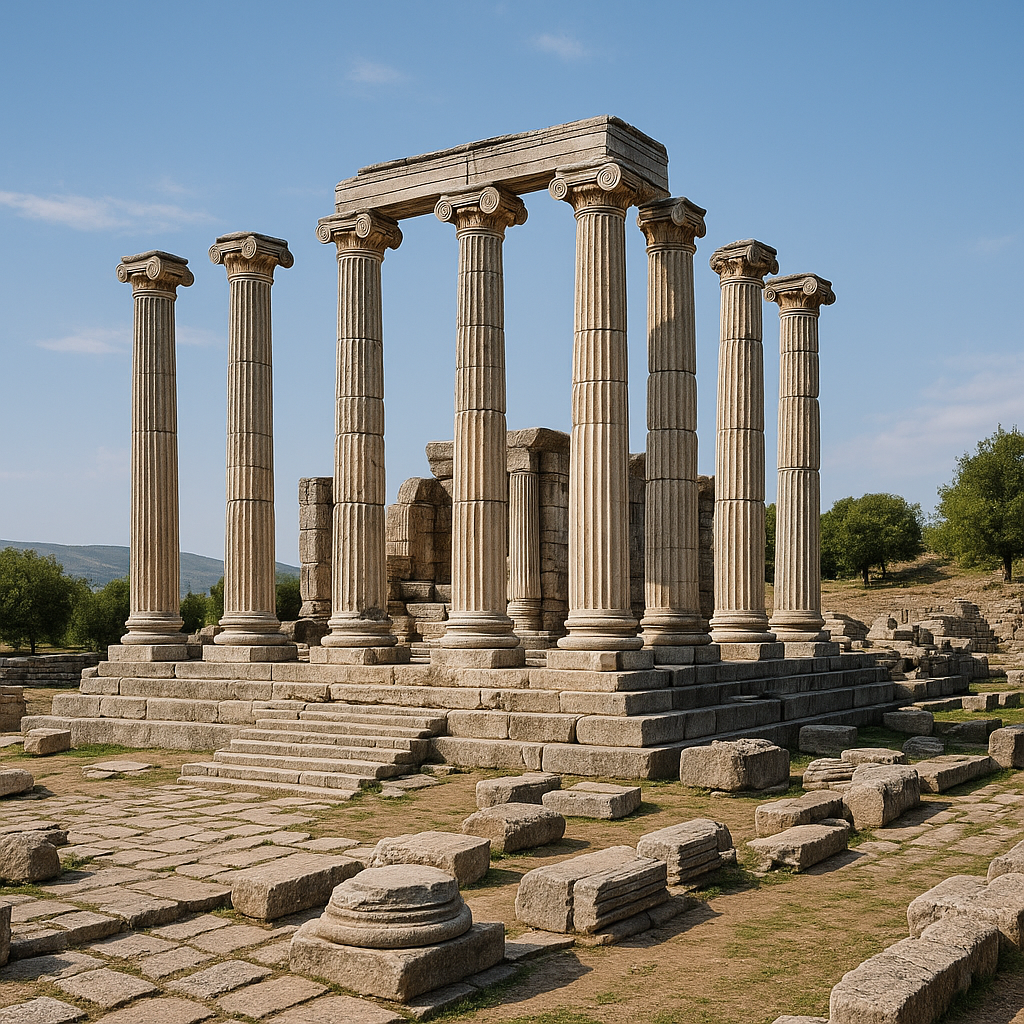
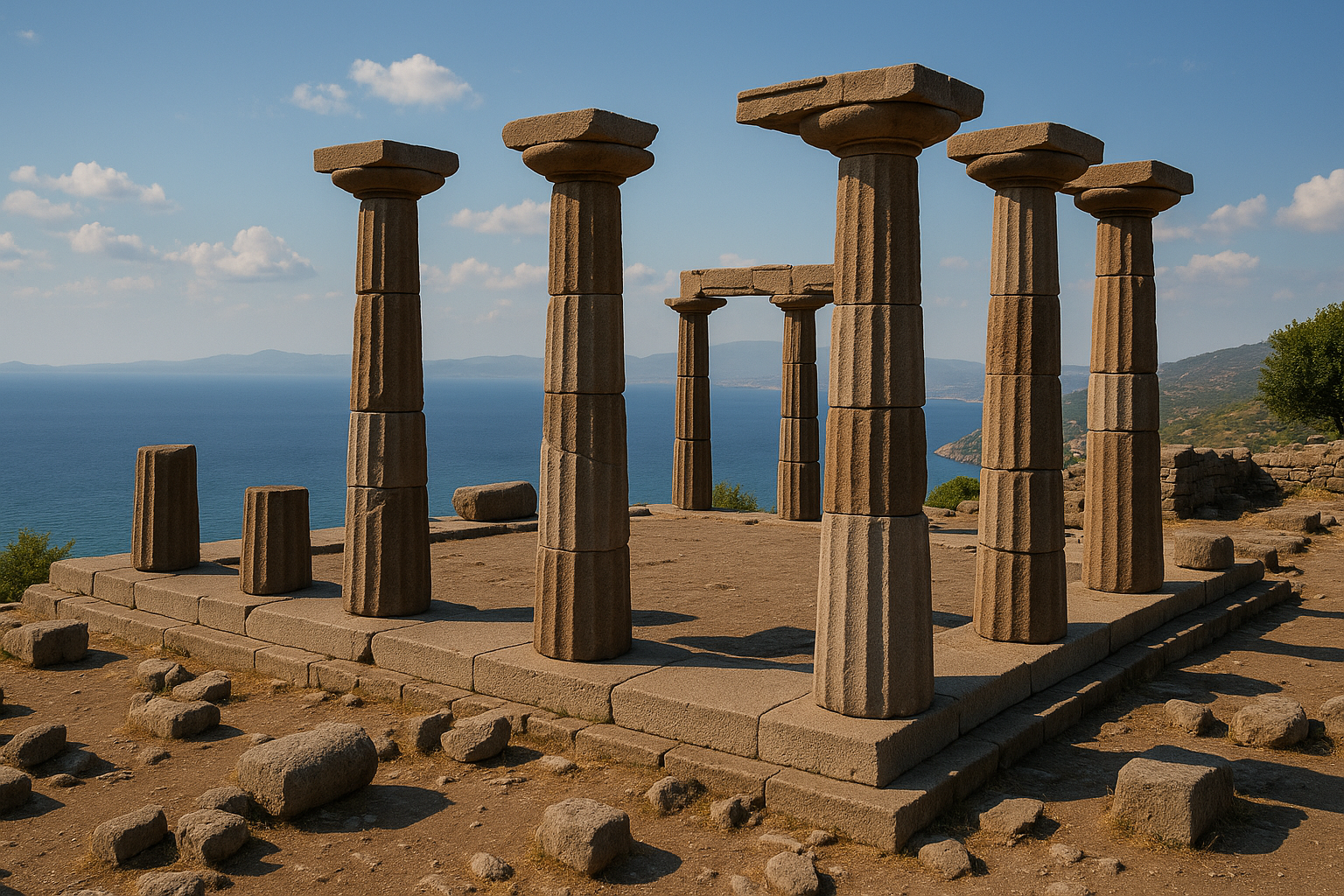
Na szczycie kopca stała Świątynia Ateny Ilias, religijna oś hellenistycznego i rzymskiego miasta. Świątynia jest słabo zachowana — jej podstruktury leżą w obszarze poważnie zniszczonym przez wykop Schliemanna — lecz doryckie bębny kolumn, fragmenty architektoniczne i inskrypcje są rozsiane po całym stanowisku. Jej wygląd najlepiej znany jest z unikalnej rzymskiej monety wybitej za Marka Aureliusza, przedstawiającej frontową elewację świątyni. Świątynia była celem ofiar Kserksesa, dedykacji Aleksandra i darów niezliczonych hellenistycznych i rzymskich pielgrzymów.
Najwcześniejsza świątynia na szczycie cytadeli była prawdopodobnie małą strukturą archaiczną, zastąpioną przez większą hellenistyczną świątynię, gdy miasto prosperowało pod Lizymachem i Seleucydami. Przebudowa z okresu augustowskiego była najbardziej ambitna: dorycka świątynia peripteros, sześć kolumn na dwanaście, wzniesiona na stylobacie dominującym nad otaczającymi tarasami. Inskrypcje dokumentują dary posągów, wotywnych tarcz, broni (w tym tzw. tarczy Achillesa zabranej przez Aleksandra) i pieniędzy od hellenistycznych królów i cesarzy Rzymu. Świątynia mieściła kultowy wizerunek Ateny Ilias, przedstawionej na monetach miasta jako stojąca postać trzymająca włócznię i kądziel lub pochodnię.
Zniszczenie świątyni w późnej starożytności pozostawiło jedynie fundamenty i rozproszone fragmenty. Większość zachowanych elementów architektonicznych została ponownie użyta w pobliskich budynkach lub spalona na wapno. Moneta Marka Aureliusza (bita ok. 161–180 n.e.) przedstawia frontispis świątyni z niezwykłym szczegółem — czteroelewacyjna fasada z niskim tympanonem, posągami w narożnikach i wotywymi tarczami zawieszonymi na architrawie. Jest to jeden z najważniejszych zachowanych numizmatycznych dowodów architektonicznych ze starożytnej świątyni.
Buleyterion
Na południe od cytadeli, na niskim tarasie, stoją prostokątne fundamenty rzymskiego buleyterion — rady miejskiej, w której spotykali się magistraci Ilium. Budowla została wzniesiona lub zasadniczo przebudowana za Augusta, który przyznał miastu przywileje. Zachowały się marmurowe siedzenia, apsydalna mównica i elementy scaenae (tylna ściana).
Buleyterion mierzył około dwudziestu ośmiu metrów długości na dwadzieścia szerokości, z miejscami dla kilkuset członków rady i obserwatorów rozmieszczonych w płytkich rzędach wokół trzech stron centralnej przestrzeni. Budynek służył jako miejsce spotkań rady ilioskiej (boule), lecz także zebrań Koinonu Ateny Ilias — regionalnej konfederacji miast Troady, która spotykała się przy sanktuarium Ateny dla federalnych spraw, obrzędów religijnych i quadrienialnych igrzysk. Monumentalność buleyterion odzwierciedla podwójną rolę Ilium jako lokalnego centrum obywatelskiego i religijnej stolicy szerszego regionu.
Odejon
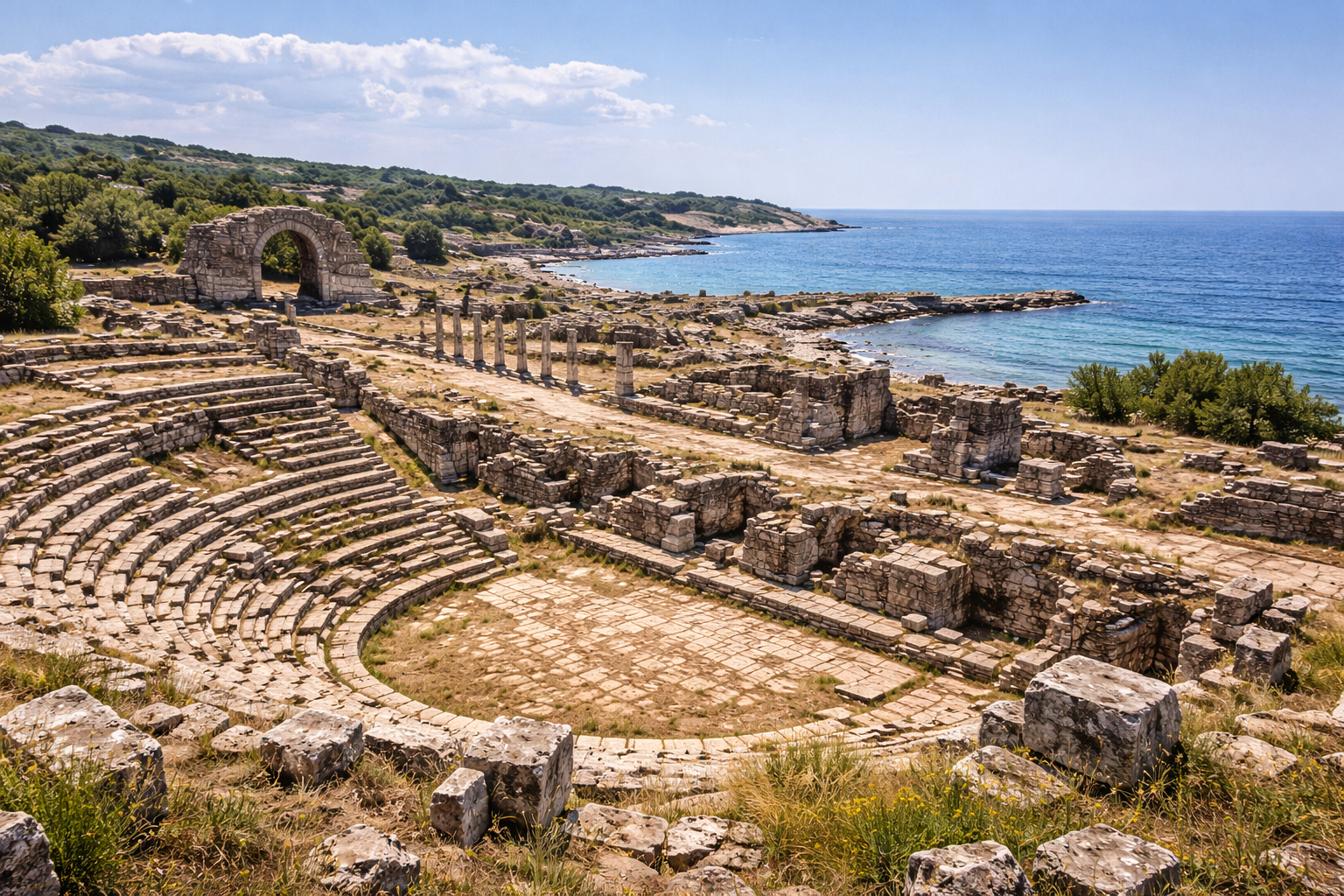
Przylegając do buleyterion leży mały rzymski odejon — zadaszona przestrzeń widowiskowa używana do konkursów muzycznych, deklamacji i zebrań obywatelskich. Jego półkoliste cavea mogło pomieścić około trzystu widzów. Budowla datuje się na okres wysokiego cesarstwa rzymskiego i dzieli swój taras z radnym domem, tworząc zwarty kompleks obywatelski.
Marmurowe siedzenia odejonu są nadal widoczne, ułożone w koncentryczne rzędy wokół orchestry i sceny. Budynek jest jednym z bardziej wizualnie angażujących rzymskich pozostałości w Troi, pozwalającym odwiedzającemu siedzieć tam, gdzie niegdyś siedziała rzymska publiczność, i wyobrażać sobie akustyczne efekty pierwotnej zadaszanej przestrzeni. Inskrypcje i podstawy posągów odkryte w okolicy dokumentują program dedykacji przez miejscowych notabli i odwiedzających rzymskich dygnitarzy. Odejon był prawdopodobnie kilkakrotnie przebudowywany w okresie cesarskim, a jego ostateczna forma datuje się na II w. n.e.
Teatr
Na niższych zboczach kopca, w miejscu wcześniejszego hellenistycznego teatru, stał niegdyś większy otwarty teatr. Jego resztki są skąpe, lecz zarys można wciąż prześledzić.
Teatr wzniesiono w okresie hellenistycznym i przebudowano w czasach rzymskich. Jego cavea, wycięta częściowo w naturalnym zboczu kopca, mogła pomieścić szacowane cztery do pięciu tysięcy widzów. Orchestra i budynek sceny są słabo zachowane, wyrabowane ze kamienia w późniejszych wiekach. Odbywały się tu przedstawienia dramatyczne, ceremonie publiczne i igrzyska Koinonu Ateny Ilias. Dziś zarys teatru jest widoczny ze znakowanego szlaku spacerowego, dając poczucie skali przestrzeni publicznej w rzymskim Ilium.
Dolne miasto
Największe topograficzne odkrycie nowoczesnej epoki w Troi należy do Manfreda Korfmanna: wykazanie za pomocą magnetometru od 1988 r., że miasto epoki brązu rozciągało się daleko poza mury cytadeli do dolnego miasta o powierzchni około trzydziestu hektarów. Dolne miasto było bronione przez rów wykuty w skale na tyle szeroki i głęboki, by zablokować rydwany, a za rowem przez solidny drewniany palisad zakotwiczony w otworach wyciętych w litej skale. Odkrycie to dramatycznie przepisało skalę Troi: zamiast małej cytadeli z kilkuset mieszkańcami, miasto w późnej epoce brązu było regionalną stolicą zamieszkałą przez może pięć do dziesięciu tysięcy ludzi.
Badania dolnego miasta były jednym z najbardziej ambitnych projektów geofizycznych kiedykolwiek podjętych na stanowisku z epoki brązu. Magnetometry wykrywały anomalie magnetyczne wywołane przez zakopane mury, rowy i otwory pod słupy; celowe wykopaliska następnie weryfikowały interpretacje. Rów — szerokości około trzech metrów i głębokości dwóch — biegł szerokim łukiem na południe od cytadeli, może czterysta metrów dalej. Wewnątrz rowu odkryto ślady drewnianego palisadu z regularnie rozmieszczonymi otworami pod słupy. W obrębie chronionej strefy znaleziono rozproszone resztki domów, warsztatów i obiektów magazynowych, choć znaczna część dolnego miasta została zaorana lub pozostaje nieodkopana.
Implikacje dolnego miasta dla zrozumienia debaty o wojnie trojańskiej są znaczne. Cytadelę o średnicy dwustu metrów trudno wyobrazić sobie jako nagrodę dziesięcioletniej wojny. Miasto o powierzchni trzydziestu hektarów, z tysiącami mieszkańców, kontrolujące przesmyk Dardaneli i biegnące przez nie szlaki handlowe, jest celem wartym walki. Identyfikacja Troi przez Korfmanna jako głównej regionalnej stolicy — porównywalnej skalą z innymi ośrodkami późnej epoki brązu, jak Mykeny czy Hattusa — przywróciła geograficzną i ekonomiczną wiarygodność homeryckie opowieści.
Miejsca znalezienia skarbów
Dwie strefy w cytadeli są związane z wielkimi zbiorami metalurgii sławnie odkrytymi przez Schliemanna. Najbardziej znany — skarb, który Schliemann nazwał „Skarbem Priama" — został wydobyty w 1873 r. z depozytu tuż za zachodnią ścianą Troi II. Inne, mniejsze skarby pochodziły z pomieszczeń w pobliżu. Żaden archeologia nie należy do okresu homeryckiego; wszystkie są o około tysiąc lat starsze. Miejsca znalezień są zaznaczone na stanowisku i stanowią część każdej przemyślanej wizyty.
Własna relacja Schliemanna z odkrycia w 1873 r. jest teatralna i nie w pełni wiarygodna. Twierdził, że dostrzegł błysk metalu w ścianie sekcji, odprawił robotników historią o dniu swego imienin i wydobył skarb sam z żoną Zofią, używając jedynie noża. Relacja umieszcza Zofię na miejscu w dniu, gdy dokumentarne dowody sugerują, że była w Atenach; dramatyczna scena odkrycia była prawie na pewno ubarwiona. Co jest jasne, to że niezwykły zbiór metalurgii — niemal dziewięć tysięcy przedmiotów według liczby Schliemanna — został usunięty ze stanowiska bez autoryzacji władz osmańskich, przemycony do Aten i ostatecznie złożony w Królewskich Muzeach w Berlinie w 1881 r. W 1945 r. wojska sowieckie zabrały kolekcję z Berlina do Moskwy, gdzie jej istnienie było oficjalnie zaprzeczane przez niemal pięćdziesiąt lat przed ponownym odkryciem i wystawą w Puszkinie w 1996 r.
Wykop Schliemanna
Przez centrum kopca przecina się długi, szeroki wykop, który Schliemann wykopał we wczesnych sezonach. Metodologicznie była to katastrofa — przekroił dokładnie tę warstwę, której szukał, by dotrzeć do tego, co (błędnie) uważał za homerycką Troję poniżej. Lecz wykop ma jedną odkupiciową cechę: oferuje odwiedzającemu pionowy przekrój przez całą stratygrafię stanowiska, wszystkie szesnaście metrów skumulowanego zasiedlenia, w jednym widoku.
Wykop ma długość ponad czterdziestu metrów i sięga miejscami niemal piętnaście metrów w dół. Jego boki zostały ustabilizowane i wzmocnione przez kolejne zespoły; mury Troi II, III, IV i V są widoczne w przekroju, ułożone jedna nad drugą, ze śladami pożarów i przebudów dającymi się odróżnić uważnemu oku. Stojąc na dnie wykopu, odwiedzający patrzy w górę na pięć tysięcy lat stratygrafii. Jest to jeden z najbardziej wizualnie uderzających momentów na stanowisku, choć znaczna część tego, co Schliemann usunął, nie może być odtworzona.
Replika Konia Trojańskiego
Przy wejściu do parku archeologicznego stoi ikoniczny drewniany Koń Trojański, turystyczna instalacja zbudowana w 1975 r. i odbudowana w nowoczesnej formie, spopularyzowana międzynarodowo po filmie Troja z 2004 r. Nie jest to w żadnym wypadku starożytny zabytek, lecz stał się emblematem stanowiska i okazją do zdjęcia. Inny, zupełnie odmienny drewniany koń — rekwizyt z filmu podarowany przez Warner Bros. — stoi na nabrzeżu w samym Çanakkale.
Obecna replika stanowiskowa ma dwanaście metrów wysokości, z wewnętrznymi schodami pozwalającymi odwiedzającym wspinać się i wyglądać przez okna na poziomie końskiego oka. Zaprojektowana przez tureckiego architekta İzzeta Senemoğlu i kilkakrotnie przebudowywana od 1975 r., stała się trwałym symbolem stanowiska zarówno dla turskich, jak i zagranicznych odwiedzających. Rekwizyt filmowy z Çanakkale jest natomiast bardziej naturalistyczny w projekcie — to obiekt rzeźbiarski, a nie wspinaczkowy — i jest eksponowany w centrum nadmorskiej promenady miasta.
Muzeum Troi
Około 800 metrów od stanowiska, we wsi Tevfikiye, wznosi się Muzeum Troi, otwarte w 2018 r. Budynek to jeden sześcian obleczony w zwietrzałą stal kortenowską, zaprojektowany przez architektów Yalına Tana i Ömera Selçuka Baza. W 2020 r. otrzymało Wyróżnienie Specjalne Europejskiego Muzeum Roku oraz Nagrodę Muzealną Rady Europy w 2020 r. Wewnątrz ponad dwa tysiące artefaktów jest wystawionych na czterech poziomach obejmujących Troadę jako region: ceramika i metalurgia epoki brązu z samej Troi; importy mykeńskie; hellenistyczne i rzymskie rzeźby ze Świątyni Ateny; monety Ilion; znaleziska z Aleksandrii Troady i innych stanowisk; oraz sekcja poświęcona historii wykopalisk. Muzeum jest niezbędnym elementem poważnej wizyty; stanowisko jest lepiej rozumiane po — lub podczas — zwiedzania jego galerii.
Galerie są zorganizowane tematycznie, a nie ściśle chronologicznie. Odwiedzający schodzi od wejścia spiralną sekwencją: archeologia Troady jako regionu; miasto Troja przez dziewięć warstw; Wojna Trojańska w sztuce i literaturze; świątynia i kulty Ilion; długa historia wykopalisk od MacLarena do Aslana. Gabloty zawierają słynny Sarkofag Polykseny (wczesniklasyczne dzieło przedstawiające ofiarę trojańskiej księżniczki), skarb hellenistycznych srebrnych tetradrachm Koinonu Ateny Ilias i kolekcję rzymskich portretów rzeźbiarskich z publicznych budynków miasta. Interaktywne ekspozycje wyjaśniają stratygrafię, animują architektoniczne rekonstrukcje każdej fazy i śledzą drogę Skarbu Priama z Hisarlık do Berlina i Moskwy.
Zewnętrzna część muzeum zaprojektowana jest jako swego rodzaju odwrócenie kopca: kwadratowy blok, którego objętość odpowiada cytadeli Troi II, z zwietrzałą powierzchnią przywołującą spaloną ziemię warstw zniszczenia. Sadzawka refleksyjna przy wejściu wyznacza przejście ze wsi do muzeum. Na terenie odbywa się mała ekspozycja otwarta z fragmentami architektonicznymi i model wybrzeża epoki brązu.
Prace archeologiczne
Charles MacLaren (1822)
Pierwszym uczonym, który na podstawie geografii i tekstów argumentował, że kopiec w Hisarlık jest miejscem starożytnej Troi, był szkocki redaktor i geolog Charles MacLaren, którego Dissertation on the Topography of the Plain of Troy (Rozprawa o topografii Równiny Trojańskiej) ukazała się w 1822 r. MacLaren nigdy nie kopał; jego argumentacja opierała się na uważnym czytaniu Homera z okiem na teren. Przez większą część XIX w. konsensus akademicki preferował jednak śródlądową wieś Pınarbaşı (Bunarbashi), a Hisarlık był odrzucany.
Frank Calvert (lata 60. XIX w.)
Brytyjsko-amerykański konsul i dżentelmeński archeolog Frank Calvert, mieszkający w pobliżu Troady, doszedł do przekonania, że MacLaren ma rację. Calvert był właścicielem części kopca w Hisarlık i przeprowadził małe wykopaliska próbne w latach 60. XIX w., które ujawniły głęboką stratygrafię. Nie mogąc sfinansować pełnych wykopalisk, spotkał Schliemanna w 1868 r. i podzielił się swoją wiedzą i przekonaniami. Rola Calverta była w dużej mierze wymazana z publikowanych relacji Schliemanna; nowożytna nauka przywróciła mu status intelektualnego twórcy nowoczesnej identyfikacji Troi.
Dom Calverta w Thymbra Farm, tuż na północ od Równiny Trojańskiej, zawierał jedną z najlepszych prywatnych kolekcji troajskich starożytności w XIX w. Publikował skrupulatnie w Archaeological Journal i korespondował z głównymi brytyjskimi archeologami swoich czasów. Jego korespondencja ze Schliemannem zachowała się i dokumentuje, jak bardzo Niemiec skorzystał z spostrzeżeń Anglika — i jak mało mu ostatecznie przyznał. Nowożytna nauka, szczególnie praca Susan Heuck Allen, przywróciła reputację Calverta jako prawdziwego intelektualnego twórcy ponownego odkrycia Troi.
Heinrich Schliemann (1870–1890)
Niemiecki biznesmen Heinrich Schliemann, który dorobił się fortuny w handlu i podczas gorączki złota w Kalifornii, poświęcił się w średnim wieku udowodnieniu historycznej rzeczywistości Homera. Zaczął kopać w Hisarlık w 1870 r. (wykopem próbnym) i na dużą skalę od 1871 r. Jego metody były brutalne: szeroki centralny wykop wpychany prosto przez każdą warstwę, by dotrzeć do tego, co (błędnie) uważał za homerycką skałę macierzystą. W tym procesie zniszczono całe mury Troi VI. W 1873 r. ogłosił odkrycie „Skarbu Priama" — zasobu złotych i srebrnych przedmiotów, które dramatycznie i prawdopodobnie nielegalnie on i jego żona Zofia przemycili z terytorium osmańskiego. Skarb trafił najpierw do Aten, potem do Berlina; po 1945 r. zabrały go siły sowieckie i jest obecnie przechowywany w Państwowym Muzeum Sztuk Pięknych im. Puszkina w Moskwie, gdzie większość z niego była wystawiona po raz pierwszy w 1996 r. Tytuł prawny jest sporny między Rosją, Niemcami i Turcją. Naukowa reputacja Schliemanna była od tego czasu kwestionowana; jego miejsce jako założyciela archeologii trojańskiej jest pewne.
Schliemann przeprowadził siedem głównych kampanii w Troi: w 1871, 1872, 1873, 1878, 1879, 1882 i 1890 r. Po każdym sezonie wydawał opublikowaną relację — Trojanische Altertümer (1874), Ilios (1881), Troja (1884) — łączącą szczegółowe obserwacje z przesadną homerycką interpretacją. Jego osobowość, ambicje i umiejętności inscenizacyjne uczyniły go celebrytą; jego metody, nawet według standardów lat 70. XIX w., były krytykowane przez profesjonalistów jako niszczycielskie i niesystematyczne. Dörpfeld, który dołączył do niego w 1882 r., zrewolucjonizował praktyki dokumentacyjne projektu w ostatnich latach. Schliemann zmarł w Neapolu w grudniu 1890 r. w drodze powrotnej z ostatniego sezonu w Troi; jest pochowany w Atenach.
Prawna historia Skarbu Priama jest studium sporów o własność kulturową. Schliemann podpisał kontrakt z rządem osmańskim zgadzający się na podział znalezisk; złamał umowę, przemycając skarb do Aten. Osmanie zaskarżyli go i ostatecznie otrzymali odszkodowanie w 1875 r. Skarb trafił do Królewskich Muzeów Berlińskich w 1881 r. jako dar Schliemanna. W 1945 r. wojska sowieckie zabrały kolekcję z bunkra, w którym berlińskie muzea przechowywały ją dla bezpieczeństwa. Jej istnienie w Moskwie było oficjalnie zaprzeczane przez niemal pół wieku; dopiero w 1993 r. Rosja przyznała, że posiada kolekcję, a w 1996 r. Muzeum Puszkina otworzyło pełną wystawę. Niemcy domagają się zwrotu; Turcja twierdzi, że przedmioty zostały nielegalnie wywiezione z terytorium osmańskiego; Rosja utrzymuje, że są one prawnym wojennym reparacjami. Sprawa pozostaje nierozwiązana.
Wilhelm Dörpfeld (1893–1894)
Po śmierci Schliemanna w 1890 r. jego współpracownik Wilhelm Dörpfeld — wykształcony architekt Niemieckiego Instytutu Archeologicznego — ukończył dwa kolejne sezony. Metody Dörpfelda były transformatywne: staranna dokumentacja architektoniczna, dyscyplina stratygraficzna i pierwszy właściwy plan murów miejskich. Stwierdził, że Troja VI, a nie Troja II Schliemanna, jest homeryckim miastem, na podstawie jej monumentalnych fortyfikacji i obfitości ceramiki mykeńskiej. Jego publikacja z 1902 r., Troja und Ilion, wyznaczyła kierunek pracy dla następnego pokolenia.
Dörpfeld dołączył do Schliemanna w 1882 r. jako już doświadczony badacz Olimpii, gdzie pracował pod kierunkiem Ernsta Curtiusa. Jego architektoniczne wykształcenie przyniosło dyscyplinę w dokumentowaniu pozostałości budowlanych, której Schliemannowi brakowało. Pod jego kierunkiem sporządzano plany w skali, odnotowywano relacje stratygraficzne i systematycznie katalogowano znaleziska. Po śmierci Schliemanna Dörpfeld wrócił do Troi w 1893 i 1894 r. z finansowaniem częściowo zapewnionym przez Zofię Schliemann; jego dwie kampanie skupiły się na rozszerzeniu obszaru wykopalisk i sporządzeniu kompleksowej opublikowanej syntezy. Troja und Ilion pozostaje podstawowym odniesieniem dla architektury stanowiska.
Carl Blegen (1932–1938)
Amerykański archeolog Carl Blegen z Uniwersytetu w Cincinnati przeprowadził siedem sezonów, które przyniosły definitywne ramy stratygraficzne nadal używane dziś: dziewięć głównych warstw podzielonych na czterdzieści sześć subfaz. Blegen nie zgadzał się z Dörpfeldem w sprawie identyfikacji homeryckie; argumentował, że Troja VI została zniszczona przez trzęsienie ziemi i że kandydatem na wojnę Homera jest następna, pospiesznie odbudowana i spalona warstwa, Troja VIIa. Czterotomowy końcowy raport Blegena (Troy, 1950–1958) pozostaje standardowym odniesieniem.
Zespół Blegena był wyjątkowo profesjonalny jak na swoje czasy, obejmując specjalistów w zakresie ceramiki, architektury, szczątków faunistycznych i dokumentacji stratygraficznej. Jego szczegółowa analiza sekwencji ceramiki — w tym pierwszego systematycznego porównania trojańskich zespołów ceramicznych z materiałem mykeńskim z lądowej Grecji — dała stanowisku nowoczesne ramy chronologiczne. Jego identyfikacja Troi VIIa jako kandydatki dla homeryckeigo miasta pozostała dominującym poglądem w archeologii egejskiej epoki brązu przez niemal wiek, choć była periodycznie kwestionowana na rzecz Troi VI. Argumentacja Blegena opierała się na dowodach zniszczenia przez pożar, pospiesznie pogrzebanych ciałach, grotach strzał w warstwie zniszczenia i chronologicznej zgodności z grecką tradycją.
Ekspedycja z Cincinnati zapoczątkowała też publikowanie sprawozdań z wykopalisk jako naukowych tomów ze szczegółowymi planami, przekrojami i katalogami znalezisk. Czterotomowe Troy (Princeton, 1950–1958) wyznaczyło standard publikacji stanowiskowej dla całego pokolenia. Materiały z wykopalisk Blegena są przechowywane w Muzeum Uniwersytetu Pensylwanii, Muzeum Sztuki w Cincinnati i (największa część) w Muzeum Archeologicznym Çanakkale i Muzeum Troi.
Manfred Korfmann (1988–2005)
Po półwiecznej przerwie wielkie wykopaliska wznowiono w 1988 r. pod kierunkiem Manfreda Korfmanna z Uniwersytetu w Tybindze, w długotrwałej współpracy z Çanakkale Onsekiz Mart Üniversitesi (ÇOMÜ). Zespół Korfmanna integrował badanie geofizyczne, studia paleoekologiczne i konserwację z tradycyjnymi wykopaliskani. Definiującym odkryciem jego kadencji było dolne miasto: badanie magnetometrem wykazało, że późnobronzowa Troja rozciągała się daleko poza cytadelę, broniona rowem i palisadem, i obejmowała około trzydziestu hektarów. Implikacja — że Troja VI/VIIa była regionalną stolicą — wywołała ostry publiczny spór z historykiem Frankiem Kolbem, lecz została szerzej poparta przez późniejsze badania terenowe. Korfmann był też instrumentalny w lobbowaniu na rzecz obecnego Muzeum Troi.
Projekt Korfmanna, formalnie znany jako Projekt Troia, trwał nieprzerwanie od 1988 do 2005 r. i w szczytowym momencie angażował ponad stu badaczy z dwudziestu instytucji w Europie i obu Amerykach. Jego roczne raporty publikowane były w piśmie Studia Troica, założonym w tym celu, które stało się głównym miejscem naukowej komunikacji o stanowisku. Interpretacyjne argumenty Korfmanna — że Troja była poważną późnobronzową regionalną stolicą, że dolne miasto było centralne dla jej tożsamości, że miasto należy rozumieć jako część szerszego anatolijskiego świata, a nie jako grecki przyczółek — wywołały godną uwagi debatę z tybingeńskim historykiem starożytnym Frankiem Kolbem. Wystawa z 2001 r. Troia: Traum und Wirklichkeit, pokazana w Stuttgarcie, Brunszwiku i Bonn, przyniosła nowe dowody szerokiej publiczności i skrystalizowała kontrowersje.
Korfmann otrzymał tureckie obywatelstwo w 2004 r. w uznaniu jego wkładu w turecką archeologię, przyjmując tureckie imię Osman. Zmarł na raka w sierpniu 2005 r., krótko po swoim ostatnim sezonie w Troi.
Ernst Pernicka, Rüstem Aslan i obecny projekt (2006–)
Po śmierci Korfmanna w 2005 r. kierownictwo przeszło na archeometra Ernsta Pernicką (Tybinga i Centrum Archeometrii im. Curta Engelhorna w Mannheim), z Rüstemem Aslanem z Çanakkale Onsekiz Mart Üniversitesi jako tureckim współdyrektorem. Od 2014 r. projekt jest prowadzony ze strony tureckiej przez Aslana, z ciągłą współpracą z Tybingi i szerokiego międzynarodowego zespołu. Obecne badania skupiają się na warstwach zniszczenia Troi VI i VIIa, na konserwacji zachowanych resztek, na rzymskich budynkach publicznych i na publikacji materiałów dziedziczonych z wcześniejszych wykopalisk. Wioska Tevfikiye i Muzeum Troi, oba fizycznie i intelektualnie sąsiadujące ze stanowiskiem, są teraz centralne dla jego misji publicznej.
Kierownictwo Pernicka kładło nacisk na analizę archeometryczną: badania izotopowe brązu i ołowiu z Troi II pomagające śledzić źródła metali, udoskonalenia datowania oparte na radiowegleniu i typologii ceramiki oraz nowe badania geofizyczne poszerzające obraz dolnego miasta. Kierownictwo Aslana od 2014 r. przesunęło centrum ciężkości na Çanakkale Onsekiz Mart Üniversitesi, ze znacznymi nowymi inwestycjami w konserwację, oznakowanie i infrastrukturę dla odwiedzających oraz kontynuowanymi celowymi wykopaliskani. Ostatnie kampanie ponownie zbadały warstwy zniszczenia Troi VI/VIIa z nową uwagą na kwestię ataku wojskowego i przyniosły znaczące nowe znaleziska, w tym groty strzał, kamienie do proc i spalone konstrukcje.
Wioska Tevfikiye, bezpośrednio sąsiadująca ze stanowiskiem, została również przekształcona w ramach projektu ÇOMÜ w „wiosk archeowioską" z kamiennymi domami ozdobionymi panelami związanymi z historią Troi. Wioska stała się wzorem dla archeologii zaangażowanej społecznościowo w Turcji, integrując zaludniony krajobraz z chronionym obszarem archeologicznym.
Sieci handlowe i dowody materialne
Położenie Troi przy południowym wejściu do Dardaneli uczyniło ją kluczowym węzłem w sieciach handlowych epoki brązu łączących Morze Egejskie, Anatolię, Morze Czarne i wschodnią część Morza Śródziemnego. Materialne dowody z wykopalisk dokumentują te połączenia we wszystkich fazach.
- Egejski obsydian z wyspy Melos pojawia się już w Troi I, dowodząc morskiego handlu z południowym Egeum od trzeciego tysiąclecia p.n.e.
- Miedź i cyna w postaci wlewków i metalurgii w Troi II świadczą o dalekosiężnym handlu surowymi metalami; badania izotopowe śledziły część trojańskiej miedzi do źródeł w górach Taurus i ewentualnie na Kaukazie.
- Ceramika mykeńska pojawia się obficie w Troi VI i VIIa: kyliki, dzbanki zasobowe, alabastra, zdobione kratery. Obecność tych naczyń, wytworzonych w Argolidzie i Beocji i eksportowanych do Troi, jest bezpośrednim dowodem kontaktu ze światem mykeńskiej Grecji.
- Połączenia anatolijskie ze światem hetyckim na wschodzie są dokumentowane przez paralele w ceramice, pieczęciach i metalurgii, a najbardziej konkretnie przez hetyckie klinowe odniesienie do Wilusy.
- Ceramika guzikowa (Buckelkeramik) w Troi VIIb sugeruje ruch populacji z Bałkanów podczas szerszego upadku późnej epoki brązu — połączenie z szerszym zjawiskiem „barbarzyńskiej" migracji, która dotknęła wschodnią część Morza Śródziemnego pod koniec drugiego tysiąclecia p.n.e.
- Kości końskie są obfite od Troi VI wzwyż, zgodne z homeryckim epitetem „Troja oswajaczka koni" i odzwierciedlające wagę koni w kulturze elit późnej epoki brązu w całej zachodniej Anatolii.
- Handel rzymski w okresie cesarskim przyniósł do Ilium fine wares z Italii, Galii i Afryki Północnej; amfory z Hiszpanii, Italii i wschodniej części Morza Śródziemnego; oraz towary luksusowe z całego cesarstwa.
Gdzie są znaleziska
- Muzeum Troi, Tevfikiye (Çanakkale). Główne repozytorium wszystkich znalezisk wykopanych od nowoczesnego tureckiego okresu i skierowane do publiczności muzeum stanowiska.
- Państwowe Muzeum Sztuk Pięknych im. Puszkina, Moskwa. Większość „Skarbu Priama" i inne złote przedmioty z ery Schliemanna, zabrane z Berlina w 1945 r.
- Muzea Archeologiczne Stambułu. Materiał odzyskany lub przekazany przez Schliemanna władzom osmańskim w 1875 r., plus późniejsze znaleziska z okresu wczesnorepublikańskiego.
- Neues Museum i inne kolekcje berlińskie. Znaleziska sprzed 1945 r. od Schliemanna, Dörpfelda i wczesnych kampanii niemieckich, które pozostały w Niemczech po sowieckim zajęciu.
- Muzeum Uniwersytetu Pensylwanii, Muzeum Sztuki w Cincinnati i inne instytucje amerykańskie. Kolekcje studyjne i część znalezisk z kampanii Blegena z lat 30. XX w.
Homer i wojna trojańska
Iliada
Iliada, skomponowana w formalnym greckim heksametrze i tradycyjnie przypisywana Homerowi, ukształtowała się we wschodniej części Morza Egejskiego — prawdopodobnie w Jonii — gdzieś w VIII w. p.n.e. To poemat liczący ponad piętnaście tysięcy wersów, obejmujący zaledwie kilka tygodni dziesiątego i ostatniego roku greckiego oblężenia Troi, skupiający się na gniewie Achillesa i jego konsekwencjach. Akcja rozciąga się od kłótni Achillesa z Agamemnonem, przez pojedynek Parysa i Menelaosa, do walki przy greckich okrętach, śmierci Patroklosa z rąk Hektora, zabicia Hektora przez Achillesa i wreszcie powrotu ciała Hektora do Priama. Sam upadek Troi nie jest opowiedziany w Iliadzie.
Poemat otwiera gniew Achillesa, kłócącego się z Agamemnonem o pojmankę Bryzeis, i jego wycofanie się z walki. Grecy, pozbawieni swego największego wojownika, są wypychani ku swoim okrętom. W Księgach III–VII focus przenosi się na pojedyncze walki i poselstwa. Księgi VIII–XV przynoszą kulminacyjną bitwę wokół greckiego obozu, z Hektorem nacierającym do ataku. W Księdze XVI Achilles pozwala swemu przyjacielowi Patroklosowi wejść do walki w zbroi Achillesa; Patroklos ginie z rąk Hektora. Pozostałe dziewięć ksiąg śledzą powrót Achillesa do walki, śmierć Hektora, igrzyska pogrzebowe za Patroklosa i wreszcie nocną wizytę króla Priama w namiocie Achillesa, by wykupić ciało Hektora. Poemat kończy się nie upadkiem miasta, lecz pogrzebem Hektora za jego murami — celowo tragicznym i nierozwiązanym zamknięciem.
To, co wyróżnia Iliadę spośród wcześniejszych epickich dzieł — sumeryjskich, akadyjskich, hetyckich — to zwrot ku wewnętrznemu wymiarowi psychologicznemu. Achilles nie jest po prostu herosem wykonującym wzorcowe czyny; to młody mężczyzna zmagający się ze znaczeniem chwały, śmiertelności i wyboru między długim, ciemnym życiem a krótkim, błyskotliwym. Hektor nie jest po prostu obrońcą Troi; to mąż i ojciec, który wie, że miasto upadnie, a jego syn zostanie zabity. Etyczna złożoność poematu uczyniła go fundamentalnym tekstem literackim greckiej kultury i — za pośrednictwem Greków — kultury zachodniej.
Szerszy cykl
Historia wojny i jej następstw była rozwijana w serii powiązanych poematów — Cyklu Epickiego — z którego tylko Iliada i Odyseja zachowały się w całości. Zagubione eposy to Kypria (przyczyny wojny), Ajtiopida (śmierć Achillesa), Mała Iliada i Iliou Persis (spustoszenie), i Nostoi (powroty do domu). W tych zaginionych dziełach pojawia się słynny Koń Trojański, skąd przechodzi do Odysei i, później, do Eneidy Wergiliusza.
Bohaterowie i tematy
Centralne postacie poematu — Achilles, Hektor, Agamemnon, Odyseusz, Parys, Helena, Priam, Andromacha — są indywidualnymi postaciami w sposób, jakiego wcześniejsza literatura starożytna ledwie się imała. Iliada jest nade wszystko medytacją nad śmiertelnością: nad wyborami dokonywanymi przez mężczyzn i kobiety, którzy wiedzą, że miasto upadnie, herosi zgińą i wojna będzie trwać.
Achilles jest synem bogini morza Tetydy i śmiertelnika Peleusa, najszybszym i najbardziej przerażającym z greckich wojowników. Hektor jest najstarszym synem Priama, wielkim obrońcą Troi i najbardziej etycznie pociągającą postacią w poemacie. Parys (Aleksandros) jest młodszym bratem Hektora, którego porwanie Heleny zaczęło wojnę; w poemacie jest konsekwentnie przedstawiany jako piękny, lecz słabowity, bardziej łucznik niż włócznik, bardziej kochanek niż żołnierz. Helena to najpiękniejsza kobieta na świecie, córka Zeusa i Ledy, kolejno żona Menelaosa i Parysa, przyczyna wojny — w poemacie wyraża wielokrotnie żal za katastrofę, którą sprowadziła na Troję. Agamemnon, król Myken i brat Menelaosa, prowadzi grecką ekspedycję; jest potężny, lecz pyszny, a jego kłótnia z Achillesem jest motorem fabuły. Odyseusz z Itaki, który stanie się później centralną postacią Odysei, pojawia się tu jako najbystrzejszy z greckich przywódców, człowiek stojący za ostatecznym fortelem drewnianego konia. Priam jest starym królem Troi, ojcem pięćdziesięciu synów, który przybywa do namiotu Achillesa w najbardziej poruszającej scenie poematu, by wykupić ciało martwego syna.
Koń Trojański
Najbardziej znany element historii Wojny Trojańskiej — drewniany koń, w którym ukryli się greccy wojownicy, by dostać się do miasta — jest tylko krótko wzmiankowany w Odysei (Księga IV i Księga VIII) i był w pełni opowiedziany w zaginionej Małej Iliadzie i Iliou Persis Cyklu Epickiego. Obraz ten był później rozbudowany przez Wergiliusza w Eneidzie (Księga II), gdzie trojański kapłan Laokoon jest zabijany przez morskie węże za ostrzeganie swoich rodaków, i gdzie Grecy wyłaniają się z konia nocą, by otworzyć bramy. Czy za koniem kryje się jakiś historyczny fortel wojskowy — być może maszyna oblężnicza, okręt, trzęsienie ziemi lub po prostu zapadająca w pamięć opowieść — jest przedmiotem niekończących się spekulacji. Nowożytni odwiedzający w Troi spotykają dwa drewniane konie: nowoczesną instalację przy wejściu na stanowisko (zbudowaną w 1975 r.) i rekwizyt z filmu Brada Pitta z 2004 r., wystawiony na nabrzeżu Çanakkale.
Eneida Wergiliusza
Pół tysiąclecia po Homerze rzymski poeta Wergiliusz skomponował swój własny epos, Eneidę, w dwunastu księgach. Jej bohater Eneasz, trojański książę i ocalały z zagłady, ucieka z płonącego miasta ze swoim ojcem, synem i bóstwami domowymi. Po latach tułaczki — w tym kartagińskim epizodzie z Dydą — Eneasz dociera do Italii, gdzie jego potomkowie założą Rzym. Poemat Wergiliusza wiąże rzymski projekt imperialny z troajskim pochodzeniem i był fundamentalnym tekstem dla kulturowej tożsamości epoki augustowskiej. August sam, przez swego adoptowanego ojca Juliusza Cezara i rzekome troajskie pochodzenie rodu Juliuszów od Eneasza, przedstawiał swoje mecenasstwo Ilium jako zamknięcie koła.
Eneida (rozpoczęta ok. 29 r. p.n.e., niedokończona w chwili śmierci Wergiliusza w 19 r. p.n.e.) jest skonstruowana jako celowa odpowiedź na zarówno Iliadę, jak i Odyseję. Księgi I–VI odzwierciedlają wędrówki Odysei (z zagładą Troi, opowiadaną przez Eneasza w Księdze II, jako retrospekcją); Księgi VII–XII odzwierciedlają wojnę Iliady. Eneasz jest celowo kontrastującym bohaterem: pobożnym, obowiązkowym, przygnębionym odpowiedzialnością, dokładnym przeciwieństwem gniewnego Achillesa. Poetycka wizja losu Rzymu — zstąpienie cesarskiej linii od trojańskich uchodźców, założenie Rzymu przez Romulusa, ostateczne rządy Augusta — nadała rzymskiemu porządkowi politycznemu quasi-religiouzną legitymizację, która trwała przez wieki.
Tratowanie Troi przez Wergiliusza jest przeniknięte głoką znajomością greckiego eposu i tragedii. Drewniany koń, śmierć Priama przy ołtarzu Zeusa, ucieczka Eneasza z ojcem Anchizesem na plecach i synem Julusem u boku — te obrazy, bardziej niż sama Iliada, definiowały średniowieczny i nowożytny obraz upadku Troi. Są reprodukowane w niezliczonych obrazach, freskach i gobelinach od renesansu po XIX w.
Debata o historycznym jądrze
Czy była Wojna Trojańska? Szczera odpowiedź brzmi: prawdopodobnie coś. Późnobronzowe zniszczenie Troi VIIa (ok. 1180 r. p.n.e.), chronologicznie zgodny upadek pałaców mykeńskich w tym samym pokoleniu, hetyckie odniesienia do konfliktu o Wilusę i długa tradycja ustna, która przetrwała przez grecki okres ciemności do stulecia Homera, wszystko to sugeruje, że historyczny konflikt — być może seria konfliktów, być może napad lub oblężenie — leżał u źródeł ostatecznego eposu. Lecz Iliada nie jest historią. To poemat, którego imiona, sceny i tematy były kształtowane przez cztery wieki ustnej transmisji przed zapisaniem. Związek między poematem a warstwą najlepiej opisać jako daleką pamięć przemienioną w sztukę.
Nowożytna nauka skupiła się na ostrożnym stanowisku: że Wojna Trojańska tradycji greckiej jest literacką reflekcją historycznego konfliktu o miasto Troja/Wilusa pod koniec XIII lub na początku XII w. p.n.e.; że ten konflikt był prawdopodobnie jednym z serii, a nie pojedynczym dziesięcioletnim oblężeniem; że imiona bohaterów i sceny bitew były kształtowane przez wieki bardowskiej elaboracji; i że głęboka pamięć wojny była zachowana przez grecki okres ciemności w tradycji ustnej, aż została skrystalizowana na piśmie przez Homera i jego następców. Przypadek ten opiera się na zbieżności trzech niezależnych linii dowodów — archeologii Troi VIIa, hetyckich odniesień do Wilusy i wewnętrznej logiki greckiej tradycji epickiej — żadnej z nich decydującej samodzielnie, lecz razem tworzących spójny obraz.
Sceptyczne stanowiska nadal są dostępne. Najbardziej radykalni sceptycy twierdzą, że Iliada jest zasadniczo czystą fikcją bez historycznej rzeczywistości za sobą. Większość pracujących archeologów i historyków epoki brązu uważa jednak kumulatywny argument za „historycznym jądrem" za przekonujący, nawet jeśli szczegóły wojny opisanej przez Homera należy uznać za poetycką elaborację, a nie zapis historyczny.
Wilusa w źródłach hetyckich
Królestwo w północno-zachodniej Anatolii
Tabliczki klinowe z hetyckiej stolicy Hattusa (dzisiejsze Boğazköy) wymieniają królestwo zwane Wilusa, leżące w skrajnym północno-zachodzie Anatolii — czyli w Troadzie. Wilusa jest jednym z grupy małych państw zwanych zbiorowo ziemiami Arzawa, leżących między Imperium Hetyckim a Morzem Egejskim. Jest wymieniana co najmniej od XV w. p.n.e. do końca XIII w.
Traktat Alaksandu
Najsłynniejszym dokumentem jest tzw. Traktat Alaksandu, zawarty między hetyckim Wielkim Królem Muuwattalim II (ok. 1295–1272 p.n.e.) a Alaksandu, królem Wilusy. Traktat uznaje Alaksandu za hetyckiego wasala, określa jego zobowiązania lojalności i wsparcia wojskowego oraz wymienia boskich świadków. Nawiązuje też do wcześniejszych stosunków dynastycznych między Wilusą a Hattusą, sugerując długie polityczne połączenie.
Imię Alaksandu jest uderzające. Nie jest to imię hetyckie ani luwickie; jest jawnie greckie — Aleksandros — a Aleksandros jest właśnie alternatywnym imieniem Parysa w Iliadzie. Czy bronzowy król Wilusy i homerycki książę Troi są w jakimkolwiek bezpośrednim historycznym sensie połączeni, jest niepoznawalne, lecz zbieżność imienia i królestwa jest jedną z najbardziej niezwykłych konwergencji między archiwum a eposem w historii Morza Śródziemnego.
Sam Traktat Alaksandu, odnaleziony w hetyckiej stolicy Hattusa (dzisiejsze Boğazköy w środkowej Turcji), jest niezwykłym dokumentem. Jego preambuła relacjonuje dyplomatyczną historię Wilusy od czasów wcześniejszego króla Kukkunni, śledzi dynastyczną ciągłość aż do Alaksandu i określa warunki wzajemnej lojalności, pomocy wojskowej i ochrony. Traktat wymienia boskich świadków zarówno z hetyckiego, jak i wilusańskiego panteonu, stanowiąc jeden z rzadkich wglądów w troajską religię: wśród świadków jest „Apaliuna z Wilusy", imię, które językoznawcy dość przekonująco łączą z greckim bogiem Apollinem, który w Iliadzie jest głównym boskim opiekunem Troi.
Inne odniesienia
Wilusa pojawia się w kilku innych hetyckich dokumentach:
- List (tzw. List Tawagalawy, ok. 1250 r. p.n.e.) odnosi się pośrednio do przeszłych konfliktów o Wilusę z królem Ahhijawa — niemal na pewno hetyckiego oddania Achai, mykeńskiego świata greckiego.
- Fragmentaryczny tekst (List Manapa-Tarhunty) opisuje hetycką interwencję w celu przywrócenia porządku w Wilusie.
- Tekst wyroczni i kilka list bogów wymieniają bóstwa Wilusy.
Kumulatywny obraz to małe, strategicznie usytuowane królestwo na egejskim obrzeżu świata hetyckiego, wielokrotnie uwikłane w konflikty angażujące zarówno Hattusę, jak i mykeńskich Greków — dokładnie polityczna geografia, którą epos Homera implikuje.
Wilusa, Wilios, Ilios
Łańcuch językowy łączący hetycką nazwę z homerycką jest prosty dla filologów:
- Wilusa w hetyckim piśmie klinowym odpowiada lokalnej formie Wilusija lub Wilios.
- We wczesnej grece staje się to Wilios (poświadczone jeszcze w archaicznej poezji z początkową digammą, ϝ).
- Digamma zanika z czasem, pozostawiając klasyczne greckie Ilios (forma użyta w tytule Iliady).
Równoległy łańcuch Alaksandu → Aleksandros (Parys) jest równie bezpośredni. Nic z tego nie dowodzi, że homerycki Parys jest historycznym Alaksandu, lecz pokazuje ponad wszelką rozsądną wątpliwość, że brązowe archiwum Hattusa i poezja jońska z VIII w. p.n.e. odnoszą się do tego samego miejsca pod ściśle spokrewnionymi nazwami.
Ahhijawa i kwestia mykeńska
Hetyckie dokumenty wymieniające Wilusę wymieniają też królestwo zwane Ahhijawa, które pojawia się wielokrotnie w korespondencji dyplomatycznej z XIV i XIII w. p.n.e. Nazwa ta jest od dawna rozumiana jako hetyckie oddanie Achai — terminu, którym Homer określa świat grecki. List Tawagalawy, datowany na ok. 1250 r. p.n.e., odnosi się pośrednio do przeszłego konfliktu o Wilusę angażującego króla Ahhijawy i do trwających negocjacji między Hattusą a Ahhijawą w sprawie mężczyzny imieniem Tawagalawa (być może hetyckie oddanie greckiego Eteoklesa). Kumulatywny obraz to mykeńska grecka ingerencja w Anatolii północno-zachodniej — w tym wojskowa — dotycząca miasta Troja — przez kilka pokoleń późnej epoki brązu. Jest to dokładnie polityczna geografia, którą epos Homera, skomponowany wieki później, przywołuje.
Religia w bronzowej Wilusie
Traktatowe odniesienie do Apaliuna z Wilusy — imienia dość przekonująco związanego z greckim Apollinem — otwiera małe okno na religię bronzowej Troi. Apollo jest głównym boskim opiekunem Trojan w Iliadzie; zsyła plagę na grecki obóz w pierwszych księgach poematu i wspiera Hektora w walce. Zbieżność hetyckiego dokumentu i greckiego poematu co do imienia i roli tego boga jest jednym z najbardziej uderzających zbiegów w całej dziedzinie. Inne imiona boskie wymienione w traktacie — w tym bóg burzy i bóg słońca Wilusy — są zgodne z szerszym anatolijskim i egejskim światem religijnym późnej epoki brązu.
Liczby i wymiary
| Okres | Data | Charakterystyka | Uwagi |
|---|---|---|---|
| Troja I | ok. 3000–2550 p.n.e. | Mała, obwarowana osada, domy megaron | Najwcześniejsza warstwa; mury do 3,5 m grubości |
| Troja II | ok. 2550–2300 p.n.e. | Brukowana rampa; „Skarb Priama" | Błędnie utożsamiona przez Schliemanna z homerycką Troją |
| Troja III | ok. 2300–2200 p.n.e. | Kontynuacja, mniejsze budynki | Skromna kultura materialna |
| Troja IV | ok. 2200–1900 p.n.e. | Kontynuacja | Nowe typy ceramiki |
| Troja V | ok. 1900–1750 p.n.e. | Kontynuacja, przejście do późnej epoki brązu | Ceramika toczona na kole |
| Troja VI | ok. 1750–1300 p.n.e. | Mury z ciosowego kamienia, importy mykeńskie | Silny kandydat na homeryckie miasto; zniszczona przez trzęsienie ziemi |
| Troja VIIa | ok. 1300–1180 p.n.e. | Zatłoczone wnętrze, pitoi, spalone zniszczenie | Najsilniejszy kandydat na homeryckie miasto |
| Troja VIIb | ok. 1180–950 p.n.e. | Zredukowana osada, ceramika guzikowa | Wioska po upadku |
| Troja VIII | ok. 950–85 p.n.e. | Greckie polis Ilion; Świątynia Ateny | Odwiedzana przez Kserksesa, Aleksandra |
| Troja IX | ok. 85 p.n.e. – 500 n.e. | Rzymskie Ilium; civitas sacra | August, buleyterion, odejon |
| Bizancjum | Po ok. 500 n.e. | Małe biskupstwo, upadek | Opuszczona w czasach osmańskich |
| Średnica cytadeli | — | ok. 200 m wschód–zachód | W szczytowym okresie Troi VI |
| Wysokość kopca | — | ok. 31 m | Ponad otaczającą równiną |
| Głębokość stratygraficzna | — | ok. 16 m | Całkowita warstwa kulturowa |
| Obwód murów Troi VI | — | ok. 550 m (pierwotnie) | Dziś widoczne ok. 330 m |
| Wysokość murów Troi VI | — | Do 9 m | Zachowane w niektórych miejscach |
| Powierzchnia dolnego miasta | — | ok. 30 ha | Badanie Korfmanna |
| Szacowana populacja | — | 5 000–10 000 | W szczytowym okresie Troi VI/VIIa |
| Subfazy (Blegen) | — | 46 | Na dziewięć głównych poziomów |
| Wpis UNESCO | 1998 | — | Kryteria (ii), (iii), (vi) |
| Otwarcie Muzeum Troi | 2018 | — | Wioska Tevfikiye |
Skarb Priama: usystematyzowany inwentarz
| Kategoria | Przedmioty | Materiał | Uwagi |
|---|---|---|---|
| Diademy | 2 duże ozdoby głowy („Klejnoty Heleny") | Złoto | Zawieszona sieć łańcuszków z liściastymi wisiorkami |
| Kolczyki | ok. 60 par | Złoto | Różne formy, koszyczkowe i sierpowate |
| Bransoletki | 6 | Złoto | Ciężkie, skręcone formy |
| Pektorały | 1 duża ozdoba piersiowa | Złoto | Kompozycja łańcuszków i wisiorków |
| Paciorki | ok. 8 750 małych | Złoto | Używane w naszyjnikach i wplatane w odzież |
| Naczynia | Sos-łódeczka, czary | Złoto i elektrum | Charakterystyczne formy wczesnej epoki brązu |
| Srebrne naczynia | Wazy, talerze | Srebro | W tym duży pojemnik zawierający mniejsze przedmioty |
| Narzędzia i broń | Siekiery, sztylety, groty włóczni | Brąz i miedź | Niektóre ceremonialne |
| Inne metalurgie | Szpile, pierścienie, fragmenty | Mieszane | Rozmieszczone w całym skarbie |
| Inne materiały | Soczewki kryształowe, kość słoniowa, fajans | Różne | Wyspecjalizowane przedmioty |
| Łączna liczba przedmiotów | ok. 8 830 (liczba Schliemanna) | Metale mieszane | Jeden z najbogatszych skarbów z wczesnej epoki brązu Egeum |
Kampanie wykopaliskowe w skrócie
| Kierownik | Lata | Przynależność | Główny wkład |
|---|---|---|---|
| Charles MacLaren (teoretycznie) | 1822 | Szkocki redaktor/geolog | Pierwszy naukowy argument, że Hisarlık to Troja |
| Frank Calvert | Lata 60. XIX w. | Brytyjski wicekonsul | Zidentyfikował kopiec, był właścicielem ziemi, przeprowadził pierwsze wykopy próbne |
| Heinrich Schliemann | 1870–1890 | Niezależny | Masowy centralny wykop, Skarb Priama, ustanowił stanowisko na arenie międzynarodowej |
| Wilhelm Dörpfeld | 1893–1894 | Niemiecki Instytut Archeologiczny | Dokumentacja architektoniczna, identyfikacja Troi VI jako hometyckiego kandydata |
| Carl Blegen | 1932–1938 | Uniwersytet w Cincinnati | Ostateczna stratygrafia 9 warstw / 46 subfaz; opowiedział się za Troją VIIa |
| Manfred Korfmann | 1988–2005 | Uniwersytet w Tybindze / ÇOMÜ | Odkrycie dolnego miasta, badanie magnetometrem, konserwacja |
| Ernst Pernicka | 2006–2013 | Tybinga / Mannheim | Kontynuacja projektu Korfmanna, badania archeometryczne |
| Rüstem Aslan | 2014–obecnie | Çanakkale Onsekiz Mart Üniversitesi | Obecne wykopaliska pod tureckim kierownictwem, Muzeum Troi, trwające badania terenowe |
Gdzie oglądać materiał trojański
| Instytucja | Lokalizacja | Zasoby |
|---|---|---|
| Muzeum Troi (Troya Müzesi) | Tevfikiye, Çanakkale | Główna nowoczesna kolekcja; Sarkofag Polykseny; najnowsze znaleziska |
| Państwowe Muzeum Sztuk Pięknych im. Puszkina | Moskwa | Większość Skarbu Priama (zajęcie z Berlina w 1945 r.) |
| Muzea Archeologiczne Stambułu | Stambuł | Znaleziska Schliemanna przekazane w 1875 r.; późniejszy materiał z okresu republikańskiego |
| Neues Museum / Muzea Berlińskie | Berlin | Znaleziska Schliemanna/Dörpfelda sprzed 1945 r. niezajęte przez siły sowieckie |
| Muzeum Uniwersytetu Pensylwanii | Filadelfia | Materiał z kampanii Blegena (1932–1938) |
| Muzeum Archeologiczne Çanakkale | Çanakkale (Cevatpaşa) | Materiał regionalny z Troady |
| Uniwersytet w Tybindze | Tybinga | Materiał studyjny z kampanii Korfmanna |
Informacje dla odwiedzających
Jak dojechać
- Z Çanakkale. Troja leży około 30 km na południe od miasta Çanakkale, na drodze w kierunku Ezine. Czas jazdy to mniej więcej trzydzieści do czterdziestu minut. Dolmuş (współdzielony minibus) odjeżdżają z centralnego dworca autobusowego Çanakkale kilka razy dziennie, zatrzymując się w pobliżu wejścia na stanowisko we wsi Tevfikiye.
- Ze Stambułu. Od czasu otwarcia Mostu Çanakkale 1915 w marcu 2022 r. Stambuł jest oddalony o około cztery do czterech i pół godziny jazdy samochodem. Most przekracza Dardanele na południe od Gelibolu i łączy europejski i azjatycki brzeg. Alternatywnie historyczny prom Eceabat–Çanakkale nadal kursuje często i jest bardziej atmosferycznym przybyciem, wysadzając podróżnych na azjatyckim brzegu naprzeciwko starego nabrzeża Çanakkale.
- Z Izmiru. Około 320 km na północ wzdłuż drogi nadmorskiej Morza Egejskiego, mniej więcej cztery i pół godziny.
- Autobusem. Firmy autokarowe dalekobieżne mają codzienne połączenia do Çanakkale ze Stambułu, Bursy, Izmiru, Ankary i innych głównych miast. Z dworca w Çanakkale lokalny dolmuş pokonuje ostatnie 30 km.
Godziny otwarcia, bilety, Karta Muzealna
- Stanowisko archeologiczne i Muzeum Troi są obie administrowane przez Ministerstwo Kultury i Turystyki. Godziny otwarcia to zazwyczaj 08:30–19:00 latem (1 kwietnia – 1 października) i 08:30–17:00 zimą, lecz przed wyjazdem zawsze należy sprawdzić oficjalną stronę ministerstwa.
- Bilety do stanowiska i muzeum są osobne.
- Museum Pass Türkiye (i jego egejski wariant regionalny) jest akceptowany w obu i jest zazwyczaj najekonomiczniejszą opcją przy zwiedzaniu wielu tureckich stanowisk.
- Dostępne są audioguidy w języku angielskim, niemieckim, tureckim i innych językach.
Wymagany czas
- Muzeum Troi. Zaplanuj co najmniej 1,5 godziny na pełne zwiedzenie galerii; poważni odwiedzający będą chcieli dwie.
- Stanowisko archeologiczne. Zaplanuj 1,5 do 2 godzin na przebycie znakowanego szlaku spacerowego po kopcu z odpowiednimi zatrzymaniami przy murach, bramach, megarach, wykopie Schliemanna i budynkach rzymskich.
- Łączna wizyta. Pełne pół dnia, najlepiej z przerwą między dwiema częściami na posiłek w Tevfikiye.
Co zabrać
- Solidne buty do chodzenia. Stanowisko ma nierówne kamienie, niskie fundamenty i nowoczesne kładki; sandały nie są wskazane.
- Ochrona przed słońcem. Kapelusz, krem przeciwsłoneczny i woda są niezbędne latem. Na kopcu jest bardzo mało naturalnego cienia.
- Przewodnik lub audioguide. Warstwy nie są samo-wyjaśniające; jakiś interpretacyjny środek przekształca doświadczenie.
- Aparat z obiektywem szerokokątnym, jeśli zależy ci na fotografii architektury — mury cytadeli i panoramiczny widok na równinę nagradzają to.
- Lornetka jest przydatna do skanowania równiny ku Dardanelom.
- Egzemplarz Iliady lub przynajmniej silna literacka pamięć o niej. Przekłady Lattimore'a, Faglesa lub Wilson są polecane dla ogólnych czytelników.
- Lekka kurtka na wiosenne lub jesienne popołudnia, gdy wiatr z cieśniny może być rześki.
- Środek odstraszający owady wiosną i latem; komary mogą być uciążliwe w pobliżu rzeki.
- Gotówka na małe zakupy i opłaty za dolmuş; karty są akceptowane w kasach i kawiarni muzeum.
Sezon
- Wiosna (kwiecień–maj). Równina Trojańska jest zielona, kwiaty pokrywają zbocza, a temperatury są przyjemne. Najlepszy sezon na poważne zwiedzanie.
- Jesień (wrzesień–październik). Łagodna, sucha, złota pogoda; mało tłumów po pierwszych tygodniach września. Doskonała do fotografii.
- Lato (czerwiec–sierpień). Gorące, z dziennymi maksimami często powyżej 30 °C. Odwiedzaj wcześnie rano lub późno po południu, by uniknąć upału i tłumów autobusów turystycznych.
- Zima (listopad–marzec). Spokojnie i atmosferycznie; burze nad Dardanelami dodają dramatyzmu. Ograniczone godziny; sprawdź przed wyjazdem.
Pobliskie stanowiska
Troada i przylegający Półwysep Gallipoli tworzą jeden z najbogatszych krajobrazów archeologicznych i historycznych w Turcji. Poważny plan zwiedzania powinien obejmować:
- Muzeum Troi (Tevfikiye). Obowiązkowe. Nie wycieczka poboczna, lecz integralna część wizyty w Troi. Zaplanuj co najmniej 1,5 godziny.
- Pola bitew i pomniki Gallipoli (Gelibolu). Przez Dardanele promem lub mostem; główne pola bitew kampanii z 1915 r., w tym Zatoka ANZAC, Lone Pine, Chunuk Bair i Pomnik Martyrów Çanakkale. Pełen dzień wizyty. Szczególnie ważne dla australijskich, nowozelandzkich, brytyjskich, francuskich i tureckich odwiedzających mających związki z kampanią.
- Assos (Behramkale). Klasyczne miasto portowe nad Zatoką Edremit z VI-wieczną Świątynią Ateny na spektakularnym akropolu. Około 90 km na południe od Troi. Arystoteles nauczał tu w IV w. p.n.e. Zaplanuj pół dnia.
- Apollon Sminthos (Gülpınar). Hellenistyczna Świątynia Apollina Sminthosa na południowo-zachodnim wybrzeżu Troady. Świątynia jest niezwykła ze względu na dekoracyjne rzeźby przedstawiające epizody z Iliady. Około 80 km od Troi.
- Aleksandria Troady (Dalyan). Rozległe hellenistyczne i rzymskie miasto portowe założone przez Antygona Jednookiego i przemianowane przez Lizymachosa. Znane z łaźni rzymskich, tzw. Łaźni Heroda Attyka i rozległych (w większości nieodkopanych) resztek. Około 50 km od Troi.
- Samo Çanakkale. Nabrzeże, Muzeum Marynarki i Zamek Cimenlik (osmańskie umocnienie przy cieśninie), bazary i tętniące życiem centrum studenckie. Drewniany koń z filmu z 2004 r. stoi tu, przy przystani promowej. Miasto jest naturalną bazą do zwiedzania Troi i Gallipoli.
- Bozcaada (Tenedos). Pokryta winnicami egejska wyspa naprzeciwko Troi, starożytny Tenedos z Iliady, gdzie ukrywała się grecka flota przed nocnym atakiem. Łatwa jednodniowa wycieczka promem z Geyikli, z winnicami, wenecko-osmańskim zamkiem i dobrymi restauracjami.
- Gökçeada (Imbros). Największa turecka wyspa egejska, dalej na północ, z tradycyjnymi wsiami i plażami. Jednodniowa wycieczka promem z Kabatepe.
Dostępność
- Główna ścieżka wokół stanowiska archeologicznego jest częściowo na podniesionych drewnianych kładkach zaprojektowanych w celu ochrony resztek i zapewnienia dostępnych tras. Niektóre odcinki obejmują jednak schody i nierówny grunt; nie wszystkie obszary są dostępne dla użytkowników wózków inwalidzkich.
- Muzeum Troi jest w pełni dostępne, z windami do wszystkich pięter.
- Toalety, mała kawiarnia i sklep z pamiątkami są dostępne przy wejściu na stanowisko.
- Parking jest dostępny obok stanowiska i muzeum.
- Dostępne toalety dla niepełnosprawnych są dostępne w obu miejscach.
- Trasy dostępne dla wózków inwalidzkich obejmują około 70 procent znakowanej trasy stanowiska. Obszar murów cytadeli epoki brązu i buleyterion są częściowo dostępne; wyższe tarasy mniej.
- Audioguidy są dostępne w języku angielskim, niemieckim, francuskim, rosyjskim, włoskim, hiszpańskim, tureckim i innych językach, z wersjami przeznaczonymi dla osób z dysfunkcją wzroku.
Gdzie jeść i nocować
- Wioska Tevfikiye ma kilka małych kawiarni i restauracji prowadzonych przez rodziny oferujących proste tureckie jedzenie, idealne na przerwę w południe między stanowiskiem a muzeum.
- Çanakkale jest głównym centrum dla hoteli, restauracji i udogodnień. Dzielnica nabrzeżna ma wiele restauracji rybnych z widokiem na Dardanele i europejski brzeg. Specjalności z rejonu Çanakkale to grillowana ryba, lokum (tureckie słodycze), peynir helvası (halwa serowa) i wina z Bozcaada.
- Na luksusową opcję Hotel Kolin i Hotel Akol w Çanakkale oferują zakwaterowanie czworo- i pięciogwiazdkowe. W średniej klasie Hotel Hellen i Hotel Anzac są popularne wśród zagranicznych odwiedzających. Budżetowi podróżnicy znajdą pensjonaty i hostele w ulicach za nabrzeżem.
- Dla atmosfery rozważ nocleg w Assos (Behramkale) w jednym z małych boutique hoteli w wiosce pod akropolem lub na Bozcaada w jednym z historycznych pensjonatów na wyspie.
Często zadawane pytania
Czy to naprawdę Troja Homera?
Jest to, bez rozsądnej wątpliwości, miejsce, które sami starożytni Grecy identyfikowali jako Troję. Hetyckie zapisy Wilusy, geograficzna odpowiedniość z Iliadą i nieprzerwana tradycja grecka i rzymska zbiegają się w Hisarlık. Czy poemat Homera odzwierciedla jedną historyczną wojnę, czy długą pamięć wielu konfliktów, to osobna kwestia — i taka, której archeologia nie może w pełni rozwiązać.
Która warstwa to „ta" homerycka Troja?
Większość uczonych dziś opowiada się za Troją VIIa (zniszczoną przez pożar ok. 1180 r. p.n.e.), zgodnie z Carlem Blegenem. Wilhelm Dörpfeld preferował Troję VI (zniszczoną ok. 1300 r. p.n.e., prawdopodobnie przez trzęsienie ziemi). Obie warstwy są widoczne na stanowisku, a otwarta wizyta rozważa obie.
Gdzie jest Skarb Priama?
Większość skarbu odkrytego przez Schliemanna w 1873 r. znajduje się w Państwowym Muzeum Sztuk Pięknych im. Puszkina w Moskwie, zabrána z Berlina przez wojska sowieckie w 1945 r. Niektóre przedmioty są w Muzeach Archeologicznych Stambułu, przekazane przez Schliemanna w 1875 r. pod osmańskim naciskiem. Wysokiej jakości repliki są wystawione w Muzeum Troi w Tevfikiye.
Co Schliemann naprawdę znalazł?
Znacznie więcej, niż rozumiał. Prawidłowo zidentyfikował stanowisko jako Troję, lecz jego błędna identyfikacja „Spalonego Miasta" Troi II z Troją Homera oznaczała, że jego wczesne wykopaliska zniszczyły znaczne fragmenty warstw (Troja VI i VIIa), które nowożytna nauka uważa za homeryckie. Jego rola jest słusznie postrzegana zarówno jako założyciela, jak i burzyciela archeologii trojańskiej.
Dlaczego jest tak wiele warstw?
Ponieważ Hisarlık jest strategicznie cennym miejscem — przy ujściu Dardaneli — które ludzie stale zasiedlali, umacniali, niszczyli i odbudowywali przez niemal cztery tysiące lat. Każda przebudowa nieznacznie podnosiła poziom gruntu; przez czterdzieści wieków stanowisko wzniosło się o szesnaście metrów nawarstwień kulturowych.
Czy drewniany koń przy wejściu jest starożytny?
Nie. Duży drewniany koń przy wejściu na stanowisko to nowoczesna instalacja, po raz pierwszy zbudowana w 1975 r. i przebudowana w zaktualizowanej formie. Inny drewniany koń, użyty jako rekwizyt w filmie Troja z 2004 r., został przekazany miastu Çanakkale przez Warner Bros. i stoi na nabrzeżu.
Jakim językiem mówili Trojanie?
Prawdopodobnie luwickim — anatolijskim indoeuropejskim językiem powszechnie mówionym w zachodniej i południowej Azji Mniejszej w późnej epoce brązu — z możliwie znaczącą grecką elitą, biorąc pod uwagę egejski charakter znacznej części kultury materialnej i greckie imię Alaksandu. Kwestia pozostaje dyskutowana.
Czy Muzeum Troi jest warte czasu?
Tak, bez zastrzeżeń. Jest jednym z najlepszych muzeów archeologicznych w Turcji, zarówno pod względem architektonicznym, jak i kuratorskim. Stanowisko jest znacznie bardziej zrozumiałe, gdy spędza się czas z artefaktami i ich kontekstem w muzeum, najlepiej przed lub podczas zwiedzania kopca.
Jak Troja wypada w porównaniu z Efezem czy Pergamonem?
Troja jest starsza, bardziej warstwowa i bardziej rozległe jako zachowana architektura niż którekolwiek z nich. Jest mniej spektakularna jako środowisko zbudowane — nie ma marmurowych ulic, nie ma teatru w efeskiej skali — lecz bogatsza chronologicznie. Odwiedzający ceniący głębię czasu, złożoność archeologiczną i literacki rezonans uznają Troję za nieporównywalną.
Czy mogę odwiedzić Troję w jeden dzień ze Stambułu?
Od otwarcia Mostu Çanakkale 1915 w 2022 r. — tak, przy wczesnym starcie. Wygodniejszy plan to nocleg w Çanakkale i przeznaczenie pełnego dnia na Troję plus Muzeum Troi, z możliwością dodania Gallipoli następnego ranka.
Czy są wycieczki z przewodnikiem?
Tak. Licencjonowani przewodnicy prowadzą wycieczki z Çanakkale i przy wejściu na stanowisko. Rezerwacja z wyprzedzeniem przez renomowaną agencję jest zalecana, szczególnie w szczycie sezonu. Stanowisko nadaje się też do samodzielnego zwiedzania z dobrym audioprzewodem lub drukowanym przewodnikiem.
Co z ostatnimi wykopaliskani?
Wykopaliska trwają każdego lata pod kierunkiem Çanakkale Onsekiz Mart Üniversitesi we współpracy z Tybingą. Ostatnie sezony przyniosły znaczące nowe dowody w warstwach zniszczenia Troi VI i VIIa, w budynkach publicznych z epoki rzymskiej oraz w dolnym mieście. Roczne raporty są publikowane przez dyrektorów i streszczane w corocznych sympozjach wykopaliskowych Ministerstwa Kultury.
Czy Równina Trojańska jest nadal rozpoznawalna z Iliady?
Zaskakująco tak. Stojąc na cytadeli i patrząc na północny zachód przez równinę ku Dardanelom, odwiedzający widzi krajobraz, który — po mentalnym uwzględnieniu zmian linii brzegowej — ściśle odpowiada geografii opisanej przez Homera. Dwie rzeki (Skamander/Karamenderes i Simoeis/Dümrek), zatoka (teraz zamulona, lecz rekonstruowalna z geologicznych odwiertów), wzgórza na zachód od cytadeli i odległe zbocza Góry Ida widoczne na południu — wszystkie są obecne. Teren jest jednym z najbardziej konkretnych punktów styku między poematem a miejscem.
Czy mogę wspinać się na mury?
Nie. Mury Troi VI są chronione znakowaną trasą spacerową na podniesionych kładkach i ścieżkach na poziomie gruntu. Odwiedzający nie mają prawa wspinać się na mury, zarówno ze względów konserwatorskich, jak i dla osobistego bezpieczeństwa. Trasa spacerowa oferuje doskonałe widoki na mury z wielu kątów.
Czy są nocne wizyty z przewodnikiem lub specjalne imprezy?
Okazjonalnie. Muzeum Troi organizuje wieczorne imprezy, wykłady i sezonowe otwarcia. Specjalne wycieczki są organizowane przez ÇOMÜ podczas głównych sezonów wykopalisk. Sprawdź oficjalną stronę Muzeum Troi dla bieżącego programu.
A adaptacje filmowe i telewizyjne Wojny Trojańskiej?
Troja była przedmiotem niezliczonych adaptacji, od średniowiecznych romansów po współczesny Hollywood. Najbardziej znana ostatnia adaptacja to film Troja z 2004 r. w reżyserii Wolfganga Petersena, z Bradem Pittem jako Achillesem i Ericem Baną jako Hektorem. Film jest luźno oparty na Iliadzie, lecz skraca wojnę do znacznie krótszych ram czasowych i pomija bogów. Rekwizytowy koń z filmu jest wystawiony w Çanakkale. Seria BBC/Netflix z 2018 r. Troy: Fall of a City jest bliższa poematowi pod względem długości i tonu. Dla widzów poszukujących wierniejszego wprowadzenia powieści Madeline Miller The Song of Achilles (2011) i Circe (2018) oraz The Silence of the Girls (2018) Pat Barker oferują nowoczesne literackie angaże z materiałem trojańskim.
Proponowane trasy zwiedzania
Wizyta na pół dnia
Dla podróżnych z ograniczonym czasem podstawowy plan półdniowy to: przyjazd do Muzeum Troi w środku przedpołudnia, 90 minut na galerie; przejazd na stanowisko archeologiczne na 90-minutowy obchód; lunch we wsi Tevfikiye; odjazd w środku popołudnia.
Pełny dzień w Troi
Pełny dzień pozwala na głębszą wizytę: rano muzeum, lunch w Tevfikiye, popołudnie na stanowisku z przewodnikiem lub audioprzewodem, czas na przejście całej znakowanej trasy w wygodnym tempie i powrót do Çanakkale na wczesny wieczór na nabrzeżu.
Trasa dwudniowa — Troja i Gallipoli
Dzień pierwszy: rano Muzeum Troi, popołudnie na stanowisku archeologicznym, nocleg w Çanakkale. Dzień drugi: prom przez Dardanele do Eceabat, pełna wycieczka po polach bitew Gallipoli, powrót do Çanakkale lub dalsza podróż.
Trasa trzydniowa — Troada i Morze Egejskie
Dzień pierwszy: stanowisko i muzeum Troi, nocleg w Çanakkale. Dzień drugi: jazda na południe do Aleksandrii Troady rano, Apollona Sminthosa w Gülpınar po południu, nocleg w Assos (Behramkale). Dzień trzeci: poranek w Assos i przy Świątyni Ateny, popołudnie w drodze powrotnej do Çanakkale lub dalej do Edremit, Pergamonu i Izmiru.
Tygodniowa wycieczka archeologiczna po zachodniej Anatolii
Połącz Troję z Pergamonem, Sardes, Efezem, Priene, Miletem i Didymą w kompleksowej wycieczce po klasycznej zachodniej Turcji. Równina Trojańska do Edremit do Pergamonu (Bergama) to naturalny pierwszy etap. Trasa następnie biegnie na południe wzdłuż egejskiego wybrzeża przez Izmir, a każde główne stanowisko reprezentuje inny okres i kulturę w długim łuku anatolijskiej cywilizacji klasycznej.
Słowniczek
- Ahhijawa. Hetycka nazwa mykeńskiego świata greckiego, wiarygodnie utożsamiana z homerycką Achaią.
- Alaksandu. Król Wilusy w XIII w. p.n.e.; strona traktatu z hetyckim Wielkim Królem Muuwattalim II; etymologicznie spokrewniony z greckim Aleksandros (= Parys).
- Buleyterion. Greckie i rzymskie zgromadzenie; miejsce spotkań miejskich magistratów.
- Buckelkeramik (ceramika guzikowa). Typ ceramiki ręcznie formowanej charakterystyczny dla Troi VIIb, ewentualnie związany z populacjami imigrantów bałkańskich.
- Cavea. Obszar siedzeń greckiego lub rzymskiego teatru lub odejonu.
- Civitas sacra. Łacińskie określenie „świętego miasta"; status przyznany Ilium przez Augusta, zwalniający je z podatków.
- Dardanele. Nowoczesna nazwa cieśniny łączącej Morze Egejskie z Morzem Marmara; starożytny Hellespont.
- Hellespont. Starożytna grecka nazwa Dardaneli.
- Hisarlık. Turecka nazwa kopca w Troi, oznaczająca „miejsce fortecy".
- Ilion / Ilios / Ilium. Greckie i łacińskie nazwy postbronzowego miasta w Troi; Ilios to forma grecka użyta w tytule Iliady.
- Koinon Ateny Ilias. Hellenistyczna i rzymska liga religijna miast Troady zjednoczona wokół kultu Ateny w Ilion.
- Megaron. Długi prostokątny dom z gankiem i główną salą z centralnym paleniskiem; charakterystyczny anatolijsko-egejski plan domu elitarnego.
- Odejon. Mały grecki lub rzymski kryty teatr na przedstawienia muzyczne i małe zgromadzenia.
- Pitos (l.mn. pitoi). Duży ceramiczny dzban magazynowy, często wkopany w podłogę bronzowego domu.
- Brama Skajska. Główna brama homeryckie Troi; pojedynek Hektora i Achillesa toczy się pod nią. Możliwe do utożsamienia z Bramą Wschodnią lub Południową Troi VI.
- Troada. Półwysep Anatolii północno-zachodniej, którego historycznym centrum jest Troja.
- Wilusa. Hetycka nazwa Troi/Ilion w późnej epoce brązu; etymologicznie spokrewniona z greckim Wilios → Ilios.
Informacje praktyczne w skrócie
| Pozycja | Szczegóły |
|---|---|
| Nazwa stanowiska | Troja / Troia / Truva |
| Nazwa z epoki brązu | Wilusa (hetycka) |
| Nazwa grecka | Ilion / Ilios |
| Nazwa łacińska | Ilium |
| Współczesna wioska | Tevfikiye, prowincja Çanakkale |
| Współrzędne | 39,957°N, 26,239°E |
| Status | Obiekt Światowego Dziedzictwa UNESCO (1998) |
| Odległość od Çanakkale | 30 km na południe |
| Odległość od Stambułu | 330 km |
| Odległość od wybrzeża | 4–5 km od Dardaneli |
| Wysokość kopca | 31 m ponad równiną |
| Powierzchnia kopca (cytadela) | ok. 2 ha |
| Dolne miasto | ok. 30 ha |
| Sezony wykopalisk | 1870–1890, 1893–1894, 1932–1938, 1988–obecnie |
| Obecny dyrektor | Prof. Rüstem Aslan, ÇOMÜ |
| Muzeum | Muzeum Troi (Troya Müzesi), Tevfikiye, otwarte 2018 |
| Architekt muzeum | Yalın Tan i Ömer Selçuk Baz |
| Europejskie Muzeum Roku | Wyróżnienie Specjalne, 2020 |
| Nagroda Muzealna Rady Europy | 2020 |
| Zalecany czas zwiedzania | Pół dnia do pełnego dnia |
Kluczowe daty z historii Troi i jej odkrycia
| Data | Zdarzenie |
|---|---|
| ok. 3000 r. p.n.e. | Założenie Troi I, pierwsza osada w Hisarlık |
| ok. 2550 r. p.n.e. | Początek Troi II, bogatej cytadeli wczesnej epoki brązu |
| ok. 2300 r. p.n.e. | Zniszczenie Troi II przez pożar; zdeponowanie „Skarbu Priama" |
| ok. 1750 r. p.n.e. | Początek Troi VI, wielkiego miasta późnej epoki brązu |
| ok. 1280 r. p.n.e. | Traktat Alaksandu między Wilusą a Imperium Hetyckim |
| ok. 1300 r. p.n.e. | Zniszczenie Troi VI przez trzęsienie ziemi |
| ok. 1180 r. p.n.e. | Zniszczenie Troi VIIa przez pożar — prawdopodobna homerycka Troja |
| ok. 1180–950 r. p.n.e. | Troja VIIb: zredukowane zasiedlenie; pojawia się ceramika guzikowa |
| ok. 950–700 r. p.n.e. | Przerwa lub bardzo ograniczone zasiedlenie |
| ok. VIII w. p.n.e. | Kompozycja Iliady i Odysei przypisywana Homerowi |
| 480 r. p.n.e. | Kserkses składa ofiary w Ilion w drodze do Grecji |
| 334 r. p.n.e. | Aleksander Wielki odwiedza Ilion i poświęca swoje zbroje |
| 188 r. p.n.e. | Traktat Apamejski; Ilion wchodzi w orbitę rzymską |
| 85 r. p.n.e. | Wojny mitrydatyckie niszczą Ilion |
| 48 r. p.n.e. | Juliusz Cezar odwiedza Ilion |
| 29–19 r. p.n.e. | Wergiliusz komponuje Eneidę |
| koniec I w. p.n.e. | Augustowska przebudowa Ilium |
| 124 r. n.e. | Hadrian odwiedza Ilion |
| 161–180 r. n.e. | Monety Marka Aureliusza przedstawiają Świątynię Ateny |
| 214 r. n.e. | Karakalla składa ofiary przy grobie Achillesa |
| 330 r. n.e. | Konstantyn przebudowuje Bizancjum na Konstantynopol |
| ok. 500 r. n.e. | Późnoantyczny upadek Ilium |
| 1462 | Mehmed II podobno odwiedza Hisarlık |
| 1822 | Charles MacLaren publikuje identyfikację Hisarlık jako Troi |
| Lata 60. XIX w. | Frank Calvert identyfikuje kopiec i przeprowadza wykopy próbne |
| 1870 | Schliemann rozpoczyna systematyczne wykopaliska |
| 1873 | Schliemann odkrywa „Skarb Priama" |
| 1881 | Skarb trafia do Królewskich Muzeów Berlińskich |
| 1890 | Śmierć Schliemanna; Dörpfeld kontynuuje |
| 1893–94 | Ostatnie kampanie Dörpfelda |
| 1902 | Publikacja Troja und Ilion |
| 1932–38 | Wykopaliska Blegena z Cincinnati |
| 1945 | Siły sowieckie zabierają Skarb Priama z Berlina |
| 1950–58 | Publikacja tomów Troy Blegena |
| 1988 | Korfmann rozpoczyna projekt tybingeński |
| 1993 | Rosja przyznaje, że posiada Skarb Priama |
| 1996 | Muzeum Puszkina wystawia skarb |
| 1998 | Troja wpisana na Listę Światowego Dziedzictwa UNESCO |
| 2001 | Wystawa Troia: Traum und Wirklichkeit w Niemczech |
| 2004 | Premiera filmu Troja z Bradem Pittem |
| 2005 | Śmierć Manfreda Korfmanna |
| 2006 | Pernicka i Aslan przejmują kierownictwo |
| 2014 | Aslan zostaje głównym dyrektorem pod tureckim kierownictwem |
| 2018 | Otwarcie Muzeum Troi w Tevfikiye |
| 2020 | Muzeum Troi otrzymuje Wyróżnienie Specjalne Europejskiego Muzeum Roku |
| 2022 | Otwarcie Mostu Çanakkale 1915 |
Czytanie Iliady w Troi
Dla odwiedzających, którzy chcą przeczytać fragmenty Iliady na stanowisku, oto krótki przewodnik po pasażach najściślej związanych z krajobrazem.
Księga III: Helena na murach
Helena stoi na murach Troi i identyfikuje greckich bohaterów stojących na równinie przed królem Priamem. Fragment — Teichoskopia („Widok z Murów") — stanowi jeden z najbardziej kinematograficznych momentów poematu i jedno z najbardziej bezpośrednich połączeń z fizycznym miejscem. Czytanie go na cytadeli Troi VI, patrząc przez równinę ku domniemanemu greckiemu obozowi, to niepodważalnie potężne przeżycie.
Księga VI: Hektor i Andromacha
Hektor wraca z walki, by zastać żonę Andromaché i niemowlę Astianaksa na murach. Ich rozstanie — Andromacha błagająca go, by nie wracał do walki, Hektor próbujący ją pocieszyć, Astianaks przestraszony hełmem ojca — to jedna z wielkich scen domowych w literaturze zachodniej. Sceneria to wielki mur Troi i Brama Skajska.
Księga XXII: Śmierć Hektora
Hektor czeka na Achillesa przed Bramą Skajską. Priam i Hekabe błagają go ze ścian, by wszedł do środka; odmawia, walczy z Achillesem i ginie. Achilles ciągnie jego ciało za rydwanem wokół murów. Miejsce tego starcia — gdzieś poza wielkimi murami cytadeli — było przedmiotem spekulacji od starożytności.
Księga XXIV: Priam i Achilles
Nocą Priam sam przekracza równinę ku namiotowi Achillesa i błaga o ciało syna. Równina Trojańska jest tłem; podróż zabrałaby Priama z cytadeli przez równinę ku domniemanemu greckiemu obozowi na brzegu. To emocjonalne apogeum poematu.
Czytanie tych fragmentów stojąc w Troi pozwala doświadczyć — bardziej bezpośrednio niż na jakimkolwiek innym klasycznym stanowisku — zbieżności literatury i krajobrazu, która przez niemal trzy tysiące lat czyniła miasto centrum kultury zachodniej.
Troja i Anatolia
Troja jest często przedstawiana zagranicznym odbiorcom jako stanowisko greckie — wschodnia placówka świata mykeńskiego, miasto Homera. To częściowa prawda. Z perspektywy hettyckiej Troja/Wilusa była anatolijskim wasalnym królestwem na zachodnim pograniczu Imperium Hetyckiego, w szerszym krajobrazie małych zachodnio-anatolijskich państw (tzw. ziemie Arzawa), obejmującym Mirę, Sechę i inne. Kultura materialna bronzowej Troi jest co najmniej równie anatolijska co egejska: plan domu megaron, tradycja mury z ciosowego kamienia, sekwencja ceramiki i językowe wskazówki — wszystko wskazuje na miasto zakorzenione w anatolijskim świecie.
To uznanie było jedną z najważniejszych interpretacyjnych zmian w troajskiej archeologii końca XX w. Argument Korfmanna za anatolijską Troją — regionalną stolicą zachodniej Anatolii, w dialogu zarówno z Imperium Hetyckim, jak i mykeńskim światem greckim, lecz kulturowo nie przynależącą wyłącznie do żadnego — wywołał ostre akademickie kontrowersje, lecz jest generalnie podtrzymany przez późniejsze badania terenowe. Troja wyłaniająca się z obecnej nauki to miasto zawiasowe, geograficznie na egejsko-anatolijskim pograniczu, kulturowo na tym samym pograniczu, politycznie gracz w wielkomocarstwowej dyplomacji wschodniośródziemnomorskiej późnej epoki brązu.
To anatolijskie ujęcie ma też znaczenie dla współczesnego odwiedzającego. Troada jest częścią Turcji, nie Grecji. Stanowisko jest odkopywane przez tureckie i niemieckie zespoły we współpracy; jego głównym muzeum jest Muzeum Troi w Çanakkale. Integracja Troi w dziedzictwo kulturowe nowoczesnej Turcji — i w długą anatolijską historię, w której hetycka, frygijska, lidyjska, grecka, hellenistyczna, rzymska, bizantyjska, seldżucka i osmańska cywilizacja są kolejnymi warstwami — stanowi część tego, jak stanowisko jest teraz rozumiane.
Równina Trojańska we współczesnej pamięci
Równina Trojańska była polem bitwy nie tylko w legendzie, ale i w nowoczesnej historii. Kampania Gallipoli z 1915 r. — toczona przez Dardanele w ramach alianckiej próby sforsowania cieśniny i zdobycia Konstantynopola — przyniosła jedno z wielkich wydarzeń militarnych i kulturowych początku XX w. Kampania, w której siły australijskie, nowozelandzkie, brytyjskie, francuskie, indyjskie i inne alianckie zmierzyły się z osmańskimi obrońcami, przyniosła masowe ofiary po obu stronach i ostateczne niepowodzenie wysiłku alianckiego.
Tureckimi obrońcami dowodził Mustafa Kemal, później Atatürk, którego dokonania w Gallipoli zapoczątkowały jego karierę i ostatecznie rolę założyciela nowoczesnej Republiki Tureckiej. Siły alianckie, szczególnie Australijsko-Nowozelandzki Korpus Armijny (ANZAC), są co roku upamiętniane w swoich krajach w Dzień ANZAC (25 kwietnia) od czasu wojny.
Dziś pola bitew Gallipoli są chronione jako park narodowy. Główne miejsca to Zatoka ANZAC, Lone Pine, Chunuk Bair, Pomnik Helles na południowym krańcu półwyspu i wielki Pomnik Martyrów Çanakkale. Słynne przemówienie Atatürka do rodzin alianckich poległych — „Nie ma różnicy między Johnniami a Mehmetami dla nas, leżącymi obok siebie w tej naszej ziemi" — jest wyryte w kilku miejscach.
Dla współczesnych odwiedzających Troję bliskość Gallipoli dodaje potężny rezonans. Dwie wielkie bitwy pamięci — jedna mitologiczna i cztery tysiące lat stara, jedna historyczna i zaledwie ponad wiek stara — toczą się po tej samej cieśninie. Wielu podróżnych odwiedza obie kolejno, a doświadczenie to zmienia sposób rozumienia każdego stanowiska.
Codzienne życie w bronzowej Troi
Jak wyglądało życie w Troi w późnej epoce brązu — w erze Troi VI i Troi VIIa? Materialne dowody pozwalają na częściową odpowiedź.
Pożywienie
Pozostałości faunistyczne z wykopalisk dokumentują dietę opartą na owcach i kozach (najliczniejsze zwierzęta), bydle i świniach (mniej powszechnych) oraz różnorodnych rybach z Hellespontu. Konie są obecne w niezwykłej obfitości od Troi VI wzwyż — zgodnie z homeryckim epitetem „Troja oswajaczka koni". Zwierzęta łowne to jelenie, zające i ptaki. Pozostałości roślinne (zwęglone ziarna, nasiona i pyłek) wskazują na uprawę pszenicy, jęczmienia, soczewicy i grochu, uzupełnioną sadowymi produktami, w tym figami, winogronami, oliwkami i granatami. Miód i produkty mleczarskie były też częścią diety.
Odzież i tkaniny
Wrzeciona, ciężarki tkackie i kościane igły są liczne we wszystkich fazach. Wełna, len i prawdopodobnie płótno były głównymi włóknami tekstylnymi. Iliada wielokrotnie wspomina kobiety — w tym Helenę i Andromaché — tkające wewnątrz domów Troi; archeologiczne dowody potwierdzają obraz tkactwa jako ważnej elitarnej domowej czynności. W niektórych przypadkach poświadczone są importowane barwniki i dekoracyjne wykończenia.
Rzemiosło i handel
Metalurgia brązu, produkcja ceramiki, obróbka kości, obróbka kamienia i prawdopodobnie obróbka drewna — wszystko to było praktykowane. Główne bronzowe skarby metalurgii — w tym Skarb Priama — świadczą o długiej tradycji doskonałej metalurgii ze złota, srebra, elektrum, miedzi i brązu. Obecność importowanej ceramiki (mykeńskie kyliki, alabastra, dzbanki zasobowe) i prawdopodobnie importowanych tkanin dokumentuje handel dalekosiężny. Lokalnie miasto było centrum wymiany produktów rolnych między zapleczem Troady a morskimi gośćmi.
Domy i gospodarstwa domowe
Elitarne gospodarstwa domowe żyły w wolnostojących domach megaron na tarasach cytadeli; szersza populacja prawdopodobnie zamieszkiwała mniejsze, gęściej skupione domy w dolnym mieście lub poza murami. Domowe czynności — gotowanie, tkanie, mielenie, przygotowywanie żywności — są dokumentowane archeologicznie przez paleniska, żarna, dzbany magazynowe i kościane narzędzia.
Religia i rytuał
Praktyka religijna pozostawiła mniej śladów niż domowa aktywność, lecz wotywne figurki, złoża rytualne i boskie imiona w Traktacie Alaksandu stanowią częściowe dowody. Bronzowy kult Apaliuna/Apollina i prawdopodobnie anatolijskiej bogini-matki są poświadczone. Doły ofiarnicze, złoża libacyjne i ślady ofiar są sporadycznie identyfikowane.
Śmiertelność i pochówek
Pochówki z późnej epoki brązu są rzadkie wewnątrz samego miasta; zmarli byli prawdopodobnie grzebani w cmentarzach zewnątrzmurowych, które nie zostały jeszcze bezpiecznie zidentyfikowane. Mały cmentarz kremacyjny z późnej epoki brązu na północny wschód od cytadeli został zbadany przez projekt Korfmanna i może zaspokajać część potrzeb pogrzebowych miasta.
Postacie z historii Troi
Mały dramatis personae najważniejszych historycznych, mitologicznych i nowoczesnych postaci związanych z Troją.
Z mitologii i epiki
- Achilles. Syn bogini morza Tetydy i śmiertelnika Peleusa, dowódca Myrmidonów, największy z greckich wojowników w Troi. Jego wycofanie się z walki jest tematem Iliady.
- Hektor. Najstarszy syn króla Priama, wielki obrońca Troi. Zabity przez Achillesa w Księdze XXII Iliady.
- Parys (Aleksandros). Młodszy syn Priama, porywacz Heleny, łucznik. Jego sąd trzech bogiń na Górze Ida wywołał wojnę.
- Helena. Córka Zeusa i Ledy, żona Menelaosa ze Sparty, porwana przez Parysa. Najpiękniejsza kobieta na świecie.
- Priam. Stary król Troi, ojciec pięćdziesięciu synów. Jego nocna wizyta u Achillesa w celu wykupienia ciała Hektora to emocjonalne apogeum Iliady.
- Hekabe. Królowa Troi, matka Hektora, Parysa, Kasandry i wielu innych. Po upadku miasta zostaje zniewolona.
- Andromacha. Żona Hektora, matka Astianaksa. Jej rozstanie z Hektorem w Księdze VI Iliady jest jedną z najbardziej poruszających scen w starożytnej literaturze.
- Kasandra. Prorocza córka Priama, przeklęta przez Apollina tak, że jej prawdziwe proroctwa nigdy nie były wierzone.
- Agamemnon. Król Myken, brat Menelaosa, dowódca greckiej ekspedycji. Zabity po powrocie do domu przez żonę Klitajmestrę.
- Menelaos. Król Sparty, mąż Heleny, brat Agamemnona.
- Odyseusz. Król Itaki, najsprytniejszy z greckich przywódców, twórca fortelu Konia Trojańskiego. Bohater Odysei.
- Eneasz. Trojański książę, syn Anchizesa i bogini Wenus/Afrodyty, który ucieka z płonącego miasta z ojcem i synem i staje się legendarnym protoplastą Rzymian w Eneidzie Wergiliusza.
Z historii
- Alaksandu z Wilusy. Hetycki wasalny król Troi na początku XIII w. p.n.e.; strona Traktatu Alaksandu z Muuwattalim II.
- Kserkses I. Perski król, który w 480 r. p.n.e. złożył ofiarę z tysiąca wołów w Ilion w drodze do najazdów na Grecję.
- Aleksander Wielki. Macedoński król, który odwiedził Ilion w 334 r. p.n.e., poświęcając swoje zbroje w Świątyni Ateny i zabierając stamtąd starożytną tarczę, którą uważał za relikt Wojny Trojańskiej.
- Lizymachos. Następca Aleksandra, ponowny założyciel Ilion na większą skalę.
- Juliusz Cezar. Rzymski dyktator, który odwiedził Ilion w 48 r. p.n.e. i przyznał miastu przywileje jako praojczyźnie rodu Juliuszów.
- August. Pierwszy cesarz Rzymu i patron głównej przebudowy Ilion.
- Hadrian. Cesarz Rzymu, który odwiedził Ilion w 124 r. n.e.
- Karakalla. Cesarz Rzymu, który w 214 r. n.e. złożył wyszukane ofiary przy domniemanym grobie Achillesa.
Z historii wykopalisk
- Charles MacLaren. Szkocki redaktor i geolog, który jako pierwszy argumentował w 1822 r., że Hisarlık jest miejscem Troi.
- Frank Calvert. Brytyjsko-amerykański wicekonsul i amatorski archeolog, który zidentyfikował kopiec i przeprowadził pierwsze wykopy próbne w latach 60. XIX w.
- Heinrich Schliemann. Niemiecki biznesmen i samouk-archeolog, który w 1870 r. rozpoczął systematyczne wykopaliska i w 1873 r. odkrył Skarb Priama.
- Zofia Schliemann. Żona i współpracownica Heinricha, słynnie sfotografowana nosząca złoto „Skarbu Priama".
- Wilhelm Dörpfeld. Architekt i archeolog, współpracownik Schliemanna od 1882 r., dyrektor kampanii z 1893–1894 r.
- Carl Blegen. Amerykański archeolog z Uniwersytetu w Cincinnati, dyrektor kampanii z 1932–1938 r.
- Manfred Korfmann. Niemiecki archeolog z Uniwersytetu w Tybindze, dyrektor projektu z 1988–2005 r., odkrywca dolnego miasta.
- Ernst Pernicka. Niemiecki archeometra, dyrektor po śmierci Korfmanna.
- Rüstem Aslan. Turecki archeolog z Çanakkale Onsekiz Mart Üniversitesi, obecny dyrektor wykopalisk.
Zwiedzanie Troi: sekwencja spacerowa
Dla odwiedzających preferujących ustrukturyzowane zwiedzanie stanowiska archeologicznego, oto zalecana sekwencja spacerowa wzdłuż znakowanej trasy od wejścia przez cytadelę i z powrotem. Sekwencja zajmuje około 90 do 120 minut w umiarkowanym tempie.
Przystanek 1: Koń Trojański i plac wejściowy
Zacznij od nowoczesnego drewnianego konia przy wejściu na stanowisko. Wejdź, jeśli chcesz (schody są strome), i wyjrzyj przez równinę ku współczesnej wsi Tevfikiye i miejscu muzeum. Orientacja placu pomaga zrozumieć relację cytadeli z jej otoczeniem.
Przystanek 2: Rampa i brama Troi II
Najwcześniejszy widoczny zabytek. Brukowana kamienna rampa prowadzi ku monumentalnej bramie kontrolującej dostęp do cytadeli wczesnej epoki brązu. Zwróć uwagę na staranne wykonanie i zachowane ślady wież bramowych. To ta sama brama, którą Schliemann wykopał w 1873 r.
Przystanek 3: Wykop Schliemanna
Krótki spacer prowadzi do wielkiego centralnego wykopu Schliemanna. Z platformy widokowej spójrz w dół na nawarstwiającą się stratygrafię: ślady murów, podłóg i przebudów wielu faz są widoczne w ścianach wykopu. To najbardziej bezpośrednie wizualne spotkanie z głębią historii Troi.
Przystanek 4: Mury Troi VI
Główna architektoniczna atrakcja. Spaceruj wzdłuż znakowanej ścieżki obok wielkich wapiennych murów, obserwując mury z ciosowego kamienia, nachylenie ku wnętrzu, pionowe odsadzenia i prostokątne wieże. Odcinek południowy jest szczególnie dobrze zachowany. Zatrzymaj się przy wieży południowo-wschodniej i spójrz w górę, by docenić zachowaną wysokość.
Przystanek 5: Brama Południowa
Główna brama Troi VI, z długim korytarzem między nakładającymi się murami i flankirującą wieżą. Stań w korytarzu bramy i rozważ trudność sforsowania wejścia przeciwko obrońcom na murach powyżej.
Przystanek 6: Dom Filarowy i inne megara
Wewnątrz cytadeli przejdź obok fundamentów Domu Filarowego (Dom VI M) i innych elitarnych rezydencji Troi VI. Kamienne podstawy kolumn są wyraźnie widoczne. To siedziby arystokracji trojańskiej późnej epoki brązu.
Przystanek 7: Brama Wschodnia
Krótkie odejście do najbardziej architektonicznie rozbudowanej bramy Troi VI, z jej długim korytarzem szechikany. Często proponowana jako Brama Skajska Homera.
Przystanek 8: Taras Świątyni Ateny
Szczyt kopca, gdzie niegdyś stała hellenistyczna i rzymska Świątynia Ateny Ilias. Na miejscu mało pozostało ze świątyni, lecz fragmenty architektoniczne są rozsiane po całym obszarze. Widok stąd, przez Równinę Trojańską ku odległym Dardanelom, jest najlepszy na stanowisku.
Przystanek 9: Buleyterion i odejon
Zstąp ku południowi cytadeli do rzymskich budynków publicznych: prostokątne fundamenty rady miejskiej i półkoliste cavea małego odejonu, bok do boku na niskim tarasie. Zachowały się marmurowe siedzenia i fragmenty architektoniczne.
Przystanek 10: Dolne miasto i droga do muzeum
Patrząc na południe z cytadeli, obszar Dolnego Miasta — odkryty magnetometrem Korfmanna — rozciąga się przez równinę. Większość z niego jest nieodkopana. Stąd wróć do placu wejściowego i przejedź do Muzeum Troi (ok. 800 metrów dalej) na uzupełniające wewnętrzne przeżycie.
Monety Ilion
Wśród najbardziej użytecznych dokumentacyjnych źródeł dla postbronzowego miasta są monety Ilion. Od końca IV w. p.n.e. Ilion emitował srebrne i brązowe monety we własnym imieniu, reklamując zarówno tożsamość obywatelską, jak i związek z boginią Ateną Ilias.
| Okres | Nominał | Awers | Rewers | Uwagi |
|---|---|---|---|---|
| Koniec IV w. p.n.e. | Srebrna drachma | Głowa Ateny w hełmie | Atena Ilias stojąca, sowa u stóp | Wczesna emisja autonomiczna |
| Po 189 r. p.n.e. | Srebrna tetradrachma | Głowa Ateny Ilias w hełmie | Atena stojąca, trzymająca włócznię; legenda ILI | Duża seria; ponad 100 znanych egzemplarzy |
| II–I w. p.n.e. | Brąz | Głowa Ateny | Atena Ilias stojąca w lewo | Cyrkulacja lokalna |
| Cesarstwo (I–III w. n.e.) | Brąz | Cesarski portret | Różne: Atena, świątynia, sceny mitologiczne | W tym moneta świątyni Marka Aureliusza |
Seria tetradrachm bitych po Traktacie Apamejskim (188 r. p.n.e.) — gdy Seleucydzi wycofali się za Taurus i Azja Mniejsza została reorganizowana pod rzymskim wpływem — była szczególnie ważna. Te monety, bite według standardu szerszego wschodniego Morza Śródziemnego i noszące imponujący wizerunek Ateny Ilias, reklamowały niezależność i prestiż miasta w całym regionie. Koinon Ateny Ilias bił też federalne monety w tym samym okresie.
Cesarsko-rzymska moneta Ilion jest ikonograficznie bogata. Emisje za Karakalli (211–217 n.e.) przedstawiają domniemany grób Achillesa; emisje za Kommodusa i Septymiusza Sewera przedstawiają mitologiczne sceny z Wojny Trojańskiej; a słynna moneta Marka Aureliusza przedstawiająca front Świątyni Ateny Ilias stanowi jedyny zachowany obraz architektury świątyni. Te monety zachowały się w skromnych ilościach w muzeach w Europie, Stanach Zjednoczonych i Turcji.
Uwaga o nazwach, językach i pisowni
Miasto było znane pod wieloma nazwami przez długą historię, a te nazwy funkcjonują w różnych językach z różnymi konwencjami. Krótka orientacja:
- Wilusa (hetyckie klinowe Wi-lu-ša). Późnobronzowa nazwa poświadczona w archiwach Hattusa, XIV–XIII w. p.n.e. To samo miejsce jest okazjonalnie nazywane Wilusija.
- Wilios / Ϝίλιος (mykeński i archaiczny grecki). Forma z początkową digammą (Ϝ), wymawianą w-, zachowana w niektórych archaicznych heksametrach jako Wilios; digamma znika z klasycznej greki attyckiej.
- Ilios / Ἴλιος (klasyczny grecki). Forma używana przez Homera w tytule Iliady.
- Ilion / Ἴλιον (hellenistyczny grecki). Forma używana jako nazwa postbronzowego miasta.
- Ilium (łacina). Łacińska forma imienia, używana przez Wergiliusza i poetów augustowskich.
- Troia / Τροία (grecki i łacina). Alternatywna nazwa, wywodząca się od eponymicznego troajskiego przodka Trosa, używana jako regionalna nazwa królestwa.
- Troy (angielski) i Truva / Troya (turecki). Nowoczesne formy w głównych językach.
Bohater Parys nosi też imię Aleksandros (Ἀλέξανδρος) u Homera; to samo greckie imię pojawia się w hetyckim dokumencie jako Alaksandu.
Nowoczesne tureckie toponimy w Troadzie to Çanakkale (stolica prowincji), Tevfikiye (wioska sąsiadująca ze stanowiskiem), Hisarlık (sam kopiec), Karamenderes (rzeka Skamander), Dümrek (Simoeis), Kaz Dağı (Góra Ida) i Bozcaada (Tenedos).
Jak Troja wpisuje się w szersze starożytne Morze Śródziemne
Połączenia w późnej epoce brązu
Późna epoka brązu (ok. 1700–1200 r. p.n.e.) była erą niezwykłego kosmopolityzmu we wschodniej części Morza Śródziemnego. Imperia i królestwa — Egipt, Hatti (Imperium Hetyckie), Mitanni, Asyria, Babilon, mykeńskie państwa pałacowe, minojska cywilizacja Krety w jej późnej formie — wymieniały dyplomatów, dary, małżeństwa i groźby. Listy Amarna z Egiptu i archiwa Hattusa z centralnej Anatolii dokumentują tę sieć w drobiazgowych szczegółach. Troja/Wilusa należy do tego świata jako małe, lecz strategiczne wasalne królestwo Imperium Hetyckiego na jego zachodnim pograniczu, w regularnym kontakcie zarówno z dworcem hetyckim, jak i mykeńskim światem greckim po drugiej stronie Egeum. Bronzowe miasto w Hisarlık jest materialnym korelatem wyrafinowanego systemu politycznego obejmującego królewskie dynastie, traktaty, poselstwa i handel przez wschodnie Morze Śródziemne.
Upadek i grecki okres ciemności
Upadek tego bronzowego systemu między około 1200 a 1150 r. p.n.e. pozostaje jednym z wielkich nierozwiązanych problemów historii starożytnej. Hattusa spłonęła, a Imperium Hetyckie upadło; pałace mykeńskie w Pylos, Mykenach, Tiryns i Tebach zostały zniszczone; egipskie zapisy mówią o najeżdżających „Ludach Morza" odpartych za cenę ogromnego wysiłku; miasta w Lewancie zostały spustoszone. Zniszczenie Troi VIIa około 1180 r. p.n.e. mieści się ściśle w tej katastrofie. Dwa stulecia, które następują — grecki okres ciemności — widziały zanik pisma w Grecji, upadek pałacowego systemu ekonomicznego, rozproszenie populacji i stopniowe wyłanianie się nowych form politycznych (polis) i nowych technologii (żelazo). W tym ciemnym okresie poeci ustni zachowywali wspomnienia zaginionego bronzowego świata; z tych wspomnień, przefiltrowanych przez wieki tradycji bardowskiej, ostatecznie wyłoniły się eposy Homera.
Hellenistyczna i rzymska recepcja
Grecy okresu archaicznego i klasycznego uważali Troję za fundacyjne miejsce — scenerię heroicznej epoki, miejsce wojny, która zakończyła wiek bohaterów. Greccy podróżnicy odwiedzali ją; Ateny twierdziły troajskie pochodzenie przez pewne plemiona; tragicy dramatyzowali epizody z wojny. Królestwa hellenistyczne — szczególnie Seleucydzi i Attalidzi — patronowały Ilion jako centrum religijnemu. Wraz z rzymskim podbiciem wschodniej części Morza Śródziemnego Troja zyskała nowe znaczenie przez Eneidę Wergiliusza i rzekome troajskie pochodzenie rodu Juliuszów. Cesarze Rzymu pielgrzymowali; miasto Ilium prosperowało; mit troajski stał się jedną z fundacyjnych narracji rzymskiej tożsamości kulturowej. Ostateczne przeniesienie stolicy cesarskiej do Konstantynopola w 330 r. n.e. umieściło nowe centrum ciężkości Rzymu niedaleko Troady, domykając długi łuk cesarskich skojarzeń z regionem.
Ceramika Troi: sekwencja w glinie
Sekwencja ceramiki w Troi jest jedną z najbardziej starannie zbadanych w egejsko-anatolijskim świecie, udoskonalaną przez kolejne pokolenia badaczy od Schliemanna przez Blegena po obecny projekt Tybinga–ÇOMÜ. Służy ona jako główne narzędzie do datowania poszczególnych faz i śledzenia zewnętrznych połączeń miasta.
Troja I i II
Ceramika jest głównie ręcznie formowana, ciemno polerowana lub czerwono-pokryta, z charakterystycznymi formami obejmującymi depas amphikypellon — wysoki, dwuuchwytowy kubek do picia, który stał się niemal emblematyczny dla kultury elit wczesnej epoki brązu w Anatolii. Typowe są dzbany z lejkowatą szyjką, dzbanki z dziobkiem i misy na nóżce. „Troajska szara ceramika" z tego okresu obiegała Morze Egejskie i zachodnie wybrzeże Anatolii.
Troja III–V
Przejście do form toczonych na kole zaczyna się w Troi III i jest kompletne w Troi V. Dominuje prosta toczona ceramika stołowa; malowana dekoracja charakteryzująca minojską i lądową grecką ceramikę z tego samego okresu jest w dużej mierze nieobecna w Troi, zaznaczając miasto jako część anatolijskiej, a nie egejskiej tradycji ceramicznej.
Troja VI
Pojawiają się dwie główne rodziny ceramiki: tzw. ceramika jasnobrązowa (toczona, niedekorowana, w szeregu praktycznych form) i importowana ceramika mykeńska z greckiego kontynentu. Importy mykeńskie — kyliki, dzbanki zasobowe, alabastra — pojawiają się od ok. 1400 r. p.n.e. i zwiększają się ilościowo przez końcową fazę. Ich chronologia stylistyczna (późnoheladycka IIB przez IIIB) stanowi główną chronologiczną kotwicę dla Troi VI.
Troja VIIa
Lokalna ceramika jasnobrązowa kontynuuje. Ceramika mykeńska we wczesnej fazie to późnoheladycka IIIB; końcowa warstwa zniszczenia zawiera najwcześniejszą ceramikę LH IIIC, dostarczając daty ok. 1180 r. p.n.e. Naczynia magazynowe — szczególnie duże pitoi wkopywane w podłogi — są liczne.
Troja VIIb
Pojawia się ręcznie formowana ceramika guzikowa (Buckelkeramik) z nakładanymi guzkami i polerowanymi powierzchniami; jej korzenie leżą na Bałkanach, sugerując ruch populacji podczas szerszego upadku późnej epoki brązu. Inne lokalne typy kontynuują obok.
Troja VIII
Od ok. VIII w. p.n.e. pojawiają się greckie typy ceramiki geometrycznej i archaicznej, zaznaczając wznowienie kontaktów ze światem greckim. Przez VI i V w. p.n.e. ceramika staje się wyraźnie eolijska i wschodnio-grecka. Od późnego okresu archaicznego pojawiają się importy attyckie czarnofigurowe i czerwonofigurowe.
Troja IX
Hellenistyczne i rzymskie typy ceramiki podążają za standardowymi sekwencjami wschodniej części Morza Śródziemnego: hellenistyczna ceramika reliefowa, rzymska terra sigillata (wschodnia sigillata A i B), późnorzymska czerwona ceramika afrykańska. Amfory dokumentują handel winem, oliwą i soloną rybą z całego świata rzymskiego.
Życie religijne w Troi
Kulty epoki brązu
Bezpośrednie dowody na religię epoki brązu w Troi są ograniczone. Wzmianka o Apaliuna z Wilusy w Traktacie Alaksandu — boskim świadku, którego imię dość przekonująco łączy się z greckim Apollinem — jest najbardziej konkretnym odniesieniem. Anatolijscy bogowie burzy i słońca są też poświadczeni jako boskich świadkowie w tym samym dokumencie. W obrębie cytadeli nie zidentyfikowano żadnej pewnej świątyni z epoki brązu, choć szczyt (zniszczony przez hellenistyczne tarasowanie) mógł ją zawierać.
Kult Ateny Ilias
Od VIII w. p.n.e. dominującym kultem w Troi jest kult Ateny Ilias — Ateny z Ilion. Jej świątynia stała na szczycie cytadeli; jej wizerunek był przedstawiany na miejskiej monecie jako stojąca postać trzymająca włócznię i pochodnię; Koinon Ateny Ilias organizował jej święto, Panatenaje Iliejskie, co cztery lata. Pielgrzymi przybywali z całego świata greckiego i rzymskiego, by składać dedykacje. Prestiż kultu wywodził się bezpośrednio z tradycji homeryckie: Atena była boginią najściślej związaną ze stroną grecką w Iliadzie, lecz Trojanie też utrzymywali sanktuarium Ateny wewnątrz swoich murów, z kapłanką Theano prowadzącą jej obrzędy.
Kulty heroiczne
Trojańskie kulty heroiczne rozwijały się obok kultu Ateny. Miejscowi przewodnicy identyfikowali groby na równinie jako należące do Achillesa, Patroklosa, Ajaksa, Hektora i Priama, i składano przy nich dedykacje. Wyszukane ofiary Karakalli przy domniemanym grobie Achillesa w 214 r. n.e., świadomie naśladujące Aleksandra, są najbardziej sławnym przykładem. Archeologiczna identyfikacja któregokolwiek z tych grobów jest niemożliwa, lecz aktywność kultowa wokół nich była integralną częścią ekonomii i tożsamości Troi od okresu hellenistycznego wzwyż.
Fazy rzymska i chrześcijańska
W ramach rządów rzymskich kult Ateny Ilias był integrowany z kultem cesarskim — ofiary składane wspólnie dla bogini i ubóstwionich cesarzy. Inskrypcje dokumentują kapłanów obu. Wraz z wzrostem chrześcijaństwa świątynia została opuszczona; z IV lub V w. n.e. poświadczona jest mała bazylika. W czasach bizantyjskich miasto miało biskupstwo podlegające metropolicie Kyzikos.
Recepcja Troi w kulturze zachodniej
Starożytność
Po Homerze każdy wielki grecki tragik pisał sztuki na tematy trojańskie. Agamemnon Ajschylosa, Ajas i Filoktet Sofoklesa, Trojanki, Hekabe, Andromacha, Helena, Ifigenia w Aulidzie i Ifigenia w Taurydzie Eurypidesa — razem czynią wojnę trojańską centralnym kompleksem narracyjnym ateńskiej tragedii. Greccy poeci liryczni — Safona, Alkajos, Pindar — nawiązywali do materiału trojańskiego. Dramaturdzy rzymscy Seneka (Troades, Agamemnon) i poeci epiccy Wergiliusz (Eneida), Owidiusz (Metamorfozy i Heroidy) oraz Stacjusz (Achilleida) kontynuowali tę tradycję.
Średniowiecze i renesans
W średniowiecznym Zachodzie Homer był ledwie dostępny (greka była w dużej mierze zapomniana), lecz materiał trojański dotarł do zachodniej Europy przez łacińskie parafrazy — szczególnie De excidio Troiae historia przypisywaną Daresowi Frygijczykowi i Ephemeridos belli Troiani przypisywaną Diktysowi z Krety, obie prawdopodobnie późnoantyczne dzieła podawane za relacje naocznych świadków. Z nich Benoît de Sainte-Maure skomponował swój Roman de Troie w XII w., z Benoîta wywodzą się Guido delle Colonne, John Lydgate i Geoffrey Chaucer (Troilus i Criseyda). Monarchia brytyjska i wiele zachodnioeuropejskich rodów szlacheckich twierdziło trojańskie pochodzenie — przez Brutusa, rzekomo prawnuka Eneasza, założyciela Brytanii.
Odzyskanie greckiego tekstu Homera w włoskim renesansie — Petrarka uzyskał rękopis w XIV w., lecz nie mógł go przeczytać; pierwsze drukowane wydanie ukazało się w 1488 r. — przywróciło bezpośredni dostęp do Iliady i Odysei i przekształciło europejską kulturę literacką. Od XVI w. wzwyż tematy trojańskie nasycają europejską sztukę i literaturę: Botticelli, Mantegna, Rubens, Tiepolo i niezliczeni inni malowali sceny z wojny; Szekspir napisał Troilusa i Krysydę i nawiązywał do materiału trojańskiego przez całą swoją twórczość; Doktor Faustus Marlowe'a widzi Helenę Trojańską; Andromacha Racine'a czerpała z Eurypidesa przez Wergiliusza.
Nowoczesne angaże
XIX i XX w. widziały Troję jako zarówno przedmiot nowej kreacji literackiej, jak i naukowych badań. Wykopaliska Heinricha Schliemanna od 1870 r. pochłonęły wyobraźnię publiczną w całej Europie i Ameryce. Tennyson napisał Ulissesa (1842); Yeats stworzył Ledę i łabędzia (1923) i Nie ma drugiej Troi; Ulisses Jamesa Joyce'a (1922) przestrukturował Odyseję jako jeden dzień w Dublinie; Kassandra Christy Wolf (1983) opowiedziała wojnę z trojańskiej kobiecej perspektywy. W filmie, poza Troją z 2004 r., produkcje to Helena Trojańska Roberta Wise'a (1956) i włoskie L'ira di Achille (1962). Na początku XXI w. powieść Madeline Miller The Song of Achilles (2011) i The Silence of the Girls (2018) i The Women of Troy (2021) Pat Barker przyniosły nowe feministyczne odczytania materiału do statusu międzynarodowego bestsellera. Przekład Iliady Emily Wilson z 2023 r. — pierwszy dokonany przez kobietę na angielski — oznaczył kolejny znaczący moment w długiej recepcji poematu.
Konserwacja i przyszłość Troi
Troja stoi w obliczu wyzwań konserwatorskich wspólnych wielu otwartym stanowiskom archeologicznym. Wiatr, deszcz, mróz i wzrost biologiczny stopniowo wietrzą odsłoniętą murę; presja odwiedzających zagęszcza powierzchnie i eroduje ścieżki; działalność rolnicza wokół chronionej strefy powoduje kurz, drift pestycydów i zmiany wód gruntowych. Obecny plan zarządzania, opracowany w ramach wpisu na Listę UNESCO i periodycznie rewidowany, adresuje te kwestie przez ukierunkowane interwencje konserwatorskie na najbardziej wrażliwych budowlach (szczególnie rampie Troi II i murach Troi VI), sieć podniesionych kładek kanalizujących ruch odwiedzających, regularne monitorowanie stanów strukturalnych i koordynację ze społecznościami rolniczymi okolicznych wiosek.
Muzeum Troi odegrało transformatywną rolę w publicznej prezentacji stanowiska od jego otwarcia w 2018 r. Dostarczając kompleksowy zasób interpretacyjny obok archeologicznych resztek, pozwala samo stanowisko odwiedzać z mniejszą infrastrukturą interpretacyjną — mniej znaków, mniej wizualnego bałaganu, więcej przestrzeni dla architektury, by mówiła własnym głosem. Muzeum funkcjonuje też jako centrum badawcze, z laboratoriami konserwatorskimi, zbiorami studyjnymi i udogodnieniami dla wizytujących uczonych.
Patrząc w przyszłość, najważniejsze niezbadane pytania dotyczą Dolnego Miasta — wciąż w dużej mierze nieodkopananego mimo badania geofizycznego Korfmanna — i szerszego regionalnego krajobrazu Troady. Przyszłe badania przyniosą też prawdopodobnie dalsze udoskonalenia chronologii warstw zniszczenia późnej epoki brązu, może ostateczne rozwiązanie kwestii Troia VI/VIIa i bardziej szczegółową rekonstrukcję linii brzegowej epoki brązu przez badania paleoekologiczne. Troja jest jednym z rzadkich klasycznych stanowisk, gdzie po stu pięćdziesięciu latach wykopalisk najważniejsze odkrycia mogą wciąż leżeć przed nami.
Źródła i dalsza lektura
- UNESCO World Heritage Centre — Archaeological Site of Troy. https://whc.unesco.org/en/list/849/
- Muzeum Troi w Çanakkale (Troya Müzesi) — oficjalna strona. https://muze.gov.tr/muze-detay?SectionId=TRY01
- Republika Turcji Ministerstwo Kultury i Turystyki. https://www.ktb.gov.tr/
- Projekt Troia, Eberhard Karls Universität Tübingen. Strony i publikacje długotrwałego projektu. https://www.uni-tuebingen.de/
- Çanakkale Onsekiz Mart Üniversitesi (ÇOMÜ), Wydział Archeologii. Aktualne raporty wykopalisk pod kierunkiem Rüstema Aslana.
- Wikipedia — Troy. https://en.wikipedia.org/wiki/Troy
- Britannica — Troy (ancient city, Turkey). https://www.britannica.com/place/Troy-ancient-city-Turkey
- Turkish Archaeological News — Troy. https://turkisharchaeonews.net/site/troy
- Carl W. Blegen, Troy and the Trojans (Londyn: Thames & Hudson, 1963).
- Manfred Korfmann (red.), Troia: Archäologie eines Siedlungshügels und seiner Landschaft (Moguncja: Philipp von Zabern, 2006).
- Trevor Bryce, The Trojans and Their Neighbours (Londyn: Routledge, 2006).
- Susan Heuck Allen, Finding the Walls of Troy: Frank Calvert and Heinrich Schliemann at Hisarlık (Berkeley: University of California Press, 1999).
- Joachim Latacz, Troy and Homer: Towards a Solution of an Old Mystery (Oxford: Oxford University Press, 2004).
- Eric H. Cline, The Trojan War: A Very Short Introduction (Oxford: Oxford University Press, 2013).
- Homer, Iliada — polecane przekłady: Richmond Lattimore (Chicago), Robert Fagles (Penguin), Caroline Alexander (Ecco), Emily Wilson (Norton, 2023).
- Wergiliusz, Eneida — polecane przekłady: Robert Fagles (Penguin), Sarah Ruden (Yale), Shadi Bartsch (Profile).
- Heinrich Schliemann, Ilios (1881) i Troja (1884). Oryginalne raporty wykopalisk w pełnej dziewiętnastowiecznej formie. Dostępne w przedrukach i online przez Project Gutenberg i Internet Archive.
- Wilhelm Dörpfeld, Troja und Ilion: Ergebnisse der Ausgrabungen in den vorhistorischen und historischen Schichten von Ilion 1870–1894 (Ateny, 1902). Pierwsza systematyczna architektoniczna publikacja stanowiska.
- Carl W. Blegen, John L. Caskey, Marion Rawson i Jerome Sperling, Troy (Princeton University Press, 1950–1958). Czterotomowa publikacja z Cincinnati.
- Donald F. Easton, Schliemann's Excavations at Troia 1870–1873 (Moguncja: Philipp von Zabern, 2002). Nowoczesna ponowna ocena dokumentacji Schliemanna.
- Susan Heuck Allen, Finding the Walls of Troy (Berkeley: University of California Press, 1999). Standardowe studium o Franku Calvercie.
- Caroline Moorehead, The Lost Treasures of Troy (Londyn: Weidenfeld & Nicolson, 1994). O historii Skarbu Priama.
- Studia Troica — pismo wydawane w Moguncji od 1991 do 2010 r. przez projekt Korfmanna. Główne miejsce naukowej publikacji o Troi w tym okresie.
- Studia Troica Monographien — seria książkowa, kontynuacja publikacji wyników wykopalisk.
- Dzienniki Heinricha Schliemanna, częściowo opublikowane i przechowywane w Bibliotece Gennadiosa w Atenach, stanowią żywy współczesny zapis wczesnych wykopalisk.
- Archiwum fotograficzne projektu Troia online — https://www.uni-tuebingen.de/ — zawiera fotografie, plany i architektoniczne rekonstrukcje z kampanii Korfmanna.
- Kolekcja Muzeum Brytyjskiego — materiał od dziewiętnastowiecznych podróżników i kolekcjonerów związany z Troadą. https://www.britishmuseum.org/
- Amerykańska Szkoła Studiów Klasycznych w Atenach — archiwa wykopalisk Blegena.
- Trevor Bryce, The Kingdom of the Hittites (Oxford University Press, 2005). Standardowe wprowadzenie do świata hetyckiego i jego stosunków z Wilusą i Ahhijawą.
- Eric H. Cline, 1177 BC: The Year Civilization Collapsed (Princeton University Press, 2014). Żywa synteza upadku późnej epoki brązu z obszerną dyskusją Troi.
- Barry Strauss, The Trojan War: A New History (Simon & Schuster, 2006). Przystępna synteza historycznych i archeologicznych argumentów.
- Caroline Alexander, The War That Killed Achilles (Viking, 2009). Literackie odczytanie Iliady z uwagą na jej historyczne tło.
- Robin Lane Fox, Travelling Heroes (Allen Lane, 2008). O dyfuzji mitologii greckiej we wczesnym pierwszym tysiącleciu p.n.e., z obszerną dyskusją Troi.
- Teksty podróżnicze Williama Dalrymple'a o Turcji i Morzu Egejskim stanowią angażujący nowoczesny kontekst dla odwiedzających zainteresowanych kulturowym krajobrazem.
Uwaga końcowa
Niewiele miejsc na świecie nagradza uważne zwiedzanie tak bogato jak Troja. Stać na cytadeli w Hisarlık to zajmować punkt, w którym mitologia, historia, archeologia, geografia i polityka zbiegają się z intensywnością niemal nieosiągalną przez żadne inne stanowisko. Odwiedzający, który przybywa oczekując marmurowych wspaniałości Efezu lub Pergamonu, będzie zawiedziony; odwiedzający, który przybywa oczekując głębi czasu i ciężaru pamięci, zostanie nagrodzony ponad wszelką miarę.
Zalecane podejście jest cierpliwe i przygotowane. Przeczytaj przynajmniej fragmenty Iliady przed wizytą. Przeznacz czas na muzeum, jak i na stanowisko. Weź przewodnika, audioguide lub dobry przewodnik; warstwy nagradzają interpretację. Chodź powoli. Usiądź na rzymskich siedzeniach odejonu. Wspnij się po części na Konia Trojańskiego i spójrz przez równinę. Stań przy Bramie Wschodniej i wyobraź sobie szykanę wypełnioną uzbrojonymimen. Spójrz w dół do wykopu Schliemanna na pięć tysięcy lat stratygrafii. Następnie w muzeum pozwól artefaktom dopełnić to, czego kamienie same nie mogą powiedzieć.
Troja to wiele miast, wiele historii, wiele wieków ludzkiego wysiłku, by budować, bronić, niszczyć, pamiętać i odkrywać na nowo. Każdy odwiedzający opuszcza ją z inną wersją. To właśnie część powodów, dla których trwa.