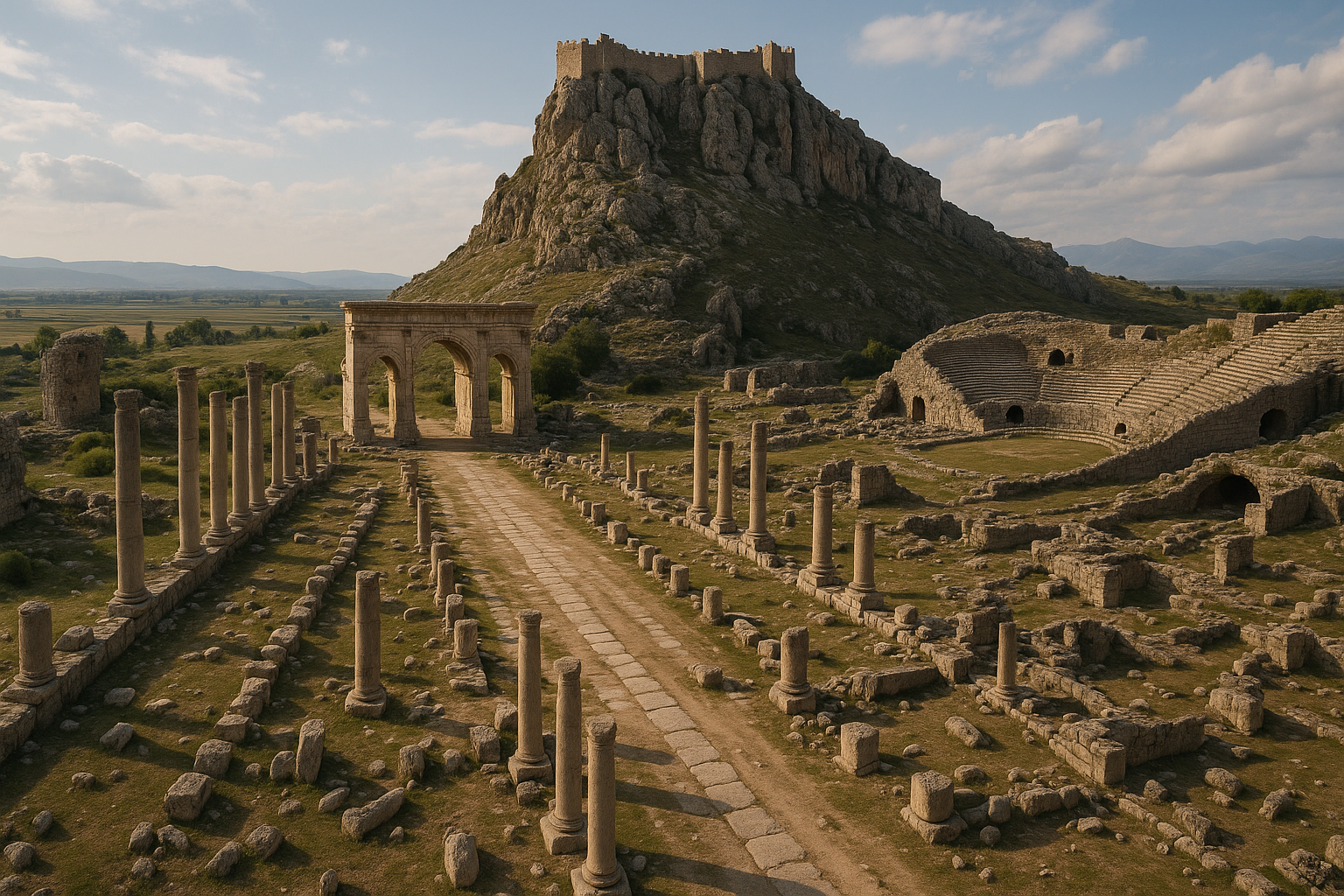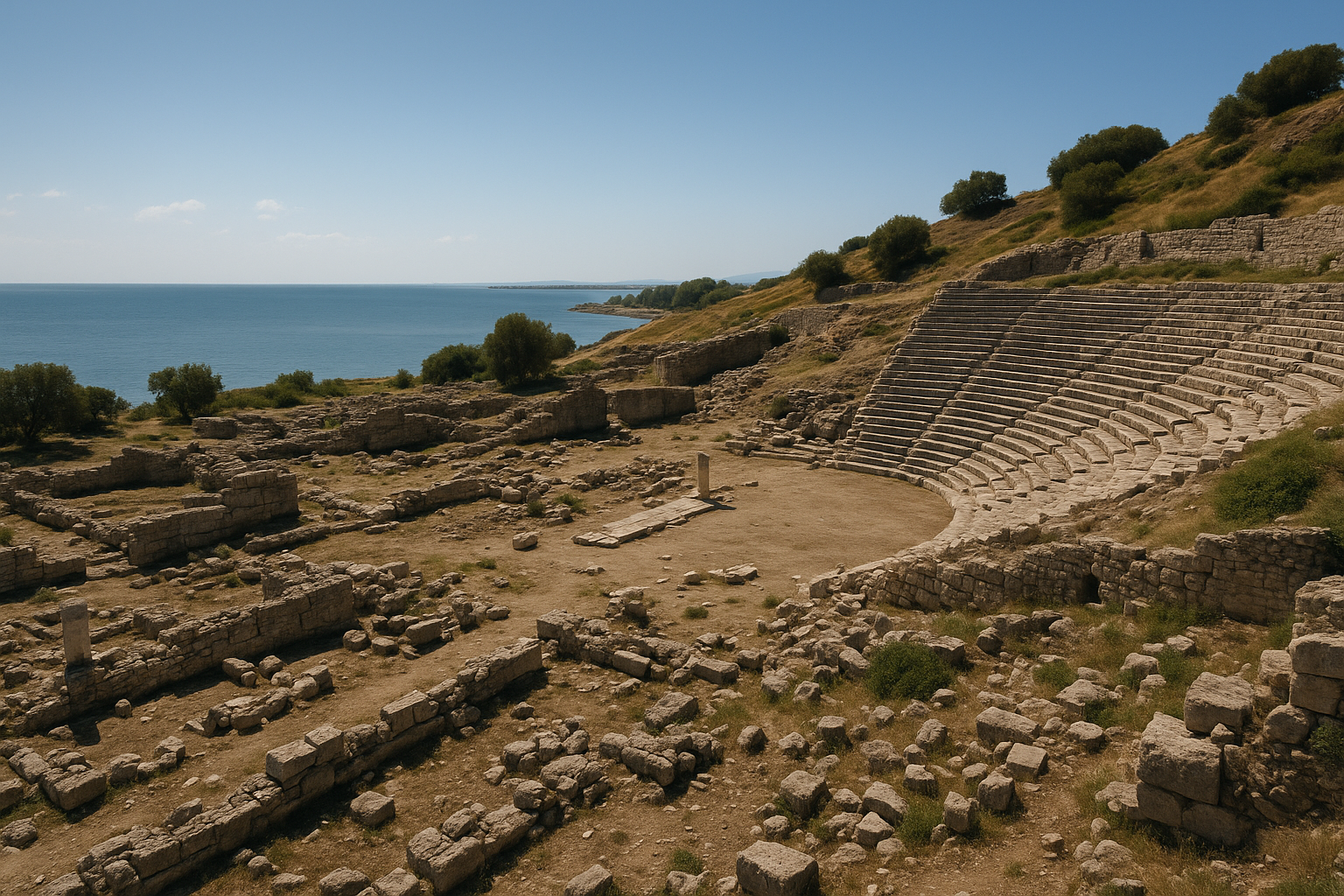
Przegląd: Magarsus było miastem portowym i okręgiem sakralnym starożytnego Mallus, jednego z najważniejszych miast Cylicji Pedias (Cylicji Nizinnej), położonym na dramatycznym przylądku przybrzeżnym w dystrykcie Karataş prowincji Adana. Usytuowany u ujścia rzeki Pyramus (współczesna rzeka Ceyhan) do Morza Śródziemnego, Magarsus pełnił rolę zarówno głównego portu, jak i słynnego centrum religijnego, w którym znajdowała się słynna Świątynia Ateny Magarskiej — jedno z głównych ośrodków proroczych (manteia) wschodniego Morza Śródziemnego. Aleksander Wielki złożył w Magarsus ofiarę w 333 r. p.n.e. przed swoją kampanią przeciwko Persom. Miejsce zachowuje unikalny teatr z widokiem na morze (jedyny tego rodzaju w starożytności), średniowieczny zamek, mury miejskie, cysterny i nieskopane pozostałości świątyni Ateny — co czyni go jednym z najbardziej obiecujących, lecz najmniej zbadanych stanowisk archeologicznych w Cylicji.
Spis treści
- Dlaczego Magarsus jest ważne
- Geografia i położenie
- Oś czasu historycznej
- Magarsus i Mallus
- Świątynia Ateny Magarskiej
- Aleksander Wielki w Magarsus
- Centrum prorocze
- Teatr z widokiem na morze
- Port
- Zamek i fortyfikacje
- Okres klasyczny i hellenistyczny
- Magarsus w epoce rzymskiej
- Monety i gospodarka
- Starożytne źródła
- Wykopaliska archeologiczne
- Delta rzeki Pyramus
- Jak odwiedzić Magarsus
- Często zadawane pytania
- Źródła
Dlaczego Magarsus jest ważne
Magarsus jest znaczące z kilku istotnych powodów:
- Wizyta Aleksandra Wielkiego: Aleksander złożył ofiarę w Świątyni Ateny Magarskiej w 333 r. p.n.e. przed bitwą pod Issos — jedną z najbardziej brzemiennych w skutki bitew w historii
- Główne centrum prorocze: Świątynia Ateny Magarskiej była jednym z głównych ośrodków wyroczni (manteia) we wschodnim basenie Morza Śródziemnego — porównywalnym pod względem funkcji z Delfami, Didymą i Klaros
- Jedyny teatr z widokiem na morze: Uważa się, że teatr w Magarsus jest jedynym starożytnym teatrem z bezpośrednim widokiem na morze — widzowie patrzyli na Morze Śródziemne podczas spektakli
- Nieskopany potencjał: Pomimo historycznego znaczenia, Magarsus jest w dużej mierze nieskopane — skarbnica potencjału archeologicznego
- Port przy ujściu rzeki: Strategiczne położenie u ujścia rzeki Pyramus (Ceyhan) uczyniło Magarsus kluczowym portem dla handlu morskiego i rzecznego
- Powiązania mitologiczne: Starożytne tradycje łączyły założenie Mallus/Magarsus z bohaterami wojny trojańskiej — Amfilochem i Mopsosem, dwoma słynnymi wróżbitami
Geografia i położenie
Magarsus zajmuje niski przybrzeżny przylądek u zbiegu rzeki Ceyhan i Morza Śródziemnego.
Lokalizacja:
- Miejscowość Dört Direk, dystrykt Karataş, prowincja Adana
- Na przylądku wcinającym się w Morze Śródziemne
- U ujścia rzeki Ceyhan (starożytny Pyramus)
- Około 50 km na południe od centrum miasta Adana
- W pobliżu współczesnego miasteczka rybackiego Karataş
Krajobraz:
- Płaski do łagodnie wzniesionego przybrzeżny przylądek
- Morze Śródziemne z trzech stron — zapewniające słynne widoki na morze
- Delta rzeki Ceyhan tworzy rozległe tereny podmokłe w pobliżu
- Piaszczyste plaże i nadmorskie wydmy
- Płaskie tereny rolnicze (równina Çukurova / Cylicja) rozciągają się w głąb lądu
- Stanowisko jest narażone na śródziemnomorskie wiatry i sól morską
Klimat:
- Gorący klimat śródziemnomorski
- Bardzo gorące lata (35°C+) i łagodne zimy
- Morska bryza łagodzi temperatury na wybrzeżu
- Suche lato z okazjonalnymi opadami zimowymi
Oś czasu historycznej
| Okres | Data | Kluczowe wydarzenia |
|---|---|---|
| Mityczne założenie | Era wojny trojańskiej | Założone przez wróżbitów Amfilocha i Mopsosa (tradycja mitologiczna) |
| Archaiczny | VII–VI w. p.n.e. | Osada założona; Świątynia Ateny Magarskiej ufundowana |
| Klasyczny | V–IV w. p.n.e. | Mallus/Magarsus się rozwija; Aleksander odwiedza miasto (333 r. p.n.e.) |
| Hellenistyczny | III–I w. p.n.e. | Pod wpływami seleucydzkimi, następnie rzymskimi; zbudowano teatr |
| Rzymski | I w. p.n.e.–IV w. n.e. | Trwający dobrobyt; port aktywny |
| Bizantyjski | V–VII w. | Chrystianizacja; zamek zbudowany/wzmocniony |
| Średniowieczny | VIII–XIV w. | Zamek utrzymywany; osadnictwo zredukowane |
| Osmański | Od XV w. | Stopniowe opuszczanie |
| Współczesne wykopaliska | Od 2000 r. do dziś | Tureckie zespoły archeologiczne |
Magarsus i Mallus
Magarsus funkcjonowało jako port i okręg sakralny większego śródlądowego miasta Mallus.
Mallus:
- Jedno z najstarszych i najważniejszych greckich miast w Cylicji Pedias (Cylicji Nizinnej)
- Położone kilka kilometrów w głąb lądu od wybrzeża
- Założone, według legendy, przez Amfilocha i Mopsosa — dwóch mitologicznych wróżbitów związanych z wojną trojańską
- Mallus było dobrze prosperującym centrum rolniczym i handlowym kontrolującym żyzną równinę cylicyjską
Relacja Mallus-Magarsus:
- Magarsus służył Mallus jako port i centrum religijne
- Statki cumowały w Magarsus; towary były transportowane śródlądowymi drogami do Mallus
- Świątynia Ateny Magarskiej przy porcie była głównym sanktuarium religijnym Mallus
- Relacja ta jest podobna do Ateny-Pireusu lub Koryntu-Lechaion — miasto ze swoim odrębnym portem
Świątynia Ateny Magarskiej
Świątynia Ateny Magarskiej była najważniejszym zabytkiem Magarsus — słynnym sanktuarium i wyrocznią.
Świątynia:
- Poświęcona Atenie Magarskiej — lokalnej formie bogini Ateny z silnymi powiązaniami proroczymi
- Świątynia była jednym z głównych ośrodków proroczych (manteia) we wschodnim basenie Morza Śródziemnego
- Pielgrzymi i władcy przyjeżdżali, by konsultować wyrocznię i otrzymywać boskie wskazówki
- Sława świątyni rozeszła się po całym starożytnym świecie — wspominają ją starożytni pisarze, w tym Strabon, Arrian i Pauzaniasz
Architektura:
- Dokładny plan i wymiary świątyni nie są jeszcze w pełni znane — świątynia nie została systematycznie zbadana
- Powierzchniowe pozostałości sugerują znaczącą kamienną świątynię o klasycznych proporcjach
- Świątynia była prawdopodobnie otoczona temenosem (świętym ogrodzeniem) z ołtarzami, wotami i budynkami kapłańskimi
- Monety z Mallus/Magarsus przedstawiają Atenę, co świadczy o znaczeniu świątyni w tożsamości miasta
Funkcja wyroczniana:
- Wyrocznię w Magarsus konsultowano w sprawach wojennych, rządzenia, handlu i decyzji osobistych
- Tradycja prorocza w Magarsus może być związana z mitologicznymi wróżbitami Amfilochem i Mopsosem, słynnymi ze swych zdolności wyrocznych
- Wyrocznie przyciągały klientów z całego regionu — Aleksander Wielki był najbardziej sławnym
Aleksander Wielki w Magarsus
Aleksander Wielki odwiedził Magarsus w 333 r. p.n.e. — jedno z najbardziej znanych wydarzeń w historii miasta.
Wizyta:
- W 333 r. p.n.e. Aleksander maszerował na wschód przez Cylicję ku konfrontacji z perskim królem Dariuszem III
- Przed udaniem się na bitwę pod Issos (jedną z najbardziej brzemiennych w skutki bitew w historii) Aleksander zatrzymał się w Magarsus
- Złożył ofiarę w Świątyni Ateny Magarskiej — szukając boskiej przychylności dla kampanii
- Starożytny historyk Arrian (Anabaza, II.5.9) odnotowuje tę wizytę
Znaczenie:
- Wizyta Aleksandra świadczy o prestiżu świątyni — zdobywca świata szukał jej błogosławieństwa
- Ofiara w Magarsus była częścią wzorca Aleksandra polegającego na czczeniu miejscowych tradycji religijnych podczas przemarszu przez podbite terytoria
- Bitwa pod Issos (333 r. p.n.e.), stoczona wkrótce po wizycie w Magarsus, zakończyła się decydującym zwycięstwem Greków, otwierając drogę do Egiptu i Persji
- Aleksander odwiedził też pobliskie Mallus i zwolnił miasto z daniny należnej Dariuszowi, powołując się na pokrewieństwo z miastem poprzez jego argiwskie legendy założycielskie
Centrum prorocze
Świątynia Ateny w Magarsus funkcjonowała jako jedno z wielkich manteia (ośrodków proroczych) starożytnego świata.
Tradycja wyroczniana:
- Proroctwo było centralną funkcją świątyni — odwiedzający przybywali specjalnie po boskie wskazówki
- Metoda prorocza stosowana w Magarsus nie jest w pełni udokumentowana, ale mogła polegać na wygłaszaniu wyroczni przez natchnionych kapłanów lub kapłanki
- Tradycja może wywodzić się od legendarnych wróżbitów Amfilocha i Mopsosa, których zdolności wyroczne były sławne w starożytności
Amfiloch i Mopsos:
- Obaj byli mitologicznymi postaciami związanymi z proroctwem i okresem po wojnie trojańskiej
- Amfiloch, syn wróżbity Amfiaraosa, był jednym z Epigonów (synów, którzy pomścili klęskę ojców pod Tebami)
- Mopsos był legendarnym wróżbitą, który wędrował przez Cylicję zakładając miasta i wyrocznie po wojnie trojańskiej
- Starożytna tradycja głosiła, że stoczyli pojedynek w Mallus i nawzajem się zabili, ale ich duchy nadal udzielały wyroczni w tym miejscu
Porównanie z innymi ośrodkami wyrocznianymi:
- Wyrocznie w Magarsus były częścią sieci wielkich ośrodków proroczych starożytnego świata:
- Delfy (Apollo) — najbardziej znana grecka wyrocznia
- Didyma (Apollo) — wielka wyrocznia jońska w pobliżu Miletu
- Klaros (Apollo) — w pobliżu Kolofonu
- Siwa (Zeus-Amon) — w Egipcie, odwiedzona przez Aleksandra
Teatr z widokiem na morze
Teatr w Magarsus jest jednym z najbardziej charakterystycznych zabytków stanowiska — uznawany za jedyny starożytny teatr z bezpośrednim widokiem na morze.
Opis:
- Półkolista kawea (misa dla widzów) zwrócona ku Morzu Śródziemnemu
- Szacowana pojemność: około 3 000 widzów
- Około 30 metrów szerokości i 150 metrów długości (łącznie z obszarem scenicznym)
- Obszar sceniczny przylegał do morza — widzowie patrzyli bezpośrednio na Morze Śródziemne podczas spektakli
- Ta orientacja jest unikalna w starożytnym świecie — większość teatrów jest skierowana w głąb lądu
Status archeologiczny:
- Teatr jest najbardziej kompleksowo zbadaną strukturą w Magarsus
- Odkryto go podczas tureckich prac archeologicznych rozpoczętych w latach 2000.
- Teatr liczący 2500 lat jest uważany za jedno z najważniejszych odkryć archeologicznych w Cylicji
Znaczenie:
- Orientacja ku morzu czyni teatr w Magarsus unikalnym w starożytnej architekturze
- Projekt sugeruje, że wizualne połączenie między spektaklem a morzem było celowo zamierzone
- Teatr mógł być miejscem zarówno przedstawień dramatycznych, jak i ceremonii religijnych związanych z kultem Ateny
Port
Port Magarsus był jego żyłą ekonomiczną — urządzeniem portowym obsługującym miasto Mallus i szerszą równinę cylicyjską.
Cechy:
- Położony w osłoniętym obszarze w pobliżu ujścia rzeki
- Rzeka Pyramus/Ceyhan zapewniała zarówno ochronę portu, jak i dostęp do wnętrza lądu
- Statki handlowały przez całe Morze Śródziemne — z Egiptem, Lewantem, Cyprem i Morzem Egejskim
- Port obsługiwał eksport rolniczy z fenomenalnie żyznej równiny cylicyjskiej — zboże, bawełnę, len i wino
Upadek:
- Na przestrzeni wieków delta rzeki Ceyhan posuwała się naprzód, zamulając starożytny port
- Linia brzegowa jest dziś znacznie inna niż w starożytności
- Zamulanie portu przyczyniło się do upadku Magarsus w późniejszych okresach
Zamek i fortyfikacje
Średniowieczny zamek wieńczy najwyższy punkt przylądka.
Cechy:
- Kamienne mury i wieże z widokiem na morze i deltę
- Budownictwo włączające spolia (wtórnie użyte starożytne bloki)
- Zamek pochodzi prawdopodobnie z okresu bizantyjskiego i/lub krzyżowców/ormiańskiego
- Mury miejskie z wcześniejszego okresu (hellenistyczno-rzymskiego) otaczały obszar osadniczy
- Fortyfikacje odzwierciedlają trwałe strategiczne znaczenie Magarsus jako pozycji przybrzeżnej
Okres klasyczny i hellenistyczny
Magarsus rozkwitało w okresach klasycznym i hellenistycznym.
Okres klasyczny (V–IV w. p.n.e.):
- Świątynia Ateny Magarskiej była już słynna
- Mallus/Magarsus było częścią satrapy cylicyjskiej Imperium Perskiego
- Wizyta Aleksandra (333 r. p.n.e.) wyznaczyła przejście do rządów hellenistycznych
- Miasto biło monety z wizerunkiem Ateny — odzwierciedlając centralność świątyni
Okres hellenistyczny (III–I w. p.n.e.):
- Pod kontrolą Seleucydów po śmierci Aleksandra
- Seleucydzi promowali urbanizację i kulturę grecką w Cylicji
- Magarsus nadal funkcjonowało jako główny port i centrum religijne
- Teatr mógł być zbudowany lub rozbudowany w tym okresie
Magarsus w epoce rzymskiej
Pod rządami rzymskimi Magarsus zachowało swoje znaczenie jako port i sanktuarium.
Okres rzymski:
- Cylicja stała się prowincją rzymską w I w. p.n.e.
- Kampania Pompejusza przeciwko cylicyjskim piratom (67 r. p.n.e.) przyniosła regionowi stabilność
- Port skorzystał z Pax Romana — wzrostu handlu morskiego
- Budowa i renowacja budynków publicznych w epoce rzymskiej
- Świątynia Ateny Magarskiej nadal funkcjonowała pod patronatem rzymskim
- Monety były nadal bite w Mallus/Magarsus przez cały okres imperialny
Monety i gospodarka
Monetarstwo Mallus/Magarsus dostarcza cennych informacji o tożsamości i gospodarce miasta.
Monety:
- Mallus/Magarsus biło własną monetę od okresu klasycznego
- Często spotykane wizerunki to Atena (odzwierciedlająca świątynię), Amfiloch i Mopsos (legendarni założyciele) oraz symbole morskie
- Monety z różnych okresów ukazują zmieniające się style artystyczne i przynależności polityczne miasta
- Trwałe bicie monet świadczy o utrzymanej aktywności gospodarczej i dumie obywatelskiej
Gospodarka:
- Handel morski przez port
- Eksport rolniczy z równiny cylicyjskiej — jednego z najbardziej żyznych regionów starożytnego świata
- Dochody świątynne od pielgrzymów i konsultacji wyroczni
- Rzeka Pyramus ułatwiała handel z wnętrzem kraju
Starożytne źródła
Kilku starożytnych autorów wspomina Magarsus, dostarczając kontekstu historycznego.
Arrian (Anabaza Aleksandra, II.5.9):
- Odnotowuje wizytę Aleksandra w Magarsus i jego ofiarę w Świątyni Ateny Magarskiej
- Główne źródło dla obecności Aleksandra w tym miejscu
Strabon (Geografia, XIV.5.16):
- Opisuje Mallus i jego port w Magarsus
- Odnotowuje legendarne założenie przez Amfilocha i Mopsosa
Pauzaniasz:
- Wspomina wyrocznię Amfilocha związaną z regionem
Mela (De Chorographia):
- Odwołuje się do Magarsus w swoim geograficznym przeglądzie
Wykopaliska archeologiczne
Prace archeologiczne w Magarsus są w toku, ale przyniosły już znaczące wyniki.
Współczesne wykopaliska:
- Tureckie zespoły archeologiczne rozpoczęły systematyczne prace w latach 2000.
- Teatr był głównym przedmiotem wczesnych wykopalisk
- Odkrycie teatru z widokiem na morze wywołało znaczne zainteresowanie mediów
- Trwające prace eksplorują mury miejskie, cysterny i potencjalny obszar świątynny
Kluczowe odkrycia:
- Teatr liczący 2500 lat z unikalną orientacją ku morzu
- Odcinki murów miejskich i struktury obronne
- Cysterny i infrastruktura zarządzania wodą
- Znaleziska ceramiczne i numizmatyczne ustalające ramy chronologiczne
Potencjał:
- Magarsus ma ogromny nieskopany potencjał
- Świątynia Ateny Magarskiej — najważniejszy historycznie zabytek stanowiska — nie została jeszcze w pełni zbadana
- Urządzenia portowe mogą znajdować się pod zamulonym deltą
- Stanowisko mogłoby dostarczyć ważnych informacji o cylicyjskim handlu morskim, religii wyrocznej i kampaniach Aleksandra
Delta rzeki Pyramus
Delta rzeki Ceyhan/Pyramus otaczająca Magarsus jest zarówno krajobrazem historycznym, jak i ekologicznym.
Znaczenie historyczne:
- Pyramus był jedną z wielkich rzek Cylicji — zapewniającą wodę dla rolnictwa, transportu i ochrony portu
- Starożytni geografowie opisywali żyzną równinę cylicyjską nawadnianą przez Pyramus i jego siostrzane rzeki
- Delta znacznie posunęła się od starożytności — starożytna linia brzegowa była bliżej obecnych ruin
Środowisko naturalne:
- Delta jest ważnym siedliskiem podmokłym
- Trasy migracji ptaków przebiegają przez ten obszar
- Połączenie terenów podmokłych delty, piaszczystych plaż i historycznych ruin tworzy unikalny krajobraz
Jak odwiedzić Magarsus
Dojazd:
- Z Adany: około 50 km na południe (około 1 godziny drogą przez Karataş)
- Z Karataş: około 5 km (około 10 minut)
- W pobliżu miejscowości Dört Direk — oznakowane z obszaru Karataş
- Brak regularnego transportu publicznego do stanowiska; wynajęty samochód lub taksówka z Karataş
Stanowisko:
- Zaplanuj 1–1,5 godziny
- Główne punkty: Teatr z widokiem na morze (główny wyekopany zabytek), ruiny zamku, ślady murów miejskich, widoki z przylądka na Morze Śródziemne i deltę
- Stanowisko jest częściowo wyekopane — niektóre obszary to aktywne strefy wykopalisk
- Brak formalnych udogodnień dla zwiedzających — zabierz wodę i ochronę przed słońcem
- Nadmorska lokalizacja zapewnia morską bryzę, ale niewiele cienia
Najlepszy czas na wizytę:
- Wiosna (marzec–maj) jest idealna — przyjemne temperatury, dzikie kwiaty
- Jesień (październik–listopad) również doskonała
- Lato jest bardzo gorące — odwiedzaj wcześnie rano
- Zima jest łagodna, ale może być wietrzna
Wskazówki praktyczne:
- Noś solidne buty — nierówny teren wokół ruin
- Zabierz wodę, krem z filtrem i kapelusz — brak cienia i udogodnień
- Fotografia jest doskonała — teatr z Morzem Śródziemnym w tle jest spektakularny
- Połącz z wizytą w Karataş (miasto plażowe ze świeżymi restauracjami rybnymi)
- Muzeum Archeologiczne w Adanie posiada znaleziska z tego regionu
- Yumurtalık (starożytna Aegeae) jest w pobliżu i warto ją odwiedzić
Często zadawane pytania
P: Czy Aleksander Wielki naprawdę odwiedził Magarsus? O: Tak. Starożytny historyk Arrian odnotowuje, że Aleksander złożył ofiarę w Świątyni Ateny Magarskiej w 333 r. p.n.e., przed bitwą pod Issos.
P: Co to jest teatr z widokiem na morze? O: Teatr w Magarsus jest zorientowany ku morzu — widzowie patrzyli bezpośrednio na Morze Śródziemne podczas spektakli. Ta orientacja jest unikalna wśród starożytnych teatrów.
P: Czy znaleziono Świątynię Ateny? O: Lokalizacja świątyni jest znana z powierzchniowych pozostałości i źródeł historycznych, ale nie została jeszcze w pełni wyekopana. Pozostaje to jedną z najbardziej ekscytujących perspektyw dla przyszłej archeologii w tym miejscu.
P: Jaka jest relacja między Magarsus a Mallus? O: Magarsus było portem i centrum religijnym Mallus — większego śródlądowego miasta. Podobnie jak w relacji Ateny-Pireusu, funkcjonowały jako para.
P: Czy stanowisko jest łatwe do odwiedzenia? O: Stanowisko jest dostępne samochodem z Karataş (około 5 km). Nie ma formalnych udogodnień dla zwiedzających — przybywaj przygotowany z wodą i ochroną przed słońcem.
P: Dlaczego wyrocznia w Magarsus była sławna? O: Świątynia Ateny Magarskiej była jednym z głównych ośrodków proroczych we wschodnim basenie Morza Śródziemnego. Jej tradycja wyroczna była związana z legendarnymi wróżbitami Amfilochem i Mopsosem. Wizyta Aleksandra potwierdziła jej prestiżową reputację.
Pomiary architektoniczne i dane strukturalne
Ostatnie wykopaliska przyniosły dokładne pomiary głównych zabytków w Magarsus.
| Zabytek | Wymiary / Pomiary | Okres | Uwagi |
|---|---|---|---|
| Teatr z widokiem na morze | 150 m długości x 30 m szerokości | Hellenistyczny (V–III w. p.n.e.) | Unikalna orientacja ku morzu; pojemność ~3 000–4 000 |
| Kawea teatru | ~26 rzędów miejsc siedzących | Hellenistyczny | Półkolista; wbudowana w naturalny stok |
| Mury miejskie | ~1,2 km dostrzegalny obwód | Hellenistyczno-bizantyjski | Kamień ciosany ze spolią w górnych warstwach |
| Zamek (średniowieczny) | ~40 x 25 m powierzchnia | Bizantyjsko-krzyżowców/ormiański | Dominująca pozycja na szczycie przylądka |
| Wysokość przylądka | ~15 m nad poziomem morza | — | Niska nadmorska wysokość; narażona na sól morską |
Szczegóły strukturalne teatru:
- Orientacja teatru ku morzu oznacza, że budynek sceniczny (skene) był umieszczony między performerami a otwartym Morzem Śródziemnym — widzowie patrzyli ponad performerami bezpośrednio na morze
- Wykopaliska odsłoniły kamienne bloki siedzeń z podziałami na indywidualne miejsca wyrytymi w powierzchni
- Orchestra (okrągły obszar do występów) mierzy około 12 m średnicy
- Nie zidentyfikowano trwałego kamiennego proskenion (podwyższonej sceny) — przedstawienia mogły być prowadzone na poziomie orchestry
- 2500-letni wiek teatru czyni go jedną z najstarszych struktur teatralnych w Cylicji
Dowody numizmatyczne z Mallus i Magarsus
Monetarstwo Mallus/Magarsus dostarcza wyjątkowych dowodów na religijną tożsamość, przynależności polityczne i życie gospodarcze miasta.
Typy monet i ich znaczenie:
| Okres | Metal | Awers | Rewers | Znaczenie |
|---|---|---|---|---|
| V w. p.n.e. | Srebrny stater | Uskrzydlona postać męska (Mopsos?) | Łabędź w kwadracie incuse | Najwcześniejsze monety; greckie wpływy artystyczne |
| IV w. p.n.e. | Srebrny stater | Atena w hełmie | Amfiloch trzymający gałąź, dzik u stóp | Bezpośrednie nawiązanie do herosa założycielskiego wyroczni |
| Epoka seleucydzka (III w. p.n.e.) | Srebrny tetradrachm | Atena Magarska (stojąca, uzbrojona) | Nike koronująca trofeum | Mennica seleucydzka w Mallus; postać kultowa Ateny |
| Epoka imperalna rzymska | Brąz | Portret cesarski | Tyche siedząca z dwoma bogami rzek u stóp | Bogowie rzek reprezentują dopływy Pyramus i Ceyhan |
Postać kultowa Ateny Magarskiej na monetach:
- Tetradrachmy z epoki seleucydzkiej z Mallus przedstawiają Atenę Magarską jako stojącą uzbrojoną boginię, wyraźnie różną od standardowych ateńskich przedstawień Ateny
- Postać kultowa nosi wysoki polos (cylindryczny nakrycie głowy) zamiast korynckiego hełmu typowego dla attyckiej Ateny
- Trzyma włócznię i tarczę, ale nosi też atrybuty wyroczne — wzmacniając dualną militarną i proroczą naturę kultu Magarskiej
- Te typy monet krążyły szeroko po Cylicji i Lewancie, rozszerzając reputację kultu poprzez kanały handlowe
Chronologia wykopalisk
| Rok(a) | Kierownik / Instytucja | Kluczowe działania i odkrycia |
|---|---|---|
| Przed 2013 | Badania Muzeum Adana | Badania powierzchniowe; identyfikacja teatru, murów i ruin zamku |
| 2013 | Muzeum Adana / Uniwersytet Çukurova | Systematyczne wykopaliska rozpoczęte ze wsparciem Generalnej Dyrekcji Dziedzictwa Kulturowego |
| 2013–2015 | Wspólny zespół | Kawea teatru oczyszczona; rzędy siedzeń odsłonięte; potwierdzona orientacja ku morzu |
| 2016 | Wspólny zespół | Udokumentowane odcinki murów miejskich; zmapowane systemy cysternowe |
| 2017–2018 | Wspólny zespół | Zainteresowanie mediów odkryciem „teatru z widokiem na morze"; znaleziska ceramiczne ustalają chronologię od V w. p.n.e. |
| Od 2018 | Trwające | Planowanie restauracji teatru; eksploracja potencjalnego obszaru świątynnego; analiza monet i ceramiki |
Perspektywa Świątyni Ateny:
- Świątynia Ateny Magarskiej — najważniejszy historycznie zabytek stanowiska — nie została jeszcze w pełni wyekopana
- Powierzchniowe pozostałości (rozproszone bloki architektoniczne, fragmenty bębnów kolumnowych) sugerują znaczącą kamienną świątynię o klasycznych proporcjach
- Badanie geomagnetyczne zidentyfikowało dużą prostokątną anomalię w obszarze historycznie związanym z okręgiem świątynnym
- Pełne wykopalisko świątyni stanowiłoby jedno z najważniejszych odkryć archeologicznych w Cylicji, potencjalnie ujawniając mechanizmy wyroczni, depozyty wotywne i instalacje kultowe tego słynnego centrum proroczego
Wróżbici założyciele: korelacje archeologiczne
Starożytne źródła literackie poświadczają, że groby obu legendarnych założycieli — Amfilocha i Mopsosa — stały w Magarsus. Strabon wprost stwierdza, że ich kurhany były widoczne na tym miejscu.
Implikacje archeologiczne:
- Żadne struktury pozytywnie zidentyfikowane jako groby heroiczne nie zostały wyekopane, ale dwa elementy kopców na przylądku zostały odnotowane w raportach badawczych
- Kult heroiczny Amfilocha i Mopsosa prawdopodobnie obejmował coroczne rytuały przy ich grobach, integrując tradycję wyroczną z czcią przodków
- Monety przedstawiające Amfilocha z gałązką i berłem, z dzikiem u jego stóp, sugerują, że kult heroiczny zachował określone konwencje ikonograficzne przekazywane przez stulecia
- Podwójna legenda założycielska — dwóch wróżbitów, którzy zabili się nawzajem w pojedynku, a jednak prorokowali po śmierci — jest unikalna w mitologii greckiej i sugeruje złożoną tradycję rytualną obejmującą sparowaną konsultację wyroczni
Źródła
- Arrian, Anabaza Aleksandra, Księga II.5.9
- Strabon, Geografia, Księga XIV.5.16
- Pauzaniasz, Opis Grecji
- Hürriyet Daily News, „Excavations continue in ancient Magarsus" (2018)
- Hürriyet Daily News, „Ancient theater of Magarsus ready to open curtains" (2015)
- Archaeology Magazine, „Excavation of Magarsus Continues in Turkey" (2016)
- Travelertopia, „The Prophecy Center of the Eastern Mediterranean: The Mysteries of the Ancient City of Magarsus"
- Wikipedia, „Magarsus" / „Mallus (Cilicia)"
- Republika Turcji, Ministerstwo Kultury i Turystyki — dziedzictwo kulturowe Adany
- WildWinds.com, „Cilicia, Mallos — Ancient Greek Coins"
- Academia.edu, „The Seleucid Mint of Mallus and the Cult Figure of Athena Magarsia"