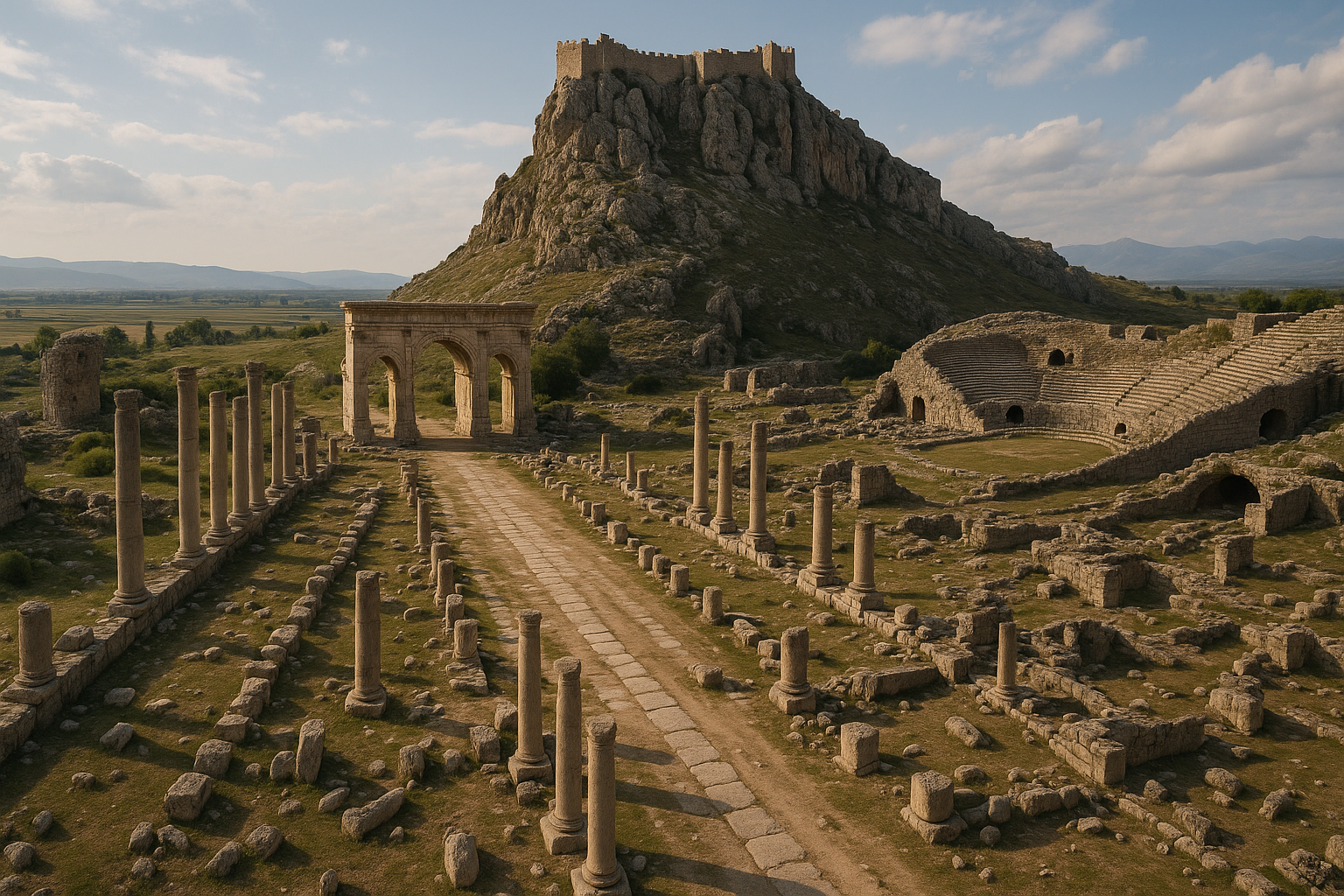
Przegląd: Komana, znana dziś jako Şar, jest jednym z najbardziej fascynujących, a zarazem najrzadziej odwiedzanych stanowisk starożytnych w Anatolii — pozostałości potężnego państwa świątynnego poświęconego bogini wojny Ma (utożsamianej z grecką Enyo i rzymską Belloną) na wyżynach starożytnej Kapadocji. Położona w pobliżu Tufanbeyli w prowincji Adana, na styku Gór Taurus i płaskowyżu kapadockiego, Komana była jednym z tylko dwóch wielkich państw świątynnych w Kapadocji (drugim była Komana Pontyjska w regionie Morza Czarnego). Miastem nie rządziło ani królestwo, ani wybrani urzędnicy, lecz arcykapłan, sprawujący władzę niemal królewską nad rozległym majątkiem obejmującym 6 000 sług świątynnych (hieroduloi). Dziś odległa wioska Şar zachowuje niezwykłe pozostałości, w tym 6-metrowe zdobione drzwi świątynne, grobowce skalne, mury twierdzy i ślady świętego okręgu, który niegdyś przyciągał pielgrzymów z całego starożytnego świata.
Spis treści
- Dlaczego Komana jest ważna
- Geografia i otoczenie
- Oś czasu historycznej
- Bogini Ma
- System państwa świątynnego
- Arcykapłan
- 6 000 hieroduloi
- Monumentalne drzwi świątyni
- Święty okręg
- Grobowce skalne
- Twierdza
- Komana w źródłach klasycznych
- Okresy perski i hellenistyczny
- Komana rzymska
- Karakalla i status kolonii
- Historia bizantyjska i późniejsza
- Komana Pontyjska — miasto siostrzane
- Badania archeologiczne
- Jak odwiedzić Şar
- FAQ
- Źródła
Dlaczego Komana jest ważna
Komana jest znacząca z kilku ważkich powodów:
- Gospodarka państwa świątynnego: Jeden z najlepiej udokumentowanych przykładów starożytnego systemu państwa świątynnego — gdzie władza religijna, polityczna i kontrola gospodarcza były skupione w rękach arcykapłana
- 6 000 sług świątynnych: Świątynia Ma zatrudniała ogromną rzeszę hieroduloi (świętych sług), co czyniło ją jednym z największych ośrodków religijnych w starożytnym świecie
- Bogini Ma: Kult Ma — srożącej się anatołyjskiej bogini wojny — reprezentuje przedgrecką tradycję religijną o ogromnej dawności i sile
- Arcykapłan jako władca: Arcykapłan Komany zajmował drugie miejsce w hierarchii jedynie po królu Kapadocji — wyjątkowy układ polityczny w starożytnym świecie
- Monumentalne drzwi świątyni: Ocalały 6-metrowy zdobiony kamienny portal świątyni jest jednym z najbardziej imponujących reliktów architektonicznych we wschodniej Anatolii
- Odległe górskie położenie: Lokalizacja stanowiska w Górach Taurus zachowuje atmosferę odosobnienia i świętości
- Dwie Komany: Istnienie dwóch Koman (kapadockiej i pontyjskiej) poświęconych tej samej bogini rodzi fascynujące pytania o religijną kolonizację i transmisję kulturową
Geografia i otoczenie
Komana zajmuje dramatyczne górskie położenie na skraju Gór Taurus.
Lokalizacja:
- W pobliżu wioski Şar, w dystrykcie Tufanbeyli, prowincja Adana
- W górnej dolinie rzeki Seyhan (starożytny Sarus)
- Na styku Gór Anty-Taurus i płaskowyżu kapadockiego
- Wysokość: około 1 400 metrów nad poziomem morza
- Około 200 km na północ od centrum Adany
- Blisko granicy między prowincjami Adana i Kayseri
Krajobraz:
- Surowy górski teren z głębokimi dolinami rzecznymi
- Osada zajmuje strategiczną pozycję kontrolującą szlaki między Kapadocją a Cylicją
- Stanowisko otaczają lasy sosnowe i alpejskie łąki
- Rzeka Sarus (współcześnie Zamantı Çayı / górny Seyhan) płynie przez dolinę poniżej
- Odległość od szlaków turystycznych pomogła zachować zarówno pozostałości archeologiczne, jak i atmosferę dawnej świętości
- Zimą wyższe partie terenu pokrywa śnieg — stanowisko ma wyraźnie kontynentalny klimat górski
Znaczenie strategiczne:
- Komana kontrolowała główną przełęcz między płaskowyżem kapadockim a równiną cylicyjską
- Trasa ta była używana przez armie, kupców i pielgrzymów przez całą starożytność
- Bogactwo świątyni wynikało częściowo z kontrolowania i opodatkowywania tego szlaku handlowego
Oś czasu historycznej
| Okres | Data | Najważniejsze wydarzenia |
|---|---|---|
| Przedchetycki | Przed 1600 p.n.e. | Możliwe wczesne centrum kultu Ma |
| Hetycki | ok. 1600–1200 p.n.e. | Część świata hetyckiego; tradycje kultowe mogą wywodzić się z religii hetyckiej |
| Neohetycki/aramejski | ok. 1200–700 p.n.e. | Państwa posthetyckiej w regionie |
| Imperium Perskie | ok. 550–330 p.n.e. | Państwo świątynne pod zwierzchnictwem perskim |
| Hellenistyczny | ok. 330–100 p.n.e. | Pod wpływem seleukidzkim; królestwo kapadockie |
| Królestwo kapadockie | ok. 250 p.n.e. – 17 n.e. | Arcykapłan drugi po królu; 6 000 hieroduloi |
| Włączenie do Rzymu | 17 n.e. | Kapadocja staje się prowincją rzymską za Tyberiusza |
| Karakalla | 212–217 n.e. | Komana wyniesiona do statusu kolonii rzymskiej |
| Późna Starożytność | IV–VI wiek | Chrystianizacja; biskupstwo |
| Bizantyjski | VII–XI wiek | Nadal twierdza i osada |
| Seldżucki/Osmański | Od XII wieku | Rozwija się wioska Şar |
Bogini Ma
Ma (zwana też Ma-Enyo lub Ma-Belloną) była jedną z najstarszych i najpotężniejszych bóstw Anatolii.
Natura i atrybuty:
- Bogini wojny o dzikiej, ekstatycznej naturze
- Wiązana z szałem bojowym, krwią i prorockim szaleństwem
- Jej kult obejmował rytuały ekstatyczne — kapłani i wyznawcy wpadali w stany transu
- Utożsamiana przez Greków z Enyo (boginią wojny i zniszczenia), a przez Rzymian z Belloną (boginią wojny)
- Ma była wyraźnie anatołyjska — jej kult poprzedza wpływy greckie i reprezentuje rdzenną kapadocką tradycję religijną
Kult:
- Kult Ma obejmował ekstatyczne procesje, frenetyczne tańce i prawdopodobnie samookaleczenia wyznawców
- Kult wykazywał podobieństwa do kultu Kybele (anatołyjskiej Wielkiej Matki) — oba angażowały praktyki ekstatyczne i wielkie kompleksy świątynne
- W Komanie mogła być praktykowana święta prostytucja, choć jest to kwestionowane przez współczesnych uczonych
- Kultowi służyła ogromna rzesza sług świątynnych (hieroduloi)
Szerzenie się kultu:
- Z kapadockiej Komany kult Ma rozprzestrzenił się na Komanę Pontyjską (w regionie Morza Czarnego)
- Żołnierze rzymscy, którzy zetknęli się z kultem w Azji, zanieśli go do Rzymu, gdzie kult Bellony wchłonął elementy ekstatycznych rytuałów Ma
- Rzymski dyktator Sulla był szczególnie oddany Ma/Bellonie po swoich wschodnich kampaniach
System państwa świątynnego
Komana jest wzorcowym przykładem bliskiego wschodniego państwa świątynnego — systemu polityczno-gospodarczego, w którym świątynia kontrolowała rozległe terytorium i ludność.
Jak to działało:
- Świątynia Ma posiadała rozległe ziemie rolnicze wokół miasta
- Ziemie świątyni były uprawiane przez hieroduloi (świętych sług) — populację 6 000 osób
- Świątynia pobierała dochody z rolnictwa, hodowli zwierząt, ceł handlowych i ofiar pielgrzymów
- Arcykapłan zarządzał tym majątkiem jako półautonomiczny władca
- Państwo świątynne funkcjonowało niemal niezależnie od rządu królewskiego Kapadocji
Porównanie:
- System państwa świątynnego w Komanie jest porównywalny z wielkimi mezopotamskimi majątkami świątynnymi
- Podobne systemy istniały w Pessinus (świątynia Kybele w Galacji) i Komanie Pontyjskiej
- Królowie kapadoccy uznawali władzę arcykapłana, ponieważ świątynia przynosiła królestwu bogactwo i prestiż
Skala gospodarcza:
- Z 6 000 hieroduloi pracującymi na ziemiach świątynnych, Komana była jednym z największych przedsięwzięć gospodarczych w starożytnej Anatolii
- Dochody świątyni z rolnictwa, ceł i ofiar czyniły ją bajońsko bogatą
- Strabon opisuje Komanę jako jeden z najbogatszych kompleksów świątynnych, jakie znał
Arcykapłan
Arcykapłan Komany sprawował nadzwyczajną władzę — był quasi-królewską postacią w królestwie kapadockim.
Status:
- Arcykapłan zajmował drugie miejsce w hierarchii jedynie po królu Kapadocji
- Rządził majątkiem świątynnym i jego 6 000 sługami z niemal absolutną władzą
- Stanowisko było dziedziczne — arcykapłani wywodzili się ze szlacheckich rodzin kapadockich
- Arcykapłan nosił diadem — symbol królewski — i był traktowany z królewskimi honorami
Rola polityczna:
- Arcykapłan reprezentował Komanę w kontaktach z królem kapadockim i obcymi mocarstwami
- Dowodził własnymi siłami zbrojnymi rekrutowanymi z majątku świątynnego
- W czasach kryzysu politycznego arcykapłani niekiedy odgrywali rolę twórców królów w walkach o sukcesję kapadocką
- Połączenie autorytetu religijnego, władzy politycznej i kontroli gospodarczej czyniło arcykapłana jedną z najpotężniejszych postaci w Azji Mniejszej
Historyczni arcykapłani:
- Strabon wspomina, że arcykapłan Komany zawsze pochodził z najwyższej szlachty
- Niektórzy arcykapłani byli członkami samej kapadockiej rodziny królewskiej
- Gdy Rzym wchłonął Kapadocję w 17 n.e., pozycja arcykapłana była stopniowo osłabiana, choć nie od razu zniesiona
6 000 hieroduloi
Hieroduloi (ἱερόδουλοι — „święci słudzy") Komany tworzyli jeden z największych personelów świątynnych w starożytnym świecie.
Kim byli:
- 6 000 mężczyzn i kobiet oddanych służbie bogini Ma
- Uprawiali ziemie rolnicze świątyni — uprawiali rolę, hodowali zwierzęta i utrzymywali święty okręg
- Ich status był pośredni między wolnymi obywatelami a niewolnikami — należeli do świątyni, nie do prywatnych właścicieli
- Część hieroduloi pełniła funkcje kapłanów, pomocników, muzyków i specjalistów rytualnych
- Inni byli robotnikami rolnymi pracującymi na majątkach świątynnych
Służba święta:
- Hieroduloi uczestniczyli w ekstatycznych rytuałach Ma
- Niektóre kobiety spośród hieroduloi mogły pełnić funkcje świętych prostytutek (hieroduloi) — choć współcześni uczeni debatują, czy praktyka ta rzeczywiście istniała, czy też jest grecką błędną interpretacją anatołyjskich zwyczajów religijnych
- Ogromna liczba sług świątynnych nadawała Komanie charakter miasta-świątyni, a nie zwykłego ośrodka miejskiego
Porównanie:
- Strabon podaje, że Komana Pontyjska posiadała podobny, lecz jeszcze większy zespół hieroduloi
- Skala jest porównywalna z wielkimi majątkami świątynnymi Mezopotamii (np. świątyniami Babilonu i Uruk)
- W okresie rzymskim system hieroduloi stopniowo przekształcał się, gdy rzymskie struktury administracyjne i gospodarcze zastępowały państwo świątynne
Monumentalne drzwi świątyni
Najbardziej uderzającym wizualnie elementem zachowanym w Şar jest monumentalny kamienny portal świątyni Ma.
Opis:
- Masywny kamienny portal o wysokości około 6 metrów
- Bogato rzeźbiony z ornamentami architektonicznymi — profilowaniami, fryzami i dekoracyjnymi pasami
- Kunszt wskazuje na poważną hellenistyczną lub rzym ską budowę lub renowację świątyni
- Portal stoi częściowo in situ, dając mocne wyobrażenie o pierwotnej skali świątyni
- Niektóre rzeźbione bloki z portalu i jego otoczenia są rozproszone po wiosce
Znaczenie:
- Portal jest jednym z najbardziej imponujących reliktów architektonicznych w wschodnim regionie Taurus
- Jego rozmiar wskazuje na świątynię monumentalnych proporcji — zgodnie z wagą, jaką Strabon przypisuje Komanie
- Ornamentyka łączy grecko-rzymskie słownictwo architektoniczne z tym, co mogą być lokalne kapadockie elementy projektowe
- Drzwi wychodziły na święty okręg, gdzie pielgrzymi gromadzili się podczas świąt
Święty okręg
Świątynia Ma stała w obrębie dużego świętego okręgu (temenos), który był centrum życia religijnego Komany.
Elementy:
- Ogrodzony murem kompleks otaczający świątynię i budynki towarzyszące
- Okręg obejmował główną świątynię, kaplice pomocnicze, rezydencje kapłańskie i magazyny
- Otwarte przestrzenie na zgromadzenia podczas świąt i rytuałów ekstatycznych
- Święty okręg był prawnie nienaruszalny — służył jako miejsce azylu (asylia)
Święta:
- Wielkie święta przyciągały pielgrzymów z całej Kapadocji i dalej
- Strabon opisuje święta jako okazje wielkich zgromadzeń publicznych i handlu
- Podczas świąt normalnie sztywna hierarchia społeczna ulegała rozluźnieniu — ekstatyczny kult tworzył tymczasową równość przed obliczem bogini
- Targom i jarmarkom towarzyszyły obchody religijne
Grobowce skalne
Zbocza wzgórz wokół Şar zawierają liczne grobowce skalne wykute w ścianach klifu.
Cechy:
- Grobowce wykute bezpośrednio w skale, z architektonicznymi fasadami
- Niektóre grobowce mają wiele komór
- Rzeźby reliefowe i inskrypcje na wybranych grobowcach
- Datowane od okresu hellenistycznego do rzymskiego
- Grobowce należały prawdopodobnie do arystokracji kapłańskiej i zamożnych obywateli Komany
Znaczenie:
- Tradycje grobowców skalnych w tym regionie odzwierciedlają zarówno kapadockie, jak i cylicyjskie praktyki pogrzebowe
- Jakość niektórych grobowców wskazuje na zamożną klasę elitarną powiązaną z kompleksem świątynnym
- Kilka grobowców wykazuje ślady ponownego użytkowania w różnych okresach
Twierdza
Twierdzę (kale) wieńczące szczyt wzgórza powyżej starożytnej osady.
Cechy:
- Kamienne mury i wieże z widokiem na dolinę i przełęcze górskie
- Twierdza kontrolowała strategiczny szlak między Kapadocją a Cylicją
- Fazy budowy od okresu hellenistycznego do bizantyjskiego
- Spolia (powtórnie użyte starożytne bloki) wbudowane w późniejsze mury
- Położenie na szczycie wzgórza czyniło twierdzę praktycznie nie do zdobycia w warunkach starożytnych
Znaczenie strategiczne:
- Lokalizacja Komany na szlaku kapadocko-cylicyjskim nadawała jej militarne znaczenie
- Twierdza chroniła zarówno bogactwo świątyni, jak i szlak handlowy
- W okresie rzymskim twierdza stanowiła część wschodniego systemu obrony granicznej
- Siły bizantyjskie utrzymywały twierdzę przeciwko najazdom arabskim
Komana w źródłach klasycznych
Kilku starożytnych autorów opisuje Komanę, dostarczając cennych informacji o państwie świątynnym.
Strabon (Geografia, XII.2.3):
- Najbardziej szczegółowy starożytny opis Komany
- Podaje 6 000 hieroduloi służących świątyni
- Opisuje arcykapłana jako drugiego po królu kapadockim
- Odnotowuje ekstatyczny charakter kultu Ma
- Wspomina o wielkich świętach przyciągających tłumy z całej Kapadocji
Appian:
- Opisuje Komanę w kontekście reorganizacji Wschodu przez Pompejusza (63 p.n.e.)
- Odnotowuje strategiczne znaczenie miejsca
Dio Kasjusz:
- Wspomina Komanę w związku z wizytą Karakalli i wyniesieniem miasta do statusu kolonii
Znaczenie źródeł:
- Starożytne opisy potwierdzają znaczenie Komany zarówno jako ośrodka religijnego, jak i politycznego
- Dostarczają szczegółów o systemie państwa świątynnego, których nie da się odtworzyć wyłącznie z archeologii
- Zgodność między źródłami (Strabon, Appian, Dio) daje pewność co do dokładności informacji
Okresy perski i hellenistyczny
Państwo świątynne Komany rozkwitało pod kolejnymi imperialnym potęgami.
Okres perski (ok. 550–330 p.n.e.):
- Pod achemenidzkm imperium perskim Kapadocja była satrapią
- Państwo świątynne Ma nadal funkcjonowało pod zwierzchnictwem perskim
- Władcy perscy na ogół szanowali i chronili lokalne instytucje religijne
- Kult Ma mógł wchłonąć pewne elementy religii perskiej w tym okresie
Okres hellenistyczny (ok. 330–100 p.n.e.):
- Po podbojach Aleksandra Wielkiego Kapadocja znalazła się pod wpływem macedońskim, a następnie seleukidzkim
- Królestwo kapadockie wyłoniło się jako półniezależne państwo pod dynastią Ariarathidów
- Arcykapłan Komany utrzymał swoją pozycję w ramach systemu królewskiego kapadockiego
- Hellenistyczne wpływy architektoniczne i artystyczne są widoczne w pozostałościach świątyni, w tym w monumentalnym portalu
Komana rzymska
Zaangażowanie Rzymu przekształciło Komanę z państwa świątynnego w centrum miejskie.
Przejście pod panowanie rzymskie:
- W 17 n.e. cesarz Tyberiusz anektował Kapadocję jako prowincję rzymską po śmierci króla Archelaosa
- System państwa świątynnego był stopniowo restrukturyzowany pod administracją rzymską
- Polityczna władza arcykapłana była ograniczana, choć funkcje religijne były kontynuowane
- System hieroduloi powoli przekształcał się, gdy narzucano rzymskie normy prawne i gospodarcze
Romanizacja:
- Wprowadzono instytucje obywatelskie wzorowane na rzymskich
- Inskrypcje łacińskie pojawiają się obok greckich
- Świątynia była odnawiana w stylu architektonicznym rzymskim
- Drogi rzymskie poprawiły dostęp do wcześniej odległego miejsca
- W regionie stacjonowały garnizony wojskowe
Karakalla i status kolonii
Cesarz Karakalla (panował 211–217 n.e.) wyniósł Komanę do statusu kolonii rzymskiej — najwyższego zaszczytu obywatelskiego, jaki Rzym mógł nadać.
Wyniesienie:
- Karakalla odwiedzał wschodnie prowincje podczas kampanii przeciwko Partom
- Wyraźnie był pod wrażeniem świątyni Ma i strategicznego znaczenia miasta
- Nadał Komanie tytuł colonii — czyniąc ją prawnie równoważną miastu rzymskiemu
- Status kolonii przyniósł przywileje podatkowe, rzymski status prawny dla obywateli i zwiększony prestiż
Znaczenie:
- Awans od państwa świątynnego do kolonii rzymskiej reprezentuje udaną integrację Komany w system imperialny Rzymu
- Wskazuje też, że kult Ma zachowywał znaczenie na początku III wieku n.e.
- Monety bite w Komanie po nadaniu statusu kolonii przedstawiają boginię Ma — demonstrując ciągłe znaczenie kultu
Historia bizantyjska i późniejsza
Komana trwała jako osada przez cały okres bizantyjski.
Wczesne chrześcijaństwo:
- Kult Ma był tłumiony, gdy chrześcijaństwo stało się dominującą religią w IV wieku
- W Komanie ustanowiono biskupstwo
- Wzniesiono kościoły chrześcijańskie, częściowo z użyciem spoliów z pogańskiej świątyni
- Z kapadocką Komaną związanych jest kilku wczesnochrześcijańskich świętych
Twierdza bizantyjska:
- Twierdza była utrzymywana i wzmacniana w okresie bizantyjskim
- Komana leżała w pobliżu granicy z kalifatem arabskim — militarne znaczenie trwało
- Osada stopniowo kurczyła się od miasta do warownej wioski
Okresy seldżucki i osmański:
- Po bitwie pod Manzikert (1071) region znalazł się pod kontrolą tureckich Seldżuków
- Osada stała się znana jako Şar (od perskiego słowa oznaczającego „miasto")
- W okresie osmańskim wioska zachowała się jako mała górska osada
- Monumentalne pozostałości świątyni zostały częściowo włączone w struktury wioski
Komana Pontyjska — miasto siostrzane
Starożytną Komanę w Kapadocji należy odróżnić od jej „miasta siostrzanego", Komany Pontyjskiej (w regionie Pontu, w pobliżu współczesnego Tokat).
Komana Pontyjska:
- Położona w pobliżu współczesnego Tokat w głębi lądu Morza Czarnego
- Również poświęcona bogini Ma
- Posiadała jeszcze większy kompleks hieroduloi niż kapadocka Komana
- Również rządzona przez arcykapłana o quasi-królewskim statusie
- Pontyjska Komana była podobno założona z kapadockiego oryginału — jako „kolonia" świątyni macierzystej
Relacja między nimi:
- Oba miasta noszą nazwę Komana i są związane z kultem Ma
- Tradycyjnie uważano, że miasto pontyjskie zostało założone przez kolonistów z kapadockiej Komany
- Ta „religijna kolonizacja" — transplantacja kultu wraz z jego systemem państwa świątynnego — jest fascynującym przykładem tego, jak instytucje religijne rozprzestrzeniały się w starożytnym świecie
- Obie Komany demonstrują nadzwyczajną potęgę i bogactwo, jakie mogły zgromadzić państwa świątynne
Badania archeologiczne
Badania archeologiczne w Şar/Komanie były ograniczone w porównaniu z zachodnioanatolijskimi stanowiskami, ale przeprowadzono ważne prace.
Badania i studia:
- Różni uczeni prowadzili badania widocznych pozostałości od XIX wieku
- Monumentalny portal świątyni był dokumentowany wcześnie i przyciągał uwagę naukową
- Grobowce skalne i pozostałości twierdzy zostały skatalogowane
- Inskrypcje znalezione na stanowisku (greckie i łacińskie) zostały opublikowane
Wyzwania:
- Odległe położenie sprawia, że systematyczne wykopaliska są logistycznie trudne
- Współczesna wioska Şar nakłada się na części starożytnego stanowiska
- Ograniczone finansowanie ograniczyło skalę prac archeologicznych
- Jednak oddalenie chroniło stanowisko przed współczesnym rozwojem i grabieżą kamienia
Potencjał:
- Komana ma ogromny potencjał archeologiczny — systematyczne wykopaliska mogłyby odsłonić plan świątyni, święty okręg i szczegóły systemu hieroduloi
- Badania geofizyczne mogłyby mapować pozostałości podziemne bez naruszania wioski
- Stanowisko zasługuje na więcej uwagi archeologicznej ze względu na swoje historyczne znaczenie
Jak odwiedzić Şar
Jak się dostać:
- Z Adany: około 200 km na północ (około 3,5 godziny górskimi drogami)
- Z Kayseri: około 150 km na południe (około 2,5 godziny)
- Z Tufanbeyli: około 20 km (30 minut lokalnymi drogami)
- Droga do wioski Şar jest wyasfaltowana, ale wąska i kręta przez górski teren
- Brak komunikacji publicznej do wioski; niezbędny samochód
- Pojazd terenowy nie jest wymagany, ale zalecany dla wygody na górskich drogach
Stanowisko:
- Przeznacz 2–3 godziny na zwiedzenie widocznych pozostałości
- Kluczowe miejsca: Monumentalny portal świątyni, grobowce skalne, ruiny twierdzy, rozproszone bloki architektoniczne w wiosce
- Wioska Şar jest mała i przyjazna — mieszkańcy przyzwyczajeni są do okazjonalnych odwiedzin
- Brak formalnej infrastruktury stanowiska — kasy, centrum dla odwiedzających ani oznakowania
- Zabierz wszystko czego potrzebujesz (woda, jedzenie, ochrona przed słońcem)
Najlepsza pora na wizytę:
- Idealna jest późna wiosna (maj–czerwiec) i wczesna jesień (wrzesień–październik)
- Lato może być gorące w ciągu dnia, lecz chłodne na wysokości górskiej
- Zima przynosi śnieg i trudne warunki drogowe — stanowisko może być niedostępne od grudnia do marca
- Górskie kwiaty wiosną są spektakularne
Praktyczne wskazówki:
- To odległe, niezatłoczone miejsce — przyjedź przygotowany
- Nawigacja GPS jest zalecana, gdyż oznakowanie jest minimalne
- Fotografowanie jest doskonałe — górska sceneria jest dramatyczna
- Jeśli możliwe, połącz z wizytami w innych stanowiskach kapadockich
- Sama podróż przez Góry Anty-Taurus jest malowniczo zachwycająca
- Tufanbeyli posiada podstawowe zakwaterowanie i restauracje
FAQ
P: Czym jest państwo świątynne? O: Państwo świątynne to system polityczno-gospodarczy, w którym świątynia kontroluje terytorium, ludność i zasoby. W Komanie świątynia Ma posiadała rozległe ziemie uprawiane przez 6 000 sług, a arcykapłan rządził z niemal królewską władzą.
P: Kim była bogini Ma? O: Ma była anatołyjską boginią wojny wiązaną z szałem bojowym i ekstatycznym kultem. Grecy utożsamiali ją z Enyo, Rzymianie z Belloną. Jej kult w Komanie poprzedza greckie wpływy.
P: Czym jest monumentalny portal? O: Jest to 6-metrowy bogato rzeźbiony kamienny portal świątyni Ma — jeden z najbardziej imponujących reliktów architektonicznych we wschodniej Anatolii.
P: Kim byli hieroduloi? O: Hieroduloi („święci słudzy") to osoby oddane służbie świątynnej. W Komanie 6 000 hieroduloi uprawiało ziemie świątyni i uczestniczyło w rytuałach religijnych. Ich status był pośredni między wolnymi obywatelami a niewolnikami.
P: Czy Komana to to samo co Komana Pontyjska? O: Nie. Istniały dwa starożytne miasta o nazwie Komana, oba poświęcone bogini Ma. Kapadocka Komana (Şar) leży koło Tufanbeyli w prowincji Adana; Komana Pontyjska leży koło Tokat. Tradycyjnie uważa się, że miasto pontyjskie zostało założone z kapadockiego pierwowzoru.
P: Czy stanowisko jest łatwe do odwiedzenia? O: Nie — Şar jest odległe i pozbawione infrastruktury turystycznej. Drogi górskie są kręte, a na stanowisku nie ma żadnych udogodnień. Jednak dramatyczna sceneria i niezwykłe pozostałości nagradzają poszukiwacza przygód.
P: Czy w Komanie praktykowano świętą prostytucję? O: Starożytne źródła wspominają o hieroduloi, które mogły praktykować świętą prostytucję, ale współcześni uczeni debatują, czy jest to fakt historyczny, czy też grecka błędna interpretacja anatołyjskich zwyczajów religijnych.
Dowody numizmatyczne: monety Komany
Mennictwo Komany dostarcza najbezpośredniejszych dowodów na wygląd Świątyni Ma i status obywatelski miasta pod panowaniem rzymskim. Komana zaczęła bić monety po otrzymaniu statusu kolonii od Karakalli, a legendy i ikonografia monet zachowują informacje niedostępne z żadnego innego źródła.
| Cesarz / Okres | Typ monety | Awers | Rewers | Legenda |
|---|---|---|---|---|
| Kaligula (37–41 n.e.) | Brąz | Portret cesarski | Bogini Ma stojąca | Pierwsze pojawienie się Ma na monetach obywatelskich |
| Septymiusz Sewer (193–211 n.e.) | Brąz | Portret cesarski | Fasada świątyni tetrastylosowej | Przedstawia Świątynię Ma jako budowlę czterokolumnową |
| Karakalla (211–217 n.e.) | Brąz kolonialny | Portret cesarski | Tetrastylosowa świątynia Ma | COL. AVG. COMANA lub COL. IVL. AVG. COMANENORV |
| Trajan (98–117 n.e.) | Brąz | Portret cesarski | Świątynia tetrastylosowa | Najwcześniejsze imperialne przedstawienie architektury świątynnej |
Rewersy monet przedstawiające Świątynię Ma konsekwentnie ukazują świątynię tetrastylosową (czterokolumnową), co pozostaje jedynym dostępnym dowodem na formę architektoniczną głównego sanktuarium. Świątynia jest ukazana z frontonem, czterema frontowymi kolumnami, a w niektórych emisjach posąg kultowy Ma widoczny między kolumnami. Te numizmatyczne obrazy stanowią najważniejsze pojedyncze źródło danych do rekonstrukcji wyglądu świątyni, ponieważ dokładna lokalizacja wielkiej świątyni nie została satysfakcjonująco zidentyfikowana przez terenowe badania archeologiczne.
Legendy kolonialne Col. Aug. Comana i Col. Iul. Aug. Comanenoru (lub Comainoru) rejestrują pełną oficjalną nazwę nadaną Komanie na mocy karty kolonialnej Karakalli.
Pozostałości archeologiczne i pomiary w Şar
Choć systematyczne wykopaliska były ograniczone, widoczne pozostałości w Şar dają architektoniczny zarys starożytnego miasta.
| Budowla | Wymiary / Opis | Okres | Stan obecny |
|---|---|---|---|
| Monumentalny portal świątyni | 6 m wysokości × 3 m szerokości | Hellenistyczno-rzymski | Częściowo in situ; ozdobne profilowania, fryzy |
| Teatr | Lewy brzeg rzeki; cavea w zboczu wzgórza | Rzymski | Częściowo widoczny; zarośnięty |
| Grobowce skalne | Wiele komór; architektoniczne fasady | Hellenistyczno-rzymski | Rozproszone po zboczach wokół Şar |
| Twierdza (Kale) | Kamienne mury z wieżami; pozycja na wzgórzu | Hellenistyczno-bizantyjski | Ruiny murów; spolia w późniejszej budowie |
| Grobowiec Hermodorusa | Zachodnia budowla z inskrypcją łacińską | Imperialny Rzym | Inskrypcja identyfikuje rzymskiego senatora Hermodorusa |
Odkrycie inskrypcji w zachodniej części budowli identyfikującej ją jako grobowiec rzymskiego senatora Hermodorusa dostarcza bezpośrednich dowodów epigraficznych na integrację miasta w sieci rzymskich elit. Senatorowie powiązani ze wschodnimi państwami świątynnymi często sprawowali zarówno urzędy religijne, jak i obywatelskie, a Hermodorus mógł pełnić funkcję administracyjną powiązaną ze statusem kolonialnym świątyni.
Dane gospodarcze Strabona i system hieroduloi
Relacja Strabona w Geografii XII.2.3 dostarcza ilościowych szczegółów pozwalających na modelowanie gospodarcze systemu państwa świątynnego.
Struktura siły roboczej:
| Kategoria | Szacunkowa liczba | Funkcja |
|---|---|---|
| Hieroduloi (ogółem) | 6 000 | Praca rolnicza, służba rytualna, produkcja rzemieślnicza |
| Klasa kapłańska | Nieznana (prawdopodobnie kilkadziesiąt osób) | Rytuały, praktyki wyroczniczne, administracja świątyni |
| Arcykapłan | 1 | Quasi-królewska władza; drugi po królu kapadockim |
| Uczestnicy świąt | Tysiące (sezonowo) | Pielgrzymi, kupcy, artyści podczas wielkich świąt |
Strabon podkreśla, że święta Ma w Komanie były jednymi z największych okresowych zgromadzeń w Kapadocji, przyciągającymi tłumy z całego regionu. Święta te funkcjonowały jednocześnie jako obchody religijne, jarmarki handlowe i zgromadzenia społeczne, podczas których normalna hierarchia społeczna była tymczasowo rozluźniana przez ekstatyczny kult. Ekonomiczny efekt mnożnikowy tak wielkich, okresowych wydarzeń czyniłby Komanę znaczącym regionalnym centrum handlowym pomimo geograficznego oddalenia.
Kult Ma-Bellony w Rzymie
Transmisja kultu Ma do Rzymu jest udokumentowana przez dowody literackie i epigraficzne, ilustrując, jak prowincjonalny kult anatołyjski został zintegrowany z rzymskim krajobrazem religijnym.
Rzymski dyktator Lucjusz Korneliusz Sulla (138–78 p.n.e.) zetknął się z kultem Ma podczas swoich wschodnich kampanii. Jego pobożność wobec Ma-Bellony wpłynęła na ustanowienie ekstatycznego kultu Bellony w Rzymie, gdzie kult wchłonął elementy szalonych rytuałów opisanych przez Strabona w Komanie. Rzymscy kapłani Bellony (bellonarii) podobno praktykowali samookaleczenia podczas rytuałów, nawiązując do ekstatycznego kultu w kapadockim sanktuarium.
Przekształcenie odległego anatołyjskiego kultu górskiego w religię wojskową Rzymu ilustruje mechanizmy dyfuzji religijnej w okresach hellenistycznym i rzymskim, i wyjaśnia, dlaczego cesarze rzymscy od Kaliguli wzwyż wybierali przedstawianie Ma na mennictwie Komany.
Źródła
- Strabon, Geografia, Księga XII.2.3
- Appian, Historia Rzymska
- Dio Kasjusz, Historia Rzymska
- Debord, Pierre. Aspects sociaux et économiques de la vie religieuse dans l'Anatolie gréco-romaine
- Hild, Friedrich i Restle, Marcell. Tabula Imperii Byzantini: Kappadokien
- Sinclair, T.A. Eastern Turkey: An Architectural and Archaeological Survey
- Wikipedia, „Comana, Cappadocia"
- Tureckie Ministerstwo Kultury i Turystyki — dziedzictwo kulturowe Adany