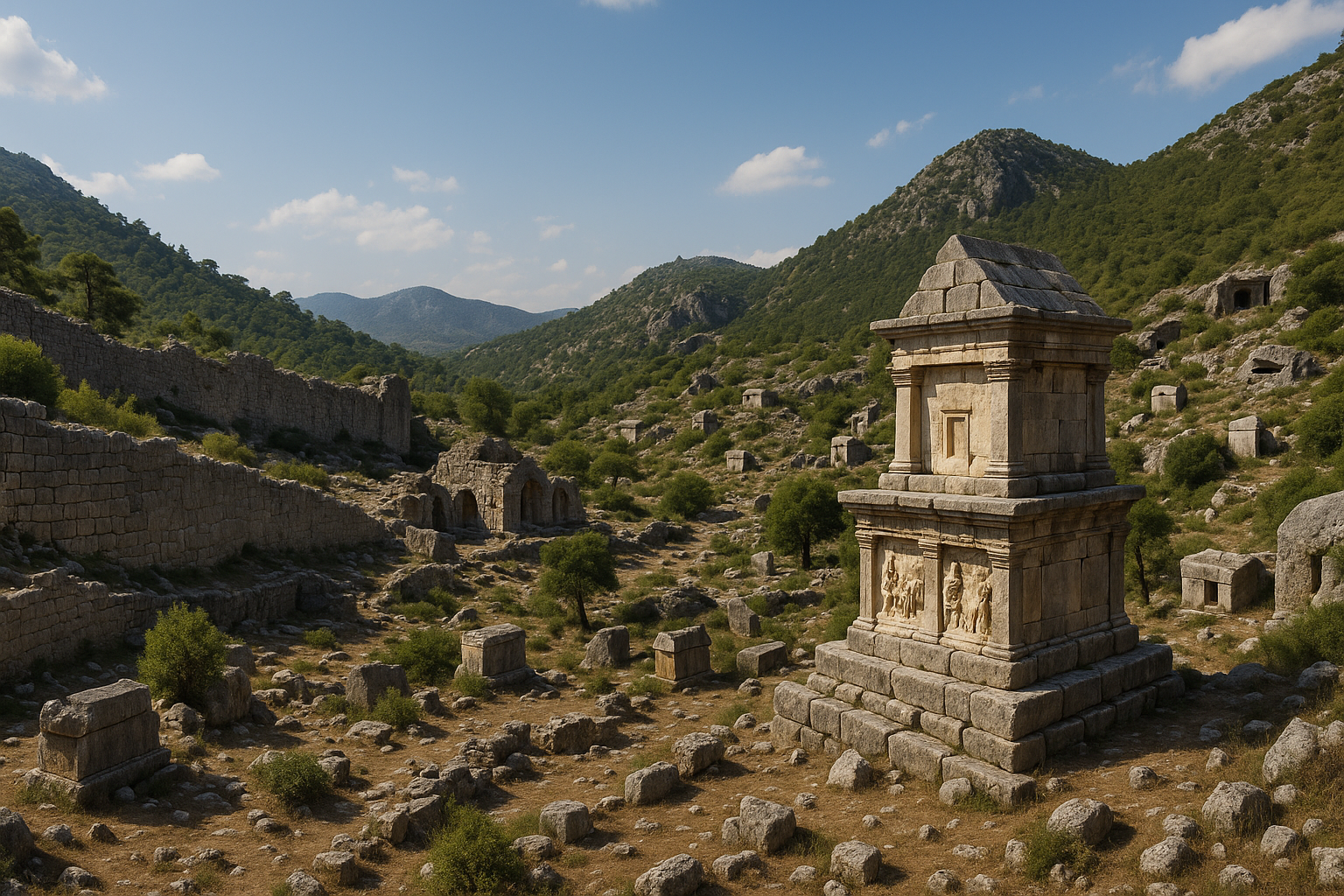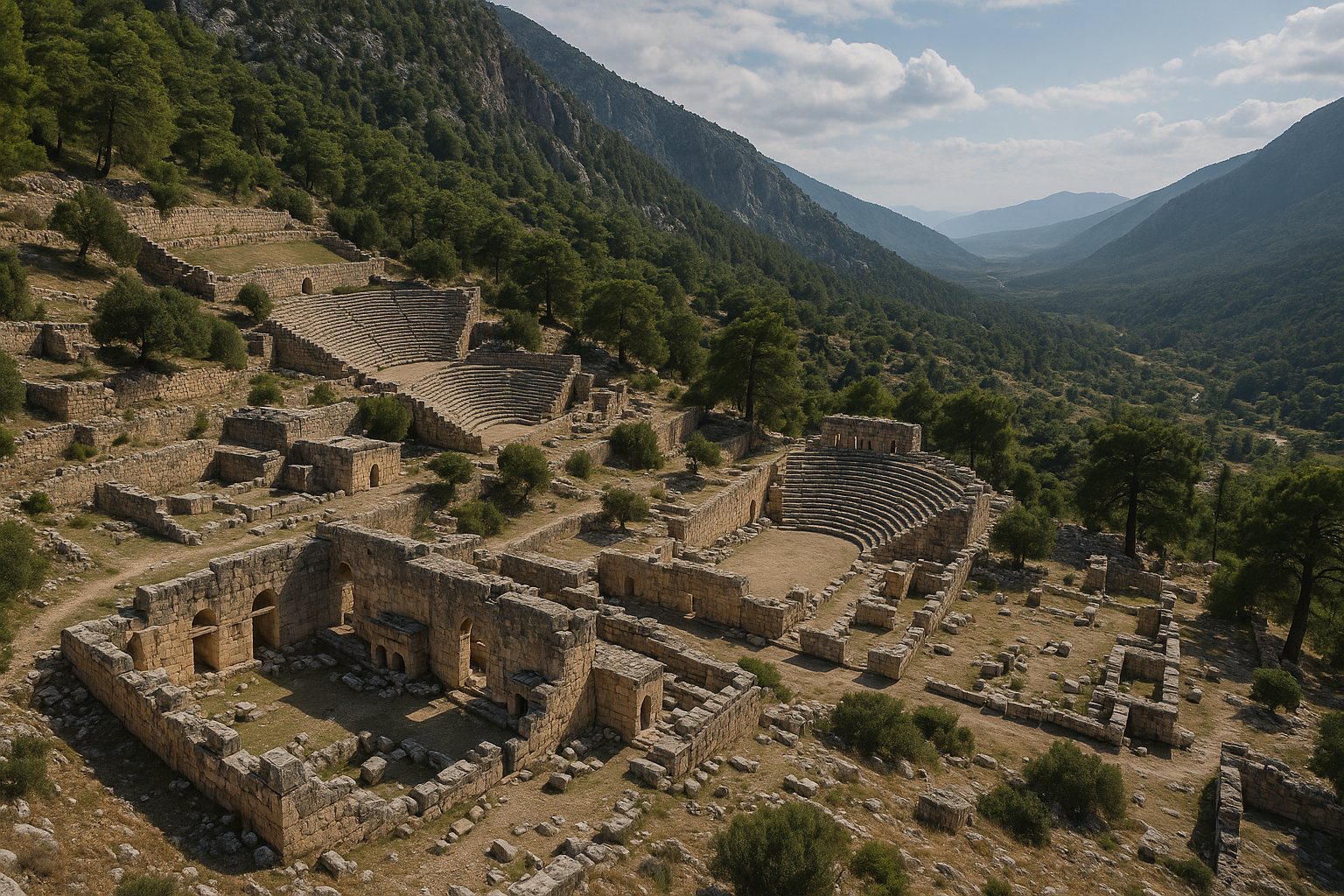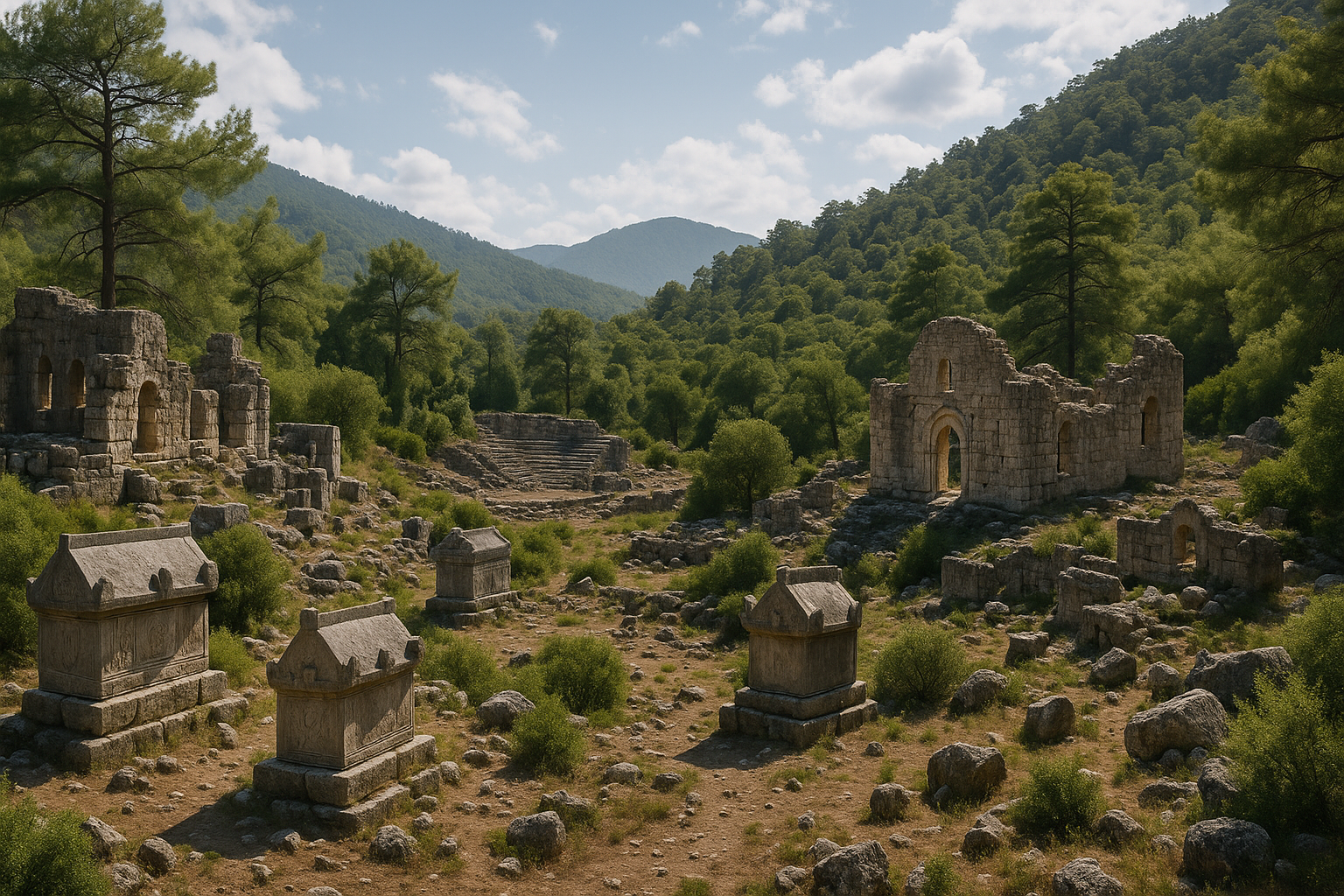
Skrótowe podsumowanie: Idebessos (zapisywane też jako Idebessus lub İdebessos) to małe, lecz historycznie znaczące miasto lycyjskie ukryte w gęstym lesie w Dolinie Alakır, w pobliżu wsi Kozağacı (Karacaören), około 21 km na północ od Kumluca w prowincji Antalya. Jako członek Związku Lykijskiego od 168 r. p.n.e., Idebessos słynie przede wszystkim z niezwykłej kolekcji 51 sarkofagów typu lycyjskiego rozsianych po całym osiedlu – jednej z najwyższych koncentracji w Lycji – oraz małego teatru o pojemności około 364 widzów. Porośnięte lasem, otoczone przyrodą otoczenie nadaje mu atmosferę „zaginionego miasta", czyniąc z niego jedno z najbardziej nastrojowych i najmniej odwiedzanych stanowisk archeologicznych Riwiery Tureckiej. Idebessos oferuje odwiedzającym rzadką możliwość odkrycia starożytnych ruin w niemal zupełnie naturalnym stanie.
Spis treści
- Dlaczego Idebessos jest ważne
- Geografia i otoczenie
- Tło historyczne
- Związek Lykijski
- Sarkofagi
- Teatr
- Inne budowle
- Inskrypcje i język
- Życie codzienne w małym mieście lycyjskim
- Badania archeologiczne
- Informacje dla odwiedzających
- Często zadawane pytania
- Źródła i literatura
Dlaczego Idebessos jest ważne
Mimo swoich niewielkich rozmiarów Idebessos jest znaczące z kilku powodów:
Koncentracja sarkofagów: 51 sarkofagów udokumentowanych w Idebessos reprezentuje jedną z najwyższych koncentracji wykutych w skale i wolnostojących sarkofagów typu lycyjskiego na jakimkolwiek pojedynczym stanowisku. Te nagrobki dostarczają bezcennych dowodów na temat lycyjskich obyczajów pogrzebowych, hierarchii społecznej i tradycji artystycznych.
Nienaruszony stan: W przeciwieństwie do wielu stanowisk starożytnych, które zostały oczyszczone, zrekonstruowane i przystosowane do turystyki, Idebessos pozostaje niemal całkowicie niezbadane i niezrekonstruowane. Ruiny wyłaniają się z gęstego lasu, tworząc autentyczne przeżycie „odkrycia", jakiego większość turystów nigdy nie doświadcza.
Członkostwo w Związku Lykijskim: Jako członek Związku Lykijskiego — najbardziej wyrafinowanej federalnej demokracji starożytnego świata — Idebessos uczestniczyło w jednym z najbardziej niezwykłych eksperymentów politycznych w historii. Nawet jako małe miasto miało prawa głosu w federalnym zgromadzeniu.
Dowody epigraficzne: Inskrypcje na sarkofagach i innych zabytkach dostarczają szczegółowych informacji o strukturach rodzinnych, konwencjach nazewniczych i organizacji społecznej małego miasta lycyjskiego — danych uzupełniających lepiej znane świadectwa z większych ośrodków, takich jak Ksantos i Patara.
Kompromis między dostępnością a autentycznością: Idebessos reprezentuje „drugą stronę" turystyki stanowisk starożytnych — trudne do osiągnięcia, niezbadane i zarośnięte, ale właśnie dlatego oferujące autentyczne przeżycie odkrycia archeologicznego, którego dopracowane atrakcje turystyczne nie mogą zapewnić.
Geografia i otoczenie
Idebessos położone jest w Dolinie Alakır (starożytne Alagir), odległej śródlądowej dolinie w zachodnim Taurusie, około 21 km na północ od Kumluca (starożytne Korydalla) w prowincji Antalya.
Położenie w dolinie
Dolina Alakır jest stosunkowo izolowaną doliną wyżynną:
- Wysokość: około 500–600 metrów nad poziomem morza
- Otoczona zalesionymi grzbietami Bey Dağları (Gór Bey)
- Alakır Çayı (Potok Alakır) płynie przez dolinę, zapewniając wodę dla rolnictwa
- Dno doliny jest stosunkowo płaskie, a miasto zajmuje taras w kształcie litery U na zboczu doliny
Środowisko leśne
Charakterystyczną cechą Idebessos jest dziś jego leśne otoczenie:
- Gęsty turecki sosna (Pinus brutia) i roślinność makii porastają ruiny
- Sarkofagi wyłaniają się z zarośli, drzewa rosną przez mury, a korzenie oplatają starożytne kamienie
- Sklepienie leśne tworzy atmosferę przepuszczającego światło cienia, potęgującą poczucie odkrycia
- Ten naturalny stan, choć utrudniający odczyt stanowiska archeologicznie, tworzy jedno z najbardziej przejmujących przeżyć związanych ze starożytnym stanowiskiem w Turcji
Klimat
- Śródziemnomorski klimat górski — chłodniejszy niż na wybrzeżu, z większymi opadami
- Letnie temperatury są bardziej umiarkowane niż na wybrzeżu w Kumluca (zazwyczaj o 5–10°C chłodniejsze)
- Wiosenne kwiaty polne tworzą wspaniały pokaz wśród ruin (kwiecień–maj)
- Zima może przynosić deszcz i chłodne temperatury, utrudniając dostęp
Tło historyczne
Okres przed-lycyjski
Dolina Alakır wykazuje ślady zamieszkania od epoki brązu. Stosunkowo odizolowane położenie doliny i żyzne dno przyciągały wczesne społeczności rolnicze. Jednak konkretne dowody przed-lycyjskie w samym Idebessos są ograniczone.
Okres lycyjski (ok. V–IV w. p.n.e.)
Idebessos zostało założone jako osada lycyjska, prawdopodobnie w okresie klasycznym (V–IV w. p.n.e.). Lycyjczycy — rdzenni mieszkańcy Anatolii z własnym językiem, pismem i tradycjami politycznymi — zasiedlali górskie doliny i przylądki nadmorskie południowo-zachodniej Anatolii.
Lycyjska nazwa miasta pojawia się w różnych inskrypcjach, a jego położenie w górzystym wnętrzu odzwierciedla lycyjski wzorzec osadnictwa zarówno w strefach przybrzeżnych, jak i wyżynnych.
Okres hellenistyczny i Związek Lykijski (od 168 r. p.n.e.)
Najważniejszym wydarzeniem politycznym w historii Idebessos było jego członkostwo w Związku Lykijskim (Lycyjskie Koinon), sformalizowane po tym, jak Rzym ogłosił niezależność Lycji od Rodos w 168 r. p.n.e.:
- Idebessos zostało sklasyfikowane jako małe miasto w ważonym systemie głosowania Związku
- Małe miasta miały jeden głos w federalnym zgromadzeniu (średnie miasta miały dwa, duże trzy)
- Mimo swoich skromnych rozmiarów Idebessos uczestniczyło w zbiorowym podejmowaniu decyzji w sprawach podatków, wojny i pokoju oraz wyboru urzędników federalnych
- Demokratyczna struktura federalna Związku była podziwiana przez Monteskiusza i wpłynęła na twórców Konstytucji Stanów Zjednoczonych
Okres rzymski (po 43 r. n.e.)
Gdy cesarz Klaudiusz włączył Lycję jako prowincję rzymską w 43 r. n.e., Idebessos stało się częścią Prowincji Lycja (późniejsza Lycia et Pamphylia):
- Miasto nadal funkcjonowało jako małe centrum miejskie
- Budownictwo z okresu rzymskiego obejmuje kompleks łaźni-gimnazjum oraz przebudowę teatru
- Sarkofagi z tego okresu wykazują rosnący wpływ rzymski w stylu artystycznym, zachowując lycyjskie tradycje pogrzebowe
- Życie gospodarcze koncentrowało się prawdopodobnie na rolnictwie (zboże, oliwki) i drewnie z okolicznych lasów
Okres bizantyjski (IV–VII w. n.e.)
Idebessos trwało w okresie bizantyjskim:
- Zbudowano mały kościół, być może z ponownym wykorzystaniem materiałów ze starszych budowli
- Populacja prawdopodobnie zmniejszała się, gdy osady wiejskie we wnętrzu traciły na znaczeniu w stosunku do ośrodków przybrzeżnych
- Wydaje się, że stanowisko zostało stopniowo opuszczone w VII–VIII w.
Związek Lykijski
Członkostwo Idebessos w Związku Lykijskim łączy je z jedną z najwspanialszych instytucji politycznych starożytnego świata:
Struktura
Związek Lykijski był federalną demokracją złożoną z 23 miast z ważonym systemem głosowania:
- Duże miasta (Ksantos, Patara, Pinara, Olimpos, Myra, Tlos): 3 głosy każde
- Średnie miasta: 2 głosy każde
- Małe miasta (w tym Idebessos): 1 głos każde
Zarządzanie
- Lykiarch (prezydent federalny) był wybierany corocznie
- Federalne zgromadzenie zbierało się, by decydować w sprawach podatków, polityki zagranicznej i prawa
- Sędziowie federalni byli mianowani proporcjonalnie spośród miast członkowskich
- Każde miasto zachowywało wewnętrzną autonomię, uczestnicząc jednocześnie w federalnych decyzjach
Znaczenie historyczne
Związek Lykijski jest uważany za pionierski przykład reprezentatywnego rządu federalnego:
- Monteskiusz przytoczył go w O duchu praw (1748) jako wzorcową federację
- Alexander Hamilton odwoływał się do Związku Lykijskiego w Federaliście nr 16 podczas debat nad Konstytucją USA
- System proporcjonalnej reprezentacji wyprzedził nowoczesne struktury federalne
Sarkofagi
51 sarkofagów w Idebessos stanowi najbardziej imponującą cechę stanowiska:
Typy
- Sarkofagi typu lycyjskiego z charakterystycznymi pokrywami ogiwalnymi (ostrołukowymi) przypominającymi odwrócone kadłuby łodzi — charakterystyczna lycyjska forma pogrzebowa
- Sarkofagi typu rzymskiego z płaskimi lub szczytowymi pokrywami, odzwierciedlające późniejszy wpływ rzymski
- Niektóre formy hybrydowe łączące lycyjskie kształty pokryw z rzymskimi elementami dekoracyjnymi
Rozmieszczenie
- Sarkofagi są rozsiane po całym osiedlu w pozornie zaplanowanym układzie
- Skupione wzdłuż głównej drogi procesjonalnej przez miasto
- Część umieszczona przy wejściu do osiedla, tworząc „ulicę umarłych"
- Inne usytuowane w pobliżu rodzinnych stref mieszkalnych, sugerując skupiska nagrobków rodowych
Dekoracja i inskrypcje
- Wiele nosi dekorację reliefową — rzeźbione głowy lwów, maski Meduzy, girlandy i rozety na częściach skrzynkowych
- Inskrypcje greckie identyfikują zmarłych, ich rodziny i niekiedy zawody
- Niektóre inskrypcje zawierają kary pogrzebowe — sankcje dla każdego, kto zakłóci grób lub doda nieautoryzowane pochówki
- Wzorce nazewnicze ujawniają sieci rodzinne i powiązania społeczne wewnątrz społeczności
Znaczenie
Kolekcja sarkofagów w Idebessos jest ważna, ponieważ:
- Dostarcza niemal kompletnego krajobrazu pogrzebowego małego miasta lycyjskiego
- Różnorodność typów sarkofagów ukazuje przejście od lycyjskiego do rzymskiego wpływu kulturowego
- Inskrypcje dokumentują prozopografię (studium jednostek) małej społeczności
- Wzorzec rozmieszczenia ujawnia, jak starożytne miasta organizowały swoją topografię pogrzebową
Teatr
Teatr w Idebessos to mała, lecz dobrze zachowana budowla:
- Pojemność: Około 364 widzów (na podstawie obliczeń miejsc siedzących)
- Jeden z najmniejszych teatrów w Lycji — odzwierciedlający skromną populację miasta
- Kawea (strefa widowni): Półkolista, z rzędami siedzeń częściowo wykutymi w skale i częściowo zbudowanymi
- Orkiestra: Półkolista przestrzeń widowiskowa u podstawy
- Skene (budynek sceny): W dużej mierze zawalony, ale widoczne są ślady fundamentów
- Teatr jest zwrócony na południe, oferując widok na dolinę — aktorzy grali na tle naturalnego górskiego tła
- Obecnie częściowo zarośnięty drzewami i roślinnością, co dodaje nastrojowego charakteru
- Niewielka skala sprawia, że przestrzeń wydaje się kameralna — widownia znała każdego aktora osobiście
Inne budowle
Kompleks łaźni-gimnazjum
Zidentyfikowano pozostałości łaźni-gimnazjum z okresu rzymskiego (balneum):
- Charakterystyczny rzymski plan łaźni z ogrzewanymi i nieogrzewanymi pomieszczeniami
- Część gimnastyczna odzwierciedla utrzymujące się znaczenie greckiej kultury atletycznej w Lycji okresu rzymskiego
- Kompleks służył jako miejsce spotkań towarzyskich małej społeczności
Kościół bizantyjski
Mały kościół bizantyjski został zbudowany w późniejszych wiekach zasiedlenia:
- Zlokalizowany w centralnej części osiedla
- Może ponownie wykorzystywać elementy architektoniczne (spolia) z wcześniejszych budowli rzymskich
- Wskazuje na obecność społeczności chrześcijańskiej w V–VII w.
Mury miejskie
Odnotowano ślady obwodu murów obronnych:
- Mniej masywne niż mury większych miast lycyjskich
- Odzwierciedlają drugorzędną obronną zależność miasta od jego odległego położenia w dolinie
Groby wykute w skale
Oprócz wolnostojących sarkofagów istnieje kilka komór grobowych wykutych w skale:
- Wycięte w ścianach skalnych w pobliżu osiedla
- Niektóre z rzeźbionymi fasadami
- Reprezentują starszą lycyjską tradycję pogrzebową, która współistniała z pochówkami w sarkofagach
Obszary mieszkalne
Rozproszone fundamenty budynków wskazują na dzielnice mieszkalne:
- Grubsza budowla kamienne murów wyznaczające parcele domów
- Trudne do prześledzenia ze względu na zarośnięcie roślinnością
- Plan osiedla w kształcie litery U sugeruje zorganizowane skupiska sąsiedzkie
Inskrypcje i język
Inskrypcje w Idebessos dostarczają cennych danych językowych i społecznych:
Język
- Wszystkie zachowane inskrypcje są w języku greckim — w Idebessos nie znaleziono tekstów w języku lycyjskim
- Sugeruje to, że miasto zostało założone lub zhellenizowane stosunkowo późno, po przejściu od języka lycyjskiego do greki jako języka codziennego (proces zasadniczo zakończony do III w. p.n.e.)
Informacje społeczne
Inskrypcje ujawniają:
- Imiona rodzinne i genealogie — niektóre rodziny pojawiają się na wielu sarkofagach, wskazując na lokalne dynastie
- Tytuły zawodowe — niektóre osoby są identyfikowane według zawodu
- Obywatelstwo — odniesienia do statusu obywatelskiego w systemie Związku Lykijskiego
- Ustawodawstwo pogrzebowe — standardowe klauzule sankcyjne grożące karami za naruszenie grobów
Życie codzienne w małym mieście lycyjskim
Niewielkie rozmiary Idebessos pozwalają nam wyobrazić sobie życie codzienne w sposób, który wielkie ośrodki miejskie niekiedy przysłaniają:
Populacja: Pojemność teatru wynosząca 364 miejsca sugeruje całkowitą populację być może 800–1 500 osób — społeczność, w której wszyscy się znali.
Gospodarka: Rolnictwo (zboże, oliwki, być może hodowla zwierząt) i leśnictwo (drewno z okolicznych lasów sosnowych) były prawdopodobnie głównymi filarami gospodarki. Izolacja Doliny Alakır ograniczała handel, ale zapewniała samowystarczalność.
Struktura społeczna: Inskrypcje na sarkofagach sugerują stosunkowo egalitarne społeczeństwo jak na standardy starożytne — żadna pojedyncza rodzina nie dominuje w zapisach, a wiele rodzin mogło sobie pozwolić na ozdobne kamienne sarkofagi.
Religia: Społeczność uczestniczyła w szerszym greckim świecie religijnym — w kulcie Apollina, Artemidy i lokalnych bóstw. Późniejszy kościół bizantyjski wskazuje na konwersję na chrześcijaństwo w V–VI w.
Kontakt ze światem: Mimo swojej izolacji Idebessos było połączone z szerszymi śródziemnomorskimi sieciami poprzez Związek Lykijski, rzymską administrację prowincji i regionalne szlaki handlowe przez Dolinę Alakır do wybrzeża.
Badania archeologiczne
Badania terenowe i dokumentacja
- Stanowisko zostało udokumentowane poprzez badania powierzchniowe, a nie systematyczne wykopaliska
- Wczesna dokumentacja przez europejskich podróżników i uczonych w XIX i na początku XX w.
- Sarkofagi i inskrypcje zostały skatalogowane przez epigrafów i historyków sztuki
- Austriackie i niemieckie zespoły archeologiczne przeprowadziły badania terenowe w regionie
Aktualny stan
- Idebessos pozostaje niezbadane — nie przeprowadzono systematycznych wykopalisk
- Stanowisko nie jest przystosowane dla turystów — brak infrastruktury, oznakowań ani środków konserwacji
- Zarośnięcie roślinnością nadal zasłania elementy stanowiska
- Odległość stanowiska w pewnym stopniu chroniła je przed grabieżą, choć niektóre pokrywy sarkofagów zostały naruszone
Przyszły potencjał
- Systematyczne wykopaliska mogłyby ujawnić pełny zasięg osiedla i potencjalnie odkryć inskrypcje w języku lycyjskim w niższych warstwach archeologicznych
- Stanowisko skorzystałoby na projekcie konserwacji i dokumentacji podobnym do podejścia stosowanego w innych małych stanowiskach lycyjskich
Informacje dla odwiedzających
Lokalizacja: Dolina Alakır, w pobliżu wsi Kozağacı (Karacaören), około 21 km na północ od Kumluca, prowincja Antalya.
Jak dotrzeć: Samochodem z Kumluca (około 45 minut krętą górską drogą). Jedź drogą na północ z Kumluca w kierunku Altınyaka/Beycik, a następnie skręć w stronę wsi Kozağacı. Ostatni odcinek może być nieutwardzony. Zalecany pojazd z odpowiednim prześwitem. Brak komunikacji publicznej.
Aktualny stan: Stanowisko jest całkowicie niezagospodarowane — brak kasy biletowej, tablic informacyjnych, wytyczonych ścieżek ani zaplecza. To wizyta w dzikim terenie archeologicznym.
Teren: Leśne podłoże z nierównym gruntem, powalonymi drzewami, gęstymi zaroślami i luźnymi kamieniami. Sarkofagi i teatr są rozsiane po zboczu wzgórza. Solidne buty trekkingowe i długie spodnie (na wypadek kolczastych zarośli) są niezbędne.
Czas zwiedzania: 1,5–3 godziny na dokładną eksplorację.
Najlepsza pora roku: Wiosna (kwiecień–maj) ze względu na kwiaty polne i umiarkowane temperatury. Jesień (wrzesień–październik) jest również odpowiednia. Lato jest gorące, ale chłodniejsze niż na wybrzeżu. Zima może przynosić deszcz i błoto.
Wizyty łączone:
- Kumluca — nowoczesne miasto z lokalnymi targowiskami
- Olimpos — główne lycyjskie stanowisko przybrzeżne (30 km na południe od Kumluca)
- Chimera (Yanartaş) — wieczne płomienie (w pobliżu Olimpos)
- Faselis — lycyjsko-rzymskie miasto nadmorskie (40 km na wschód)
- Adrasan — piękna zatoka i plaża (15 km na południe od Kumluca)
Wskazówki:
- To przygodowe zwiedzanie poza szlakami — nieodpowiednie dla przypadkowych turystów lub osób oczekujących zagospodarowanego zaplecza
- Zabierz dużo wody, przekąsek oraz GPS lub szczegółową mapę offline
- Poinformuj kogoś o swoich planach — stanowisko jest odległe i miejscami bez zasięgu sieci
- Sarkofagi wśród sosen to główna atrakcja — zaplanuj czas na eksplorację i fotografowanie
- Teatr łatwo przeoczyć — jest częściowo ukryty przez roślinność na południowym zboczu
- Miejscowi mieszkańcy wsi Kozağacı mogą pomóc z wskazówkami dojazdu
- Szanuj ruiny — nie wchodź na sarkofagi ani nie zabieraj żadnych materiałów
- Przeżycie odkrywania ruin w lesie jest nagrodą samo w sobie — oddaj się przygodzie
Często zadawane pytania
Czym jest Idebessos? Małe miasto lycyjskie w Dolinie Alakır koło Kumluca w Antalyi, znane z 51 sarkofagów i małego teatru (pojemność 364 miejsc). Było członkiem Związku Lykijskiego.
Czy zostało zbadane? Nie. Idebessos jest niezbadane i niezagospodarowane. Ruiny są zarośnięte lasem i należy je zwiedzać samodzielnie.
Ile jest sarkofagów? 51 udokumentowanych sarkofagów różnych typów — lycyjskie z pokrywami ogiwalnymi, rzymskie z płaskimi pokrywami i formy hybrydowe.
Czy wysiłek dotarcia jest wart trudu? Dla miłośników archeologii i podróżników lubiących przygody — zdecydowanie tak — przeżycie odkrywania sarkofagów w lesie sosnowym jest niezapomniane. Dla ogólnych turystów pobliskie stanowiska Olimpos i Faselis oferują łatwiejszy dostęp z bardziej widocznymi ruinami.
Czy to jest bezpieczne? Stanowisko jest odległe, ale ogólnie bezpieczne. Obowiązują standardowe środki ostrożności w dzikim terenie: odpowiednie obuwie, woda, ostrożność na nierównym gruncie i poinformowanie kogoś o swoich planach.
Czym był Związek Lykijski? Starożytna federalna demokracja 23 miast lycyjskich z proporcjonalną reprezentacją — jeden z najwcześniejszych demokratycznych systemów federalnych w historii. Wywarł wpływ na projekt Konstytucji Stanów Zjednoczonych.
Sympoliteja Idebessos, Akalissos i Kormos
Jednym z najważniejszych faktów politycznych dotyczących Idebessos jest jego członkostwo w sympoliteji -- formalnym związku politycznym -- z sąsiednimi osiedlami Akalissos i Kormos. To potrójne przymierze miejskie funkcjonowało jako jeden podmiot polityczny w ramach Związku Lykijskiego.
| Miasto | Rola w sympoliteji | Lokalizacja |
|---|---|---|
| Akalissos | Miasto wiodące (hegemon) | Północno-wschodnia górska Lycja |
| Idebessos | Miasto członkowskie | Dolina Alakır, ~21 km na N od Kumluca |
| Kormos | Miasto członkowskie | Pobliski płaskowyż, dokładna lokalizacja dyskutowana |
Sympoliteja była reprezentowana przez jeden głos w federalnym zgromadzeniu Związku Lykijskiego. Ten układ był powszechny wśród mniejszych osad lycyjskich: łącząc swój polityczny ciężar, społeczności zbyt małe, by kwalifikować się do indywidualnej reprezentacji, mogły nadal uczestniczyć w federalnym zarządzaniu. Inskrypcje potwierdzają, że związek był kierowany przez Akalissos, choć każde miasto zachowało własną lokalną tożsamość, miejsca pochówku i instytucje obywatelskie.
Praca doktorska zatytułowana „Idebessos, Akalissos ve Kormos: Kent Tarihi" (Historia Miasta), napisana pod opieką naukową na Uniwersytecie Marmara, dostarczyła najbardziej wszechstronnej nowoczesnej analizy tego, jak te trzy miasta funkcjonowały razem politycznie i gospodarczo.
Typologia i klasyfikacja sarkofagów
51 udokumentowanych sarkofagów w Idebessos wykazuje wyraźny charakter hybrydowy, odzwierciedlający położenie miasta na styku lycyjskich i pizydyjskich stref kulturowych.
| Cecha | Tradycja lycyjska | Wpływ pizydyjski | Adaptacja rzymska |
|---|---|---|---|
| Kształt pokrywy | Ogiwalny (ostrołukowy), przypominający odwrócony kadłub łodzi | -- | Płaskie lub szczytowe pokrywy na późniejszych przykładach |
| Dekoracja skrzynki | Minimalna lub geometryczna | Panele tabula ansata, motywy girlandowe w stylu pizydyjskim | Protomy z głowami lwów, maski Meduzy |
| Inskrypcje | Pismo lycyjskie (nieznalezione w Idebessos) | -- | Teksty greckie z karami pogrzebowymi |
| Konstrukcja | Trójczęściowa: podstawa, komora grobowa, ogiwalny wierzch | -- | Monolityczne skrzynki na przykładach rzymskich |
| Zakres datowania | Forma wywodzi się z V w. p.n.e. | -- | Wszystkie przykłady z Idebessos pochodzą z okresu rzymskiego |
Sama forma sarkofagu -- wolnostojąca kamienna trumna z ogiwalaną pokrywą imitującą rdzenną architekturę drewnianą -- pojawiła się po raz pierwszy w Lycji w V w. p.n.e. W Idebessos jednak wszystkie 51 przykładów pochodzi z okresu rzymskiego (I–III w. n.e.), co dowodzi, że tradycyjny lycyjski kształt pokrywy utrzymywał się przez wieki, nawet gdy dekoracja skrzynki przyjmowała motywy pizydyjskie i rzymskie.
Cztery groby typu egzedry (pomniki z półkolistą ławą) zostały również udokumentowane w nekropoli, reprezentując odrębną formę pochówku związaną z upamiętnieniem rodzinnym i ucztami pogrzebowymi.
Dowody epigraficzne i ustawodawstwo pogrzebowe
Greckie inskrypcje na sarkofagach Idebessos dostarczają konkretnych danych społecznych i prawnych:
- Genealogie rodzinne: Patronimiki (imiona ojców) i niekiedy matronimiki pojawiają się, umożliwiając rekonstrukcję drzew genealogicznych na przestrzeni wielu pokoleń. Kilka nazwisk rodzinnych powtarza się na różnych sarkofagach, wskazując na lokalne dynastie.
- Formuły obywatelskie: Niektóre inskrypcje wyraźnie identyfikują zmarłych jako polites (obywatela) Idebessos, potwierdzając formalny status osiedla jako polis (miasta-państwa) w ramach systemu Związku Lykijskiego.
- Kary pogrzebowe: Standardowe klauzule sankcyjne groziły karą finansową każdemu, kto naruszył grób lub dodał nieautoryzowane pochówki. Kary były zazwyczaj płatne do skarbca miejskiego lub do wyznaczonego funduszu świętego. Kwoty wahały się od 500 do 2 500 denarów na porównywalnych stanowiskach lycyjskich.
- Tytuły zawodowe: Niektóre osoby są identyfikowane według zawodu, dostarczając dowodów na działalność gospodarczą tej małej społeczności.
Brak jakichkolwiek inskrypcji w języku lycyjskim w Idebessos jest godny uwagi. Wszystkie zachowane teksty są po grecku, co sugeruje, że miasto zostało albo założone po przejściu językowym od lycyjskiego do greki (zasadniczo zakończonym do III w. p.n.e.), albo że starsze zabytki w języku lycyjskim nie przetrwały.
Teatr: szczegóły architektoniczne i porównania
Teatr w Idebessos, o szacowanej pojemności 364 widzów, jest jednym z najmniejszych znanych teatrów w Lycji. Poniższa tabela przedstawia go w kontekście porównawczym.
| Teatr | Miasto | Region | Szacowana pojemność |
|---|---|---|---|
| Idebessos | Idebessos | Wschodnia Lycja | ~364 |
| Kyaneai | Kyaneai | Środkowa Lycja | ~1 000 |
| Arycanda | Arycanda | Zachodnia Lycja | ~2 500 |
| Myra | Myra | Środkowa Lycja | ~10 000 |
| Patara | Patara | Zachodnia Lycja | ~6 000 |
| Ksantos | Ksantos | Zachodnia Lycja | ~4 200 |
Teatr jest zgodny ze standardowym planem hellenistycznym:
- Kawea: Półkolista strefa widowni, częściowo wykuta w naturalnym zboczu, częściowo zbudowana z bloków kamiennych
- Orkiestra: Półkolista przestrzeń widowiskowa u podstawy
- Skene: Budynek sceny, dziś w dużej mierze zawalony, ale widoczne ślady fundamentów
- Orientacja: Zwrócony na południe, oferując widok na Dolinę Alakır
Stosunek pojemności teatru do szacowanej populacji (~364 miejsc dla ~800–1 500 mieszkańców) sugeruje, że jednocześnie mogło uczestniczyć w przedstawieniu 25–45% całkowitej populacji, co wskazuje, że spektakle teatralne były prawdziwie wspólnotowymi wydarzeniami w osiedlu tej wielkości.
Historia badań archeologicznych
| Data | Badacz | Działalność |
|---|---|---|
| 1842 | T.A.B. Spratt | Pierwsze zidentyfikowanie ruin jako Idebessos |
| XIX – pocz. XX w. | Różni europejscy podróżnicy | Dokumentacja sarkofagów i inskrypcji |
| Połowa XX w. | Zespoły austriackie i niemieckie | Regionalne badania terenowe obejmujące Dolinę Alakır |
| Lata 2000. | Uczeni tureccy i międzynarodowi | Szczegółowe badanie wszystkich pozostałości; mapowanie i archiwizacja ruin |
| Ostatnio | Uniwersytet Marmara (badania doktorskie) | Wszechstronne studium Idebessos, Akalissos i Kormos jako jednostki politycznej |
Stanowisko pozostaje niezbadane -- nie przeprowadzono systematycznych wykopalisk. Cała wiedza pochodzi z badań powierzchniowych, katalogowania inskrypcji i dokumentacji architektonicznej. Przyszłe wykopaliska mogłyby potencjalnie ujawnić wcześniejsze (przed-rzymskie) warstwy archeologiczne, w tym możliwe inskrypcje w języku lycyjskim pod widocznymi pozostałościami z okresu rzymskiego.
Źródła i literatura
- TAM (Tituli Asiae Minoris) — korpus inskrypcji z Azji Mniejszej, w tym z Idebessos
- George Bean, Lycian Turkey (Londyn, 1978) — regionalny przewodnik archeologiczny
- Martin Zimmermann, „Die Lykischen Sarkophage" — studium lycyjskich sarkofagów
- Hasan Malay & Mustafa Adak, „Epigraphic Research in Lycia" — dokumentacja inskrypcji
- UNESCO Światowe Dziedzictwo, „Xanthos-Letoon" — wpisane lycyjskie stanowisko UNESCO (kontekst regionalny)
- Studia nad Związkiem Lykijskim w American Journal of Archaeology
- Alexander Hamilton, Federalista nr 16 — odniesienie do lycyjskiego modelu federalnego