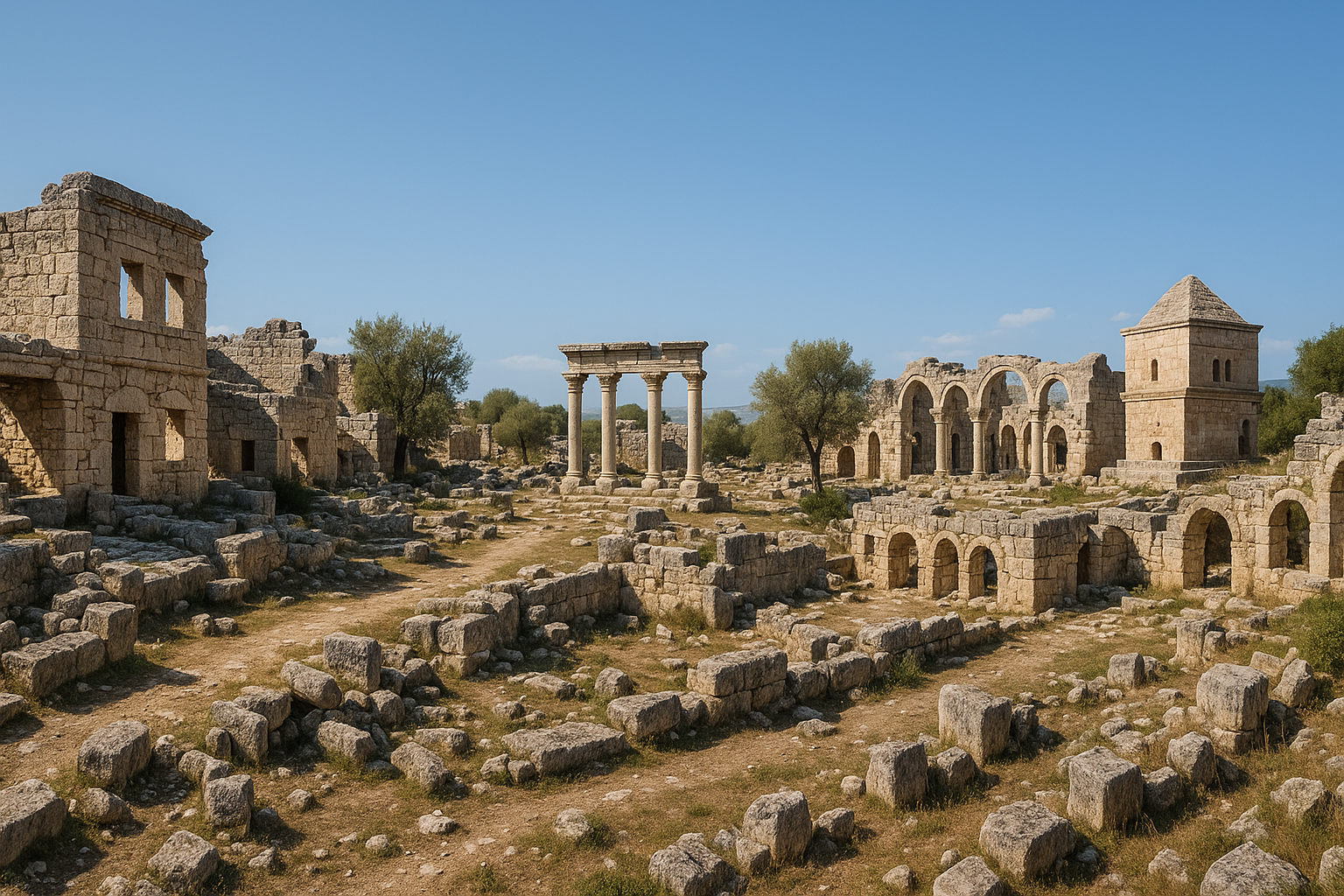
Resumen rápido: El Monasterio de Alahan (también conocido como Alahan Manastırı o Koja Kalesi) es uno de los complejos arquitectónicos bizantinos tempranos más notables del Mediterráneo, encaramado de manera espectacular en una empinada ladera de montaña a 1.300 metros de altitud, dominando el valle del Göksu cerca de Mut, en la provincia de Mersin. Construido principalmente durante el siglo V d. C. bajo los emperadores León I y Zenón, el complejo incluye dos magníficas iglesias --la Iglesia Occidental (Iglesia de los Evangelistas) y la Iglesia Oriental (Iglesia con Cúpula)-- conectadas por una pasarela columnada, junto con un baptisterio, dependencias residenciales y cámaras excavadas en la roca. Famoso por su excepcional tradición isauria de tallado en piedra, su elaborada decoración escultórica y su impresionante entorno natural, Alahan se considera uno de los ejemplos más importantes que se conservan de arquitectura prejustiniana. El yacimiento figura en la Lista Indicativa de Patrimonio Mundial de la UNESCO de Turquía.
Tabla de contenidos
- Por qué importa Alahan
- Geografía y emplazamiento
- Antecedentes históricos
- La Iglesia Occidental (Iglesia de los Evangelistas)
- La Iglesia Oriental (Iglesia con Cúpula)
- El baptisterio
- Otras estructuras
- La tradición isauria de tallado en piedra
- Programa escultórico
- Peregrinación y vida monástica
- Investigaciones arqueológicas
- Información para el visitante
- Preguntas frecuentes
- Fuentes y lecturas complementarias
Por qué importa Alahan
Alahan es significativo por varias razones:
Arquitectura prejustiniana: El complejo data del siglo V, antes de las grandes campañas constructivas de Justiniano I (527-565). Esto lo convierte en uno de los ejemplos más importantes que se conservan de arquitectura bizantina temprana, preservando formas y técnicas que fueron superadas más tarde por el estilo justinianeo.
La Iglesia con Cúpula: La Iglesia Oriental de Alahan es uno de los primeros ejemplos conocidos de una basílica con cúpula, un tipo edilicio que culminaría más tarde en Santa Sofía. Sus innovaciones arquitectónicas influyeron en el desarrollo del diseño de las iglesias bizantinas.
Artesanía isauria: La calidad del tallado en piedra de Alahan es excepcional. La tradición isauria de escultura arquitectónica --caracterizada por roleos vegetales, figuras animales y patrones geométricos tallados en profundidad y de modo naturalista-- alcanzó aquí su apogeo. Los marcos de puertas, los encuadres de ventanas y las cornisas talladas son obras maestras del arte decorativo tardoantiguo.
Entorno natural: La dramática posición del yacimiento en una empinada ladera montañosa que domina el valle del Göksu crea uno de los emplazamientos arqueológicos más espectaculares de Turquía. La combinación de arquitectura pétrea en ruinas, acantilados montañosos y vistas panorámicas es inolvidable.
Peregrinación: Investigaciones recientes sugieren que Alahan funcionó principalmente como santuario de peregrinación más que como monasterio tradicional, atrayendo a viajeros cristianos a un lugar sagrado en las montañas isaurias.
Geografía y emplazamiento
Alahan está situado en las laderas septentrionales de los montes Tauro, aproximadamente a 20 km al norte de Mut, en la provincia de Mersin, a una altitud de unos 1.300 metros. El complejo está construido en una estrecha terraza recortada en una empinada pared de acantilado, con dramáticas caídas debajo y peñascos rocosos arriba.
El yacimiento domina el valle del Göksu (el antiguo valle del río Calicadno), que fue una importante ruta que conectaba la costa de Cilicia con el interior de Anatolia. La antigua carretera de Silifke (Seleucia del Calicadno) a Karaman (Laranda) atravesaba este valle, haciendo accesible la ubicación a peregrinos y viajeros.
La región de Isauria --el accidentado interior montañoso de Cilicia-- tenía una identidad cultural distintiva en la Antigüedad tardía. Los isaurios eran conocidos como feroces guerreros de montaña que sirvieron y resistieron alternativamente a la autoridad romana y bizantina. Varios emperadores (Verina, la esposa de León I, era isauria; Zenón era completamente isaurio) tuvieron vínculos con la región, lo que puede explicar el patronazgo imperial de Alahan.
El paisaje circundante se caracteriza por bosques de pinos y cedros, afloramientos rocosos calizos y profundos valles, un terreno salvaje y hermoso que realzaba el ambiente espiritual del lugar.
Antecedentes históricos
Fundación (mediados del siglo V)
La primera fase de construcción tuvo lugar a mediados del siglo V, probablemente bajo el emperador León I (r. 457-474). La Iglesia Occidental y las estructuras residenciales asociadas se construyeron durante este período. La escala y la calidad de la construcción sugieren el patronazgo imperial.
Segunda fase (finales del siglo V)
La Iglesia Oriental (Iglesia con Cúpula) se construyó en el último cuarto del siglo V, muy probablemente bajo el emperador Zenón (r. 474-491), que era él mismo de origen isaurio. La conexión de Zenón con la región explicaría la extraordinaria inversión en un lugar situado en la patria de sus antepasados.
Peregrinación y uso monástico
El complejo funcionó tanto como santuario de peregrinación como comunidad monástica desde los siglos V hasta VII. La escala de los edificios y la presencia de un baptisterio sugieren que atraía a un número significativo de visitantes.
Declive
El lugar parece haber sido abandonado hacia el siglo VII, probablemente debido a la perturbación de las guerras fronterizas árabo-bizantinas y al declive del tráfico de peregrinos. Su remota ubicación montañosa preservó las ruinas del posterior expolio de piedra.
La Iglesia Occidental (Iglesia de los Evangelistas)
La Iglesia Occidental es la mayor de las dos iglesias:
- Planta de basílica de tres naves con una nave central y dos naves laterales
- Dimensiones: aproximadamente 36 × 16 metros, una iglesia sustancial
- La nave estaba separada de las laterales por dos hileras de columnas que sostenían un claristorio superior
- Ábside en el extremo este con planta semicircular
- Llamada «Iglesia de los Evangelistas» por los símbolos de los evangelistas tallados (las cuatro criaturas aladas: hombre, león, buey, águila) en su decoración
- La entrada occidental está enmarcada por un elaborado portal tallado con decoración de roleos vegetales
- Gran parte del muro norte sobrevive a una altura significativa, conservando los vanos originales de las ventanas
- La calidad de la mampostería de sillería es excepcional: bloques de caliza ajustados con precisión y mortero mínimo
La Iglesia Oriental (Iglesia con Cúpula)
La Iglesia Oriental es la estructura arquitectónicamente más innovadora:
- Planta de basílica con cúpula que combina la forma longitudinal de la basílica con una cúpula central
- Esto la convierte en una de las basílicas con cúpula más tempranas conocidas en la arquitectura cristiana
- La cúpula se sostenía sobre trompas (estructuras arqueadas que abarcan las esquinas de una base cuadrada para sostener una cúpula circular), una técnica que se convertiría en fundamental para la arquitectura bizantina
- Ricamente decorada con relieves escultóricos en el exterior, incluidas elaboradas cornisas, marcos de ventanas y encuadres de puertas
- La fachada sur presenta un extraordinario panel de relieve tallado con roleos vegetales, animales y patrones geométricos
- Construida con sillería caliza cortada con precisión en la tradición isauria
- La cúpula se ha derrumbado, pero los muros sobreviven a una altura considerable, lo que permite reconstruir el diseño original
El baptisterio
Un baptisterio de dos ábsides se encuentra entre las dos iglesias:
- Dos naves orientadas este-oeste
- Una piscina bautismal cruciforme que confirma su función como baptisterio: los candidatos al bautismo descendían a la piscina en forma de cruz
- La presencia de un baptisterio indica que Alahan era un lugar donde se bautizaba a los conversos, lo que apoya su identificación como centro de peregrinación más que como comunidad puramente monástica
- La posición del baptisterio entre las dos iglesias sugiere una procesión litúrgica del bautismo a la comunión
Otras estructuras
La columnata
Una pasarela columnada conecta la Iglesia Occidental con la Iglesia Oriental, recorriendo el borde de la terraza del acantilado:
- Columnas de tipos variados (algunas con capiteles corintios)
- La pasarela creaba una ruta procesional resguardada entre las dos iglesias
- Las vistas desde la columnata sobre el valle del Göksu son espectaculares
Cámaras excavadas en la roca
Varias cámaras excavadas en la roca están talladas en la pared del acantilado, detrás de las estructuras construidas:
- Algunas servían como celdas de los monjes (alojamientos individuales)
- Otras pudieron haber sido almacenes o cámaras funerarias
- Una gran cámara excavada en la roca (a veces llamada la «iglesia rupestre») pudo haber sido un lugar de culto anterior, previo a las iglesias construidas
Dependencias residenciales
Los restos de edificios residenciales en la terraza inferior servían a la comunidad monástica:
- Espacios comunales para comedor y reunión
- Celdas individuales para los monjes
- Edificios de servicio para almacenamiento y preparación de alimentos
Patio anterior
Un patio anterior en el extremo occidental del complejo servía como zona principal de entrada para los visitantes que llegaban desde el valle inferior.
La tradición isauria de tallado en piedra
Alahan es el mejor ejemplo conservado de la escuela isauria de tallado arquitectónico en piedra:
Características
- Relieves tallados en profundidad con un fuerte modelado tridimensional
- Motivos de roleos vegetales -- zarcillos de vid continuamente espiralados con hojas, racimos y animales anidados entre los roleos
- Figuras animales naturalistas -- aves, conejos, ciervos y leones
- Patrones de entrelazado geométrico -- complejos diseños de nudos
- Símbolos cristianos integrados en los esquemas decorativos -- cruces, monogramas cristológicos y símbolos de los evangelistas
- Caliza de alta calidad procedente de canteras locales, muy adecuada para el tallado detallado
Significación
La tradición isauria de tallado en piedra representa uno de los logros culminantes del arte decorativo tardoantiguo. Los tallados de Alahan influyeron en la decoración bizantina posterior y tienen paralelos con las tradiciones artísticas contemporáneas coptas y sirias, lo que sugiere conexiones culturales por todo el Mediterráneo oriental.
Programa escultórico
La decoración escultórica de Alahan incluye:
Símbolos de los evangelistas
Los cuatro símbolos de los evangelistas -- el ángel (Mateo), el león (Marcos), el toro (Lucas) y el águila (Juan) -- aparecen en la Iglesia Occidental, dándole el nombre de «Iglesia de los Evangelistas».
Roleos de vid
Los roleos de vid habitados (zarcillos de vid que contienen animales y aves) son el motivo decorativo dominante, cubriendo marcos de puertas, encuadres de ventanas y cornisas. La vid es un poderoso símbolo cristiano que representa a Cristo («Yo soy la vid, vosotros los sarmientos» -- Juan 15,5).
Figuras animales
Los animales tallados incluyen águilas, leones, ciervos, conejos y diversas aves. Estos pueden representar tanto naturalismo decorativo como significados cristianos simbólicos (el águila = resurrección; el ciervo = el alma sedienta de Dios; el león = Cristo).
Arcángel Gabriel
Un relieve tallado del Arcángel Gabriel aparece en la Iglesia Oriental, uno de los mejores ejemplos de escultura figurativa del período bizantino temprano en Anatolia.
Peregrinación y vida monástica
Investigaciones recientes han precisado la comprensión de la función de Alahan:
Santuario de peregrinación
La escala del complejo, la presencia de un baptisterio y la elaborada decoración sugieren que Alahan fue principalmente un santuario de peregrinación -- un lugar sagrado que atraía a visitantes cristianos, más que una comunidad monástica puramente cerrada.
El foco específico de la peregrinación es incierto: pudo haber estado asociado con el culto de un santo local (posiblemente la tumba de un hombre santo en las cámaras excavadas en la roca) o con el dramático entorno natural en sí mismo, que se entendía como una manifestación del poder divino.
Comunidad monástica
Una comunidad monástica permanente mantenía el lugar y atendía a los peregrinos. Los monjes habrían celebrado servicios litúrgicos diarios en las iglesias, administrado bautismos y proporcionado hospitalidad a los visitantes.
Contexto regional
Alahan formaba parte de una red de lugares cristianos de peregrinación en las montañas isaurias. El cercano yacimiento de Dag Pazarı contiene otra significativa iglesia bizantina temprana, y la región más amplia de Cilicia incluía el centro de peregrinación de Santa Tecla en Seleucia (Silifke).
Investigaciones arqueológicas
Descubrimiento temprano
- El lugar fue descrito por primera vez por viajeros europeos en el siglo XIX
- William Ramsay y Gertrude Bell visitaron y describieron las ruinas
Excavaciones de Michael Gough
- Michael Gough (Universidad de Toronto) realizó las excavaciones más importantes en las décadas de 1950-1970
- Publicó el primer estudio exhaustivo del complejo
- Su trabajo estableció la significación de Alahan en la historia de la arquitectura bizantina
Trabajos recientes
- Equipos de conservación turcos han llevado a cabo trabajos de estabilización y documentación
- El yacimiento fue añadido a la Lista Indicativa de Patrimonio Mundial de la UNESCO de Turquía en el año 2000
- Continúa el debate académico sobre la función del complejo (monasterio frente a santuario de peregrinación) y su relación con el patronazgo imperial
Información para el visitante
Ubicación: Aproximadamente 20 km al norte de Mut, en la carretera de Mut a Karaman, provincia de Mersin.
Cómo llegar: En coche desde Mut (30 minutos al norte por la carretera Mut-Karaman). El yacimiento está señalizado desde la autovía. No hay transporte público regular directamente al lugar. Mut es accesible en autobús desde Mersin (2,5 horas) y Silifke (1 hora).
Horarios: El yacimiento está abierto a diario; no hay taquilla formal. El acceso es libre pero puede restringirse durante los trabajos de conservación.
Admisión: Gratuita en el momento de redactar este texto.
Duración: 1-2 horas para el yacimiento.
Visitas combinadas:
- Mut -- la mezquita Lal Paşa de época caramánida y el museo local
- Alanya o Silifke -- como excursión de un día desde la costa
- Uzuncaburç (Diocesarea) -- ciudad de templo romana (50 km al sur vía Silifke)
- Aya Tekla (Santa Tecla) -- iglesia bizantina de peregrinación cerca de Silifke
Consejos:
- El entorno montañoso del yacimiento es impresionante: lleve cámara
- Use calzado resistente para el terreno rocoso irregular
- El trayecto desde Mut a través del valle del Göksu es escénico
- Visite en primavera u otoño para el mejor clima y flores silvestres
- La decoración tallada de la Iglesia Oriental es lo más destacado: examine los marcos de las puertas de cerca
- La columnata ofrece las mejores vistas del valle
- El yacimiento es remoto: lleve agua y aperitivos
Preguntas frecuentes
¿Qué es el Monasterio de Alahan? Un complejo bizantino del siglo V en una ladera montañosa sobre el valle del Göksu, con dos iglesias (una de las primeras basílicas con cúpula), un baptisterio y dependencias monásticas. Es uno de los mejores ejemplos de arquitectura bizantina temprana en Turquía.
¿Era realmente un monasterio? Investigaciones recientes sugieren que funcionaba principalmente como santuario de peregrinación con una comunidad monástica asociada, más que como un monasterio cerrado tradicional.
¿Por qué es importante arquitectónicamente? La Iglesia Oriental es una de las basílicas con cúpula más tempranas conocidas, un tipo de edificio que llevó a Santa Sofía. El tallado isaurio en piedra representa la cumbre del arte decorativo tardoantiguo.
¿Es Patrimonio de la UNESCO? Alahan figura en la Lista Indicativa de Patrimonio Mundial de la UNESCO de Turquía (desde 2000), pero aún no ha sido inscrito formalmente.
¿Es fácil de llegar? El yacimiento requiere coche y está aproximadamente a 30 minutos de Mut. No hay transporte público regular.
Alahan en el mundo bizantino
La significación de Alahan se extiende mucho más allá de su entorno montañoso. El complejo representa un eslabón crítico en la cadena de desarrollo arquitectónico que conecta las basílicas paleocristianas del siglo IV con las grandes iglesias con cúpula del siglo VI, culminando en la Santa Sofía de Justiniano (532-537).
Cadena de innovación arquitectónica: La Iglesia Oriental de Alahan demuestra que los arquitectos bizantinos ya estaban experimentando con soluciones de cúpula sobre basílica una generación completa antes de que los maestros constructores de Justiniano, Antemio de Tralles e Isidoro de Mileto, alcanzaran el mismo objetivo a una escala mucho mayor. El uso de trompas en Alahan --en lugar de las pechinas que se perfeccionarían más tarde en Santa Sofía-- representa un enfoque estructural alternativo que fue finalmente superado, pero que era claramente viable.
Conexión imperial isauria: El patronazgo de los emperadores León I y Zenón sitúa a Alahan dentro de un patrón más amplio de inversión imperial isauria. Zenón, nacido como Tarasicodisa en el pueblo isaurio de Rusumblada (actual Zenópolis), mantuvo fuertes lazos con su patria durante todo su reinado. La calidad de la construcción de Alahan sugiere que no se trataba simplemente de un proyecto provincial, sino de un escaparate de la cultura y la artesanía isauria financiado imperialmente.
Comparación con yacimientos contemporáneos: Alahan puede compararse de manera productiva con varios complejos bizantinos contemporáneos:
- Qal'at Sim'an (Siria) -- la iglesia de peregrinación de San Simeón Estilita (c. 475-490), construida aproximadamente en el mismo período, demuestra ambiciones similares en la creación de arquitectura monumental de peregrinación
- Dağ Pazarı -- otra iglesia montañosa isauria cercana, que comparte la misma tradición de tallado en piedra pero a menor escala
- Meriamlik (Aya Tekla) -- el centro de peregrinación de Santa Tecla cerca de Silifke, que formaba parte de la misma red regional de peregrinación
La cuestión de la veneración del hombre santo: Una cuestión sin resolver es si Alahan se construyó para honrar a una figura santa específica. La presencia de cámaras excavadas en la roca anteriores a las iglesias construidas plantea la posibilidad de que un ermitaño ascético --un «hombre santo» en la tradición estudiada por Peter Brown-- ocupara originalmente la cornisa de la montaña, y su culto atrajera primero a peregrinos y después al patronazgo imperial para la construcción monumental.
Paradoja isauria: Los isaurios suelen describirse en las fuentes romanas y bizantinas como «bárbaros» o «bandidos», pero lugares como Alahan demuestran una tradición artística y arquitectónica extraordinariamente refinada. Esta contradicción surge de la perspectiva centralizadora de los autores antiguos; los isaurios eran en realidad comunidades de montaña con profundas raíces culturales que mantuvieron su identidad distintiva durante siglos de presión imperial.
Mediciones arquitectónicas y análisis estructural
Los detallados trabajos de prospección y excavación han producido mediciones precisas de los edificios de Alahan, revelando la ambición y la sofisticación técnica de los constructores del siglo V.
| Estructura | Dimensiones | Notas |
|---|---|---|
| Iglesia Occidental (Iglesia de los Evangelistas) | 36 x 16 m (118 x 52,5 pies) | Iglesia más grande del complejo |
| Iglesia Oriental (Iglesia con Cúpula) | 23 x 15 m (75,5 x 49 pies) | Arquitectónicamente el edificio más innovador |
| Iglesia rupestre | 7,5 x 7,7 m (24,5 x 25 pies) | Cámara excavada en la roca, posiblemente el espacio de culto más antiguo |
| Cueva natural (extremo occidental) | ~10 m (32,8 pies) de altura | Pudo haber albergado a un ermitaño ascético antes de las iglesias construidas |
| Terraza del yacimiento (longitud total) | ~250 m de largo, ~30 m de ancho | Cornisa artificial recortada en la ladera de la montaña |
| Pasarela columnada | ~130 m de largo | Construida sobre un pesado muro de contención de piedra |
| Piscina bautismal | Planta cruciforme | Pila de inmersión en forma de cruz entre las dos iglesias |
La propia terraza del yacimiento representa una importante hazaña de ingeniería: una repisa de aproximadamente 250 metros de largo y 30 metros de ancho fue tallada y construida en la empinada ladera de la montaña, sostenida por un macizo muro de contención de piedra. La creación de esta plataforma nivelada --que requirió la excavación y retirada de miles de toneladas de roca-- fue un requisito previo para toda construcción posterior y demuestra la escala de los recursos disponibles para los patronos del proyecto.
Ingeniería estructural de la cúpula de la Iglesia Oriental
La cúpula de la Iglesia Oriental es el elemento que sitúa a Alahan a la vanguardia de la historia de la arquitectura bizantina. La cúpula descansaba sobre una torre cuadrada superpuesta sobre la sección oriental de la nave, una configuración que requería resolver el problema geométrico fundamental de la transición de una base cuadrada a una cúpula circular.
En Alahan, los constructores emplearon trompas --estructuras arqueadas que abarcan cada esquina del cuadrado-- en lugar de las pechinas que se perfeccionarían más tarde en Santa Sofía. Las trompas de Alahan son distintivas: descansan sobre esbeltas columnas sostenidas por ménsulas talladas con motivos florales y cabezas de carnero, combinando la función estructural con la artesanía decorativa.
| Elemento de la cúpula | Detalle |
|---|---|
| Elemento de transición | Trompas (no pechinas) |
| Soporte de la trompa | Columnas esbeltas sobre ménsulas talladas |
| Decoración de las ménsulas | Flores y cabezas de carnero |
| Material de la cúpula | Probablemente con armazón de madera (no se encontraron fragmentos de cúpula pétrea entre los escombros) |
| Posición de la torre | Superpuesta sobre el tramo oriental de la nave |
La excavación de Michael Gough encontró prácticamente ningún fragmento de piedra que pudiera atribuirse a una cúpula de mampostería caída entre los escombros. Esta ausencia le llevó a concluir que la cúpula se había construido probablemente con madera ligera y tejas en lugar de piedra sólida, un hallazgo significativo porque sugiere que los constructores de Alahan estaban experimentando con la forma visual de una cúpula sobre una basílica sin dominar todavía las técnicas de mampostería necesarias para una cúpula completa de piedra. La cúpula de piedra sobre una basílica no se lograría a gran escala hasta que los arquitectos de Justiniano construyeran Santa Sofía en 532-537 d. C., aproximadamente medio siglo después.
Cronología de excavaciones y hallazgos clave
| Período | Investigador | Actividades y hallazgos |
|---|---|---|
| Siglo XIX | William Ramsay, Gertrude Bell | Primeras descripciones europeas de las ruinas; Bell fotografió el lugar |
| 1955-1961 | Michael Gough (Universidad de Toronto) | Primera excavación sistemática; despeje de la Iglesia Occidental; descubrimiento de los tallados de los evangelistas |
| 1961-1967 | Michael Gough | Excavación de la Iglesia Oriental; identificación del sistema cúpula-trompa; despeje del baptisterio |
| 1967-1972 | Michael Gough | Investigación de la iglesia rupestre; documentación de la columnata; excavación de las dependencias residenciales |
| 1972 | Gough muere antes de completar el informe final | Mary Gough continúa los esfuerzos de publicación |
| 1985 | Publicación | Se publica póstumamente Alahan: An Early Christian Monastery in Southern Turkey |
| 2000 | UNESCO | El yacimiento es incluido en la Lista Indicativa de Patrimonio Mundial de Turquía |
| Años 2000-actualidad | Equipos de conservación turcos | Estabilización, documentación y trabajos de infraestructura para visitantes |
Las excavaciones de Gough revelaron que la Iglesia Occidental había sido decorada originalmente con mampostería esculpida y ricos mosaicos de suelo, lo que indica un rico patronazgo durante la fase de construcción. El descubrimiento de mosaicos en un contexto de monasterio de montaña es destacable porque implica que artesanos mosaiquistas cualificados viajaron a este remoto yacimiento de altura, o que el presupuesto del proyecto era suficiente para atraerlos.
Entre los hallazgos escultóricos, el relieve tallado del Arcángel Gabriel en el exterior de la Iglesia Oriental se considera uno de los mejores ejemplos conservados de escultura figurativa del período bizantino temprano en toda Anatolia. La figura acompañante del Arcángel Miguel flanqueaba originalmente el lado opuesto del mismo vano de la puerta, aunque se conserva peor.
Inventario escultórico de Alahan
La decoración tallada de Alahan constituye un exhaustivo programa de iconografía cristiana ejecutado en la tradición isauria de tallado en piedra. Un inventario sistemático incluye:
| Categoría de motivo | Ejemplos específicos | Ubicación |
|---|---|---|
| Símbolos de los evangelistas | Ángel (Mateo), León (Marcos), Buey (Lucas), Águila (Juan) | Fachada de la Iglesia Occidental |
| Arcángeles | Gabriel, Miguel | Marco de la puerta de la Iglesia Oriental |
| Roleos de vid | Zarcillo de vid continuamente espiralado con hojas y racimos de uva | Marcos de puertas, encuadres de ventanas, cornisas en ambas iglesias |
| Animales en roleos de vid | Aves, conejos, ciervos, leones | Integrados en la decoración de roleos vegetales |
| Entrelazado geométrico | Complejos diseños de nudos y patrones trenzados | Cornisas, marcos de ventanas |
| Símbolos cristianos | Cruces, monogramas cristológicos | Diversas ubicaciones en ambas iglesias |
| Elementos naturalistas | Peces, hojas de acanto, granadas | Capiteles de columna, bloques de cornisa |
| Cabezas de carnero | Talladas en tres dimensiones | Ménsulas que sostienen las columnas de las trompas en la Iglesia Oriental |
El motivo del roleo de vid es el elemento decorativo más generalizado, presente prácticamente en cada superficie tallada. En la iconografía cristiana, la vid hace referencia a la declaración de Cristo «Yo soy la vid, vosotros los sarmientos» (Juan 15,5), mientras que los animales que habitan los roleos representan a las almas en el paraíso. La profundidad del tallado en Alahan --con figuras que se proyectan varios centímetros desde el fondo, creando fuertes sombras en la luz de la montaña-- distingue a la tradición isauria del trabajo en relieve más plano que se encuentra en yacimientos contemporáneos en Constantinopla o en la costa egea.
La calidad de los tallados de Alahan puede compararse con los programas escultóricos de Qal'at Sim'an (la iglesia de San Simeón Estilita en Siria, c. 475-490 d. C.) y de Meriamlik (la iglesia de peregrinación de Santa Tecla cerca de Silifke). Los tres lugares se produjeron durante el mismo cuarto de siglo y comparten una combinación similar de arquitectura monumental con elaborada decoración pétrea, lo que sugiere una red interconectada de artesanos cualificados que trabajaban por todo el Mediterráneo oriental a finales del siglo V.
Fuentes y lecturas complementarias
- Michael Gough, Alahan: An Early Christian Monastery in Southern Turkey (Toronto, 1985)
- Mary Gough, «Alahan Monastery: A Masterpiece of Early Christian Architecture», Anatolian Studies 17 (1967)
- Hugh Elton, «Alahan and its Landscape», en Landscapes of Change (2004)
- The Byzantine Legacy, «Alahan Monastery» — análisis arquitectónico
- Lista Indicativa de Patrimonio Mundial de la UNESCO — Monasterio de Alahan
- Dirección de Museos de Turquía — Monasterio de Alahan
- Archiqoo, «Alahan Monastery» — documentación arquitectónica
- Slow Travel Guide, «Alahan Monastery» — guía del visitante