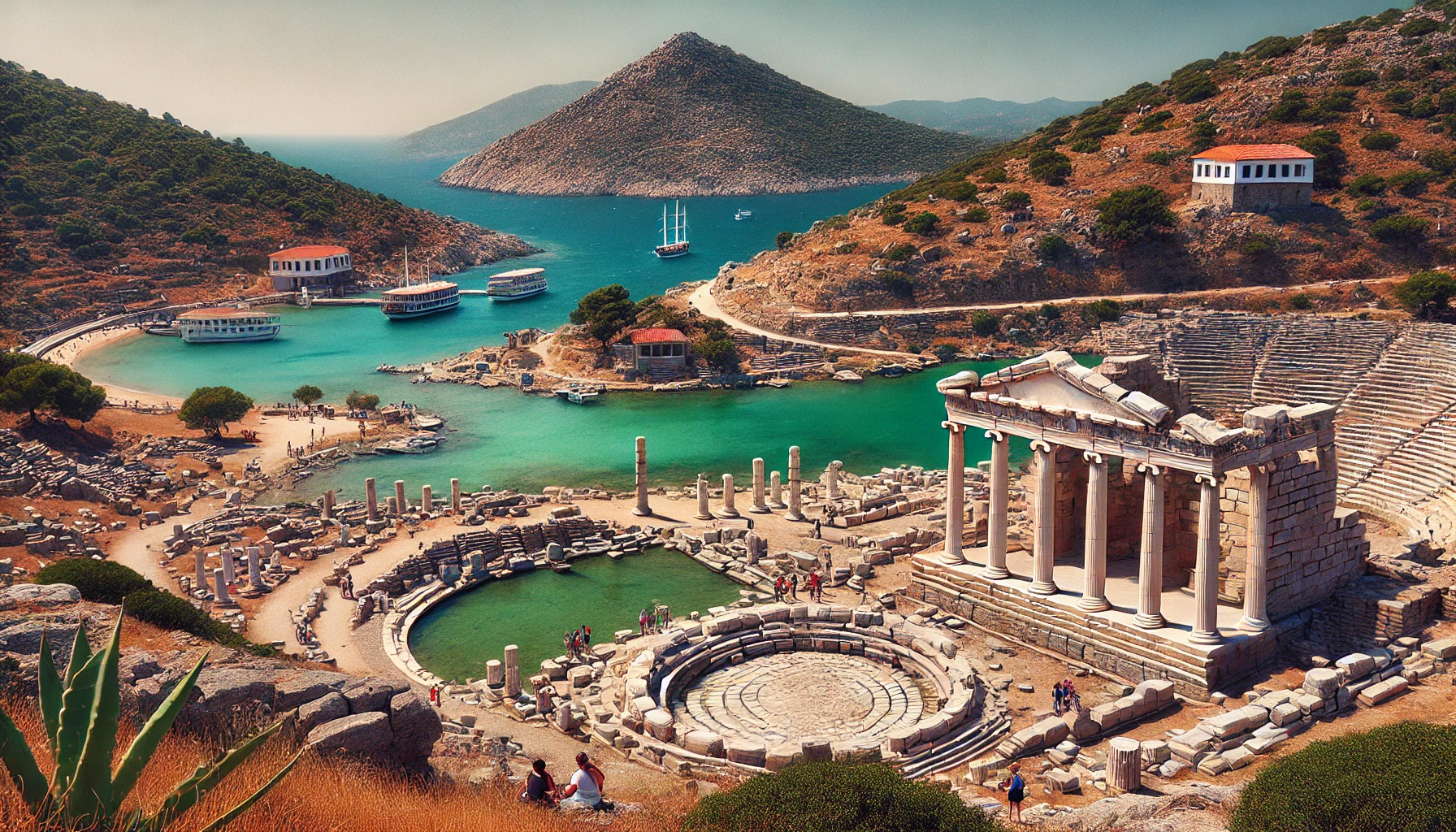
ملخّص سريع: كلّف بإنشائه المرزبان الكاري ماوسولوس وأتمّته أخته وزوجته أرتميسيا الثانية نحو عام 351 ق.م، وكان ضريح هاليكارناسوس يرتفع نحو 45 مترًا في قلب مدينة بودروم الحالية. زُيِّن بأعمال أربعة من أعظم النحّاتين الإغريق، وبلغت شهرة هذا النصب حدًّا جعل اسمه يدخل كلّ لغة بمعنى كلمة «mausoleum» (ضريح). واليوم تُشكّل قاعدته الأساسية وحجرة الدفن تحت الأرض والكسر المتناثرة متحفًا في الهواء الطلق، بينما تُحفظ أجود المنحوتات الباقية في المتحف البريطاني.
جدول المحتويات
- لماذا يُعدّ الضريح مهمًا
- الجغرافيا والإطار
- الخلفية التاريخية
- التصميم المعماري
- البرنامج النحتي
- البناء والقوى العاملة
- الصمود عبر القرون
- التدمير وإعادة الاستخدام
- إعادة الاكتشاف الأثري
- ما تبقّى في الموقع
- القطع المحفوظة في المتحف البريطاني
- الإرث والتأثير الثقافي
- معلومات للزوّار
- الأسئلة الشائعة
- المصادر والقراءات الإضافية
لماذا يُعدّ الضريح مهمًا
ضريح هاليكارناسوس هو العجيبة الوحيدة من العجائب السبع التي شُيّدت لتكريم فرد لم يكن إلهًا ولا فرعونًا. وقد أفرز مزجه بين العناصر المعمارية الإغريقية والمصرية والليكية في نصب جنائزي عملاق واحد طرازًا جديدًا في البناء. وكلمة «mausoleum» ذاتها — المشتقّة من اسم ماوسولوس — دخلت اللاتينية واليونانية وفي نهاية المطاف كلّ لغة أوروبية. ولا يوجد قبر قديم، حتى الأهرامات، أثّر بشكل مباشر في عمارة الدفن الغربية كهذا الضريح.
وإلى جانب العمارة، يمثّل الضريح ذروةً من ذرى النحت الإغريقي الكلاسيكي المتأخّر. فالنحّاتون الأربعة الأساتذة الذين زخرفوا جوانبه — سكوباس وبرياكسيس وليوخاريس وتيموثيوس — كانوا من أبرز فنّاني القرن الرابع قبل الميلاد. ولا تزال ألواح إفريز معركة الأمازونات الباقية في لندن مرجعًا أساسيًا لمؤرّخي الفنّ الذين يدرسون الانتقال من الأسلوب الكلاسيكي إلى الهلنستي.
كما يُلقي النصب الضوء على الاستراتيجية السياسية لـسلالة الهيكاتومنيين التي حكمت كاريا بصفتها مرزبانية تابعة للإمبراطورية الفارسية، مع تشجيعها الجريء للثقافة الإغريقية. فقد نقل ماوسولوس عاصمته من ميلاسا الداخلية إلى مدينة هاليكارناسوس الساحلية تحديدًا لإبراز القوة البحرية والوجاهة الكوزموبوليتية. وكان الضريح القطعة المركزية في ذلك البرنامج.
الجغرافيا والإطار
كانت هاليكارناسوس تحتلّ موقعًا مذهلًا على الساحل الجنوبي الغربي لآسيا الصغرى، مقابل جزيرة كوس عبر الخليج السيراميكي (خليج غوكوفا الحديث). جلست المدينة في مدرّج طبيعي من التلال يرتفع فوق مرفأ مزدوج محميّ، ممّا منحها مزايا بحرية استثنائية.
أمّا الضريح نفسه فقد وُضع في المركز الهندسي لشبكة المدينة، على مدرّج محفور في سفح التلّ بين المرفأ في الأسفل والأكروبوليس في الأعلى. وقد رسم ماوسولوس مخطّطًا هيبوداميًا جديدًا للعاصمة المنقولة، فاحتلّ القبر الموقع الأكثر بروزًا — مرئيًا من البحر ومن كلّ حيّ في المدينة.
ويتميّز المشهد الطبيعي المحيط بشبه جزيرة بودروم بـأشجار حوض المتوسط الجافة والخلجان الفيروزية والجيولوجيا الحجرية الجيرية البيضاء التي وفّرت معظم حجر البناء لهاليكارناسوس القديمة. أمّا الرخام الأناضولي الأزرق (الذي يُعرف اليوم برخام ميلاس) المستخدم في الضريح فقد جاء من المحاجر في التلال الواقعة خلف المدينة.
الخلفية التاريخية
سلالة الهيكاتومنيين
كان ماوسولوس (حكم 377–353 ق.م) الابن الأكبر لهيكاتومنوس، المرزبان الفارسي المعيّن على كاريا. وعند وفاة والده أصبح هو نفسه مرزبانًا، يحكم إقليمًا يمتدّ على جزء كبير من جنوب غرب الأناضول، بما في ذلك أجزاء من ليكيا وأيونيا. حافظ ماوسولوس على الولاء الظاهري للملك الفارسي الأعظم بينما كان يعمل عمليًا حاكمًا مستقلًا.
وقد نقل عاصمة كاريا من ميلاسا (ميلاس) إلى هاليكارناسوس نحو عام 370 ق.م، فأعاد تخطيط المدينة الميناء بالكامل بمدرّجات ضخمة وأسوار تحصينية تمتدّ عدّة كيلومترات وشبكة شوارع جديدة. كما دعم ثورة المرزبانين (366–360 ق.م) ضدّ أرتحششتا الثاني، ثمّ عاد بسلاسة إلى الولاء عندما انهارت الثورة.
أرتميسيا الثانية
تزوّج ماوسولوس من شقيقته الشقيقة أرتميسيا الثانية، اتّباعًا لتقليد ملكي كاري. وتصف المصادر القديمة تفانيها بالغريب: إذ يروي غيليوس أنّها بعد وفاة ماوسولوس عام 353 ق.م خلطت رماده المحروق بالنبيذ وشربت حصّة منه كلّ يوم. حكمت عامَين فحسب (353–351 ق.م) قبل وفاتها هي الأخرى، لكنّها أطلقت مشروع الضريح وأشرفت على معظم بنائه. وما إذا كان قد اكتمل قبل وفاتها أو بعدها بقليل أمر متنازع عليه؛ ويرى بعض الباحثين أنّ النحّاتين أنهوا العمل باستقلالية بعد وفاة أرتميسيا، بدافع الفخر المهني.
النحّاتون الأربعة الأساتذة
اجتذب المشروع أرقى المواهب في العالم الإغريقي:
- سكوباس الباروسي — اشتُهر بحدّة التعبير العاطفي؛ وعمل لاحقًا في معبد أرتميس بأفسس
- برياكسيس — كاريّ أو أثيني؛ عُرف بتماثيل العبادة الضخمة
- ليوخاريس — أثيني؛ نحّات تمثال أبولّو بلفيدير الأصلي
- تيموثيوس — مرتبط بمعبد أسكليبيوس في إبيداوروس
ووفقًا لـبليني الأكبر (التاريخ الطبيعي 36.30–31)، كُلّف كلّ نحّات بجانب واحد من النصب. أمّا النحّات الخامس، بيثيوس (أو بيثيس)، فقد صمّم العمارة الإجمالية ونحت مجموعة العربة الرخامية التي تُوّجت بها القمّة.
التصميم المعماري
جمع الضريح بين ثلاثة تقاليد معمارية في تكوين عمودي واحد:
- قاعدة مرتفعة (نحو 20 × 24 م عند الأساس، بارتفاع نحو 10 م) — متأثّرة بأعمدة القبور الليكية ومنصّات القصور الشرقية القديمة
- رواق محيطي من 36 عمودًا أيونيًا (بترتيب 11 × 9) — عمارة معبد إغريقية خالصة
- سقف هرمي مدرّج من 24 درجة — يحاكي أشكال الأهرامات المصرية
وتوّجت قمّة الهرم عربة رباعية الخيول رخامية (quadriga) تحمل تماثيل ضخمة لماوسولوس وأرتميسيا، رافعةً الارتفاع الإجمالي إلى نحو 45 مترًا (148 قدمًا).
الأبعاد
تذكر المصادر القديمة أبعادًا متباينة. يسجّل بليني المحيط بـ411 قدمًا (نحو 125 م). وتُشير عمليات إعادة البناء الحديثة المستندة إلى الأساسات الباقية والكسر المعمارية إلى قاعدة بحوالي 33 × 39 م للجدار الخارجي للحَرَم، مع ارتفاع البنية نفسها من القاعدة في الداخل.
المواد
كانت مادة البناء الأساسية الحجر الجيري المحلّي مكسوًّا بـالرخام الأبيض، الذي يُرجَّح أنّه جاء من محاجر قرب ميلاسا. أمّا المنحوتات فقد نُحتت من الرخام الباروسي أو البنتيلي. وربطت قوالب الحديد ومشابك الرصاص مداميك الحجر.
حجرة الدفن
ضمّ بئر عميق محفور في الصخر الأمّ تحت القاعدة حجرة الدفن، يُوصَل إليها عبر درج حجري. وحين نقّب فيها تشارلز نيوتن في خمسينيات القرن التاسع عشر، عثر على شظايا تابوت رخامي وزخارف ذهبية ودلائل على أنّ الحجرة قد نُهبت في العصور القديمة — على الأرجح خلال العصر الروماني المتأخّر.
البرنامج النحتي
يُذكر أنّ الضريح كان يحتوي على أكثر من 400 منحوتة قائمة بذاتها ومنحوتة بارزة، ممّا جعله من أكثر المباني زخرفة في العالم القديم.
الأفاريز
التفّت حول النصب ثلاث حزم رئيسية على الأقلّ من الأفاريز:
- معركة الأمازونات (Amazonomachy) — الإغريق يقاتلون الأمازونات؛ تُظهر الأقسام الأفضل حفظًا تكوينات عنيفة دوّامية بشخصيات منحوتة بعمق تكاد تنفصل عن الخلفية
- معركة القناطرة (Centauromachy) — اللابيثيون يقاتلون القناطير؛ لم تبقَ منها سوى شظايا
- سباق العربات — إفريز موكبي ربّما يمثّل الألعاب الجنائزية تكريمًا لماوسولوس
ألواح إفريز معركة الأمازونات متنوّعة أسلوبيًا، ممّا يؤكّد الرواية القديمة بأنّ نحّاتين مختلفين عملوا على جوانب مختلفة. ويتميّز الجانب الشرقي، المنسوب إلى سكوباس، بالتعبير العاطفي الحادّ والثياب المثقوبة بعمق.
التماثيل القائمة بذاتها
وُضعت شخصيات ضخمة قائمة — مكسوّة وعارية على حدّ سواء — بين أعمدة الرواق المحيطي وعلى طول حواف السقف الهرمي. ومثّلت تماثيل بورتريه بحجم الحياة وأكبر منه أفرادًا من سلالة الهيكاتومنيين. وأشهر القطع الباقية هو الشخصية الذكورية الضخمة التي طالما عُرّفت بأنّها ماوسولوس نفسه، ويبلغ ارتفاعها 3 أمتار. وتُمثّل واقعيتها البورتريهية — الوجه العريض والفكّ الثقيل والشعر الطويل — انفصالًا عن النحت الإغريقي المثاليّ.
الأسود
اصطفّ ما لا يقلّ عن 56 من الأسود الحارسة الرخامية على طول حواف القاعدة، وأدّت دور العناصر الزخرفية والحماة الرمزيين للقبر معًا.
البناء والقوى العاملة
كان الضريح مشروعًا لوجستيًا هائلًا. ولا بدّ من أنّ آلاف البنّائين والنحّاتين والرسّامين والعمّال المهرة قد عملوا فيه على مدى يُقدَّر بـ4–6 سنوات (نحو 355–350 ق.م). وقد تطلّب المشروع:
- تقطيع مئات الأطنان من الرخام ونقلها
- حفر بئر دفن عميق في الصخر الأمّ
- تشييد قاعدة حجرية بارتفاع مبنى من ثلاثة طوابق
- نحت 36 عمودًا أيونيًا مع الكورنيش الكامل وتركيبها
- بناء هرم من 24 درجة من كتل حجرية مقطوعة بدقّة
- رفع مجموعة عربة رخامية إلى ارتفاع 45 مترًا
كانت التحدّيات الهندسية مماثلة لتلك التي واجهتها مشاريع المعابد الكبرى في أفسس أو ديديما. واستخدام مشابك الحديد ووصلات الرصاص المصبوبة لتثبيت كتل البناء موثّق جيّدًا من البقايا المنقّبة.
الصمود عبر القرون
ظلّ الضريح قائمًا في معظمه أكثر من 1500 سنة، وهو سجلّ بقاء استثنائي بين عجائب الدنيا السبع. وقد استمرّ الرحّالة القدماء في الإعجاب به طوال العصر الروماني. وقد نجا من حصار الإسكندر الأكبر لهاليكارناسوس عام 334 ق.م، الذي احترقت خلاله أجزاء كبيرة من المدينة، وظلّ يخدم بصفته معلَمًا خلال العصرَين الروماني والبيزنطي المبكّر.
وقد أضرّت سلسلة من الزلازل بين القرنَين الحادي عشر والخامس عشر بالبنية تدريجيًا. فانهارت الأعمدة، وسقط السقف الهرمي، وارتطمت العربة المتوّجة بالأرض. وبحلول أوائل القرن الخامس عشر، لم يبقَ قائمًا سوى القاعدة الضخمة والجدران السفلية.
التدمير وإعادة الاستخدام
جاء التدمير النهائي على يد فرسان الإسبتارية القدّيس يوحنا. فقد بنوا قلعة القدّيس بطرس (قلعة بودروم) على شبه جزيرة المرفأ القديم ابتداءً من عام 1402. وحين احتاجوا إلى تعزيز القلعة استعدادًا لهجوم عثماني متوقّع عام 1494، استخرجوا حجارة الضريح بشكل منهجي:
- في عام 1494 جرّدوا المداميك العليا واستخدموا كتل الرخام المهذّبة لجدران القلعة
- في عام 1505 اقتحموا حجرة الدفن أثناء التقطيع، فعثروا على التابوت والقطع الذهبية — وقد نُهب معظمها بين عشيّة وضحاها
- بحلول عام 1522، حين استولى العثمانيون بقيادة سليمان القانوني على بودروم، لم يبقَ فوق سطح الأرض إلّا القليل
ولا تزال كتل الحجر الأخضر من الضريح قابلة للتمييز في جدران قلعة بودروم اليوم. وقد بُنيت بعض شظايا النقوش البارزة في جدران القلعة بوجهها إلى الخارج؛ ويبدو أنّ الفرسان أدركوا قيمتها الفنية.
إعادة الاكتشاف الأثري
بعثة نيوتن (1856–1859)
وصل عالم الآثار البريطاني تشارلز توماس نيوتن إلى بودروم عام 1856 نيابة عن المتحف البريطاني، مُكلَّفًا تحديدًا بتحديد موقع الضريح والتنقيب عنه. فبشراء العقارات المحيطة والتنقيب بمنهجية، تمكّن من تحديد موقع منصّة الأساس وبئر الدفن.
شملت اكتشافات نيوتن الرئيسية:
- التماثيل الضخمة لماوسولوس وأرتميسيا (أو زوجَين من الهيكاتومنيين)
- ألواح أفاريز معركة الأمازونات وسباق العربات
- عجلة عربة ضخمة من الكوادريغا المتوّجة (يقارب قطرها مترَين)
- أجزاء من تماثيل خيول رخامية من الكوادريغا
- شظايا أسود حارسة
- عناصر معمارية تشمل أسطوانات أعمدة وتيجانًا
وقد شُحنت كلّ الاكتشافات الكبرى إلى لندن، حيث تشكّل جوهر القاعة 21 في المتحف البريطاني.
التنقيبات الدنماركية (1966–1977)
أعاد فريق دنماركي بقيادة كريستيان يبّيسن من جامعة آرهوس التنقيب في الموقع بين عامَي 1966 و1977. وقد أنتج عمل يبّيسن الدقيق إعادات بناء منقّحة لمظهر المبنى، مصحّحًا النماذج السابقة. ولا يزال منشوره المتعدّد المجلّدات Paradeigmata (الصادر بين 1981 و2004) المرجع العلمي الموثوق.
التنقيبات التركية (من العقد الثاني من الألفية الثالثة حتى الآن)
أجرت فرق الآثار التركية أعمال صون وتنقيب إضافية منذ عشرينيات الألفية الثالثة، مركّزة على حماية منصّة الأساس وتحسين عرض الموقع للزوّار. وقد وضّحت هذه الحملات العلاقة بين حَرَم الضريح وشبكة المدينة المحيطة.
ما تبقّى في الموقع
يحفظ الموقع الأثري المفتوح في وسط بودروم:
- القطع التأسيسي في الصخر الأمّ — خندق مستطيل ضخم يُظهر الأثر الدقيق للقاعدة
- بئر الدفن تحت الأرض ونفقه (يمكن الوصول إليه جزئيًا)
- أقسام من جدار الحَرَم الذي كان يطوّق المعبد المقدّس (التيمينوس)
- بعض أسطوانات الأعمدة المتناثرة والكتل المعمارية الكبيرة جدًّا التي لا يمكن نقلها
- لوحات معلوماتية ونموذج بمقياس يُظهر المظهر المُعاد بناؤه
- منطقة مغطّاة صغيرة تعرض شظايا ونسخًا
البقايا المادية للموقع متواضعة، لكنّه قويّ بأجوائه، ويقع في شارع سكنيّ هادئ على بُعد دقائق من مرفأ بودروم الصاخب.
القطع المحفوظة في المتحف البريطاني
تشمل مجموعة الضريح في المتحف البريطاني (القاعة 21):
- شخصية ذكورية ضخمة (يُعرَّف تقليديًا بأنّه ماوسولوس) — بارتفاع 3 أمتار، يرتدي ثيابًا متأثّرة بالطراز الفارسي فوق قميص (شيتون) إغريقي
- شخصية أنثوية ضخمة (تُعرَّف بأنّها أرتميسيا) — بمقياس ضخم مماثل
- ألواح إفريز معركة الأمازونات — سبعة عشر لوحًا رئيسيًا تُظهر مشاهد قتال محتدمة
- شظايا إفريز سباق العربات — مشاهد موكبية بمقياس أصغر
- منحوتات الأسود الحارسة — هادئة، مُنمَّطة، بأعراف ناعمة
- حصان ضخم من مجموعة العربة المتوّجة — يزيد طوله على مترَين
- عجلة العربة — إحدى أكبر عجلات الرخام القديمة الباقية
- تيجان أعمدة أيونية وقوالب معمارية
تُعدّ هذه القطع من أهمّ نماذج النحت الإغريقي في القرن الرابع قبل الميلاد في أيّ مجموعة على مستوى العالم.
الإرث والتأثير الثقافي
جرى تقليد التكوين العمودي الثلاثي للضريح — قاعدة ورواق وهرم — في أنحاء العالمَين الهلنستي والروماني:
- يحاكي شكله مباشرة ضريح بيليفي قرب أفسس (القرن الثالث ق.م)
- وتُظهر القبور البرجية الرومانية في شمال أفريقيا والشرق الأدنى تأثيره
- وقد يستحضر ضريح ثيودوريك في رافينا (520 م) كتلته
- وأحيا المعماريون الكلاسيكيون الجدد أشكاله: نصب كانوفا في فيينا وضريح غرانت في نيويورك وضريح التذكار في ملبورن وضريح الآغا خان في أسوان، جميعها تستلهم هاليكارناسوس
أمّا كلمة «mausoleum» نفسها، التي دخلت اللاتينية بصيغة mausoleum، فقد أصبحت عالمية. وكلّ قبر تذكاريّ في كلّ لغة يدين باسمه إلى مرزبان كاريّ مدفون في بودروم.
معلومات للزوّار
الموقع: وسط بودروم، شارع تورغوتريس. الموقع على بُعد عشر دقائق سيرًا على الأقدام من مرفأ بودروم وقلعة بودروم.
ساعات العمل: يوميًا، عادةً من 08:00 إلى 19:00 صيفًا، ومن 08:30 إلى 17:30 شتاءً. مغلق في بعض الأعياد الوطنية.
الدخول: بطاقة متاحف بحر إيجة صالحة. تتوفّر التذاكر الفردية عند المدخل.
المدّة: 30–45 دقيقة للزيارة في الموقع. اترك وقتًا إضافيًا لقلعة بودروم (التي تحتوي على حجارة من الضريح) ومتحف بودروم لآثار الغوص تحت الماء.
الزيارات المركّبة:
- قلعة بودروم (قلعة القدّيس بطرس) — 500 م؛ بُنيت جزئيًا من حجارة الضريح
- متحف بودروم لآثار الغوص تحت الماء — داخل القلعة
- بوّابة مينْدوس — قسم باقٍ من جدران مدينة ماوسولوس
- المسرح القديم — مسرح هلنستي على المنحدر فوق المدينة
نصائح:
- زُر الموقع في الصباح الباكر لتجنّب حرارة منتصف النهار والازدحام
- الموقع صغير لكنّ اللوحات المعلوماتية ممتازة
- زيارة قلعة بودروم بعد ذلك تعطي السياق — ابحث عن كتل الرخام ذات اللون الأخضر المعاد استخدامها من الضريح في جدران القلعة
- توفّر مجموعة المتحف البريطاني الإلكترونية صورًا عالية الدقّة لجميع المنحوتات الكبرى
الأسئلة الشائعة
لماذا يُسمّى الضريح (Mausoleum)؟ بُني القبر لماوسولوس، مرزبان كاريا. وقد أصبح اسمه المصطلح العامّ لأيّ قبر فخم: «mausoleum».
ما ارتفاعه؟ نحو 45 مترًا (148 قدمًا)، بما في ذلك مجموعة العربة المتوّجة. وهذا جعله أعلى من مبنى حديث من 14 طابقًا.
من صمّمه؟ صمّم البنية الإجمالية المعماري بيثيوس (أو بيثيس)، بمساعدة ساتيروس. وزخرف كلّ جانب أحد النحّاتين الأربعة — سكوباس وبرياكسيس وليوخاريس وتيموثيوس.
لماذا دُمّر؟ أسقطت زلازل بين القرنَين الحادي عشر والخامس عشر البنية العلوية. ثمّ استخرج فرسان القدّيس يوحنا الحجارة المتبقّية لبناء قلعة بودروم في الفترة 1494–1522.
هل يمكن رؤية المنحوتات الأصلية؟ أجود القطع موجودة في القاعة 21 من المتحف البريطاني في لندن. ويحفظ موقع بودروم الأساسات وبئر الدفن.
هل تستحقّ الزيارة؟ نعم. فعلى الرغم من تواضع البقايا المادية، فإنّ الموقع موحٍ ومعروض جيّدًا. ومع قلعة بودروم (حيث تُرى حجارة الضريح في الجدران)، تكتمل القصّة كاملة.
كيف تقارن بعجائب الدنيا السبع الأخرى؟ من بين عجائب الدنيا السبع، لا يبقى قائمًا بشكل جوهري سوى هرم الجيزة الأكبر. ويحفظ موقع الضريح أكثر ممّا يحفظه موقع تمثال رودس العملاق أو حدائق بابل المعلّقة، لكنّه أقلّ من معبد أرتميس في أفسس، حيث لا تزال أسطوانات الأعمدة في موضعها الأصلي.
الضريح في الأدب القديم
احتفى بالضريح كتّاب قدماء عديدون، ممّا ضمن شهرته عبر القرون:
- بليني الأكبر (التاريخ الطبيعي 36.30–31) يقدّم الوصف الأكثر تفصيلًا، مسمّيًا النحّاتين الأربعة وذاكرًا الأبعاد
- فيتروفيوس (De Architectura 2.8.10–15) يناقش نسب المبنى وابتكاراته المعمارية
- سترابون (الجغرافيا 14.2.16) يذكر الضريح بصفته معلَمًا من معالم هاليكارناسوس
- بوسانياس يمتدح النصب بوصفه أحد أعظم إنجازات العمارة
- لوقيان يستخدم الضريح مثالًا على إحياء الذكرى المُسرف
- أولوس غيليوس (الليالي الأتيكية 10.18) يسجّل القصّة الشهيرة عن شرب أرتميسيا رماد زوجها ممزوجًا بالنبيذ
- وقد ظهر النصب باستمرار في قوائم العجائب القديمة منذ القرن الثاني قبل الميلاد فصاعدًا، دائمًا إلى جانب الأهرامات والتمثال العملاق وسائر العجائب القانونية
ثراء السجلّ الأدبي يجعل الضريح من أفضل المباني القديمة توثيقًا، إذ يسمح للباحثين المعاصرين بمقارنة الأوصاف النصّية بالأدلّة الأثرية.
الأبعاد المعمارية الدقيقة وبيانات إعادة البناء
ظلّت إعادة البناء العلمية للأبعاد الدقيقة للضريح تحدّيًا كبيرًا، لأنّ المصادر النصّية القديمة تذكر أرقامًا متضاربة، ولأنّ المبنى فُكّك بشكل منهجي. وقد أنتجت التنقيبات الدنماركية بقيادة كريستيان يبّيسن (1966-1977) إعادة البناء الحديثة الأكثر موثوقية، عبر الجمع بين الأدلّة الأثرية من القطع التأسيسي والكسر المعمارية الباقية.
| العنصر | القياس | المصدر / الطريقة |
|---|---|---|
| القطع التأسيسي في الصخر الأمّ | 33 × 39 م (107 × 127 قدمًا) | مقيس من القطع الصخري المنقّب |
| عمق القطع التأسيسي | 2.4-2.7 م (8-9 أقدام) | عمق حفر الصخر الأمّ |
| أثر القاعدة (أحجار الزاوية في موضعها) | 38 × 32 م (125 × 104 قدم) | موضع كتل الزاوية الباقية |
| بنية المبنى العلوية (من العتب الباقي) | 32 × 26 م (104 × 85 قدمًا) | محسوبة من أبعاد حجر العتب |
| المحيط (رقم بليني) | 411 قدمًا رومانيًا (نحو 125 م) | بليني، التاريخ الطبيعي 36.30 |
| الرواق الأيوني | 36 عمودًا (بترتيب 11 × 9) | مصادر قديمة أكّدتها شظايا أسطوانات الأعمدة |
| ارتفاع العمود | نحو 11 م لكلّ عمود | مقدّر من الأسطوانات والتيجان الباقية |
| السقف الهرمي | 24 درجة | مصادر قديمة؛ شظايا الدرجات استُرجعت |
| الارتفاع الإجمالي (بما فيه الكوادريغا) | نحو 45 م (148 قدمًا) | إعادة بناء مركّبة |
| قطر عجلة العربة | نحو 2 م (6 أقدام و7 بوصات) | شظية رخامية باقية في المتحف البريطاني |
| مجموعة تماثيل الكوادريغا | نحو 6 م ارتفاعًا | مقدّرة من مقياس العجلة وشظية الحصان |
يشير التفاوت بين أثر القاعدة 38 × 32 م والقطع التأسيسي 33 × 39 م إلى أنّ القاعدة كانت تجلس داخل حَرَم مقدّس (تيمينوس) أكبر، قُطع جدار حدوده في الصخر الأمّ على مستوى أدنى. وقد حلّت إعادة بناء يبّيسن الالتباس السابق بإظهار أنّ القياسات القديمة كانت تشير إلى أجزاء مختلفة من المركّب — بعضها إلى الحَرَم وبعضها إلى القاعدة وغيرها إلى مستوى الرواق.
كتالوغ النحت: ما تبقّى
كان البرنامج النحتي للضريح من أغنى البرامج في العالم القديم. وتقدّر الدراسات الحديثة أنّه احتوى على أكثر من 400 منحوتة فردية، رغم أنّه لم يبقَ منها سوى جزء يسير.
| نوع المنحوتة | الكمية التي عُثر عليها | الموقع الحالي | تفاصيل رئيسية |
|---|---|---|---|
| ألواح إفريز معركة الأمازونات | 17 لوحًا رئيسيًا | المتحف البريطاني، القاعة 21 | نحو 0.89 م (35 بوصة) ارتفاعًا؛ منحوتة بشكل يكاد ينفصل عن الخلفية |
| إفريز سباق العربات | شظايا | المتحف البريطاني | مشاهد موكبية بمقياس أصغر |
| ذكر ضخم قائم («ماوسولوس») | 1 كامل | المتحف البريطاني | ارتفاع 3 م؛ ثياب متأثّرة بالطراز الفارسي فوق قميص إغريقي |
| أنثى ضخمة قائمة («أرتميسيا») | 1 كاملة | المتحف البريطاني | مقياس ضخم مماثل |
| الأسود الحارسة | شظايا متعدّدة (يُقدَّر العدد الأصلي بـ56) | المتحف البريطاني | اصطفّت على حواف القاعدة؛ بأعراف ناعمة مُنمَّطة |
| حصان ضخم (من الكوادريغا) | شظية كبيرة واحدة | المتحف البريطاني | يزيد طوله على مترَين |
| عجلة العربة | شظية واحدة | المتحف البريطاني | قطرها نحو 2 م عند اكتمالها |
| تماثيل البورتريه (سلالة الهيكاتومنيين) | عدّة شظايا | المتحف البريطاني | بحجم الحياة وأكبر منه |
| تيجان أعمدة أيونية | متعدّدة | المتحف البريطاني | تيجان حلزونية بقالب البيض والسهم |
| القوالب المعمارية | عديدة | المتحف البريطاني وفي الموقع | كتل الكورنيش وأقسام الكورنيش |
يُعدّ إفريز معركة الأمازونات أكثر العناصر الباقية أهمّية فنية. والألواح متنوّعة أسلوبيًا، ممّا يؤكّد رواية بليني بأنّ نحّاتين مختلفين عملوا على جوانب مختلفة. وتُظهر الأقسام المنسوبة إلى سكوباس (الجانب الشرقي) كثافة عاطفية حادّة، مع ثياب مثقوبة بعمق وتعابير وجه مكروبة وشخصيات تلتوي بعنف في القتال. أمّا ألواح الجانب الغربي، المنسوبة إلى ليوخاريس، فتُظهر أسلوبًا كلاسيكيًا أكثر تحفّظًا بأسطح أنعم وتكوينات أكثر اتّزانًا. وهذا التنوّع الأسلوبي داخل حزمة إفريز واحدة فريد في الفنّ الإغريقي، ويجعل إفريز الضريح وثيقة أساسية لمؤرّخي الفنّ الذين يدرسون الانتقال من الجماليات الكلاسيكية إلى الهلنستية.
تاريخ التنقيب: تسلسل زمني مفصّل
| السنة | المنقّب | الأحداث والاكتشافات الرئيسية |
|---|---|---|
| 1402 | فرسان الإسبتارية | يبدأ بناء قلعة القدّيس بطرس على شبه جزيرة المرفأ |
| 1494 | فرسان الإسبتارية | تُقطع المداميك العليا للضريح بشكل منهجي لتعزيز القلعة |
| 1505 | فرسان الإسبتارية | اقتحام حجرة الدفن أثناء التقطيع؛ عُثر على التابوت والقطع الذهبية ونُهبت بين عشيّة وضحاها |
| 1522 | الفتح العثماني | لا يبقى فوق سطح الأرض إلّا القليل بعد استيلاء العثمانيين على بودروم |
| 1846 | اللورد ستراتفورد دي ردكليف | يستردّ ألواح نقوش بارزة رخامية من جدران قلعة بودروم؛ يرسلها إلى المتحف البريطاني |
| 1856-1859 | تشارلز توماس نيوتن | تنقيب منهجي نيابة عن المتحف البريطاني؛ تحديد منصّة الأساس وبئر الدفن |
| 1857 | نيوتن | اكتشاف التماثيل الضخمة لماوسولوس وأرتميسيا |
| 1857-1858 | نيوتن | التنقيب عن أفاريز معركة الأمازونات وسباق العربات؛ استرجاع شظايا الأسود والحصان |
| 1858 | نيوتن | شحن شظية عجلة العربة (قطرها نحو 2 م) وأسطوانات الأعمدة إلى لندن |
| 1966-1977 | كريستيان يبّيسن (جامعة آرهوس) | إعادة تنقيب كاملة؛ إعادة بناء معمارية منقّحة |
| 1981-2004 | يبّيسن | نشر Paradeigmata في ستّة مجلّدات — المرجع العلمي الموثوق |
| من العقد الثاني من الألفية الثالثة حتى الآن | فرق الآثار التركية | صون منصّة الأساس؛ تحسين عرض الموقع |
كانت منهجية تنقيب نيوتن منهجية لافتة في عصرها. فقد اشترى العقارات السكنية المحيطة للوصول إلى الأساسات المدفونة، ثمّ نقّب بالخنادق والأنفاق لتحديد محيط المبنى. وقد أكّد اكتشافه لـبئر الدفن — قطع عمودي عميق في الصخر الأمّ تحت مركز القاعدة — أنّ وظيفة الضريح كانت قبرًا لا مجرّد نصب تذكاري. وعثر داخل البئر على شظايا تابوت رخامي وزخارف من ورق الذهب وأدلّة على نهب قديم (على الأرجح في العصر الروماني المتأخّر، قبل قرون من اقتحام الفرسان عام 1505).
تقدّم العلاقة بين الضريح وقلعة بودروم دراسة حالة أثرية حيّة في إعادة استخدام العمارة. فلا تزال كتل الرخام ذات اللون الأخضر من الضريح قابلة للتمييز في جدران القلعة حتى اليوم. واللافت أنّ الفرسان بنوا بعض الألواح المنقوشة البارزة بوجهها إلى الخارج في جدران القلعة، يبدو أنّهم أدركوا قيمتها الفنية — وهذه هي الشظايا التي أزالها اللورد ستراتفورد دي ردكليف عام 1846، قبل ستّ سنوات من بدء تنقيب نيوتن الرسمي.
المصادر والقراءات الإضافية
- بليني الأكبر، التاريخ الطبيعي، الكتاب 36.30–31
- فيتروفيوس، De Architectura، الكتاب 2.8.10–15
- كريستيان يبّيسن، Paradeigmata: The Maussolleion at Halikarnassos، 7 مجلّدات (آرهوس، 1981–2004)
- جيفري ب. وايويل، The Free-Standing Sculptures of the Mausoleum at Halicarnassus (المتحف البريطاني، 1978)
- براين ف. كوك، Relief Sculpture of the Mausoleum at Halicarnassus (أوكسفورد، 2005)
- سايمون هورنبلاور، Mausolus (مطبعة جامعة أوكسفورد، 1982)
- مجموعة المتحف البريطاني الإلكترونية — القاعة 21: ضريح هاليكارناسوس
- القائمة المؤقّتة لليونسكو للتراث العالمي — هاليكارناسوس (بودروم)
- مجلّة Archaeology، "Secrets of the Seven Wonders: Mausoleum at Halicarnassus" (نوفمبر/ديسمبر 2025)