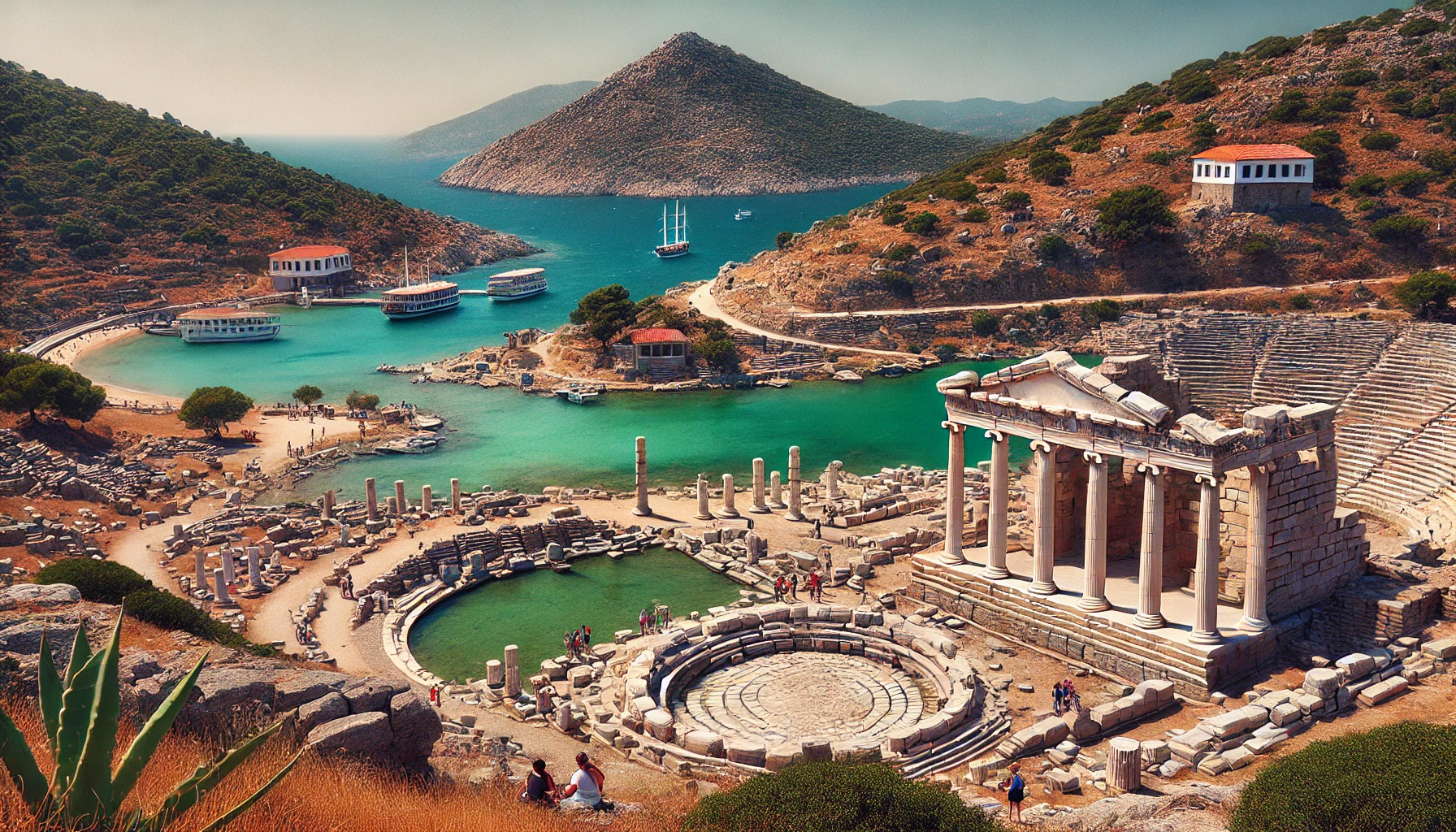
نظرة شاملة موسّعة: لم تكن كنيدوس مجرّد مدينة مينائية ذات مناظر خلّابة عند الطرف الغربي من شبه جزيرة داتشا. لقد كانت نقطة تفتيش بحرية بين بحر إيجة والبحر المتوسط، ومدينة دورية كبرى في كاريا، ومركزًا للطبّ والفلك، وموطن إيودكسوس، والمدينة التي ذاع صيتها العالمي بفضل تمثال أفروديتي كنيدوس لبراكسيتيليس. ما يجعل كنيدوس استثنائية هو كثافة الدلالة المتراكمة في مشهد طبيعي واحد: الجغرافيا الاستراتيجية، والتاريخ العلمي، والتصميم العمراني المتقدّم، والعمارة المقدّسة، والبنية التجارية التحتية، وواحد من أكثر الأعمال الفنية إعجابًا في العصور القديمة.
جدول المحتويات
- لماذا تُعدّ كنيدوس مهمة
- الجغرافيا والإطار الاستراتيجي
- الخلفية التاريخية والجدول الزمني
- التخطيط العمراني ونظام المرفأ المزدوج
- الاقتصاد والتجارة والقوة البحرية
- الدين والأماكن المقدسة والطبوغرافيا الدينية
- العلم والطب والحياة الفكرية
- الشهرة الفنية وأفروديتي كنيدوس
- كيف تقرأ الموقع الأثري اليوم
- أبرز المعالم والمناطق الأثرية
- تاريخ التنقيب والبحث الحديث
- استراتيجية زيارة أفضل
- ملاحظات موسمية وعملية
- عدسة الخيال التاريخي
- الأسئلة الشائعة
- المصادر
لماذا تُعدّ كنيدوس مهمة
كنيدوس واحدة من المدن القديمة النادرة التي يمكن مقاربتها من زوايا متعدّدة متساوية في الأهمية، حيث تعزّز كلّ زاوية الأخرى.
إنّها مهمّة استراتيجيًا لأنّها تتحكّم في الطرف الغربي من شبه جزيرة داتشا، تحديدًا حيث تضيق حركة السفن بين جنوب إيجة وشرق المتوسط في ممرّ بحري ضيّق.
وهي مهمّة سياسيًا لأنّها كانت من المدن الدورية الكبرى في جنوب غرب الأناضول، وعضوًا في التحالف الدوري السداسي (Hexapolis)، الذي ربط كنيدوس مع كوس وهاليكارناسوس ومدن رودس.
وهي مهمّة اقتصاديًا لأنّها كانت ميناءً تجاريًا مزدهرًا يضمّ نظامًا مرفئيًا مهندسًا، ومدرّجات عمرانية، ومخازن، وسمعة في تصدير النبيذ ومنتجات أخرى.
وهي مهمّة علميًا لأنّ كنيدوس أنجبت مفكّرين مثل إيودكسوس الكنيدي وحافظت على تقليد طبّي بلغ من الأهمية أن ذُكر إلى جانب مدرسة كوس.
وهي مهمّة فنيًا لأنّ المدينة أصبحت لا تنفصل عن تمثال أفروديتي كنيدوس لبراكسيتيليس، أحد أشهر التماثيل في العصور القديمة كلّها.
وهي مهمّة أثريًا لأنّ الموقع لا يزال يتيح للزائرين قراءة كيفية تنظيم مدينة هلنستية ساحلية عبر المدرّجات والشوارع والمعابد والمرافئ والتحصينات والمسارح والأروقة (الستوا) ومناطق المقابر.
قليلة هي المواقع التي تجمع كلّ هذه الطبقات في مشهد طبيعي لا يزال مقروءًا بهذا الوضوح البصري.
الجغرافيا والإطار الاستراتيجي
تقع كنيدوس عند الطرف الغربي الأقصى من شبه جزيرة داتشا، على تكير بورنو، حيث يلتقي بحر إيجة بالبحر المتوسط. ويؤكّد المؤلّفون القدماء والأبحاث الأثرية الحديثة على حدّ سواء أنّ هذه مدينة شكّلتها التضاريس.
شغلت المستوطنة كلًا من البرّ الرئيسي والنتوء الصخري المعروف تقليديًا باسم كاب كريو (Kap Krio). وفي العصور القديمة، هُندس الاتصال الضيّق بين هذين الجزأين بحيث أوجدت القناة مرفأَين منفصلَين. وقد أنتج هذا الخاصّية المادية المميِّزة للمدينة: كانت كنيدوس عمليًا مدينة مدرّجة محصّنة ذات مرفأ مزدوج، شُيّدت حول مضيق بحري.
كان هذا الموقع مهمًا لثلاثة أسباب:
- كانت السفن المتنقّلة بين شبكات الجزر وغرب الأناضول والمشرق ومصر تمرّ بالقرب من هذا الرأس.
- تمكّنت المدينة من الجمع بين النشاط المرفئي التجاري والحماية البحرية.
- أوجد الرأس ذاته خطوط نظر مهيبة، جعلت المعابد والأبراج والمعالم العامّة مرئيّة عند الاقتراب من البحر.
وصف سترابون كنيدوس بأنّها مدينة ترتفع كالمسرح من الساحل نحو المرتفعات. ولا يزال هذا الوصف صحيحًا اليوم. تتسلّق التضاريس عبر المدرّجات والجدران الساندة والشوارع المتدرّجة والفضاءات المقدّسة والعامّة المرتفعة. ليست هذه مدينة مسطّحة تتناثر فيها الأطلال عشوائيًا؛ بل هي مدينة صُمّمت عمارتها في حوار مباشر مع المنحدر والريح وحركة السفن والرؤية البصرية.
الخلفية التاريخية والجدول الزمني
الأصول المبكّرة والهوية الدورية
أسّس الإغريق الدوريون كنيدوس، وترتبط في المصادر تقليديًا بالاستعمار اللاكدمونيّ أو بالاستعمار الدوريّ الأوسع. وتُشير الشهادات القديمة أيضًا إلى تأثير أرغوسي. وبحلول الفترة العتيقة (الأركية)، كانت كنيدوس قد أصبحت مدينة كارية-دورية كبرى وعضوًا في التحالف الدوري السداسي. وكان هذا التحالف مرتبطًا بعبادة أبولو في تريوبيون وبالهوية الإقليمية الدورية.
الازدهار العتيق والتوسّع البحري
كانت المدينة من الثراء بحيث شاركت في نشاط الاستعمار الأوسع وانخرطت في شبكات بحرية تمتدّ إلى ما وراء كاريا. وتربط الإشارات القديمة الكنيديين بالاستيطان وراء البحار وبالتجارة النشطة. وبحلول القرن السادس ق.م، كانت كنيدوس قد غدت بالفعل ذات أهمية في العالم الإغريقي.
السيطرة الفارسية والمدار الأثيني
كحال كثير من مدن غرب الأناضول، خضعت كنيدوس للسلطة الفارسية. وبعد الحروب الفارسية وخلال معظم القرن الخامس ق.م، ارتبطت بالقوة الأثينية وبالعصبة الديلية. وتعكس أهميتها خلال هذه المرحلة مدى ضرورة شبه الجزيرة للحركة البحرية في جنوب شرق إيجة.
معركة كنيدوس وتحوّل ميزان القوى
في عام 394 ق.م، أصبحت معركة كنيدوس واحدة من المعارك البحرية الفاصلة في ذلك العصر. هُزم الأسطول الإسبرطي على يد قوات بقيادة كونون بدعم فارسي. أضعفت المعركة الهيمنة البحرية الإسبرطية وغيّرت الخريطة السياسية لإيجة. لم تكن كنيدوس مجرّد خلفية سلبية للمعركة؛ بل ساعدت جغرافيتها على جعل المنطقة حاسمة استراتيجيًا.
نقل المدينة
تشير الأدلّة الأثرية إلى أنّ المدينة الأولى كانت على الأرجح تقع شرقًا، قرب بورغاز على الأرجح. وفي القرن الرابع ق.م، نُقل المركز الحضري إلى موقع الرأس المهيب الذي يُرى اليوم. كان هذا فعلًا مخططًا للنقل وليس انجرافًا بطيئًا. وقد أتاح لكنيدوس تعظيم سيطرتها على الطرق البحرية وبناء مدينة مدرّجة أكثر طموحًا منظّمة وفق خطّة منتظمة.
الازدهار الهلنستي
جاءت أكثر مراحل المدينة تألّقًا في أواخر الفترة الكلاسيكية والفترة الهلنستية. كان هذا عصر المدرّجات الكبرى وأنظمة الشوارع الرسمية والمعابد والمسارح والمنشآت المرفئية والأروقة، والشهرة الدولية لتمثال أفروديتي.
الاستمرارية الرومانية
في ظلّ الحكم الروماني، استمرّت كنيدوس بوصفها مركزًا حضريًا ومرفأ مهمًا. كافأ الرومان المدينة على دعمها ضدّ أنطيوخس الثالث، واحتفظت كنيدوس بمكانة بارزة. رُمّمت المباني العامة أو أُعيد استخدامها أو حُوّلت، واستمرّت الحياة الحضرية طوال العصر الإمبراطوري.
الحياة الآخرة في العصور القديمة المتأخرة والبيزنطية
لم تختفِ كنيدوس ببساطة بعد العالم الكلاسيكي. الكنائس والمدافن المسيحية وإعادة استخدام البناء ومستويات الاستيطان المتأخرة تُظهر أنّ الموقع ظلّ مأهولًا حتى العصور البيزنطية. وفي نهاية المطاف انحدرت المدينة وتفتّتت، غير أنّ حياتها الآخرة الطويلة لا تزال مرئيّة في الأطلال.
التخطيط العمراني ونظام المرفأ المزدوج
تكتسب كنيدوس أهمية خاصة لدى مؤرّخي العمران لأنّ الموقع يحفظ علاقة قوية بين الهندسة المخطّطة والتضاريس الصعبة.
تُوصف المدينة عادة بأنّها تتبع مخطّطًا هيبوداميًا أو متعامدًا. وفي الممارسة، لا يعني ذلك رقعة شطرنج مسطّحة تمامًا. بل تستخدم كنيدوس شبكة مخطّطة مكيّفة مع المنحدرات. وتُلاحظ الأوصاف الرسمية شوارع شرقية-غربية واسعة تتقاطع مع محاور شمالية-جنوبية، بينما تتحوّل الطرق الثانوية إلى منحدرات أو سلالم بحسب سفح التلّ.
وهذا أمر مهم لأنّه يُظهر أنّ التخطيط الهلنستي لم يكن مجرّدًا. لقد طُبّق بشكل عملي.
أكثر السمات العمرانية تميّزًا هي نظام المرفأ المزدوج:
- كان المرفأ الشمالي أصغر وذا وظيفة دفاعية. ويُفسَّر عادة على أنّه المرفأ العسكري.
- كان المرفأ الجنوبي أكبر وتجاريًا، يخدم حركة السفن التجارية ونقل البضائع.
- ساعدت الحواجز البحرية والأبراج وإنشاءات حافة المرفأ على تنظيم الحركة والحماية.
- جعل الاتصال الشبيه بالبرزخ بين البرّ الرئيسي وكاب كريو نظام المرفأ لا ينفصل عن المنطق الدفاعي والاقتصادي للمدينة.
كما قُسّمت المدينة إلى قطاعات وظيفية على شكل مدرّجات. لم تكن المدرّجات المقدّسة ومناطق المسارح والأروقة والشوارع والمنازل وورش العمل والفضاءات العامة المطلّة على المرفأ موزّعة عشوائيًا. صُمّمت كنيدوس لتحريك الناس والبضائع عبر بيئة ساحلية شديدة الانحدار بوضوح وسيطرة.
ومن أبرز التفاصيل المثيرة في تقارير التنقيب الحديثة وجود نظام كبير للصرف والمجاري قرب الطريق الرئيسي الشرقي-الغربي ومنطقة مدرّج أبولو. وهو تذكير بأنّ المدينة القديمة لم تكن معابد ومعالم فحسب؛ بل اعتمدت على التحكّم بالمياه والحركة والبنية التحتية.
الاقتصاد والتجارة والقوة البحرية
أصبحت كنيدوس ثرية لأنّ الجغرافيا والتصميم العمراني تُرجما إلى تجارة.
كانت المدينة تقف على ممرّ بحري يربط الجزر وغرب الأناضول والمشرق ومصر. وقد منحها ذلك عدّة مزايا:
- تستطيع تموين السفن وخدمتها.
- تستطيع فرض الضرائب على حركة المرور أو مراقبتها أو الاستفادة منها بطرق أخرى.
- تستطيع تصدير المنتجات المحلية.
- تستطيع استيراد السلع الكمالية والأفكار فضلًا عن البضائع.
تؤكّد المصادر الثقافية التركية الرسمية أنّ كنيدوس اشتهرت بـالنبيذ وصدّرته على نطاق واسع. كما تدعم منشآتها البحرية وبقايا التخزين المرتبطة بالمرفأ التي لوحظت حديثًا صورة مستوطنة منغمسة بعمق في الشحن والتخزين والتبادل.
شكّلت التجارة أيضًا الطابع الاجتماعي للمدينة. تُنتج المرافئ سكانًا متعدّدي اللغات ومتنقّلين: بحّارة وتجارًا ومسؤولين وحجّاجًا وحرفيين وأطبّاء وزائرين مؤقّتين. ولذلك ينبغي تصوّر كنيدوس لا كمدينة طقسية معزولة، بل كميناء يتطلّع إلى الخارج، يلتقي فيه الدين والعلم والسياسة والتجارة يوميًا.
كانت أهمّيتها البحرية بقدر أهمّيتها التجارية. كان المرفأ الأصغر المحميّ يخدم الاحتياجات العسكرية، بينما يتولّى المرفأ الأكبر التبادل. أعطى هذا الهيكل المزدوج المدينة المرونة والمكانة.
الدين والأماكن المقدسة والطبوغرافيا الدينية
كانت كنيدوس مشهدًا مقدّسًا بقدر ما كانت تجارية.
ارتبطت هويتها الدورية بعبادة أبولو تريوبيوس وبالمكانة الإقليمية لتريوبيون. كانت ثقافة الاحتفالات مهمة هنا؛ تُشير أوصاف الموقع الرسمية إلى احتفالات أبولو كارنيوس والمدرّجات المرتبطة بهذه المنصّة، ممّا يدلّ على أنّ الطقوس والعروض العامة كانت مدمجة في عمارة المدينة.
تشمل المناطق المقدّسة الأخرى المهمة:
- معبد ديميتر في الجزء الشرقي من المدينة.
- مدرّج أبولو، المرتبط بالممارسة الطقسية والاقتراب الفخم.
- مدرّج ديونيسوس، المرتبط بمعبد ديونيسوس وفضاءات الأداء القريبة.
- ما يُسمّى مدرّج المعبد الدائري، أحد أكثر المناطق المقدّسة جدلًا في الموقع.
- معبد الميوزات في الجزء الشمالي من منطقة البرّ الرئيسي.
نقطة مهمة للحذر: تذكر كثير من الأوصاف الشائعة مباشرة أنّ البناء الدائري على المدرّج العلوي كان معبد أفروديتي. أصبح هذا التحديد مؤثّرًا بشكل خاصّ من خلال عمل آيريس كورنيليا لاف. غير أنّ الأبحاث اللاحقة تساءلت عمّا إذا كان هذا المدرّج الدائري يمكن تحديده بصورة مؤكّدة على أنّه معبد أفروديتي. بعبارة أخرى، الارتباط مهم في تاريخ التفسير الحديث، لكنّه يُوصف بشكل أفضل بأنّه مَحلّ جدل لا أمر مؤكّد.
هذا الجدل في حدّ ذاته مفيد. يذكّر الزائرين بأنّ الآثار لا تتعلّق فقط باكتشاف المعالم؛ بل تتعلّق أيضًا باختبار التفسيرات مقابل العمارة والنقوش والطبوغرافيا والأوصاف الأدبية القديمة.
العلم والطب والحياة الفكرية
كنيدوس واحدة من المدن القديمة القليلة التي يمكن وصفها بحقّ كمركز فكري.
إيودكسوس الكنيدي هو أشهر شخصية علمية في المدينة. كان رياضيًا وفلكيًا وجغرافيًا وطبيبًا ومفكّرًا سياسيًا. أهمّيته استثنائية:
- طوّر نظرية الأفلاك متحدة المركز لتفسير حركة الكواكب.
- أسهم بشكل حاسم في نظرية التناسب التي انعكست لاحقًا في الكتاب الخامس من عناصر إقليدس.
- طوّر طريقة الاستنفاد، وهي مقدّمة للتفكير التكاملي.
- تربطه المصادر القديمة برصد جرى في مصر وكنيدوس.
- ينسب إليه التقليد المتأخر بناء مرصد في كنيدوس.
اشتُهرت كنيدوس أيضًا بـمدرستها الطبية، التي تُناقش غالبًا إلى جانب التقليد الطبّي لكوس. ويوصف النهج الطبّي الكنيدي عادة بأنّه أكثر تشخيصًا وتصنيفًا، مع تركيز أحدّ على تحديد مجموعات الأعراض المحدّدة والحالات البدنية.
تشمل الشخصيات المرتبطة بالثقافة الطبية الكنيدية:
- إيوريفون، المرتبط بتأسيس المدرسة الكنيدية.
- كتيسياس، طبيب ومؤرّخ خدم في البلاط الفارسي.
- هيروديكوس، الذي ذُكر في التقاليد اللاحقة لدمجه بين النظام الغذائي والتمارين وإدارة الصحة.
هذا سبب رئيسي يجعل كنيدوس تستحقّ أكثر من مجرّد وصف سياحي بحت. الموقع ليس جميلًا بصريًا فحسب؛ بل ينتمي إلى تاريخ التفكير العلمي والملاحظة الطبية.
الشهرة الفنية وأفروديتي كنيدوس
إذا كان عمل فنّي واحد قد جعل كنيدوس خالدة في الذاكرة الثقافية للعالم القديم، فهو أفروديتي كنيدوس لـبراكسيتيليس، الذي صُنع نحو منتصف القرن الرابع ق.م.
التمثال شهير لأنّه حوّل تمثيل الجسد الأنثوي في الفنّ الإغريقي. كانت العُرى الضخمة السابقة تخصّ بشكل ساحق الشخصيات الذكورية. أوجد تمثال أفروديتي لبراكسيتيليس قاعدة فنية جديدة: إلهة عارية بحجم الحياة تظهر في إيماءة متّزنة محتشمة بستر ذاتي، ترتبط بالاستحمام والطهارة الطقسية.
يقول التقليد الأدبي القديم إنّ براكسيتيليس صنع نسختين من أفروديتي، واحدة مكسوّة وأخرى عارية. اختار أهل كوس المكسوّة، بينما اشترى الكنيديون النسخة العارية. وسواء كانت كلّ تفصيلة من تلك القصّة حرفية أم لا، فإنّ النقطة الأوسع واضحة: أصبحت كنيدوس مشهورة دوليًا لأنّها احتضنت صورة عبادة جريئة وثورية بصريًا.
تصف الروايات القديمة عدّة جوانب رئيسية لشهرته:
- سافر الزوّار خصّيصًا إلى كنيدوس لرؤية التمثال.
- صُمّم ليُشاهد من زوايا متعدّدة.
- ولّد جماله مقطّعات أدبية وحكايات في أرجاء العالمين الإغريقي والروماني.
- يُذكر أنّ ملكًا عرض دفع ديون كنيدوس مقابل التمثال، فرفضت المدينة.
- أصبح التمثال من أكثر الأعمال نسخًا في العصور القديمة.
النحت الأصلي مفقود، وقد نُقل على الأرجح إلى القسطنطينية في العصور القديمة المتأخرة ودُمّر هناك. تحفظ النسخ الرومانية مظهره العامّ، وقد بقي تأثير العمل من خلال أنماط لاحقة مثل تقليد فينوس بوديكا (Venus Pudica).
بالنسبة لكنيدوس نفسها، كان التمثال أكثر من مجرّد فنّ. كان صورة عبادة، ورمزًا للهوية المدنية، ومغناطيسًا للمكانة الدينية-السياحية.
كيف تقرأ الموقع الأثري اليوم
أفضل طريقة لزيارة كنيدوس ليست التفكير في معالم منفصلة بل في طبقات.
1. اقرأ التضاريس أوّلًا
قبل تحديد المنشآت، انظر إلى الرأس والمدرّجات وأحواض المرفأ. تُفسّر الجغرافيا تقريبًا كلّ شيء آخر.
2. ثمّ حدّد الحركة
ابحث عن كيفية تنقّل الناس والبضائع: حواف المرفأ والشوارع الواسعة والمنحدرات والسلالم ونقاط الوصول عبر البروبيلون.
3. افصل المناطق الوظيفية
تحتوي كنيدوس على مناطق مقدّسة وعرضية وسكنية وبنيوية وجنائزية. يصبح فهمها أسهل عندما تتوقّف عن توقّع وجود معلَم مركزي واحد يفسّر المدينة كلّها.
4. لاحظ إعادة الاستخدام
تحوّلت المعابد إلى كنائس، وأعيد شغل المدرّجات، وأُعيد استخدام البناء. كنيدوس موقع طويل العمر، وليست لقطة مجمّدة لفترة واحدة.
5. تعامل مع التفسير بحذر
بعض التحديدات مؤكّد، وبعضها مُرجَّح، وبعضها لا يزال موضع جدل. يصبح الموقع أكثر إثارة عندما يُقرأ مع وضع هذا التمييز في الاعتبار.
أبرز المعالم والمناطق الأثرية
- المسرح الكبير: يقع بشكل مذهل على المنحدر ويرتبط بمناظر مهيبة. تُشير المصادر الرسمية إلى أنّ معظمه جُرّد في العصر الحديث لإعادة استخدامه في أماكن أخرى، ممّا يساعد في تفسير سبب كون البقايا أكثر تجزّؤًا ممّا قد يتوقّعه الزوّار.
- المسرح الصغير: دليل مهم على أنّ كنيدوس استثمرت بكثافة في ثقافة الأداء والتجمّع العامّ.
- معبد ديميتر: أحد أهمّ المناطق المقدّسة المنقّبة؛ عُثر هنا على تمثال ديميتر كنيدوس الشهير الجالس، وهو الآن في المتحف البريطاني.
- مدرّج أبولو: مرتبط باحتفالات أبولو كارنيوس ودليل المذبح والمدرّجات المتدرّجة والوصول الفخم.
- مدرّج المعبد الدائري: مدرّج مهيمن بصريًا أصبح محوريًا في النقاشات حول موقع معبد أفروديتي.
- مدرّج ديونيسوس: يقع قرب المسرح الأصغر ويرتبط بالعبادة والعرض المدني.
- منطقة الأروقة (الستوا): منطقة معمّدة كبرى تمتدّ نحو شارع المرفأ، مع أدلّة على كسوة رخامية زخرفية واستخدام طويل الأمد من الفترة الهلنستية إلى الرومانية.
- شارع المرفأ: طريق مهم استعراضي وعملي يربط القطاعَين السفلي والعلوي من المدينة.
- منشأة النافورة الضخمة: مرتبطة بنقش بـبولاكراتيس، الذي يُعرّف بصفته مسؤولًا عن مياه المدينة.
- منطقة البولوتيريون: آثار قرب نظام المدرّجات تشير إلى وظائف إدارية ومدنية.
- المعبد الوردي: بناء أُطلق عليه في الدراسات الحديثة هذا الاسم نسبة إلى الحجر المحلّي الوردي المستخدم فيه؛ أُعيد استخدامه لاحقًا ككنيسة.
- معبد الميوزات: دليل على أنّ الهوية الثقافية والفكرية لكنيدوس اتّخذت أيضًا شكلًا معماريًا مقدّسًا.
- الأوديون والمناطق المدنية الرومانية: مهمّة لفهم كيف تكيّفت المدينة عبر الفترات.
- الكنائس: تشير معلومات الموقع الرسمية إلى سبع كنائس معروفة، ممّا يدلّ على استمرارية بيزنطية قوية.
- المقابر: تمتدّ لنحو 7 كيلومترات شرق المدينة، مع أنواع مدافن متعدّدة واستخدام جنائزي طويل.
- متاجر وورش كاب كريو: دليل على أنّ قطاع الجزيرة/الرأس كان نشطًا اقتصاديًا، لا مجرّد منطقة مشهدية أو دفاعية.
تاريخ التنقيب والبحث الحديث
كنيدوس أيضًا دراسة حالة في تاريخ علم الآثار نفسه.
اشتدّ الاهتمام الغربي في القرن التاسع عشر. وصف الرحّالة والمسّاحون الأوائل البقايا ورسموها، لكنّ التنقيبات الأولى الحاسمة كانت تنقيبات تشارلز توماس نيوتن نيابة عن المتحف البريطاني في 1857-1859. نُقلت اكتشافات مهمة إلى لندن، بما فيها أسد كنيدوس وديميتر كنيدوس.
وثّق باحثون آخرون من القرن التاسع عشر وأوائل القرن العشرين طبوغرافيا شبه الجزيرة ومعالمها، ممّا ساعد في تأسيس خريطة الموقع الأوسع.
في القرن العشرين، جدّد عمل آيريس كورنيليا لاف ابتداءً من عام 1967 الاهتمام بكنيدوس بشكل مثير. شكّلت تنقيباتها وتفسيراتها، خاصّة فيما يتعلّق بمعبد أفروديتي، الفهم العامّ الحديث للموقع. ووسّعت الحملات اللاحقة بقيادة علماء آثار أتراك، بما في ذلك العمل بقيادة رمضان أوزغان ولاحقًا م. إرتكين دوكسانالتي، قاعدة الأدلّة بشكل كبير وحسّنت أو تحدّت التحديدات السابقة.
أضافت التقارير الأخيرة بُعدًا آخر: جعلت تغيّرات مستوى البحر والمدّ والجزر المنخفض البقايا المرتبطة بالمرفأ مرئية أحيانًا بشكل أوضح، بما في ذلك ميزات التخزين والرسوّ قرب الساحل. لا يُعيد هذا كتابة تاريخ كنيدوس، لكنّه يعزّز مدى ارتباط المدينة الدائم بالبنية التحتية البحرية.
استراتيجية زيارة أفضل
إذا كان الهدف فهمًا حقيقيًا لا مجرّد توقّف سريع للتصوير، فإنّ كنيدوس تستحقّ الوقت والتسلسل.
ترتيب مقترح لزيارة قوية:
- ابدأ بالنظر إلى حوضَي المرفأ من نقطة مرتفعة.
- سِر في منطقة المسرح لفهم كيف اجتمع العرض والمشهد البحري.
- تنقّل عبر نظام المدرّجات بدلًا من الاندفاع مباشرة إلى حافة الرأس.
- انتبه إلى البنية التحتية: الشوارع والصرف والجدران الساندة ومنطق الصهاريج والوصول إلى المرفأ.
- أنهِ الزيارة عند الحافة الخارجية لشبه الجزيرة، حيث يصبح المنطق البحري الكامل للموقع بديهيًا.
الحدّ الأدنى من الوقت: نحو 2.5 ساعة.
الوقت الأكثر واقعية لزيارة متأنّية: 4 ساعات أو نصف يوم.
ما يُحسّن الزيارة:
- أحذية مشي جيّدة،
- ماء،
- وقاية من الشمس،
- صبر على تغيّرات الارتفاع،
- واستعداد لقراءة الموقع كمشهد حضري، لا كقصّة تمثال فقط.
ملاحظات موسمية وعملية
- الربيع: على الأرجح أفضل توازن عامّ للطقس والإضاءة وظروف المشي.
- الصيف: مكشوف للغاية. اذهب مبكرًا. حرارة منتصف النهار قد تُفسد التجربة.
- الخريف: ممتاز غالبًا، خاصّة للتصوير والاستكشاف الأبطأ.
- الشتاء: ذو أجواء هادئة، لكنّ ظروف الطرق والطقس تكتسب أهمية أكبر.
حقائق عملية:
- التضاريس غير مستوية وصخرية في الغالب.
- الظلّ محدود.
- يمكن أن تكون الرياح قوية على المدرّجات المكشوفة وحافة الرأس.
- يمكن أن تتغيّر ساعات العمل الرسمية، لذا ينبغي مراجعة صفحة هيئة المتحف قبل السفر.
- الموقع مؤثّر بالسيارة وبالقارب، لكنّ الوصول بحرًا يمنح أوضح إحساس بأهمية كنيدوس في العصور القديمة.
عدسة الخيال التاريخي
تخيّل دخولك إلى كنيدوس في القرن الثالث ق.م من الماء.
قبل أن ترى المدينة بوضوح، تفهم جغرافيتها. يضيّق الرأس الطريق البحري. يرتفع الرأس في مدرّجات. تنظّم جدران المرفأ والحواجز البحرية الساحل. لا تجلس المدينة بجانب البحر فحسب؛ بل تتحكّم به.
تدخل المرفأ التجاري حيث تخلق البضائع والحبال والأمفورات والمسؤولون والطواقم والمترجمون أجواء كثافة منظّمة. خلف الأرصفة، ترتفع الشوارع بقصد. أعلى منها مسارح ومدرّجات وأماكن عبادة ومبانٍ مدنية. وفي مكان ما في الأعلى، تجذب أشهر صور المدينة، أفروديتي، الزوّار الذين عبروا بحارًا كاملة ليقفوا أمامها.
لكنّ كنيدوس ليست جمالًا فحسب. إنّها حسابات: أنظمة مياه وجدران ساندة ومنطق رسوّ ومسارات احتفالية وخطة مدينة مضبوطة على منحدر صعب. كلّما نظرت بعناية أكبر، تكشف المدينة أكثر أنّ الأناقة والهندسة كانتا هنا لا تنفصلان.
الأسئلة الشائعة
ما أهمّ شيء واحد يجب فهمه عن كنيدوس؟
أنّ الموقع لا يكتسب معناه الكامل إلّا حين يُقرأ بوصفه نظام مدينة-بحرية. الأطلال هي البقايا المرئية لمكان صُمّم حول التحكّم بالبحر والتجارة والمكانة المقدّسة والتخطيط الحضري المدرّج.
هل المدرّج العلوي الدائري هو معبد أفروديتي بشكل قطعي؟
ليس بشكل قاطع. لقد حُدّد بهذه الصورة بشكل مشهور في الدراسات الحديثة المؤثّرة، خاصّة من قبل آيريس لاف، لكنّ الأبحاث اللاحقة أثارت شكوكًا. الأدقّ أن يُقال إنّ التحديد مهم لكنّه موضع جدل.
لماذا ترتبط كنيدوس بالطبّ؟
لأنّ العصور القديمة تذكّرت مدرسة طبّية كنيدية ذات سمعة قوية في الملاحظة والتصنيف والتشخيص، ولأنّ عدّة أطبّاء بارزين ارتبطوا بالمدينة.
لماذا إيودكسوس مهم إلى هذه الدرجة؟
لأنّه لم يكن مجرّد عالم محلّي. كان أحد المفكّرين المؤسّسين للرياضيات والفلك في العالم القديم، وكنيدوس جزء من ذلك التاريخ الفكري.
ماذا حدث لأشهر اكتشافات المدينة؟
نُقلت بعض أشهر الاكتشافات من تنقيبات القرن التاسع عشر، بما في ذلك أسد كنيدوس وديميتر كنيدوس، إلى المتحف البريطاني.
هل تستحقّ كنيدوس الزيارة إذا لم أكن مهتمًا أصلًا بعلم الآثار؟
نعم، لكنّ الزيارة تتحسّن بشكل كبير إذا فهمت الأساسيات على الأقلّ مسبقًا. بدون سياق، قد تبدو حقل أطلال جميل. مع السياق، تصبح واحدة من أكثر المدن المرفئية القديمة قابلية للقراءة في الأناضول.
إذا كان لديّ وقت محدود، فما الذي ينبغي إعطاؤه الأولوية؟
انظر إلى المرافئ من الأعلى، وامشِ في منطقة المسرح، وتابع إلى الرأس الخارجي. تشرح هذه التجارب الثلاث الجغرافيا والعمران والأجواء أفضل من أيّ معلَم منفرد.
القياسات المعمارية والبيانات الإنشائية
أنتجت حملات التنقيب من تشارلز نيوتن (1857–1859) حتى المشروع الحالي بقيادة تركية تحت إشراف م. إرتكين دوكسانالتي قياسات دقيقة لمنشآت كنيدوس الرئيسية.
| المعلَم | الأبعاد / القياس الرئيسي | التاريخ |
|---|---|---|
| المسرح الكبير | السعة نحو 5,000؛ معظم الكافيا جُرّد في العصر الحديث لإعادة الاستخدام | هلنستي / روماني |
| المسرح الصغير (الأوديون) | جرى الكشف عن معظمه منذ تنقيبات 2013 | هلنستي |
| البروبيلون | 11 x 8 m؛ 4 أعمدة على الواجهة | هلنستي |
| معبد أبولو | 19 x 11 m؛ موجّه شرقًا–غربًا مع مدخل في الشرق | كلاسيكي / هلنستي |
| الكنيسة D (بازيليكا ثلاثية الأروقة) | 36 x 16 m | بيزنطي |
| المقابر | تمتدّ نحو 7 km شرق المدينة | فترات متعدّدة |
| ديميتر كنيدوس (تمثال) | 150 cm ارتفاع جلوس؛ رخام | نحو 350 ق.م |
| أسد كنيدوس (تمثال) | طول 2.89 m، ارتفاع 1.82 m؛ وزن نحو 6 أطنان | هلنستي |
| سور المدينة | أقسام كبيرة باقية؛ مراحل بناء متعدّدة | من العتيق حتى البيزنطي |
أسد كنيدوس، المعروض الآن على قاعدة في الردهة الكبرى للملكة إليزابيث الثانية في المتحف البريطاني (منذ عام 2000)، شبه مكتمل باستثناء فكّه السفلي وأرجله الأمامية. كانت عيناه في الأصل مرصّعتين بالزجاج أو الأحجار شبه الكريمة. وقد استُخرج تمثال ديميتر كنيدوس، الموجود أيضًا في المتحف البريطاني، من معبد ديميتر في المدرّج العلوي للمدينة — وهو حرَم مقدّس أُسّس نحو 350 ق.م حين نُقلت المدينة إلى موقعها الحالي على جانب الرأس.
الأدلّة النقدية
أنتجت كنيدوس نقودًا متميّزة فنيًا، عكست هويتها الدورية وشهرة عبادة أفروديتي.
| الفترة | الفئة | السمات الرئيسية | الوزن / الأبعاد |
|---|---|---|---|
| نحو 520–480 ق.م | درخمة فضية | مقدّمة أسد (الوجه)؛ تجويف هندسي (الظهر) | — |
| نحو 395–380 ق.م | تتراد رخمة فضية | رأس أفروديتي (الوجه)؛ مقدّمة أسد (الظهر) | 14.55 g؛ 26 mm |
| نحو 390 ق.م فصاعدًا | تتراد رخمة / ديدر خمة / درخمة / نصف درخمة | أفروديتي (الوجه)؛ رأس أسد (الظهر) | التتراد رخمات نحو 15 g |
| منتصف القرن الثالث ق.م | تتراد بولات وأنصاف درخمات | تغيير في التصميم: أرتميس (الوجه)؛ ثلاثي القوائم (الظهر) | — |
| الفترة الرومانية | برونز محلّي | أنماط مدنية معيارية | متنوّعة |
التحوّل من أفروديتي إلى أرتميس في نقود منتصف القرن الثالث يعكس تغيّر أولويات العبادة أو الاصطفافات السياسية داخل المدينة. تزامنت أنماط أفروديتي السابقة، التي أُدخلت نحو 390 ق.م، مع الفترة التي كانت تنتشر فيها شهرة تمثال أفروديتي لبراكسيتيليس عبر العالم الإغريقي. وتُعدّ التتراد رخمات في هذه الفترة من أكثر النقود تكريرًا فنيًا في العالم الإغريقي الكلاسيكي، إذ يُصوَّر فيها رأس أفروديتي بنحت بارز رقيق.
معركة كنيدوس (394 ق.م): تحليل استراتيجي
دارت معركة كنيدوس في المياه القريبة من المدينة عام 394 ق.م خلال حرب كورنث. هزم أسطول فارسي-أثيني مشترك بقيادة المرزبان الفارسي فارنابازوس الثاني والقائد البحري الأثيني كونون بشكل حاسم الأسطول الإسبرطي بقيادة القائد البحري عديم الخبرة بايساندر، الذي قُتل في المعركة.
| الجانب | التفصيل |
|---|---|
| التاريخ | أغسطس 394 ق.م |
| الأطراف | الأسطول الفارسي-الأثيني مقابل الأسطول الإسبرطي |
| القادة | فارنابازوس الثاني وكونون (حلفاء) مقابل بايساندر (إسبرطة) |
| النتيجة | نصر حاسم للحلفاء؛ مقتل بايساندر |
| التبعة الاستراتيجية | نهاية الهيمنة البحرية الإسبرطية في إيجة |
| التبعات على كنيدوس | استخدم كونون لاحقًا الأموال الفارسية لإعادة بناء الجدران الطويلة لأثينا |
أنهت المعركة بشكل دائم فترة سيادة إسبرطة البحرية القصيرة عقب الحرب البيلوبونيزية وأعادت النفوذ الأثيني عبر إيجة — وإن كان الآن معتمدًا على الدعم الفارسي. أمّا بالنسبة لكنيدوس نفسها، فقد أكّدت المعركة الأهمية الاستراتيجية للرأس بصفته نقطة اختناق للحركة البحرية بين إيجة وشرق المتوسط.
تسلسل التنقيب الزمني
| السنوات | المدير / المؤسّسة | الأنشطة والاكتشافات الرئيسية |
|---|---|---|
| 1857–1859 | تشارلز توماس نيوتن / المتحف البريطاني | تنقيب كبير؛ نقل أسد كنيدوس وديميتر كنيدوس إلى لندن |
| القرن 19 وأوائل القرن 20 | مسّاحون أوروبيون متنوّعون | توثيق طبوغرافي ومخططات رسومية |
| 1967–1977 | آيريس كورنيليا لاف | تجديد التنقيب؛ تحديد المدرّج الدائري (بشكل جدلي) كمعبد أفروديتي |
| 1988 | رمضان أوزغان | بدء التنقيبات التركية |
| 2012–حتى الآن | م. إرتكين دوكسانالتي | برنامج تنقيب موسّع؛ كشف المسرح الصغير إلى حدّ كبير (من 2013 فصاعدًا) |
| المواسم الأخيرة | فريق دوكسانالتي | ميزات التخزين والرسوّ المرتبطة بالمرفأ لوحظت خلال انخفاض المدّ |
أُجريت تنقيبات نيوتن 1857–1859 بموجب فرمان (إذن إمبراطوري) من الحكومة العثمانية، وأسفرت عن نقل أعمال نحتية كبرى لا تزال في المتحف البريطاني حتى اليوم. تطلّب أسد كنيدوس، الذي يزن نحو ستة أطنان، جهدًا هندسيًا كبيرًا لنقله من الموقع إلى لندن. ولّد عمل آيريس لاف اللاحق في المدرّج العلوي الدائري اهتمامًا إعلاميًا دوليًا بسبب التحديد المقترح بأنّه معبد أفروديتي، رغم أنّ الدراسات اللاحقة شكّكت في هذا النسب.
المصادر
- https://muze.gov.tr/muze-detay?DistId=KND&SectionId=KND01
- https://muze.gov.tr/s3/MysFileLibrary/Mu%C4%9Fla%20Knidos%20%C3%96ren%20Yeri-d7ab7bde-3444-4430-9fce-5ce32c614377.pdf
- https://www.kulturportali.gov.tr/turkiye/mugla/gezilecekyer/knidos-antik-kenti
- https://turkishmuseums.com/blog/detail/tip-tarihi-knidos-antik-kenti/10010/1
- https://en.wikipedia.org/wiki/Knidos
- https://en.wikipedia.org/wiki/Eudoxus_of_Cnidus
- https://en.wikipedia.org/wiki/Aphrodite_of_Knidos
- https://www.britishmuseum.org/collection/object/G_1859-1226-26
- https://www.hurriyetdailynews.com/low-tide-reveals-ruins-of-ancient-port-near-knidos-172351