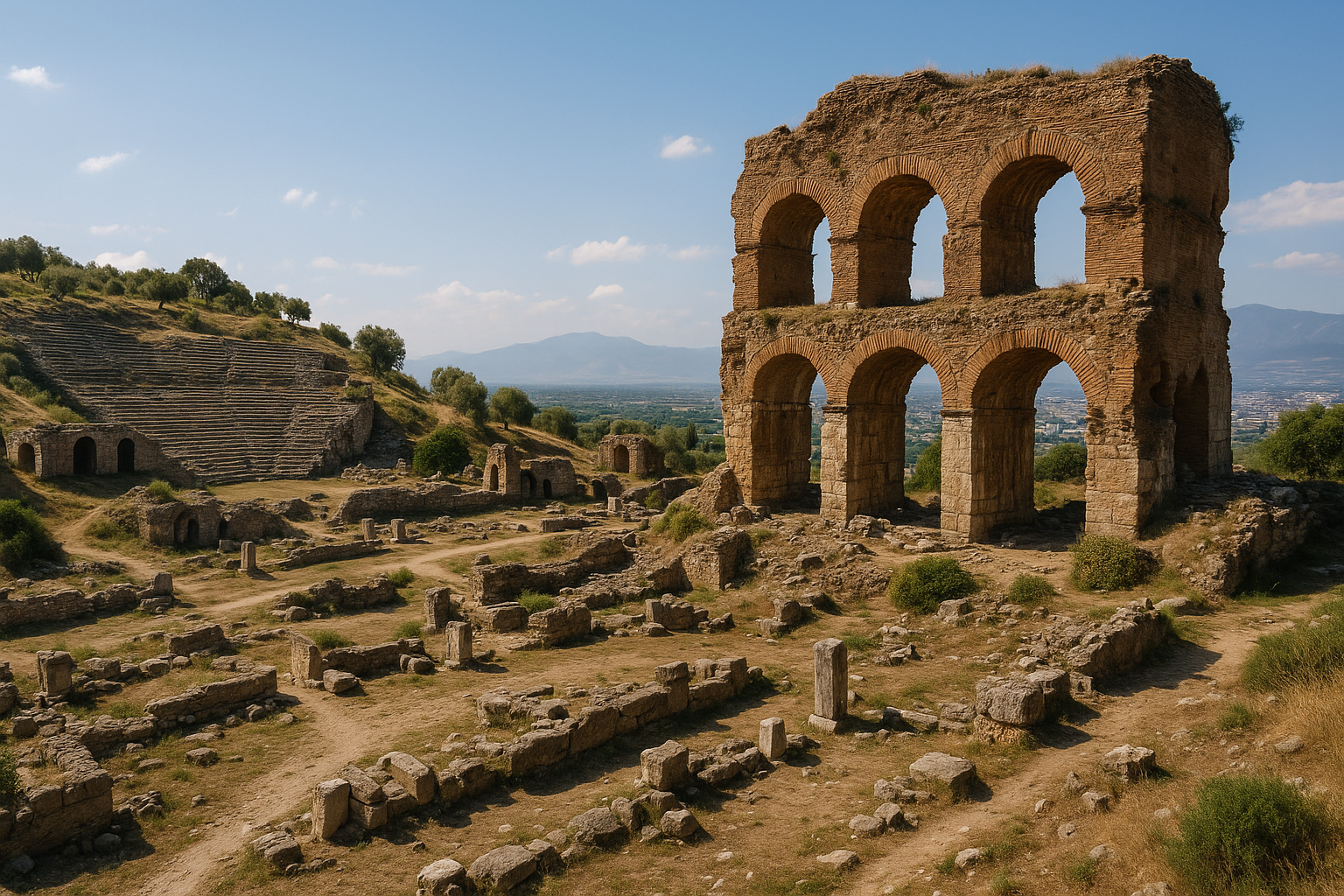
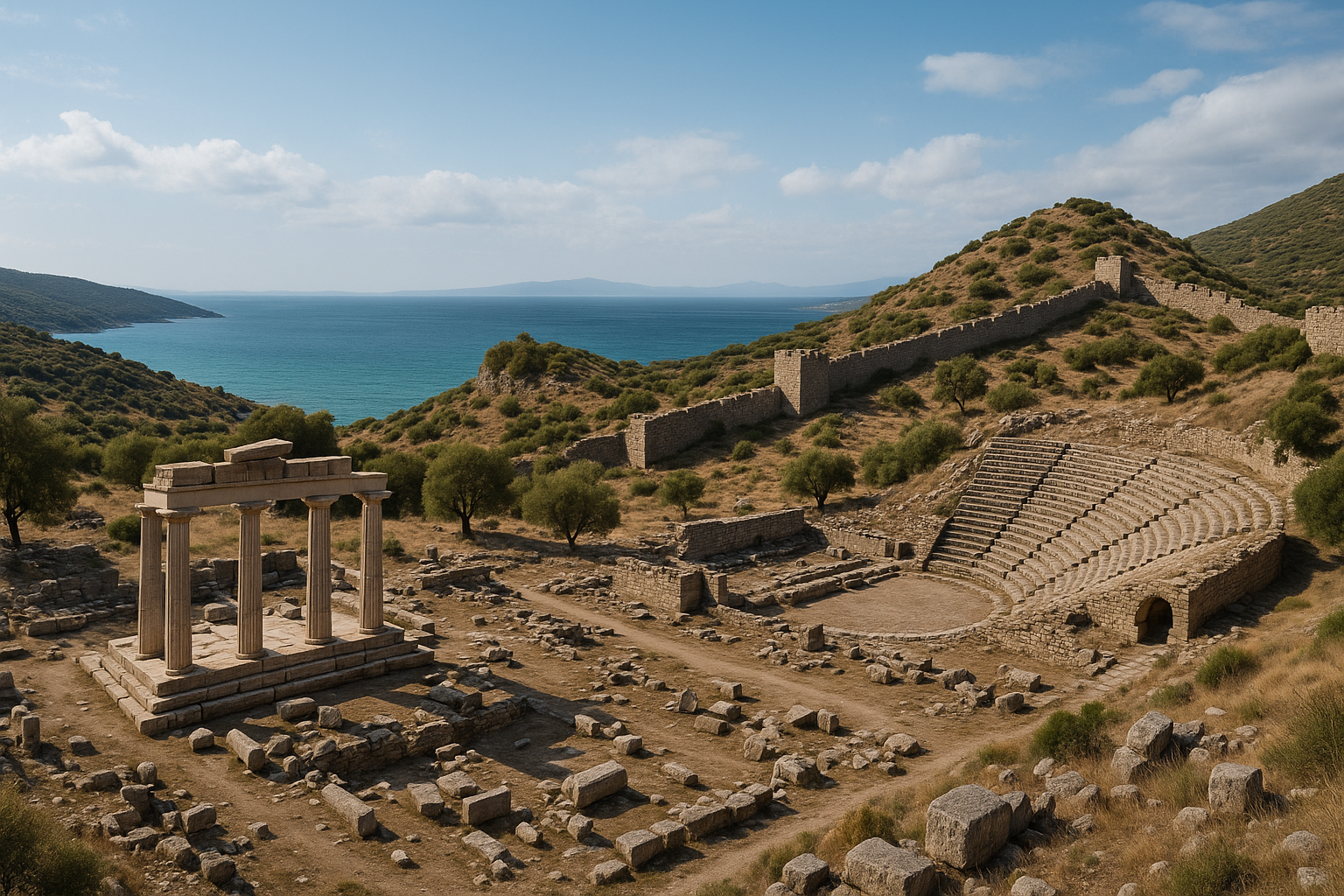
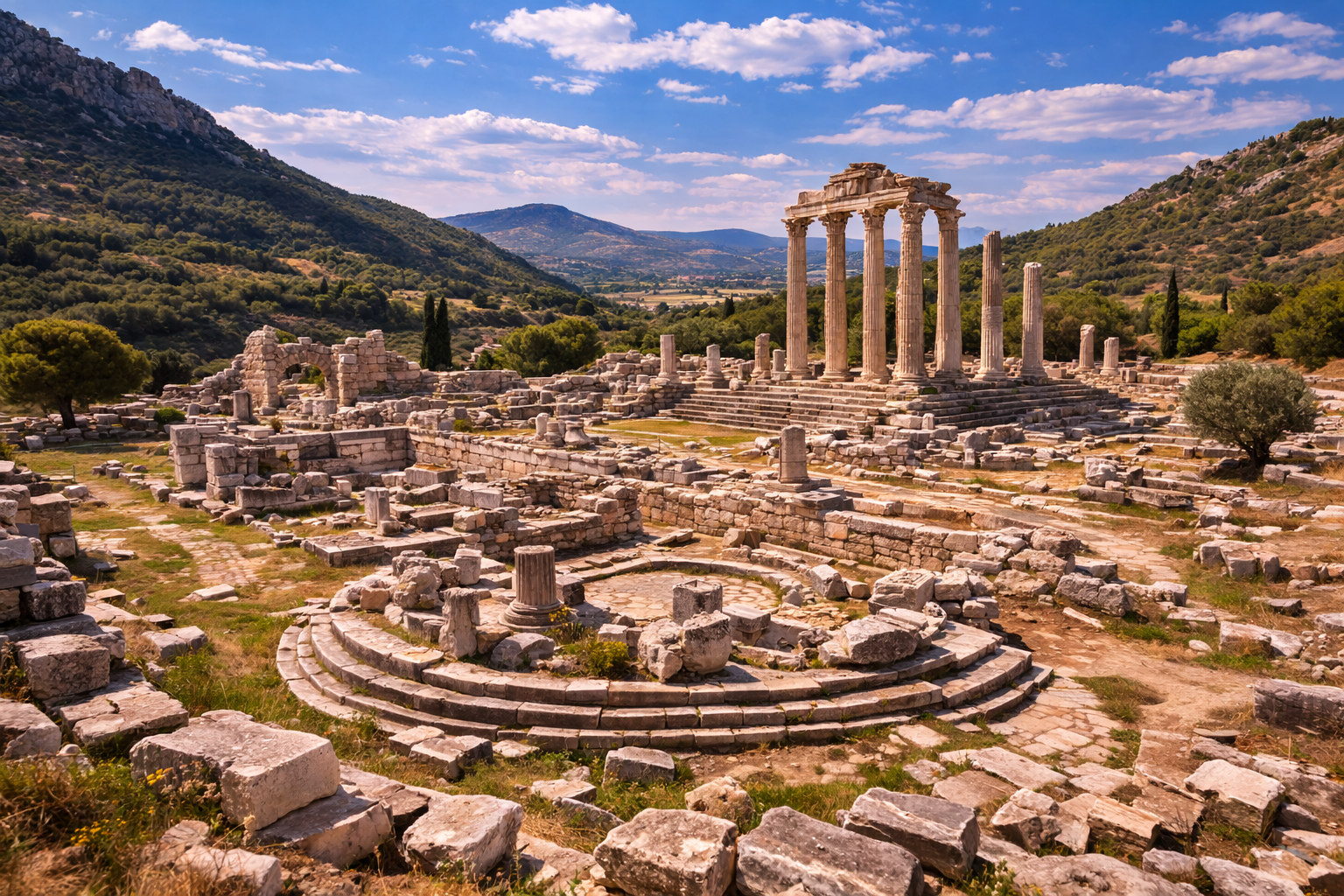
نظرة عامة: كانت ماغنيسيا على نهر مياندروس (Magnesia ad Maeandrum) إحدى كبرى مدن أيونيا القديمة، تقع عند سفح جبل ثوراكس في سهل نهر مياندروس (بويوك مندريس) الخصيب، قرب أورتاكلار الحديثة في محافظة أيدن. واشتُهرت المدينة قبل كل شيء بـمعبد أرتميس لوكوفريني، التحفة الفريدة لـهيرموجينيس — أكثر مهندسي المعابد تأثيرًا في العصور القديمة — وهو أحد أكبر المعابد في العالم القديم. كما اشتُهرت ماغنيسيا بـالأغورا الضخمة (أكبر أغورا أيونية معروفة)، ومسرحها البديع، وإفريز الأمازونوماخيا (الموجود الآن في متحفَي اللوفر وبرلين)، ودورها في التاريخ الهلنستي. وعلى الرغم من أنها أقل شهرةً من جارتيها الشهيرتين أفسس وبريني، فإن إرثها المعماري قد أثّر تأثيرًا عميقًا في تصميم المعابد في جميع أنحاء العالم الروماني.
جدول المحتويات
- لماذا تُعدّ ماغنيسيا مهمة
- الجغرافيا والموقع
- الجدول الزمني التاريخي
- أساطير التأسيس
- معبد أرتميس لوكوفريني
- هيرموجينيس المهندس المعماري العبقري
- إفريز الأمازونوماخيا
- الأغورا
- المسرح
- معبد زيوس سوسيبوليس
- البريتانيون
- مهرجان أرتميس والأسيليا
- معركة ماغنيسيا 190 ق.م
- الاقتصاد والحياة اليومية
- الدين والأديان
- التراجع والتاريخ اللاحق
- التاريخ الأثري
- كيفية زيارة ماغنيسيا
- الأسئلة الشائعة
- المصادر
لماذا تُعدّ ماغنيسيا مهمة
تتميّز ماغنيسيا بأسباب عدة:
- تحفة هيرموجينيس: صمّم هيرموجينيس معبد أرتميس (نحو 200–130 ق.م)، وقد غدا مخططه الكاذب الثنائي المعيارَ الذي قامت عليه عمارة المعابد الرومانية — مما يجعله من أكثر مهندسي المعابد تأثيرًا في التاريخ
- رابع أكبر معابد العصر الهلنستي: بلغت أبعاد معبد أرتميس 67 × 40 مترًا — أحد أضخم المعابد في آسيا الصغرى
- إفريز الأمازونوماخيا: إفريز رائع يبلغ طوله 175 مترًا يصوّر معركة الإغريق والأمازونيات — أحد أروع منجزات النحت الهلنستي
- أكبر أغورا أيونية: كانت الساحة المدنية في ماغنيسيا أكبر أغورا معروفة في العالم الأيوني
- الأسيليا: مُنحت المدينة الحرمة الدينية (أسيليا) إثر ظهور أرتميس الإلهية — وهو شرف رفيع في العالم الهلنستي
- معركة ماغنيسيا (190 ق.م): إحدى أكثر المعارك حسمًا في التاريخ القديم — انتصار روما على الملك السلوقي أنطيوخوس الثالث، الذي رسّخ الهيمنة الرومانية على آسيا الصغرى
- حفريات كارل هومان: المهندس المعماري والأثري ذاته الذي اكتشف مذبح بيرغامون هو من نقّب في ماغنيسيا أيضًا
الجغرافيا والموقع
تحتلّ ماغنيسيا موقعًا استراتيجيًا في سهل نهر مياندروس (بويوك مندريس).
الموقع:
- قرب أورتاكلار (منطقة جيرمينجيك)، محافظة أيدن
- على بُعد نحو 100 كيلومتر جنوب إزمير
- عند سفح جبل ثوراكس (غوموش داغي)
- في المثلث الواقع بين أفسس (30 كم غربًا) وبريني (40 كم جنوبًا) وتراليس/أيدن (20 كم شرقًا)
الطبيعة الجغرافية:
- سهل مياندروس الفسيح الخصيب — أحد أكثر المناطق الزراعية إنتاجيةً في غرب تركيا
- يرتفع جبل ثوراكس بشكل درامي خلف الموقع الأثري
- يمرّ نهر مياندروس ذو المجرى الملتوي الشهير (الذي استُمدّت منه كلمة "meander" في الإنجليزية) بالقرب منه
- كان نهر ليثايوس، أحد الروافد، يخترق المدينة
- مناخ متوسطي بصيف حار وشتاء معتدل
الجدول الزمني التاريخي
| الحقبة | التاريخ | الأحداث الرئيسية |
|---|---|---|
| التأسيس | نحو القرن السابع ق.م | أسّسها مستوطنون أيوليون/أيونيون من ثيساليا |
| الحقبة الفارسية | 546–334 ق.م | تحت الحكم الفارسي؛ نُفي ثيميستوكليس إليها |
| الإسكندر | 334 ق.م | حرّرها الإسكندر الأكبر |
| الهلنستية | القرنان الثالث والثاني ق.م | النمو في ظل الرعاية السلوقية |
| بناء المعبد | نحو 200–130 ق.م | يصمّم هيرموجينيس معبد أرتميس |
| ظهور أرتميس | نحو 220 ق.م | ظهور إلهي يفضي إلى الاعتراف بالأسيليا |
| معركة ماغنيسيا | 190 ق.م | روما تهزم أنطيوخوس الثالث بالقرب منها |
| الجمهورية الرومانية | 133 ق.م | إنشاء مقاطعة آسيا |
| الإمبراطورية الرومانية | القرن الأول ق.م – القرن الرابع م | ازدهار مستمر |
| البيزنطية | القرن الخامس – القرن الثالث عشر | تراجع السكان |
| العثمانية | القرن الرابع عشر فصاعدًا | هجر الموقع إلى حدٍّ بعيد |
| التنقيب | 1891–1893 | كارل هومان ينقّب لحساب برلين |
| التنقيب الحديث | 1984–حتى الآن | أورهان بينغول يستأنف الحفريات التركية |
أساطير التأسيس
ترتبط أصول ماغنيسيا بأساطير الهجرة الإغريقية:
- يُروى أن المدينة أسّسها الماغنيتيون من ثيساليا (شمال اليونان) — وهم الشعب الذي يُقال إن كلمة "مغناطيس" (magnet) مشتقة من اسمهم (حجر المغنيسيا)
- تربط بعض الروايات التأسيسَ بالتشرّد الذي أعقب حرب طروادة
- ميّزت المدينة نفسها بوصف "ماغنيسيا على مياندروس" (ad Maeandrum) تمييزًا لها عن ماغنيسيا الأخرى — ماغنيسيا على سيبيلوس (مانيسا الحديثة) الواقعة أكثر شمالًا
- تُفسّر الأصول الثيسالية الروابطَ الأيولية للمدينة على الرغم من تصنيفها لاحقًا ضمن المدن الأيونية
معبد أرتميس لوكوفريني
يُعدّ معبد أرتميس لوكوفريني ("أرتميس ذات الجبهة البيضاء") جوهرة ماغنيسيا المكلّلة وأحد أكثر المعابد أهمية معماريةً في العصور القديمة.
العمارة:
- صمّمه هيرموجينيس، أشهر مهندسي العصر الهلنستي
- مخطط أيوني كاذب الثنائية — رواق خارجي مُباعَد كما لو كان لصفّين من الأعمدة، غير أن الصف الداخلي حُذف، مما أوجد ممرًا فسيحًا حول القاعة الداخلية
- الأبعاد: نحو 67 × 40 مترًا (شاملةً الرواق) — رابع أكبر معبد في العالم الهلنستي
- 8 × 15 عمودًا في الرواق المحيطي
- احتضن الناووس (القاعة الداخلية) تمثال عبادة أرتميس
- وقف مذبح ضخم أمام المعبد
الأهمية:
- كان تصميم هيرموجينيس الكاذب الثنائية ثوريًا — وفّر في المواد وجهد البناء مع إيجاد داخل واسع متناسق الأبعاد
- ناقش المهندس الروماني فيتروفيوس أعمال هيرموجينيس مناقشةً مستفيضة في De Architectura، مما جعل مبادئه أساسًا لتصميم المعابد الرومانية
- أثّر معبد أرتميس في ماغنيسيا تأثيرًا مباشرًا في عدد لا يحصى من المعابد اللاحقة في أرجاء الإمبراطورية الرومانية
الحالة الراهنة:
- تتجلّى أساسات المعبد وقواعد أعمدته وبعض عناصره المعمارية في الموقع
- العناصر النحتية الكبرى (إفريز الأمازونوماخيا) موجودة في باريس وبرلين
هيرموجينيس المهندس المعماري العبقري
هيرموجينيس البريني (نشط نحو 200–130 ق.م) هو أحد أهم المهندسين المعماريين في التاريخ القديم كله.
الابتكارات:
- طوّر المخطط الكاذب الثنائي — إسهامه المميّز الذي حذف فيه الحلقة الداخلية من الأعمدة في المعابد الثنائية
- أوجد هذا الحذف ممرًا مظلّلًا فسيحًا (بتيرون) حول القاعة الداخلية — أوسع فضاءً وأقل تكلفةً وأبهج منظرًا
- يُنسب إليه أيضًا توطيد التباعد اليوستيلي بين الأعمدة (المسافة المثالية بين الأعمدة)
- كتب رسائل نظرية في العمارة أثّرت في أجيال من المهندسين
الإرث:
- خصّص فيتروفيوس مساحة واسعة لمبادئ هيرموجينيس
- أصبح المخطط الكاذب الثنائي الشكل السائد للمعابد في العصر الروماني الإمبراطوري
- يتجلّى تأثير هيرموجينيس في معابد تمتد من روما إلى شمال أفريقيا حتى شرق البحر المتوسط
- يُعدّ ربما المهندس الأكثر تأثيرًا في تاريخ المعابد في الحضارة الغربية
إفريز الأمازونوماخيا
يُعدّ إفريز الأمازونوماخيا من معبد أرتميس إحدى روائع النحت الهلنستي.
الوصف:
- إفريز منحوت متواصل يبلغ طوله نحو 175 مترًا زيّن الواجهة الخارجية للمعبد
- يصوّر الأمازونوماخيا — المعركة الأسطورية بين المحاربين الإغريق والأمازونيات (المحاربات)
- تركيبات ديناميكية درامية بشخصيات متشابكة وأثواب متموّجة وتعابير شديدة
- يُظهر الأسلوب تأثير تقاليد النحت البيرغامية (كان مذبح بيرغامون معاصرًا له تقريبًا)
الموقع الراهن:
- 43 لوحة من الإفريز محفوظة في متحف اللوفر في باريس
- شظايا إضافية في متحف بيرغامون في برلين
- بعض القطع في تركيا (متاحف إسطنبول الأثرية)
- يعكس توزّع الإفريز على متاحف متعددة ممارسات التنقيب في القرن التاسع عشر
الأغورا
تُعدّ أغورا ماغنيسيا أكبر أغورا معروفة في العالم الأيوني.
السمات:
- ساحة عامة مسوّرة بالأروقة، هائلة الحجم
- يحيط بها صفوف من الستوا (الممرات المسقوفة) مع الحوانيت والمباني العامة
- اندمج معبد زيوس سوسيبوليس في المجمّع المحيط بالأغورا
- استُخدمت للتجارة والجمعيات المدنية والحياة العامة
- يدلّ حجم الأغورا على ثروة المدينة الكبيرة وكثافتها السكانية
المسرح
كان مسرح ماغنيسيا فضاءً احتفاليًا ضخمًا:
السمات:
- شُيّد في منحدر التلة
- تُقدَّر طاقته الاستيعابية بنحو 5,000–8,000 متفرّج
- تصميم هلنستي/روماني نموذجي بالكافيا والأوركسترا ومبنى المسرح
- مُنقَّب جزئيًا ومرئي في الموقع
- تمتدّ المناظر من المقاعد العليا عبر سهل مياندروس
معبد زيوس سوسيبوليس
قام معبد زيوس سوسيبوليس ("زيوس منقذ المدينة") داخل الأغورا:
السمات:
- معبد أصغر حجمًا لكن ذو أهمية بالغة داخل المركز المدني
- برهن على أهمية عبادة زيوس إلى جانب عبادة أرتميس الرئيسية
- اندمج في التصميم المعماري للأغورا
- ربما أسهم هيرموجينيس في تصميمه
البريتانيون
كان البريتانيون موقد ماغنيسيا المدني — المبنى الذي تتّقد فيه النار المقدسة للمدينة إلى الأبد:
السمات:
- آوى اللهب الأبدي للمدينة
- تناول المسؤولون (البريتانيس) طعامهم فيه على نفقة عامة
- كان يستقبل السفراء الأجانب
- مثّل قلب المجتمع السياسي والمقدّس
مهرجان أرتميس والأسيليا
كان أعظم مصادر المكانة لماغنيسيا ارتباطَها بالإلهة أرتميس لوكوفريني.
الظهور الإلهي:
- في نحو عام 220 ق.م، أبلغ مواطنو ماغنيسيا عن ثيوفانيا (ظهور إلهي) لأرتميس
- يُقال إن الإلهة ظهرت في المدينة أو بالقرب منها، مؤكّدةً حمايتها الخاصة
الأسيليا:
- في أعقاب الظهور، أرسلت ماغنيسيا سفراء في أرجاء العالم الإغريقي طالبةً الاعتراف بـأسيليا المدينة (الحرمة الدينية)
- كان معنى ذلك أن ماغنيسيا وحرمها المقدّس ستُعترف بهما ملجأً لا يُنتهك — لا يجوز الإيذاء داخل حدودها المقدّسة
- اعترفت بأسيليا ماغنيسيا أكثر من 150 مدينة ومملكة يونانية — وقد عُثر على مراسيم إجاباتها منقوشةً على جدران الأغورا
- تُعدّ هذه النقوش من أهم الوثائق لفهم العلاقات الدبلوماسية في العصر الهلنستي
مهرجان اللوكوفريينا:
- أُقيم مهرجان كبير ومسابقات رياضية وموسيقية تكريمًا لأرتميس لوكوفريني
- ارتقت الألعاب إلى مرتبة إيزوبيثية — مكافئة في المكانة لألعاب البانهيليني البيثية في دلفي
- تنافس فيها رياضيون وفنانون من جميع أنحاء العالم الإغريقي
معركة ماغنيسيا 190 ق.م
كانت معركة ماغنيسيا إحدى أكثر المعارك حسمًا في التاريخ القديم.
الخلفية:
- كانت الإمبراطورية السلوقية تحت قيادة الملك أنطيوخوس الثالث "الكبير" تسيطر على معظم الشرق الأدنى وتتمدّد نحو اليونان وبحر إيجة
- عارضت روما، متحالفةً مع بيرغامون وسائر الدول اليونانية، التمدّد السلوقي
المعركة:
- خُضيت عام 190 ق.م بالقرب من ماغنيسيا (موقع ساحة المعركة بالضبط محلّ جدل — ربما كانت أقرب إلى ماغنيسيا على سيبيلوس/مانيسا)
- هزم الجيش الروماني بقيادة لوكيوس كورنيليوس سكيبيو (بمشورة أخيه سكيبيو الأفريقي) جيشَ أنطيوخوس الثالث الأكبر هزيمةً نكراء
- أدّى الفرسان الرومانيون والبيرغاميون دورًا محوريًا
التبعات:
- أجبرت معاهدة أباميا (188 ق.م) السلوقيين على الانسحاب من الأناضول غربي جبال طوروس
- حازت بيرغامون ورودس أراضي شاسعة بوصفهما حليفتَين لروما
- أصبحت روما القوة المهيمنة في شرق البحر المتوسط — بداية السيادة الرومانية على آسيا
- غيّرت المعركة الخريطة السياسية للعالم القديم تغييرًا جذريًا
الاقتصاد والحياة اليومية
قام ازدهار ماغنيسيا على عدة عوامل:
الزراعة:
- أنتج سهل مياندروس الخصيب الحبوبَ والزيتون والخمر والتين
- دعم الريّ من نهرَي مياندروس وليثايوس الزراعةَ المكثّفة
التجارة:
- جعل الموقع الاستراتيجي بين أفسس وتراليس وبريني من ماغنيسيا مركزًا تجاريًا
- تشهد الأغورا الكبيرة على حياة تجارية نشطة
- ارتبطت بالطرق البرية الرئيسية عبر غرب الأناضول
السكان:
- بلغت ماغنيسيا في أوج ازدهارها على الأرجح 15,000–25,000 نسمة
- مدينة هلنستية ورومانية مزدهرة وذات روابط واسعة
الدين والأديان
تمحور الدين في ماغنيسيا حول أرتميس لوكوفريني:
- منحت عبادة أرتميس الأساسية المدينةَ هويّتها الدينية
- رفع الظهور الإلهي والأسيليا مكانة ماغنيسيا الدينية في جميع أنحاء العالم الإغريقي
- كان زيوس سوسيبوليس يُعبد حارسًا للمدينة
- شملت العبادات الأخرى ديونيسوس وأبولو وعبادة الإمبراطور في العصر الروماني
- آوى البريتانيون النار المقدّسة للجماعة
التراجع والتاريخ اللاحق
كان تراجع ماغنيسيا تدريجيًا:
- ازدهرت المدينة تحت الحكم الروماني لكنها عاشت في ظل أفسس المجاورة
- تسبّبت الزلازل (لا سيما الزلزال المدمّر عام 17 م الذي ضرب مدنًا كثيرة في غرب الأناضول) في أضرار جسيمة
- ربما أثّر طمي نهر مياندروس في المشهد الطبيعي المحيط
- تقلّصت المدينة تقلّصًا ملحوظًا في الحقبة البيزنطية
- بحلول العصر العثماني، هُجر الموقع إلى حدٍّ بعيد مع انتقال السكان إلى المدن المجاورة
التاريخ الأثري
كارل هومان (1891–1893):
- أجرى المهندس المعماري والأثري الألماني كارل هومان — الشهير باكتشاف مذبح بيرغامون — أول حفريات كبرى في ماغنيسيا
- كشف خلال 21 شهرًا عن معبد أرتميس والمسرح والأغورا ومعبد زيوس والبريتانيون كشفًا جزئيًا
- نُقلت الاكتشافات النحتية الكبرى (إفريز الأمازونوماخيا) إلى برلين وباريس
- وثّقت منشورات هومان الموقعَ لكن الحفرية ظلّت غير مكتملة
أورهان بينغول (1984–حتى الآن):
- بعد توقّف قرابة قرن، استأنف البروفيسور أورهان بينغول من جامعة أنقرة الحفريات المنهجية عام 1984 تحت إشراف وزارة الثقافة التركية
- ركّز فريق بينغول على الصيانة والتوثيق والكشف الإضافي عن معالم المدينة
- تستمر الأعمال الجارية في توسيع فهمنا للموقع
الاكتشافات في المتاحف:
- متحف اللوفر، باريس: 43 لوحة من إفريز الأمازونوماخيا
- متحف بيرغامون، برلين: عناصر معمارية وشظايا إفريز إضافية
- متاحف إسطنبول الأثرية: بعض الاكتشافات
- متحف أيدن: اكتشافات محلية من الحفريات التركية
كيفية زيارة ماغنيسيا
الوصول إليها:
- من أيدن: 25 كم (نحو 30 دقيقة)
- من إزمير: 100 كم (نحو 1.5 ساعة)
- من كوشاداسي/سلجوق (أفسس): 50 كم (نحو 45 دقيقة)
- الموقع قرب أورتاكلار (قرية تيكين)، منطقة جيرمينجيك
- يمكن الوصول بالسيارة؛ وجود إشارات إرشادية من الطريق الرئيسي
الموقع:
- خصّص 1.5–2 ساعة
- المحطات الرئيسية: أساسات معبد أرتميس وبقايا أعمدته، المسرح، الأغورا، معبد زيوس، البريتانيون
- الموقع مُنقَّب جزئيًا — بعض المناطق مغطّاة بالنباتات
- عدد الزوار أقل من أفسس المجاورة — هادئ في أغلب الأحيان
أفضل وقت للزيارة:
- الربيع (مارس–مايو) والخريف (أكتوبر–نوفمبر) هما الوقت المثالي
- الصيف شديد الحرارة في سهل مياندروس
- الشتاء معتدل لكنه قد يكون ممطرًا
نصائح عملية:
- ارتدِ حذاءً مريحًا — بعض المسالك وعرة
- أحضر معك ماءً وواقيًا من الشمس
- اجمع الزيارة مع أفسس (30 كم) وبريني (40 كم) وميليتوس وديديما
- يضمّ متحف أيدن اكتشافات من الحفرية
الأسئلة الشائعة
س: من هو هيرموجينيس؟ ج: هيرموجينيس البريني (نشط نحو 200–130 ق.م) هو أكثر مهندسي المعابد تأثيرًا في العصور القديمة. أصبح مخططه الكاذب الثنائي المُتقَن في معبد أرتميس في ماغنيسيا المعيارَ لتصميم المعابد الرومانية. وقد ناقش المهندس الروماني فيتروفيوس مبادئه مناقشةً مستفيضة.
س: أين يوجد إفريز الأمازونوماخيا؟ ج: قُسّم الإفريز البالغ طوله 175 مترًا بعد الحفرية: 43 لوحة في متحف اللوفر (باريس)، وشظايا إضافية في متحف بيرغامون (برلين) وإسطنبول. لا توجد أي قطعة منه في الموقع الأصلي.
س: ما هي معركة ماغنيسيا؟ ج: معركة حاسمة عام 190 ق.م هزمت فيها روما الملك السلوقي أنطيوخوس الثالث، مرسّخةً سيادتها على آسيا الصغرى. وقد يكون الميدان الفعلي قريبًا من ماغنيسيا على سيبيلوس (مانيسا) لا من ماغنيسيا على مياندروس.
س: هل الموقع محفوظ جيدًا؟ ج: تبدو أساسات المعبد وبعض العناصر المعمارية، فضلًا عن المسرح والأغورا وسائر المنشآت. الموقع مُنقَّب جزئيًا وأقل تطورًا للسياحة مقارنةً بأفسس، لكنه يتيح تجربةً أهدأ وأعمق أثرًا.
س: كيف تقارن ماغنيسيا بأفسس؟ ج: تتميّز ماغنيسيا معماريًا — فتصميم معبد هيرموجينيس أثّر في العمارة الرومانية كلها. لكنها تستقبل زوارًا أقل بكثير من أفسس وأقل اتساعًا في التنقيب. وهي تستهوي بالدرجة الأولى المهتمّين بالتاريخ المعماري.
س: هل ماغنيسيا مدرجة في قائمة اليونسكو؟ ج: ماغنيسيا غير مدرجة حاليًا في قائمة اليونسكو للتراث العالمي أو قائمة الانتظار، وإن كانت أهميتها المعمارية تستحق النظر في ذلك.
القياسات المعمارية التفصيلية
أسفرت حفرية كارل هومان في 1891–1893 والمسوحات اللاحقة التي أجراها فريق أورهان بينغول عن بيانات قياسية دقيقة لأبرز معالم ماغنيسيا.
| المعلم | الأبعاد / القياس الرئيسي | التاريخ |
|---|---|---|
| معبد أرتميس — المخطط الكلي | 67 × 41 م (شاملًا الرواق) | نحو 200–130 ق.م |
| معبد أرتميس — الرواق | 8 أعمدة (الأضلاع القصيرة) × 15 عمودًا (الأضلاع الطويلة) — كاذب ثنائي ثماني الأعمدة | نحو 200–130 ق.م |
| إفريز الأمازونوماخيا — الطول الكلي | نحو 175 م | نحو 200–130 ق.م |
| إفريز الأمازونوماخيا — اللوحات في اللوفر | 43 لوحة | حُفرت 1891–1893 |
| معبد زيوس سوسيبوليس — المنصة | 7.38 × 15.82 م | هلنستي |
| الأغورا — المساحة الكلية | أكبر أغورا أيونية معروفة (الأبعاد الدقيقة غير منشورة بأرقام مقرّبة) | هلنستي |
| المسرح — الطاقة الاستيعابية | نحو 5,000–8,000 متفرّج | هلنستي / روماني |
| المذبح الضخم (أمام معبد أرتميس) | منصة ضخمة متناسبة مع حجم المعبد | هلنستي |
أزاح المخطط الكاذب الثنائي لمعبد أرتميس لدى هيرموجينيس الحلقةَ الداخلية من الأعمدة الموجودة في المعابد الثنائية القياسية، مُنشئًا ممرًا مظلّلًا فسيحًا (بتيرون) حول القاعة الداخلية دون تكاليف الرواق المزدوج وتكاثفه البصري. وكان التباعد الذي أوجده هذا التصميم محسوبًا بدقة بالغة لدرجة أن فيتروفيوس قنّنه لاحقًا باعتباره التباعد "اليوستيلي" بين الأعمدة — المسافة المثالية بين الأعمدة من حيث المتانة الإنشائية والتناسق الجمالي (De Architectura III.3.6–9). غدا هذا التقنين في ماغنيسيا النموذجَ الذي قامت عليه إنشاءات المعابد الرومانية في أرجاء الإمبراطورية.
إفريز الأمازونوماخيا: التوزيع والبيانات التقنية
قُسّم الإفريز البالغ طوله 175 مترًا من معبد أرتميس بين مؤسسات متعددة في أعقاب حفرية هومان. يوثّق الجدول التالي توزيعه الراهن والتفاصيل التقنية الرئيسية.
| المجموعة | عدد القطع | المادة | السمات البارزة |
|---|---|---|---|
| متحف اللوفر، باريس | 43 لوحة | رخام | أكبر مجموعة؛ تركيبات معركة ديناميكية |
| متحف بيرغامون، برلين | نحو 60 قطعة معمارية (بالإضافة إلى أجزاء من الإفريز) | رخام | يشمل عناصر البروناوس (ثلثا المواد المنقولة من البروناوس) |
| متاحف إسطنبول الأثرية | بعض القطع | رخام | محتجزة في تركيا |
| متحف أيدن | اكتشافات محلية من حفريات تركية | رخام ومواد أخرى | من حملات بينغول |
| في الموقع | لا شيء | — | لا توجد لوحات إفريز في مكانها الأصلي |
نُقلت نحو 200 قطعة معمارية من معبد أرتميس إلى برلين في أعقاب حفرية هومان، حيث اندمجت في مجموعة أنتيكينزاملونغ (مجموعة الآثار الكلاسيكية). ثلثا هذه المواد المنقولة كانت مصدرها البروناوس. يعكس توزّع الإفريز بين باريس وبرلين وإسطنبول أعرافَ التنقيب في القرن التاسع عشر التي كانت تقتضي مشاركة الاكتشافات بين الحكومات المضيفة والمؤسسات الحافرة — وهي ممارسة أفضت إلى نقاشات مستمرة حول الإعادة.
ملفّ الأسيليا: الشواهد الكتابية
أنتج الاعتراف بأسيليا ماغنيسيا (الحرمة الدينية) واحدًا من أبرز الملفات الكتابية في العالم الهلنستي.
| الجانب | التفصيل |
|---|---|
| تاريخ ظهور أرتميس | نحو 220 ق.م |
| عدد مراسيم الإجابة | أكثر من 150 من المدن والممالك الإغريقية |
| موقع النقوش | منقوشة على جدران الأغورا |
| الوثيقة الرئيسية | I.Magnesia 16 — نقش سردي يشرح تاريخ طلب الأسيليا |
| مكانة المهرجان | رُفعت ألعاب اللوكوفريينا إلى المرتبة الإيزوبيثية (مكافئة لألعاب بيثيا في دلفي) |
يُشكّل ملفّ الأسيليا المنقوش على جدران الأغورا إحدى أكبر مجموعات الوثائق الدبلوماسية الهلنستية من موقع واحد. اعترفت رسميًا بالوضع المقدّس لماغنيسيا وبحرمة حرمها أكثرُ من 150 مدينة ومملكة — من اليونان البرية وجزر إيجة حتى الإمبراطورية السلوقية ومصر البطلمية. تتيح هذه النقوش أدلةً ثمينة لفهم الشبكات الدبلوماسية والتراتبيات السياسية وأنظمة الهيبة الدينية في العالم الهلنستي.
تسلسل الحفريات والاكتشافات الحديثة
| العام/الأعوام | المدير / المؤسسة | الأنشطة والاكتشافات الرئيسية |
|---|---|---|
| 1891–1893 | كارل هومان / متاحف برلين | حملة مدّتها 21 شهرًا: كُشف جزئيًا عن معبد أرتميس والمسرح والأغورا ومعبد زيوس والبريتانيون |
| 1891–1893 | هومان | نُقل إفريز الأمازونوماخيا إلى برلين وباريس |
| 1893–1983 | — | قرابة قرن دون حفرية منهجية |
| 1984 | أورهان بينغول / جامعة أنقرة | استئناف الحفريات التركية تحت إشراف وزارة الثقافة |
| 1984–2010s | فريق بينغول | الصيانة والتوثيق والكشف المتواصل عن المعالم |
| يوليو 2018 | فريق بينغول | اكتشاف ستة تماثيل يونانية في أطلال معبد أرتميس: 4 أنثوية و1 ذكورية و1 مجهولة الجنس |
| ما بعد 2018 | فريق بينغول | إعادة رفع بوابة معبد زيوس؛ استخراج 80 تمثالًا إضافيًا وقطع أثرية متنوعة |
| مستمر | جامعة أنقرة | استمرار التنقيب في الأحياء السكنية والمباني المدنية |
كان اكتشاف التماثيل الستة عام 2018 داخل معبد أرتميس بالغ الأهمية لأن الأشكال عُثر عليها في تماسّ وثيق مع أسس المعبد، مما يوحي بأنها أُودعت هناك عمدًا — ربما أثناء تحويل المعبد أو هدمه في أواخر العصور القديمة — لا أنها نُقلت بفعل الانهيار الطبيعي. وتؤكد استعادة نحو 80 تمثالًا وقطعًا أثرية إضافية من منطقة معبد زيوس أن البرنامج النحتي في ماغنيسيا كان أوسع بكثير مما كان مفهومًا سابقًا من أعمال هومان في القرن التاسع عشر وحدها.
المصادر
- فيتروفيوس، De Architectura (في العمارة)، الكتابان الثالث والسابع
- Humann, Carl, et al. Magnesia am Maeander. Berlin, 1904.
- بينغول، أورهان. تقارير الحفريات، جامعة أنقرة.
- Wikipedia, "Magnesia on the Maeander"
- Turkish Archaeological News, "Magnesia on the Meander"
- Turkish Museums, "Aydın Magnesia Archaeological Site"
- Louvre Museum, "Amazonomachy Frieze from Magnesia"
- Republic of Türkiye Ministry of Culture and Tourism