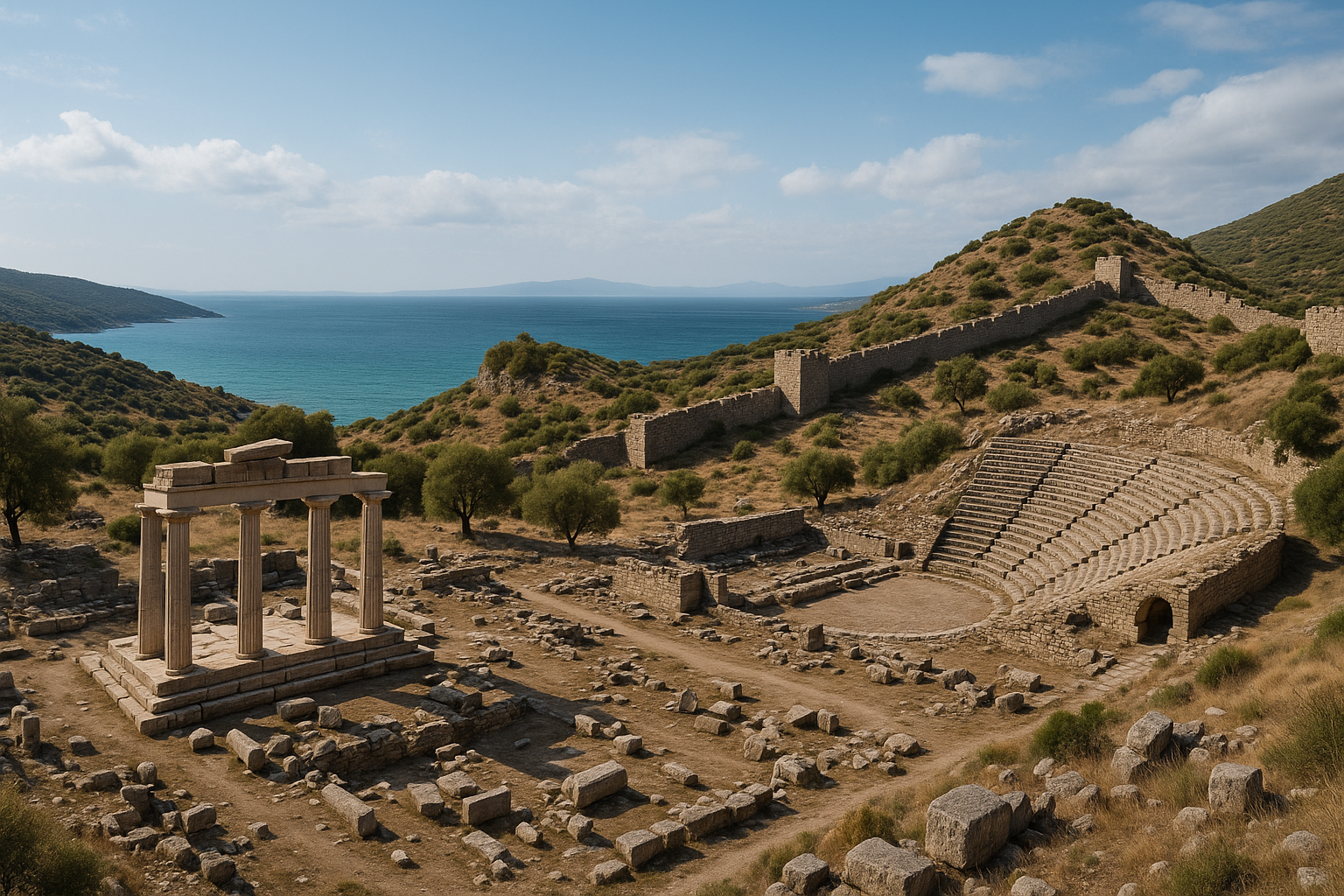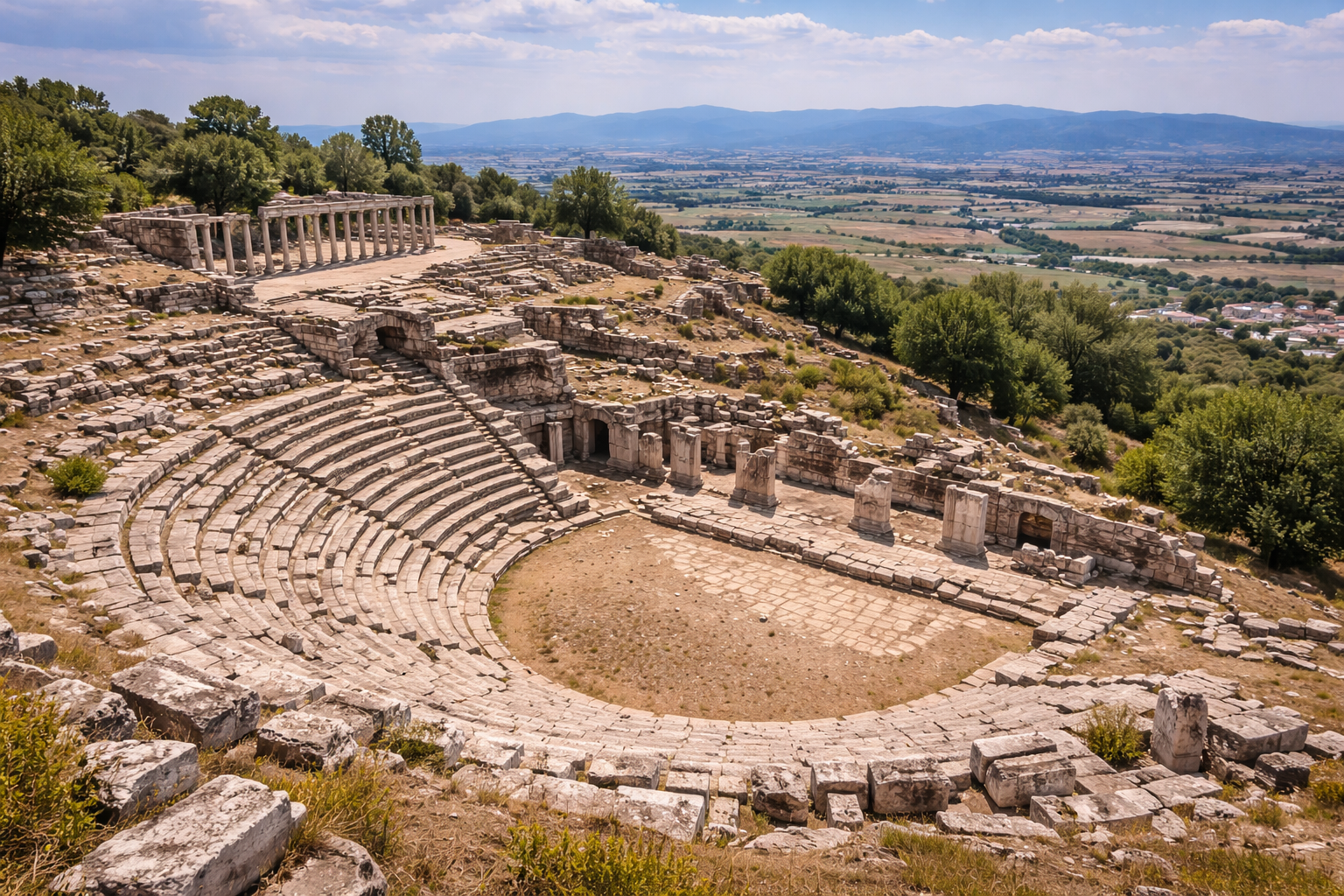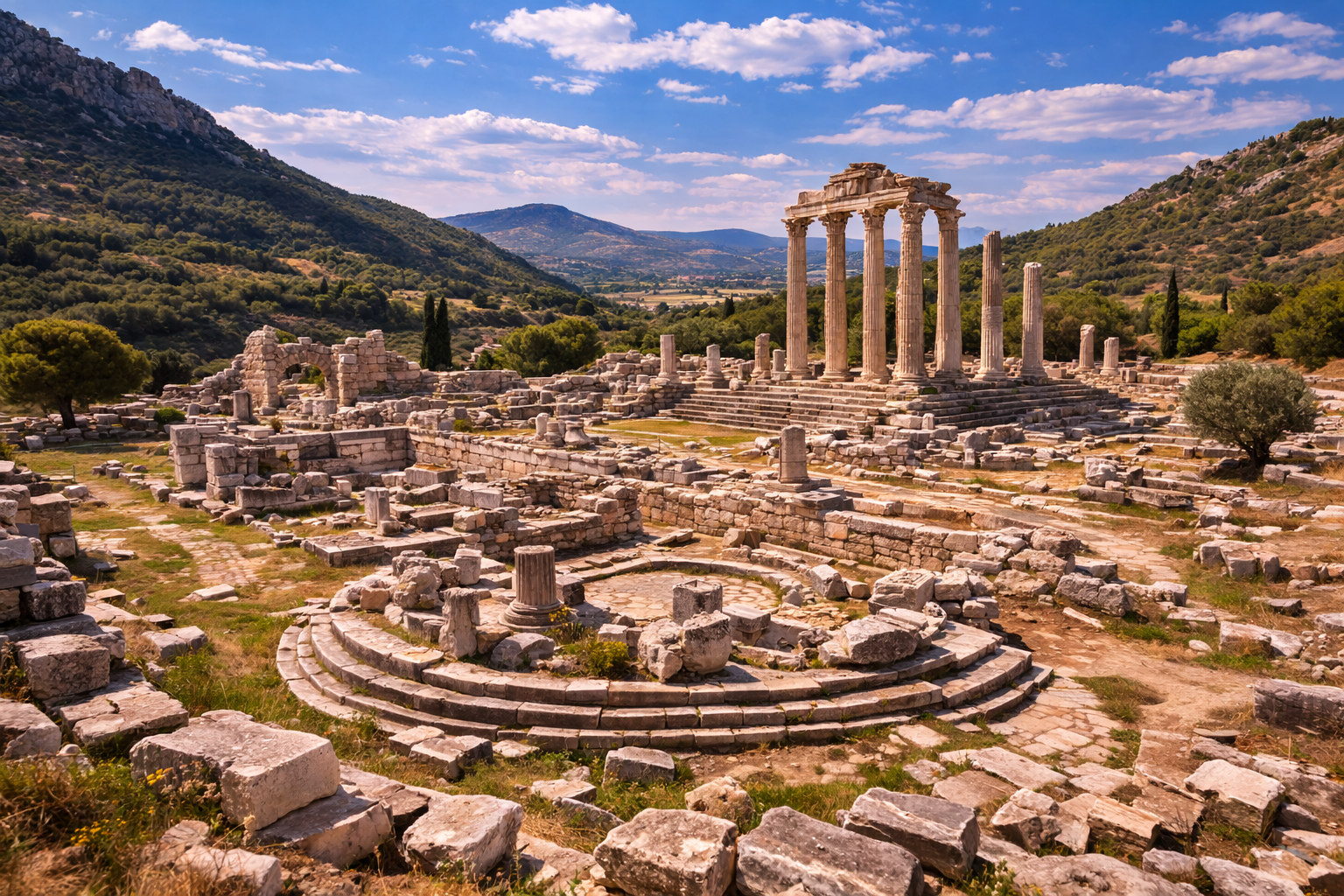
كلاروس (باليونانية القديمة: كلاروس) هي واحدة من أهمّ محميات العرّافة في العالم الإغريقي القديم، وهي مكرَّسة لـأبولو الكلاريوسي، وتقع في وادي أحمد بيلي ضمن ناحية مندريس بمحافظة إزمير. وإذ تستقرّ على أرض الوادي المستوية التي تصل سهل مندريس بـخليج كوشاداسي، على بُعد نحو 13 كم جنوب كولوفون (ديغرمن درَه) و2 كم شمال بلدة نوتيون الساحلية، فإنّ كلاروس لم تكن قطّ مدينة مستقلّة -- بل عملت طوال تاريخها بوصفها مركز العرّافة المقدّس لكولوفون، إحدى المدن الاثنتي عشرة في الرابطة الأيونية. وما يجعل كلاروس فريدةً بين مواقع العرّافة القديمة هو القدس الجوفي (الأديتون) الذي حُفظ بشكل لافت تحت معبد أبولو، حيث كان النبيّ الموحى إليه ينحدر عبر ممرّات مظلمة متاهية ليُلقي الردود الإلهية. وإلى جانب دلفي في اليونان الأمّ وديديما قرب ميليتوس، احتلّت كلاروس مرتبة واحدة من أكبر ثلاثة مراكز للعرّافة في العالم اليوناني-الروماني، وامتدّ نشاطها الديني أكثر من 1,500 عام من أواخر القرن الثالث عشر ق.م حتى القرن الرابع الميلادي.
جدول المحتويات
- لماذا تهمّ كلاروس
- الجغرافيا والإطار
- الجدول الزمني التاريخي
- أبرز المعالم والمنشآت
- طقس العرّافة
- العمل الأثري
- معلومات للزائرين
- الأسئلة الشائعة
- المصادر ومزيد من القراءة
لماذا تهمّ كلاروس
-
واحدة من ثلاث عرّافات كبرى: وقفت كلاروس إلى جانب دلفي وديديما بوصفها واحدة من أرقى ثلاث محميات نبوئية في العالم اليوناني-الروماني القديم. سافرت الوفود من مدن عبر المتوسط -- من ساحل البحر الأسود إلى شمال إفريقيا -- إلى كلاروس لاستشارة عرّافة أبولو.
-
قدس جوفي محفوظ: بخلاف معظم مواقع العرّافة القديمة التي ضاعت فيها الآلية النبوئية، تحتفظ كلاروس بـقدسها الجوفي (الأديتون) -- الحجرات والممرات تحت الأرضية المظلمة المقبّبة التي كان كاهن العرّافة (البروفيتيس) يشرب فيها من نبع مقدّس ويُلقي الردود الموحى بها إلهيًا. ولا يزال بإمكان الزائرين اليوم دخول هذه الممرّات الموحية والمشي فيها.
-
تماثيل عبادة ضخمة وُجدت في موضعها الأصلي: كلاروس واحدة من المحميات النادرة التي وُجدت فيها شظايا تماثيل عبادة ضخمة -- أبولو (نحو 7.5-8 أمتار طولًا)، وأرتميس، وليتو -- في مواضعها الأصلية داخل المعبد. وكانت التماثيل الرخامية الأصلية تزن نحو 25 طنًا وتمثّل بعضًا من أكبر صور العبادة في العالم القديم.
-
الكتلة الوحيدة المعروفة لربط الهكاتومب: يذكر المؤلّفون القدماء كثيرًا الهكاتومب -- ذبيحة مئة حيوان -- لكنّ كتلة الربط (بناء حجري كان يُستخدم لتثبيت الحيوانات قبل الذبح) المكتشفة في كلاروس يُعتقد أنّها المنشأة الوحيدة من نوعها وُجدت في موضعها الأصلي في أيّ محمية في العالم.
-
1,500 عام من الاستخدام المقدّس المتواصل: تُظهر الأدلّة الأثرية أنّ المحمية كانت نشطة منذ أواخر القرن الثالث عشر ق.م على الأقلّ (فخار بدائي هندسي) حتى القرن الرابع الميلادي، ممّا يمثّل أكثر من 1,500 عام من النشاط الديني المتواصل دون انقطاع في موقع واحد.
-
التأسيس الميثولوجي: يربط التقليد القديم كلاروس بـمانتو، ابنة العرّاف الطيبي تيريسياس، التي يُقال إنّها أسّست العرّافة بعد سقوط طيبة. ويُشير كهف مقدّس أقدم إلى أنّ الموقع ربّما كان في الأصل مكانًا لعبادة الأمّ الأناضولية الكبرى سيبيلي، قبل أن يُعاد تفسيره لاحقًا كعرّافة لأبولو.
-
مئات النقوش الوفدية: تحفظ المحمية سجلًا نقشيًا استثنائيًا: مئات النقوش الوفدية من مدن عبر الإمبراطورية الرومانية توثّق الشبكة الدولية للجماعات التي استشارت العرّافة، ممّا يجعل كلاروس أحد أفضل المواقع الدينية توثيقًا في العالم القديم.
الجغرافيا والإطار
تشغل كلاروس أرضية وادي أحمد بيلي (أليس) المستوية، وهو ممرّ ضيّق شرقي-غربي يربط سهل مندريس (جوماأوواسي) الداخلي بـخليج كوشاداسي على ساحل بحر إيجة. تستقرّ المحمية على ارتفاع منخفض، محميّة بتلال على الجانبين، ممّا أسهم في دفنها في النهاية تحت الطمي الفيضي من الفيضانات الموسمية -- وهي عملية حفظت بشكل مفارق المنشآت تحت الأرضية في حالة لافتة.
كانت هيدرولوجيا الوادي حاسمة لوظيفة العرّافة. زوّد نبع مقدّس داخل الأديتون الماء الذي كان كاهن العرّافة يشربه قبل التنبّؤ. ومن المرجّح أنّ وجود هذا المصدر المائي تحت الأرض في وادٍ ضيّق كان السبب الأصلي لاختيار الموقع مكانًا مقدّسًا. كان يُعتقد أنّ للماء خصائص إلهية تُمكّن البروفيتيس من تلقّي رسائل أبولو.
إلى الشمال، كانت مدينة كولوفون القديمة (ديغرمن درَه الحديثة) تقع على بُعد نحو 13 كم؛ وإلى الجنوب، كانت بلدة الميناء نوتيون (قرب أحمد بيلي الحديثة) توفّر الوصول البحري. كان الحجّاج القادمون بحرًا ينزلون في نوتيون ويمشون شمالًا عبر الوادي للوصول إلى المحمية -- وهو مسار موكبي يمرّ عبر طريق مقدّس ضخم تصطفّ على جانبيه نُصب وتماثيل تشريفية. وقد صُمّمت هذه المقاربة الموكبية بعناية لبناء الترقّب والوقار مع اقتراب الحجّاج من الحرَم المقدّس.
المشهد اليوم زراعي، حيث تحيط بساتين الحمضيات والحقول بالمحمية المنقّبة. ويمكن للموقع المنخفض أن يصبح مغمورًا بالمياه في الشتاء، ممّا يعكس الديناميكيات الفيضية ذاتها التي دفنت المحمية في العصور القديمة. ويعني الطابع الموسمي لهيدرولوجيا الوادي أنّ الموقع يكون أكثر جفافًا وإمكانية للوصول خلال أشهر الربيع والخريف.
يتألّف الأساس الجيولوجي لأرضية الوادي من ترسّبات طينية لينة فوق صخر أساس أصلب. ومن هذا الصخر الأساس ينبثق النبع المقدّس، موفّرًا الظروف الهيدروجيولوجية التي فسّرها القدماء على أنّها مظهر من مظاهر الحضور الإلهي.
الجدول الزمني التاريخي
الأصول ما قبل التاريخية والميثولوجية (القرنان الثالث عشر-الثامن ق.م)
يأتي أقدم دليل على النشاط المقدّس في كلاروس من الفخار البدائي الهندسي (القرن العاشر ق.م) الذي وُجد في خنادق عميقة بين المذبح وواجهة المعبد، ممّا يؤكّد أنّ الموقع كان مكان عبادة قبل وقت طويل من بناء المعبد الضخم. ويُنسب التقليد الميثولوجي تأسيس العرّافة إلى مانتو، ابنة العرّاف الأعمى تيريسياس الطيبي، التي فرّت إلى الأناضول بعد تدمير طيبة على يد الإبيغوني. ويُشير كهف مقدّس أقدم قرب المعبد المتأخّر إلى احتمال وجود عبادة قبل-إغريقية لـالأمّ الإلهة سيبيلي، استُوعبت لاحقًا في عبادة أبولو.
كما يربط السرد الميثولوجي كلاروس بالدورة الأوسع للأساطير الطيبية. ووفقًا للتقليد، أُسرت مانتو على يد الإبيغوني وأُرسلت إلى محمية أبولو في دلفي، فوجّهها بدوره إلى تأسيس عرّافة جديدة في أيونيا. وقد أرست هذه الأسطورة التأسيسية شرعية كلاروس بربطها بأرقى تقليد عرّافي في العالم اليوناني.
العصر العتيق (القرنان السابع-السادس ق.م)
مع صعود كولوفون إلى الصدارة بين المدن الأيونية، نمت أهمّية محميتها العرّافية في كلاروس. تشير المذابح المبكّرة والقرابين الصغيرة من هذه الفترة إلى تزايد حركة الحجّاج. وبدأت العرّافة في تطوير طقسها المميّز: نبيّ (بروفيتيس)، وشاعر (ثيسبيودوس)، وكاهن، يعملون معًا لإنتاج الردود العرّافية وإلقائها. اشتُهرت كولوفون نفسها بثرائها وفرسانها، وعزّزت هيبة المدينة الأمّ سمعة عرّافتها.
خلال هذه الفترة، بدأت عبادة أبولو الكلاريوسي في الانتشار خارج أيونيا. وتظهر إشارات إلى كلاروس في أعمال الشعراء والمؤرّخين الإغريق الأوائل، مرسّخةً مكانة المحمية في الوعي الديني الإغريقي الأوسع.
العصر الكلاسيكي والهلنستي (القرون الخامس-الأوّل ق.م)
صُمّم معبد أبولو الدوري الضخم الذي يهيمن على الموقع اليوم وبدأ في القرن الثالث ق.م خلال الفترة الهلنستية، رغم أنّه لم يكتمل قطّ. تعكس أبعاد المعبد الطموحة -- 26 مترًا عرضًا و46 مترًا طولًا، مع 6 × 11 عمودًا ترتفع على 5 صفوف من الدرجات -- الهيبة المتنامية للعرّافة في العالم الهلنستي. وقد يعكس عدم اكتمال البناء رغم هذه الخطط الطموحة عدم الاستقرار السياسي في الفترة الهلنستية، التي تبدّلت خلالها السيطرة على المنطقة مرارًا.
شُيّد الأديتون الجوفي تحت كيلا المعبد، ويمكن الوصول إليه عبر مداخل جانبية متدرّجة تؤدّي إلى نظام من الممرّات تحت الأرضية المقبّبة. تتقاطع الممرّات عند نقطة مركزية حيث كان البروفيتيس ينحدر ليشرب من النبع المقدّس وينال الإلهام الإلهي. كان هذا الترتيب المعماري فريدًا بين العرّافات القديمة وصُمّم خصّيصًا لتعزيز السرّ والرهبة في التجربة النبوئية.
بُني بروبيلون ضخم (بوّابة) عند المدخل الجنوبي للمحمية، واصطفّ الطريق المقدّس المؤدّي من نوتيون بـتماثيل تشريفية ونقوش ونصب نذرية من مدن عبر المتوسط. أرسى البروبيلون عتبة معمارية واضحة بين العالم الدنيوي والحرَم المقدّس.
العصر الإمبراطوري الروماني (القرون الأوّل-الرابع الميلادية)
بلغت كلاروس ذروة شهرتها الدولية خلال العصر الإمبراطوري الروماني، لا سيّما في القرون الأوّل-الثالث الميلادية. بعد تأسيس مقاطعة آسيا الرومانية في 133 ق.م، نافست سلطة العرّافة سلطة دلفي وديديما. وتُسجّل مئات النقوش الوفدية من مدن عبر الإمبراطورية الرومانية -- من تراقيا والبحر الأسود إلى شمال إفريقيا -- زيارات رسمية لاستشارة العرّافة.
أُقيمت تماثيل العبادة لـأبولو (نحو 7.5-8 أمتار طولًا) وأرتميس وليتو في المعبد خلال هذه الفترة. شُيّد مذبح ضخم للذبائح الحيوانية الكبرى أمام واجهة المعبد. وبُنيت كتلة ربط الهكاتومب -- منشأة لتثبيت ما يصل إلى مئة حيوان ذبيحة -- قرب المذبح، وهي المثال الوحيد المعروف الباقي من هذا النوع من البناء من العالم القديم.
تناولت ردود العرّافة خلال هذه الفترة طيفًا واسعًا من الهموم: الحملات العسكرية، والتأسيس الاستعماري، وعلاجات الأوبئة، والقرارات السياسية، والشؤون الشخصية. وأبقى الاتّساق ودقّة تنبّؤات العرّافة المُدركة على سمعتها عبر القرون.
الانحدار والدفن (من القرن الرابع الميلادي فصاعدًا)
أدّى انتشار المسيحية وحظر العبادة الوثنية في عهد الإمبراطور ثيودوسيوس الأوّل (أواخر القرن الرابع الميلادي) إلى إنهاء نشاط العرّافة. هُجرت المحمية ودُفنت تدريجيًا تحت الترسّبات الفيضية من الفيضانات الموسمية في الوادي. وقد سرّعت قرون من إزالة الغابات في التلال المحيطة التعرية والترسّب. وفي الواقع، حمى هذا الدفن المنشآت تحت الأرضية وشظايا تماثيل العبادة من سرقة الحجر والتدمير، وحفظها للاكتشاف الأثري الحديث.
أبرز المعالم والمنشآت
معبد أبولو
يبلغ قياس المعبد الدوري المحاط بالأعمدة الضخم 26 × 46 مترًا ويتميّز بصفّ أعمدة من 6 × 11 عمودًا قائمة على 5 صفوف من الدرجات. وقد بدأ تشييده في القرن الثالث ق.م، لكنّه لم يكتمل قطّ، كما تشهد بذلك أسطوانات الأعمدة والعناصر المعمارية غير المنتهية التي لا تزال تحمل النتوءات الخشنة المستخدمة للرفع والتحديد أثناء البناء. ضمّ المعبد تماثيل العبادة الهائلة لأبولو وأرتميس وأمّهما ليتو. تتبع النسب المعمارية القانون الدوري المعياري لكن مع تعديلات تعكس السياق الأيوني، بما في ذلك نسب أعمدة أطول قليلًا ممّا قد يكون معتادًا في معبد دوري إغريقي من البرّ الرئيسي.
الأديتون الجوفي
أبرز سمة استثنائية في كلاروس هي حجرة العرّافة تحت الأرض. تحت كيلا المعبد، ينحدر نظام من الممرّات الضيّقة المظلمة المقبّبة إلى الحجرة النبوئية. تؤدّي المداخل الجانبية المتدرّجة على كلا جانبي المعبد إلى ممرّات جانبية تعبر منتصف المبنى، متقاطعةً مع ممرّ مركزي من الأمام إلى الخلف. وعند أعمق نقطة، كان البروفيتيس (كاهن العرّافة) يشرب من نبع مقدّس ينبثق من الصخر الأساس، وفي حالة من الإلهام الإلهي يُلقي ردود أبولو على الوفد المجتمع في الأعلى.
شُيّدت الممرّات من كتل حجرية مركّبة بعناية بسقوف مقبّبة برميلية. خلقت الظلمة التامّة وصوت الماء والمكان الضيّق بيئة حسّية صُمّمت لإحداث حالة من الوعي الروحي المرتفع. هذه الممرّات محفوظة جيّدًا ولا يزال بإمكان الزائرين المشي فيها اليوم، مختبرين الظلمة والضيق اللذين كانا مركزيَّين في الأجواء الطقسية للعرّافة.
تماثيل العبادة الضخمة
وقفت مجموعة عبادة أبولو وأرتميس وليتو داخل كيلا المعبد. تُظهر الشظايا التي وُجدت في موضعها أنّ تمثال أبولو الرخامي كان نحو 7.5-8 أمتار طولًا ويزن حوالي 25 طنًا. صُوّر أبولو جالسًا ممسكًا بالقيثارة، مع أرتميس واقفة في جانب وأمّهما ليتو في الجانب الآخر. كلاروس واحدة من المحميات النادرة جدًا التي وُجدت فيها تماثيل عبادة ضخمة في مواضعها الأصلية. وقد وُثّقت قطع التماثيل بعناية وأُزيل بعضها للحفظ.
المذبح الضخم
أمام واجهة المعبد يقف مذبح ذبائحي كبير كان يُستخدم للذبائح الحيوانية العامّة خلال احتفالات الأعياد. يعكس حجم المذبح الأهمّية الدولية للمحمية، التي استضافت وفودًا كبيرة من مدن بعيدة. وكتلة ربط الهكاتومب المرتبطة -- بناء حجري مصمّم لتثبيت ما يصل إلى مئة حيوان في وقت واحد -- هي المثال الوحيد المعروف لمثل هذه المنشأة الموجودة في موضعها الأصلي في أيّ محمية قديمة في العالم.
البروبيلون (البوّابة الضخمة)
حدّد بروبيلون ضخم المدخل الجنوبي للحرَم المقدّس، حيث كان الحجّاج القادمون من مدينة الميناء نوتيون يدخلون المحمية. أرست هذه البوّابة الحدّ المعماري بين العالمين الدنيوي والمقدّس. زُيّن البروبيلون بنقوش وعناصر زخرفية تليق بمدخل أحد أرقى المواقع الدينية في العالم القديم.
الطريق المقدّس والنصب التشريفية
اصطفّت على جانبَي طريق الموكب المؤدّي من نوتيون إلى المحمية مئات من القواعد المنقوشة والتماثيل التشريفية والنصب النذرية التي أقامتها وفود المدن الزائرة على مدى قرون. تُعدّ هذه النقوش مصدرًا أساسيًا لفهم الشبكة الدولية للمدن التي استشارت العرّافة. تشمل النصب تماثيل لمسؤولين محلّيين وسفراء أجانب وموسيقيين شاركوا في الاحتفالات بالمحمية.
معبد أرتميس
بمحاذاة معبد أبولو، خدم معبد أرتميس الأصغر الإلهة التي تقاسمت المحمية مع شقيقها التوأم. تشمل بقايا المعبد قواعد الأعمدة والشظايا المعمارية. يعكس حضور أرتميس إلى جانب أبولو العلاقة الميثولوجية الإغريقية المعيارية بين التوأمين الإلهيين، اللذين وُلدا في جزيرة ديلوس.
طقس العرّافة
اتّبعت استشارة العرّافة في كلاروس طقسًا منظّمًا بعناية يختلف عن كلٍّ من دلفي وديديما:
الفريق: عملت العرّافة عبر فريق من ثلاثة اختصاصيّين:
- البروفيتيس (النبيّ/الكاهن) كان شخصية ذكورية تنحدر إلى الأديتون الجوفي، وتشرب من النبع المقدّس، وتدخل في حالة من الإلهام الإلهي.
- الثيسبيودوس (الشاعر/الناظم) كان يحوّل تلفّظات البروفيتيس إلى شعر موزون -- عادةً السداسي -- مانحًا ردّ العرّافة طابعًا رسميًا أدبيًا.
- الكاهن كان يدير الجوانب الاحتفالية، ويستقبل الوفد، ويشرف على حسن إجراء الذبائح.
العملية: كانت الوفود الواصلة إلى كلاروس تُقدّم نفسها أوّلًا لمسؤولي المحمية وتُقدّم الذبائح المطلوبة على المذبح الضخم. وبعد حلول الليل -- إذ كانت استشارات العرّافة في كلاروس تجري تقليديًا ليلًا -- ينحدر البروفيتيس إلى الممرّات الجوفية للأديتون. وفي ظلمة تامّة، يجتاز الممرّات المتاهية إلى الحجرة الداخلية حيث ينبثق النبع المقدّس من الصخر الأساس. يشرب من ماء النبع، الذي كان يُعتقد أنّه ينقل البصيرة الإلهية لأبولو. ثمّ يتلفّظ البروفيتيس بردّ الإله، الذي يسمعه الثيسبيودوس المنتظر في الممرّات أعلاه. يصوغ الثيسبيودوس الردّ شعرًا، فيُلقى بعد ذلك إلى الوفد المنتظر في المعبد أعلاه.
الطابع الليلي: بخلاف دلفي، حيث كانت الاستشارات تجري في وضح النهار، عملت عرّافة كلاروس أساسًا ليلًا. أضاف هذا الطابع الليلي إلى سرّ التجربة وقوّتها، إذ كان النزول إلى الممرّات الجوفية الحالكة الظلام يحاكي رحلة رمزية إلى عالم المعرفة الإلهية.
العمل الأثري
إعادة الاكتشاف (1886-1913)
كانت المحمية مدفونة بالكامل تحت الطمي الفيضي لقرون حين تعرّف عالم الآثار الألماني كارل شوخهارت على الموقع في 1886، مفتتحًا أوّل بحث منهجي في كلاروس. وفي 1905، كشف ت. ماكريدي المدخل الضخم للمحمية. وفي 1913، عاد ماكريدي مع عالم الآثار الفرنسي شارل بيكار لاستكشافات إضافية بدأت تكشف حجم المحمية المدفونة.
التنقيبات الفرنسية تحت إشراف لويس روبرت (1950-1961)
أُجريت تنقيبات منهجية كبرى بين 1950 و1961 بإشراف عالم النقوش والمؤرّخ الفرنسي الشهير لويس روبرت، بمشاركة جان روبرت. كشفت هذه الحملات معبد أبولو الدوري في طوره الهلنستي الكبير لكن غير المكتمل، والأديتون الجوفي، والعديد من النصب النذرية الرومانية، ومئات النقوش الوفدية التي أظهرت الشهرة الدولية للعرّافة. أرسى عمل الزوجين روبرت النقشي الدقيق الأساس لفهم دور المحمية في الجغرافيا الدينية للإمبراطورية الرومانية.
التنقيبات التركية (1988-حتى الآن)
منذ 1988، استمرّت التنقيبات بإشراف علماء آثار أتراك، ولا سيّما المرتبطون بـجامعة إيجة. ركّزت هذه الحملات على حفظ الممرّات الجوفية، وتوثيق تماثيل العبادة، وتنقيب الطريق المقدّس، والإدارة البيئية للسيطرة على التهديد المستمرّ لتسرّب المياه الذي لا يزال يؤثّر على الموقع المنخفض. فُتحت المحمية للزائرين بوصفها موقعًا أثريًا، ويهدف العمل الجاري للحفظ إلى تثبيت المنشآت الجوفية ضدّ الآثار المستمرّة للمياه الجوفية.
الاكتشافات الرئيسية
- الفخار البدائي الهندسي (القرن العاشر ق.م) في خنادق عميقة، ممّا أرسى الأصول ما قبل التاريخية للمحمية
- شظايا تماثيل العبادة الضخمة (أبولو، أرتميس، ليتو) وُجدت في مواضعها الأصلية -- بين أكبر الأمثلة الباقية من العالم القديم
- مئات النقوش الوفدية من مدن عبر الإمبراطورية الرومانية، تشكّل أحد أغنى المجموعات النقشية من أيّ محمية قديمة
- الأديتون الجوفي السليم بممرّاته المقبّبة والوصول إلى النبع المقدّس
- النصب التشريفية الرومانية على طول الطريق المقدّس
- كتلة ربط الهكاتومب، المثال الوحيد المعروف الموجود في موضعه الأصلي في أيّ محمية في العالم
- عملات وفخار وقرابين نذرية تمتدّ عبر التاريخ الكامل للمحمية البالغ 1,500 عام
معلومات للزائرين
الوصول إلى الموقع
تقع كلاروس في حيّ أحمد بيلي بـناحية مندريس، محافظة إزمير. من إزمير، اسلك طريق إزمير-آيدين السريع (O-31) واخرج عند مندريس/جوماأوواسي، ثمّ اتبع اللافتات نحو أحمد بيلي. يبعد الموقع نحو 50 كم جنوب مركز إزمير. ومن سلجوق (أفسس)، تبلغ القيادة نحو 30 كم شمالًا. ويبعد موقع نوتيون القريب (الميناء القديم لكولوفون) نحو 2 كم جنوبًا. تعمل حافلات صغيرة محلّية بين مندريس وأحمد بيلي، رغم أنّ المركبة الخاصّة أكثر ملاءمة.
أفضل وقت للزيارة
يُعدّ الربيع (أبريل-مايو) والخريف (سبتمبر-أكتوبر) مثاليَّين. يمكن أن يكون الوادي المنخفض حارًا جدًا في الصيف، بدرجات حرارة تتجاوز 35 درجة مئوية، ومغمورًا بالمياه أحيانًا في الشتاء بسبب الديناميكيات الفيضية ذاتها التي دفنت المحمية في العصور القديمة. تحافظ الممرّات الجوفية على درجة حرارة باردة على مدار العام، موفّرةً راحة مرحّبًا بها خلال زيارات الصيف.
المدّة
خصّص 1.5 إلى 2.5 ساعة لزيارة شاملة. ممرّات الأديتون الجوفية تجربة فريدة لا ينبغي التسرّع فيها -- خذ وقتك لاستيعاب أجواء الظلمة والضيق التي اختبرها الحجّاج القدماء. وإذا جمعت ذلك مع زيارة إلى أطلال نوتيون القريبة، أضف ساعة أخرى.
ما يجب إحضاره
أحذية مشي مريحة، ومصباح يدوي أو ضوء هاتف (ضروري للممرّات الجوفية)، وحماية من الشمس، وماء. الموقع مستوٍ في معظمه لكنّ المناطق الجوفية يمكن أن تكون رطبة وزلقة. يُنصح بإحضار سترة حتى في الصيف، لأنّ الممرّات الجوفية أبرد بشكل ملحوظ من السطح.
الجمع مع مواقع أخرى
تقترن كلاروس طبيعيًا مع أطلال نوتيون القريبة (مدينة ميناء كولوفون، 2 كم جنوبًا) ومع أفسس/سلجوق (30 كم جنوبًا). توفّر رحلة يوم مشتركة تزور كلاروس ونوتيون ومتحف أفسس في سلجوق مسحًا ممتازًا للثقافة الدينية والحضرية الأيونية. وللمهتمّين بمواقع العرّافة القديمة، توفّر مقارنة مع ديديما (قرب ميليتوس، على بُعد نحو 100 كم جنوبًا) تباينات مذهلة في عمارة العرّافة وممارستها.
إمكانية الوصول
منطقة المعبد الرئيسية والمذبح على أرض مستوية ويمكن الوصول إليها نسبيًا. ينطوي الأديتون الجوفي على النزول عبر سلالم حجرية ضيّقة والمشي عبر ممرّات مقبّبة منخفضة؛ ولا يمكن الوصول إليه للكراسي المتحرّكة أو الزائرين ذوي القيود الحركية الشديدة. الممرّات بارتفاع نحو 1.5 متر في بعض الأماكن، ممّا يتطلّب من الزائرين الانحناء أو الانحدار.
كلاروس في العالم القديم: الصلات الدولية
توفّر النقوش الوفدية في كلاروس نافذة استثنائية على الشبكة الدولية للجماعات التي استشارت العرّافة. تُسجّل هذه النقوش، البالغ عددها المئات، زيارات رسمية من مدن عبر الامتداد الواسع للإمبراطورية الرومانية:
النطاق الجغرافي للوفود:
- تراقيا والبلقان: أرسلت مدن من بلغاريا ورومانيا وشمال اليونان الحديثة وفودًا، ممّا يدلّ على امتداد العرّافة إلى المقاطعات الأوروبية.
- ساحل البحر الأسود: استشارت كلاروسَ جماعاتٌ من حول حوض البحر الأسود بأكمله -- من ساحل تركيا الشمالي الحديث إلى القرم والقوقاز -- متنقّلةً أحيانًا مئات الكيلومترات بحرًا.
- آسيا الصغرى: المدن في غرب الأناضول ووسطها وجنوبها ممثّلة على نطاق واسع في سجلّ النقوش.
- شمال إفريقيا: تُظهر وفود من ليبيا وجماعات شمال إفريقيا الأخرى الامتداد المتوسّطي الشامل لكلاروس.
- جزر بحر إيجة: أرسلت جماعات الجزر في أرجاء بحر إيجة وفودًا منتظمة.
أنواع الأسئلة المطروحة:
تكشف المصادر القديمة والأدلّة النقشية أنّ الوفود استشارت العرّافة في أمور تشمل:
- القرارات العسكرية: هل يخوضون الحرب، وكيف يدافعون ضدّ التهديدات
- الطاعون والمرض: البحث عن علاجات إلهية للأوبئة
- المساعي الاستعمارية: الموافقة على تأسيس مستوطنات جديدة
- القرارات السياسية: التوجيه بشأن التغييرات الدستورية أو خيارات التحالف
- الشؤون الدينية: الأشكال السليمة للعبادة، وبناء المعابد، وتنظيم الاحتفالات
- الأسئلة الشخصية: استشارات فردية من مواطنين أثرياء
المسابقات الموسيقية:
إضافةً إلى وظيفتها العرّافية، استضافت كلاروس مسابقات موسيقية كجزء من تقويمها الاحتفالي. تنافس الموسيقيّون والمغنّون والشعراء تكريمًا لأبولو، إله الموسيقى. تُحيي بعض التماثيل التشريفية على طول الطريق المقدّس ذكرى موسيقيّين فائزين، ممّا يدلّ على أنّ كلاروس كانت مركزًا ثقافيًا فضلًا عن كونها مركزًا دينيًا.
المقارنة مع مواقع العرّافة الأخرى:
| السمة | كلاروس | دلفي | ديديما |
|---|---|---|---|
| الإله | أبولو الكلاريوسي | أبولو البوثي | أبولو الديديميوسي |
| النبيّ | ذكر (بروفيتيس) | أنثى (البوثيا) | ذكر (بروفيتيس) |
| الطريقة | شرب الماء المقدّس | استنشاق الأبخرة | إلهام نبعي |
| الوقت | ليل | نهار | نهار |
| تحت الأرض | نعم، محفوظ جيّدًا | متنازع عليه | نعم، محفوظ جزئيًا |
| الفترة | القرن 13 ق.م - القرن 4 م | القرن 8 ق.م - القرن 4 م | القرن 8 ق.م - القرن 4 م |
نقوش محدّدة وردود العرّافة
تُقدّم المجموعة النقشية في كلاروس بعضًا من أكثر الأدلّة الباقية تفصيلًا عن الممارسة العرّافية القديمة. وقد أُعيد بناء عدّة ردود عرّافية محدّدة من شظايا النقوش:
عرّافة الطاعون (منتصف القرن الثاني الميلادي): تلقّت مدن متعدّدة ردود العرّافة خلال فاشيات الطاعون، لا سيّما خلال طاعون أنطونينوس (165-180 م). وقد وصف ردّ لمدينة بِرغامون إجراءات طقسية محدّدة شملت إقامة تماثيل وقائية لأبولو ألكسيكاكوس ("صادّ الشرّ") عند بوّابات المدينة. كما أمر ردّ مشابه إلى قيصرية تروكيتا في ليديا المواطنين بإقامة تمثال لأبولو بمتطلّبات أيقونية محدّدة: الإله يحمل قوسًا بيد وغصن غار بالأخرى.
نقش سيدرا: يُسجّل ردّ عرّافي محفوظ جيّدًا اكتُشف في سيدرا (قرب ألانيا على ساحل بامفيليا) نصًّا سداسيًا مفصّلًا يصف طقوسًا ضدّ الطاعون، تشمل تعليمات لخلط مواد محدّدة ورشّها عند مفترقات الطرق. النصّ مؤلّف بالسداسي الداكتيلي، ممّا يؤكّد دور الثيسبيودوس في نظم ردود العرّافة في وزن أدبي رسمي.
ردّ عرّافة كيساريا: يحفظ نقش من كيساريا (كبادوكيا) ردّ عرّافة كلاريوسية ينصح المدينة بشأن العبادة السليمة لأبولو، ويفرض ذبائح سنوية من الثيران البيضاء وعروضًا كورالية لصبيان يرتدون البياض. يُظهر الردّ دور العرّافة في تنظيم الممارسة الدينية عبر مسافات شاسعة.
سجلّات الوفود -- مدن محدّدة موثّقة: حدّد البحث النقشي للزوجين لويس وجان روبرت والباحثين اللاحقين وفودًا من المدن المحدّدة التالية بين المئات المسجّلة:
- أوديسوس (فارنا الحديثة، بلغاريا) -- ساحل البحر الأسود
- ديونيسوبوليس (بالتشيك الحديثة، بلغاريا) -- ساحل البحر الأسود
- توميس (كونستانتا الحديثة، رومانيا) -- غرب البحر الأسود
- أبولونيا بونتيكا (سوزوبول الحديثة، بلغاريا)
- أماستريس (أماصرة الحديثة، تركيا) -- ساحل البحر الأسود الجنوبي
- نيقوميديا (إزميت الحديثة، تركيا) -- بحر مرمرة
- هيراكليا بونتيكا (قرة دنيز إيرَغلي الحديثة) -- البحر الأسود
- قيصرية جرمانيكا (بيثينيا)
- سينّادا (فريجيا، داخل الأناضول)
- ترالّيس (آيدين الحديثة) -- وادي ميندر
- لاوديقية على نهر ليكوس (قرب دنيزلي الحديثة)
- هيرابوليس (باموكّاله الحديثة)
- ثياتيرا (آق حصار الحديثة)
- بِرغامون (بَرغمة الحديثة) -- مركز ثقافي كبير
- سميرنا (إزمير الحديثة) -- المدينة الأيونية المجاورة
الفائزون في المسابقات الموسيقية: تُسجّل عدّة نقوش أسماء وإنجازات المتنافسين الموسيقيّين في كلاروس:
- يُسجَّل شخص يُدعى بوبليوس إيليوس بومبيانوس بوصفه فائزًا في مسابقة الكيثارا (القيثارة) خلال العصر الهادرياني (أوائل القرن الثاني الميلادي).
- توثّق النقوش التي تذكر الأوليتيس (عازفي الناي) والكيثارودس (مغنّي القيثارة) الفئات المحدّدة للمسابقات الموسيقية المقامة في المحمية.
- تلقّى الفائزون تماثيل تشريفية على طول الطريق المقدّس، وقد بقيت عدّة قواعد منها بنصوص إهداء مقروءة.
العملات المرتبطة بكلاروس
شهرة العرّافة موثّقة عبر الأدلّة النميّاتية الممتدّة عدّة قرون:
- سكّت كولوفون عملات برونزية تُظهر أبولو الكلاريوسي جالسًا على عرش، ممسكًا بقيثارة، ممّا يعكس مباشرة وضعية تمثال العبادة المكتشف في المعبد. تحمل عملات العصر الإمبراطوري الروماني (القرون 1-3 م) عبارة "KOLOPHONION" مع أبولو على الظهر.
- أصدرت نوتيون (مدينة الميناء التي تخدم كلاروس) عملات تُظهر أبولو واقفًا مع قيثارة والعبارة الإثنية "NOTIEON"، مؤكّدةً الصلة الأيقونية بين مدينة الميناء والعرّافة الداخلية.
- تُظهر العملة البرونزية المستقلّة لكولوفون من الفترة الهلنستية (القرون 3-2 ق.م) رأس أبولو على الوجه وقيثارة على الظهر، مرسّخةً الصلة الأيقونية بين المدينة والعرّافة.
- يؤكّد هذه التمثيلات النميّاتية نوع تمثال العبادة المُعاد بناؤه من الشظايا الموجودة في الموقع -- أبولو جالس يحمل قيثارة بيده اليسرى وغصن غار بيده اليمنى -- موفّرةً تحقّقًا مستقلًا من المظهر الأصلي للتمثال.
- تُظهر بعض عملات كولوفون ثلاثي القوائم، الرمز العالمي لوظيفة أبولو العرّافية، مشيرةً مباشرة إلى الدور النبوئي لمحمية كلاروس.
- في ظلّ الإمبراطورية الرومانية، صوّرت عملات كولوفون أيضًا واجهة المعبد بأعمدتها الدورية، موفّرةً دليلًا نميّاتيًا على مظهر المعبد حين كانت أجزاؤه العلوية (المفقودة الآن) لا تزال سليمة.
قائمة البروفيتيس وموظّفو العرّافة
تحفظ النقوش في كلاروس قوائم جزئية لموظّفي العرّافة، ممّا يتيح إعادة بناء جزئية للتعاقب الكهنوتي:
- كانت وظيفة البروفيتيس سنوية ويشغلها مواطنون ذكور من النخبة في كولوفون. لم يتطلّب البروفيتيس مؤهّلًا وراثيًا -- بخلاف البوثيا في دلفي، التي خدمت مدى الحياة.
- كان الثيسبيودوس (الشاعر) مسؤولًا عن تحويل التلفّظات الخام للبروفيتيس الموحى إليه إلى شعر سداسي صحيح وزنيًا. هذا التقسيم في العمل بين الإلهام والتأليف الأدبي فريد من نوعه لكلاروس.
- يُسجّل نقش أنّ البروفيتيس كان مطالبًا بـالصيام والتطهّر قبل النزول إلى الأديتون، وأنّ الاستشارات كانت تجري فقط في أيّام محدّدة.
- شغل البروفيتيس المنصب لمدّة عام واحد واخْتير من بين جسد المواطنين في كولوفون، لا من طبقة كهنوتية. وبعد عام خدمته، عُيّن بروفيتيس جديد.
- يبدو أنّ وظيفة الثيسبيودوس تطلّبت مهارة أدبية كبيرة في تأليف الشعر السداسي، ممّا يُشير إلى أنّ هؤلاء المسؤولين كانوا أعضاءً متعلّمين من النخبة أو شعراء محترفين.
- تُسجّل النقوش الوفدية كثيرًا أسماء البروفيتيس والثيسبيودوس الخادمَين في سنة الاستشارة، موفّرةً إطارًا زمنيًا لتأريخ النقوش.
التفاصيل التقنية لبناء الأديتون
قدّمت الدراسات المعمارية قياسات دقيقة لنظام العرّافة الجوفي:
- تبلغ الممرّات الجانبية (شرقي-غربي) عرضًا يقارب 1.40 متر بسقوف مقبّبة برميلية بارتفاع نحو 2.10 متر عند القمّة.
- الممرّ المركزي (شمالي-جنوبي) أضيق قليلًا، بعرض نحو 1.20 متر.
- شُيّدت الممرّات من كتل حجر جيري منقوشة بدقّة بمفاصل دقيقة، ممّا يدلّ على بناء حجري متطوّر.
- تحفظ حجرة النبع المقدّس عند أعمق نقطة بئرًا صغيرة دائرية بقطر نحو 0.60 متر، مقطوعة مباشرة في الصخر الأساس.
- يتضمّن النزول من أرضية المعبد إلى أعمق نقطة هبوطًا عموديًا بحوالي 4 أمتار، يتمّ تحقيقه عبر ممرّات متدرّجة على جانبَي الكيلا.
- الحجر الجيري الأزرق-الرمادي المستخدم لتقبيب الأديتون مميّز عن الرخام الأبيض لبنية المعبد الفوقية، ممّا يخلق تباينًا بصريًا ورمزيًا متعمّدًا بين العالم العلوي المضيء وعالم النبوّة المظلم.
- تظلّ درجة الحرارة في ممرّات الأديتون نحو 15-18 درجة مئوية على مدار العام، أبرد بكثير من درجات حرارة السطح الصيفية (التي تتجاوز 35 درجة مئوية).
- تُعدّ تقنية البناء بالقبو البرميلي المستخدمة في الممرّات مثالًا مبكّرًا للبناء بقوس الفصّ الحقيقي في العمارة الإغريقية الأناضولية.
- تشكّل الممرّات مخطّطًا صليبيًا عند رؤيتها من الأعلى، مع النبع المقدّس عند نقطة التقاطع.
النبع المقدّس: الأدلّة الأدبية القديمة
يُقدّم المؤلّفون الكلاسيكيون شهادات محدّدة عن نبع كلاروس ودوره في النبوّة:
- يصف بليني الأكبر (التاريخ الطبيعي 2.232) النبع في كلاروس ويُلاحظ أنّ شرب الماء يقصّر عمر البروفيتيس، ممّا يُشير إلى وعي قديم بآثار صحية محتملة من التعرّض المطوّل.
- يكتب تاسيتوس (الحوليات 2.54) أنّ البروفيتيس "يشرب من نبع سرّيّ" ثمّ "يُلقي ردودًا شعرية حول مواضيع تصوّرها المستفسرون في أذهانهم، وكثيرًا ما يكون جاهلًا بالحروف والوزن." يؤكّد هذا المقطع كلًا من الإجراء الهيدرومانتي ودور الثيسبيودوس في تأليف الشعر.
- يُقدّم يامبليخوس (في الأسرار 3.11) الوصف القديم الأكثر تفصيلًا: النبيّ في كلاروس "يشرب الماء من نبع سرّيّ" و"يُصدر العرّافات"، مع الماء يجلب نشوة تملأ البروفيتيس بالنور الإلهي.
- يذكر بوسانياس (7.3.1-3) كلاروس في وصفه لأيونيا، مُلاحظًا أنّها كانت مركز العرّافة لكولوفون وأنّ البروفيتيس اخْتير من عائلات محدّدة.
- اتّساق هذه الروايات -- الممتدّة عبر القرون الأوّل إلى الرابع الميلادي -- يؤكّد أنّ الإجراء العرّافي الهيدرومانتي (المستند إلى الماء) ظلّ دون تغيير طوال الفترة الرومانية، ممّا يمثّل استمرارية مؤسّسية لافتة.
كلاروس والإمبراطور جرمانيكوس (18 م)
واحدة من أشهر الزيارات التاريخية إلى كلاروس قام بها جرمانيكوس يوليوس قيصر، ابن الإمبراطور تيبيريوس بالتبنّي، في 18 م خلال جولته الشرقية في المقاطعات الرومانية:
- يُسجّل تاسيتوس الزيارة في الحوليات 2.54، مُلاحظًا أنّ جرمانيكوس استشار العرّافة بالطريقة التقليدية في المحمية.
- يُقال إنّ العرّافة تنبّأت بـموته المبكر، الذي حدث بالفعل في العام التالي (19 م) في أنطاكية في ظروف مريبة نسبها بعض المؤلّفين القدماء إلى التسميم على يد غنيوس كالبورنيوس بيسو.
- تُظهر هذه الحلقة هيبة العرّافة خلال العصر الإمبراطوري المبكّر -- حتى أعضاء الأسرة الحاكمة سعوا إلى مشورتها في شؤون المصير الشخصي.
- يُشير استشارة كلاروس من قبل جرمانيكوس بدلًا من ديديما (التي كانت أقرب جغرافيًا إلى مساره عبر مقاطعة آسيا) إلى أنّ كلاروس كانت تتمتّع بسلطة خاصّة خلال الفترة اليوليو-كلاوديانية.
- يُلاحظ تاسيتوس تحديدًا أنّ في كلاروس "ليست كاهنة، كما في دلفي، بل كاهن ذكر" يُلقي العرّافة -- ممّا يوفّر تأكيدًا أدبيًا مستقلًا لنظام البروفيتيس الذكر الفريد لكلاروس.
- كما يؤكّد المقطع في تاسيتوس أنّ البروفيتيس يمكن أن يكون "جاهلًا بالحروف والوزن"، أي أنّه لا يحتاج إلى أن يكون متعلّمًا، بينما يتطلّب الثيسبيودوس الذي نظم الردود تدريبًا أدبيًا.
مثلّث كولوفون-نوتيون-كلاروس: الجغرافيا الحضرية المقدّسة
شكّلت المستوطنات الثلاث المترابطة مجمّعًا حضريًا-مقدّسًا فريدًا في العالم الأيوني القديم:
- كولوفون (13 كم شمالًا): المدينة الأمّ والمركز السياسي، إحدى الأعضاء الاثني عشر في الدوديكابوليس الأيونية (رابطة المدن الأيونية الاثنتي عشرة). شهيرة في الأدب العتيق بفرسانها (شظية زينوفانيس 3)، وبترفها وثروتها. كان الشاعر ميمنرموس (القرن السابع ق.م) من كولوفون. سيطرت المدينة على كلاروس وعيّنت كهنة عرّافتها.
- نوتيون (2 كم جنوبًا): مدينة الميناء، التي توفّر الوصول البحري للحجّاج القادمين بحرًا. في النهاية، طغت نوتيون على كولوفون كمستوطنة رئيسية بعد عمليات الترحيل القسري في عهد ليسيماخوس (نحو 294 ق.م)، الذي نقل كثيرًا من سكّان كولوفون إلى مدينته الجديدة أفسس.
- كلاروس (بينهما): محمية العرّافة، التي لم تكن قطّ بوليس مستقلّة، وعملت دائمًا كفضاء مقدّس تديره كولوفون (ولاحقًا نوتيون).
- كان الطريق المقدّس الذي يربط نوتيون بكلاروس بطول نحو 2 كم ومرصوفًا بألواح حجرية. وقد كشفت التنقيبات أقسامًا من هذا الطريق محاطًا بقواعد التماثيل، وكثير منها لا يزال يحمل نقوش الإهداء من القرنَين الثاني-الثالث الميلاديَّين.
- في ذروة النشاط (القرن الثاني الميلادي)، قد يكون قد زار العرّافةَ ما يُقدّر بـ30-50 وفدًا سنويًا، بناءً على كثافة سجلّات النقوش الباقية وتوزيعها الزمني.
- الشاعر نيكاندر الكولوفوني (القرن الثاني ق.م)، مؤلّف الثيرياكا والأليكسيفارماكا (أعمال عن السموم ومضادّاتها)، شغل الكهنوت الوراثي لأبولو الكلاريوسي، ممّا يدلّ على الصلة بين الثقافة الأدبية والسلطة الدينية في كلاروس.
الأسئلة الشائعة
كيف عملت العرّافة في كلاروس؟
عملت العرّافة عبر فريق من ثلاثة: بروفيتيس (نبيّ/كاهن)، وثيسبيودوس (شاعر/ناظم)، وكاهن يدير الاحتفال. ينحدر البروفيتيس إلى الأديتون الجوفي تحت المعبد، عادةً ليلًا، ويشرب من نبع مقدّس، ويدخل في حالة من الإلهام الإلهي. الردود التي يتلفّظ بها كان ينظمها الثيسبيودوس بعد ذلك وتُسلَّم إلى الوفد المنتظر في المعبد أعلاه. اختلف هذا النهج القائم على الفريق عن دلفي، حيث كانت كاهنة واحدة (البوثيا) تخدم كعرّافة.
كيف تقارن كلاروس بدلفي وديديما؟
كلّ الثلاث كانت مراكز عرّافة كبرى لأبولو، لكن لكلّ منها خصائص متميّزة. دلفي كان لديها البوثيا (كاهنة) كانت تجلس فوق صدع تستنشق الأبخرة. ديديما (قرب ميليتوس) كان لديها أيضًا أديتون جوفيّ لكن آليتها النبوئية اختلفت. كلاروس فريدة بنظام ممرّاتها الجوفية المحفوظة جيّدًا، وبشرب البروفيتيس من نبع مقدّس، واستشاراتها الليلية. كلاروس غير معتادة أيضًا في أنّ هويّة زوّارها موثّقة على نطاق واسع عبر مئات النقوش الوفدية الباقية.
هل يمكنني دخول الممرّات الجوفية؟
نعم، ممرّات الأديتون الجوفية يمكن الوصول إليها عمومًا للزائرين، رغم أنّ الظروف قد تتفاوت حسب الموسم وحالة الحفظ. يُوصى بشدّة بمصباح يدوي. الممرّات ضيّقة ومنخفضة السقف (نحو 1.5 متر في بعض الأقسام)، ممّا يخلق تجربة موحية تستحضر الطقس القديم. تحقّق من السلطات المحلّية بشأن ظروف الوصول الحالية قبل الزيارة.
ماذا حدث لتماثيل العبادة العملاقة؟
عُثر على شظايا تماثيل أبولو وأرتميس وليتو (التي كانت في الأصل بطول نحو 7.5-8 أمتار، وتزن نحو 25 طنًا) في مواضعها الأصلية داخل المعبد. أُزيلت بعض الشظايا للحفظ. كلاروس واحدة من المحميات القليلة جدًا التي وُجدت فيها تماثيل عبادة ضخمة في مواضعها الأصلية، ممّا يجعل هذه الشظايا مهمّة بشكل استثنائي لفهم النحت الديني القديم.
لماذا دُفنت المحمية؟
بعد الهجر في القرن الرابع الميلادي، دُفنت المحمية تدريجيًا تحت الطمي الفيضي الذي ترسّب من الفيضانات الموسمية في وادي أحمد بيلي الضيّق. وقد سرّعت قرون من إزالة الغابات في التلال المحيطة التعرية والفيضانات. في الواقع، حمى هذا الدفن المنشآت الجوفية وشظايا تماثيل العبادة من سرقة الحجر والتدمير، عاملًا كصندوق زمن غير مقصود.
هل كلاروس مرتبطة بمدينة كولوفون؟
نعم. كلاروس لم تكن قطّ مدينة مستقلّة -- بل كانت مركز العرّافة المقدّس لكولوفون، إحدى المدن الأيونية الاثنتي عشرة. كانت كولوفون (ديغرمن درَه الحديثة) تقع على بُعد نحو 13 كم إلى الشمال، بينما كانت بلدة الميناء نوتيون (قرب أحمد بيلي الحديثة) على بُعد نحو 2 كم إلى الجنوب. وكان الحجّاج يصلون عادةً بحرًا في نوتيون ويتقدّمون شمالًا إلى كلاروس عبر الطريق المقدّس.
ما هي كتلة ربط الهكاتومب؟
الهكاتومب كان ذبيحة مئة حيوان (عادةً الثيران) لإله -- واحد من أهمّ الأفعال الطقسية في الديانة الإغريقية. كتلة الربط في كلاروس منشأة حجرية مصمّمة لتثبيت ما يصل إلى مئة حيوان قبل ذبحها على المذبح الضخم. يذكر المؤلّفون القدماء كثيرًا ذبائح الهكاتومب، لكنّ كتلة الربط في كلاروس يُعتقد أنّها المثال المادي الوحيد الذي وُجد على الإطلاق في موضعه الأصلي في أيّ محمية قديمة.
هل كانت عرّافات كلاروس دقيقة؟
تُفيد المصادر القديمة بردود عرّافية ناجحة ومثيرة للجدل على حدّ سواء. طول عمر العرّافة -- أكثر من 1,500 عام من العمل المتواصل -- وحقيقة أنّ المدن استمرّت في إرسال وفود رسمية من عبر الإمبراطورية الرومانية تُشير بقوّة إلى أنّ العرّافة كانت تُعدّ موثوقة وذات سلطة من قبل مستشيريها القدماء.
المصادر ومزيد من القراءة
- Wikipedia -- Claros
- Heritage Daily -- Claros: The Ancient Sanctuary of Apollo
- Turkish Museums -- Izmir Klaros Archaeological Site
- Visit Izmir -- Claros Archaeological Site
- Turkish Archaeological News -- Claros
- Izmir Provincial Directorate of Culture and Tourism -- Klaros (Menderes)
- Hurriyet Daily News -- Claros Sanctuary Excavations Continue
- Turkiye Today -- Claros: Sacred Oracle of Anatolia
- ANAMED Blog -- Klaros: An Oracular Center of Apollo in Western Anatolia
- Turkey Tour Organizer -- Claros Prophecy Center of Apollo
- LikeCesme -- Claros Ancient Sanctuary
- All About Turkey -- Claros