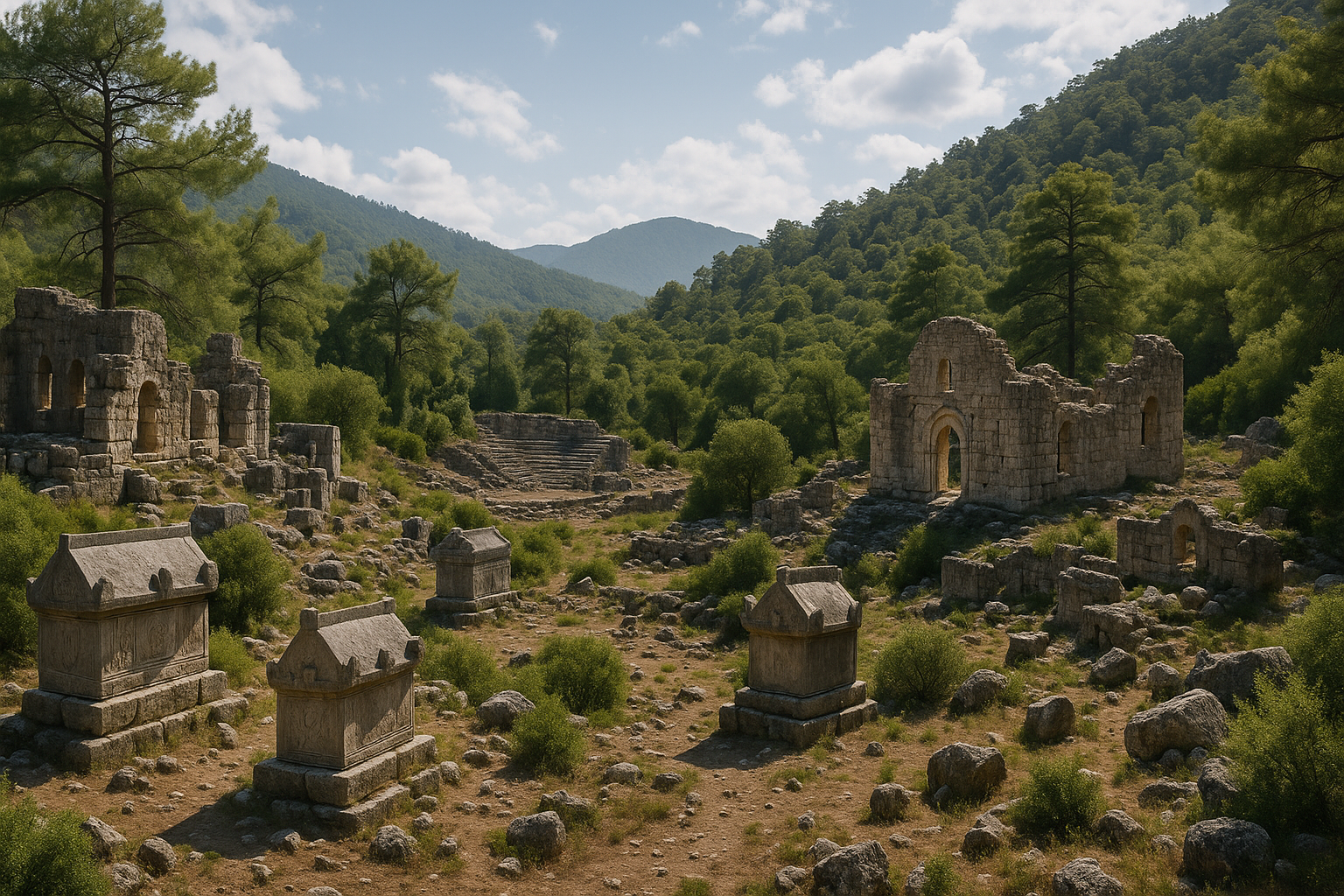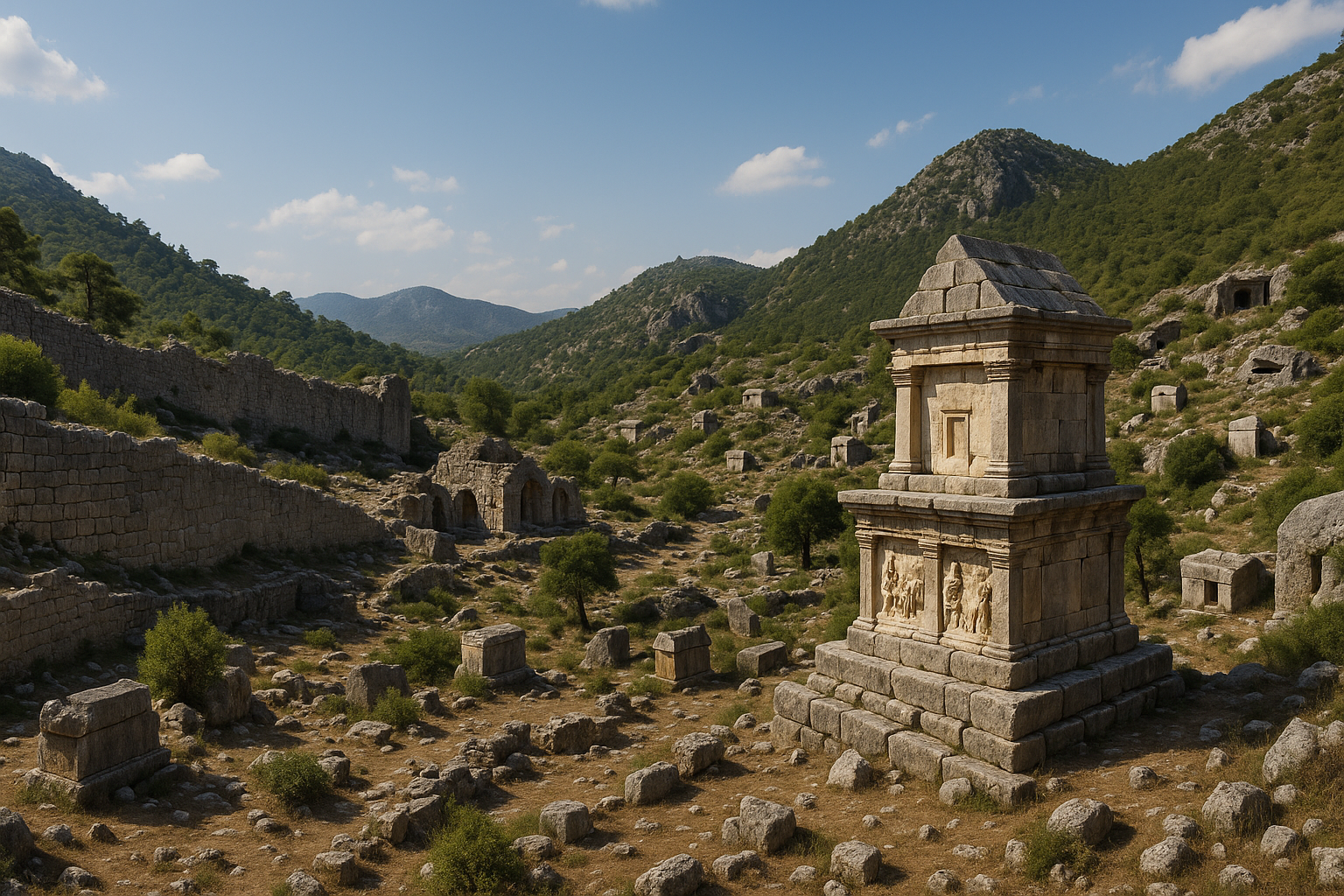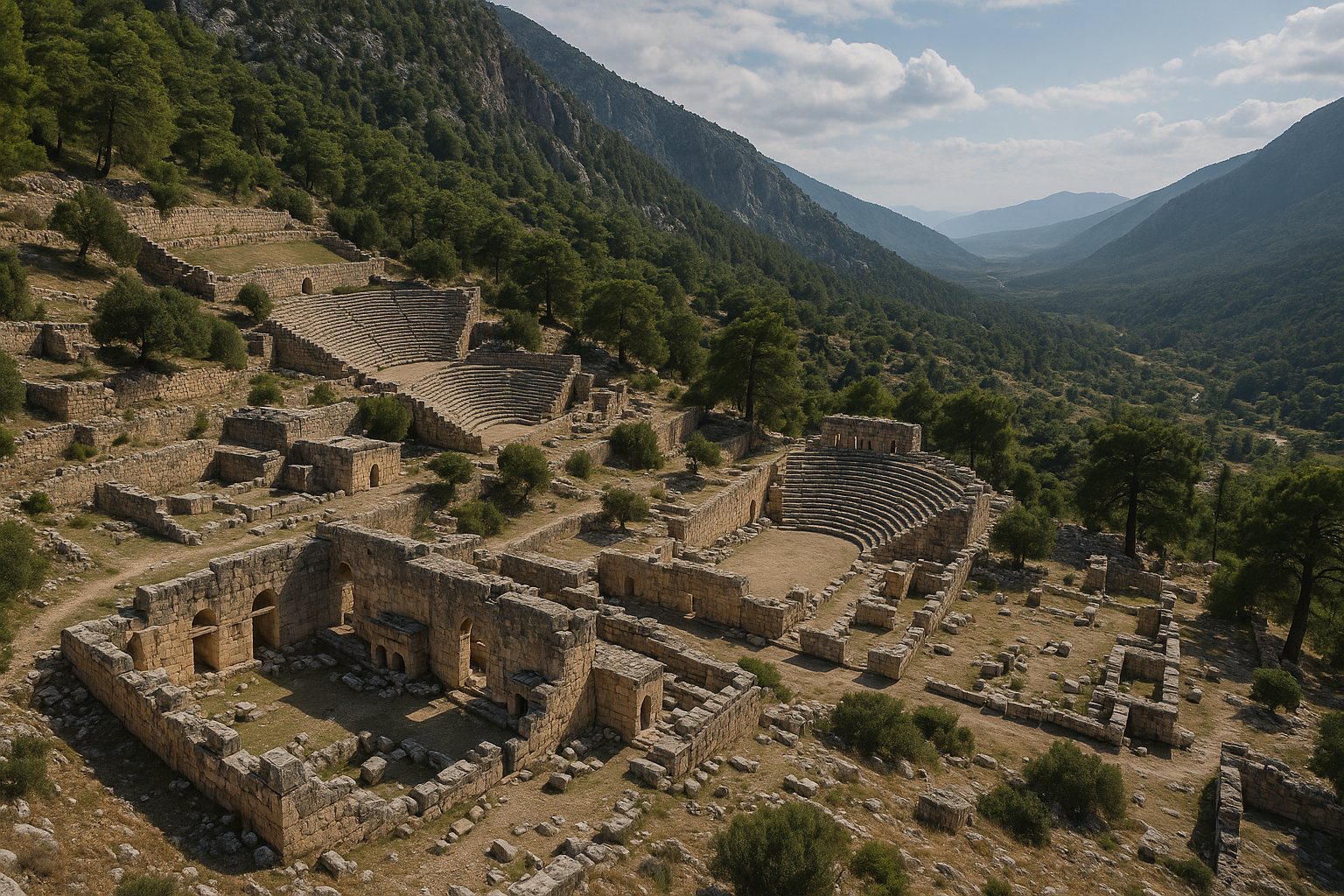
أريكاندا (وتُكتب أيضًا آريكاندا) من أكثر المدن اللوكية روعةً بصريًا في جنوب تركيا، إذ تتدرّج على خمس مصطبات محفورة في الصخر على المنحدرات الغربية الشديدة لـجبال بيداغلاري على ارتفاع يبلغ نحو 1,050 م. يحمل اسمها اللاحقةَ الأناضولية -anda، بمعنى "المكان القريب من الصخرة العالية"، مما يؤكّد وجود استيطان يمتدّ إلى الألفية الثانية قبل الميلاد على الأقل. تصف المصادر الأدبية القديمة مواطني أريكاندا بأنّهم مولعون بالترف والاحتفالات -- سمعة تدعمها برامجها المعمارية غير المعتادة لحجمها المتواضع.
جدول المحتويات
- لماذا تُعدّ أريكاندا مهمة
- الجغرافيا والموقع
- الجدول الزمني التاريخي
- أبرز المعالم الأثرية
- أعمال التنقيب الأثري
- معلومات الزيارة
- الأسئلة الشائعة
- المصادر وقراءات إضافية
لماذا تُعدّ أريكاندا مهمة
-
عمران مدرّجي بديع. قليلة هي المدن القديمة في حوض البحر المتوسط التي تكيّفت بهذا الشكل الدرامي مع التضاريس الجبلية. يجعل التصميم الخماسي المصاطب من أريكاندا كتابًا مفتوحًا في التخطيط العمراني الهلنستي والروماني على المنحدرات الحادة.
-
حالة حفظ استثنائية. بفضل موقعها الجبلي النائي وهجرها المبكّر نسبيًا، تنجو كثير من المنشآت -- ولا سيّما مجمّع الحمّامات الضخم -- إلى ارتفاع يقترب من ارتفاعها الأصلي، مع بقاء الأقواس والأسقف المقوّسة سليمةً.
-
الاستمرارية الثقافية اللوكية. تربط اللاحقة -anda في اسم المدينة، إلى جانب العملات اللوكية من القرن الخامس قبل الميلاد المكتشفة في الموقع، أريكاندا بأقدم مجموعة لغوية أناضولية من العصر البرونزي وبالنظام السياسي لـالرابطة اللوكية.
-
مقابر مزيّنة بغنى. تعرض ثلاث مناطق دفن متميّزة (مقابر المدخل والشرقية والغربية) مقابر محفورة في الصخر، ومقابر على هيئة معابد، ومنشآت مقوّسة برميلية، وتوابيت تمتدّ على قرابة ألف عام من الممارسات الجنائزية.
-
إمكانية استحضار التاريخ الحيّ. خلافًا للمواقع المُرمَّمة ترميمًا مكثّفًا، تكافئ أريكاندا الزائرين الذين يقرؤون الأطلال في سياقها الطبيعي -- إذ لا يزال التفاعل بين الجبل ومصدر المياه والأراضي الزراعية الخلفية وشبكة الطرق مقروءًا على الأرض.
الجغرافيا والموقع
تقع أريكاندا قرب قرية آيكيريجاي الحديثة (المكتوبة أيضًا أريف)، على طريق الماللي--فينيكه في غرب محافظة أنطاليا. يحتلّ الموقع منحدرًا مواجهًا للجنوب يطلّ على وادي باشيايلا، الذي وفّر أراضي خصبة ومصدر مياه دائمًا.
| الميزة | التفاصيل |
|---|---|
| الإحداثيات | 36.49 شمالًا، 30.06 شرقًا |
| الارتفاع | ~1,050 م فوق مستوى البحر |
| عدد المصاطب | 5 مصاطب رئيسية، تنخفض بمقدار 100 م تقريبًا |
| أقرب مدينة حديثة | فينيكه (نحو 30 كم جنوبًا) |
| أقرب مطار | أنطاليا (نحو 150 كم شرقًا) |
| المنطقة | لوقيا القديمة، محافظة أنطاليا الحديثة |
يعني المناخ المتوسطي على هذا الارتفاع صيفًا دافئًا جافًّا وشتاءً باردًا ممطرًا. قد يكسو الثلج المصاطب العليا بين ديسمبر وفبراير، غير أنّ الموقع يبقى في متناول الزوّار طوال العام عبر طريق معبّد.
أتاح الموقع الجبلي دفاعًا طبيعيًا، فيما عظّمت الواجهة الجنوبية أشعة الشمس اللازمة للزراعة. وقد حُوّلت الينابيع الوفيرة التي تغذّي الوادي أدناه إلى المدينة عبر نظام قناة مياه لا تزال بقاياه قابلة للتتبّع.
الجدول الزمني التاريخي
ما قبل العصر الكلاسيكي (قبل القرن الخامس قبل الميلاد)
تُشير اللاحقة الأناضولية -anda في الاسم إشارةً قوية إلى أنّ الموقع استُوطن خلال العصر البرونزي (الألفية الثانية قبل الميلاد)، وإن لم تبقَ أيّ عمارة من هذه الحقبة فوق الأرض. يتمثّل أقدم دليل مادّي في عملات لوكية من القرن الخامس قبل الميلاد، وهي من أقدم العملات المكتشفة في لوقيا.
العصر الكلاسيكي والهلنستي (القرن الخامس -- القرن الأول قبل الميلاد)
بحلول القرن الثالث قبل الميلاد، كانت أريكاندا قد اكتسبت مجموعة كاملة من المعالم المدنية الإغريقية: الأغورا، والبولوتيريون (دار المجلس)، والاستاد، والمعابد. وأصبحت عضوًا في الرابطة اللوكية، النظام السياسي الاتحادي الذي وحّد المدن اللوكية وأُعجب به نظريو السياسة لاحقًا، بمن فيهم واضعو الدستور الأمريكي.
اكتسبت المدينة في هذا العصر سمعةً بـالإسراف والمديونية. يلاحظ كتّاب قدماء أنّ مواطني أريكاندا كانوا مولعين بالترف درجةً استدعت لجوءهم المتكرّر إلى الحكّام طلبًا للإعفاء من الضرائب -- بل إنّهم أيّدوا الملك السلوقي أنطيوخوس الثالث ضدّ روما، جزئيًا لإسقاط ديونهم.
العصر الروماني (القرن الأول قبل الميلاد -- القرن الثالث الميلادي)
في ظلّ الحكم الروماني، حظيت أريكاندا باستثمار كبير في العمارة العامّة. يعود المسرح والأوديون والمجمّع الكبير لـالحمّامات والجمنازيوم في المصطبة السفلى أساسًا إلى القرن الثاني الميلادي، وهو ذروة ازدهار المدينة. كانت الجدران الداخلية للأوديون مبطّنة بـالأورثوستات (ألواح الحجر المنتصبة)، وواجهت الجدران وأرضية الأوركسترا والمقاعد بـالرخام الملوّن.
دمّر زلزال مروّع في منتصف القرن الثالث الميلادي المدينة تدميرًا شديدًا، فأفضى إلى هجر جزئي للمصاطب العليا.
العصر الروماني المتأخّر والبيزنطي (القرن الرابع -- القرن السابع الميلادي)
تعافت أجزاء من المدينة بعد الزلزال. شُيّدت عدة بازيليكات مسيحية مبكّرة، تعكس دور أريكاندا بوصفها أسقفية ضمن المقاطعة الكنسية لمايرا. استمرّ السكن بصورة محدودة حتى القرن السادس، حين انتقل السكان على ما يبدو إلى مستوطنة جديدة جنوب الطريق الحديث، تُعرف في أدبيات التنقيب الأثري بـأريف (أو آروف).
الهجر وإعادة الاكتشاف
بحلول القرن السابع، كانت المصاطب القديمة قد هُجرت إلى حدٍّ بعيد. بقي الموقع مدفونًا تحت الغطاء النباتي حتى انطلقت أعمال التنقيب المنهجية في القرن العشرين.
أبرز المعالم الأثرية
المسرح
يقع في المصطبة الثانية من القمة، وهو محفور في المنحدر الطبيعي ويأمر بمنظر بانورامي رائع للوادي أدناه. يتّبع التصميم الهلنستي المعتاد بـكافيا (منطقة الجلوس) شبه الدائرية المقسومة بـدياذوما (ممرّ أفقي). تحفظ البروسكينيون (مبنى المسرح) بقايا زخارفه المعمارية الأصلية. الطاقة الاستيعابية المقدّرة: 2,000--2,500 متفرّج.
الاستاد
يقع في المصطبة العليا مباشرةً فوق المسرح، وهو واحد من أصغر الاستادات وأحسنها حفظًا في العالم القديم. يأخذ شكل مضمار جري مستقيم يبلغ 106 م طولًا و17 م عرضًا، بمقاعد حجرية مبنية على جانب واحد فقط (جانب المنحدر). هذا التصميم الأحادي الجانب نموذجيّ في الاستادات الإغريقية المبنية على المنحدرات. يجعل تأريخه الهلنستي منه أحد أقدم الاستادات الباقية في لوقيا.
الأوديون (البولوتيريون)
يقوم جنوب المسرح مباشرةً، وهو قاعة عروض ومجلس مسقوفة تعود إلى القرن الثاني الميلادي. كان من أكثر المباني زخرفةً في المدينة: بُطّنت جدرانه الداخلية بـالأورثوستات، وكُسيت أرضية الأوركسترا والجدران والمقاعد بـالرخام متعدّد الألوان. استُرجعت خلال التنقيب بقايا من هذا المخطّط الزخرفي.
مجمّع الحمّامات والجمنازيوم
يقع في المصطبة السفلى (الخامسة)، وهو أضخم منشأة وأكثرها إثارةً في أريكاندا -- وأحد أكبر مجمّعات الحمّامات في لوقيا كلّها. يتميّز المبنى بحفظ استثنائي، إذ تمنح سلسلة الأقواس القائمة إحساسًا قويًا بحجم المنشأة الأصلي. يشمل المجمّع التسلسل الروماني المعتاد للاستحمام: الفريجيداريوم (الغرفة الباردة)، والتيبيداريوم (الغرفة الدافئة)، والكالداريوم (الغرفة الساخنة)، متّصلةً بـالجمنازيوم المجاور حيث كان التدريب الرياضي يجري.
يجعل بقاء الأقواس إلى ارتفاعها الكامل تقريبًا هذه الحمّامات من أكثر المنشآت القديمة جاذبيةً للتصوير في تركيا.
الأغورا
يحتلّ المركز التجاري والمدني لأريكاندا مصطبةً مُسوَّاةً بين منطقة المسرح والحمّامات. كانت أروقة أعمدية تحيط بجانبَين على الأقل. وإن كانت الأغورا أقلّ حفظًا من مجمّع الحمّامات، فإنّ مسقطها وقواعد أعمدتها مرئية بجلاء.
المعابد
جرى تحديد عدة أسس معابد على مصاطب مختلفة، من بينها معبد صغير قرب الأغورا ربّما كان مكرّسًا لآلهة لوكية أو أولمبية. لا تزال التعريفات الدقيقة قيد الدراسة.
المقابر
تمتلك أريكاندا ثلاث مناطق دفن متميّزة، تعكس كلٌّ منها حقبًا وطبقات اجتماعية مختلفة:
- مقبرة المدخل: تقع على طول الطريق القديم المؤدّي إلى المدينة. تضمّ سلسلة من النُّصب الجنائزية المزيّنة بغنى التي كانت تُعلن ثروة المدينة للوافدين.
- المقبرة الشرقية: تحوي مقابر ضخمة مقوّسة برميلية، ومقابر على هيئة معابد، وتوابيت، من الفترتَين الرومانية ومتأخّرة الرومانية في معظمها.
- المقبرة الغربية: تضمّ مقابر محفورة في الصخر ومقابر مقوّسة برميلية إضافية، بعضها يُظهر تفاصيل معمارية ذات طابع لوكي.
القناة المائية ونظام المياه
يمكن تتبّع بقايا قناة المياه التي كانت تمدّ المدينة من الينابيع العلوية على امتداد المنحدر الجبلي. وفّر النظام المائي مياهه لمجمّع الحمّامات والنافورات العامّة والمناطق السكنية -- إنجاز بنية تحتية بالغ الأهمية نظرًا للتصميم المدرّجي الحادّ للمدينة.
أعمال التنقيب الأثري
بدأت الحفريات المنهجية في أريكاندا عام 1971 تحت إشراف الأستاذ الدكتور جيفدت بايبورتلوغلو من جامعة أنقرة. كان هذا المشروع الطويل الأمد أحد أكثر حملات التنقيب استدامةً في لوقيا.
تشمل أبرز إنجازات برنامج التنقيب:
- إزالة الردم والترميم الجزئي للمسرح والأوديون والاستاد ومجمّع الحمّامات.
- اكتشاف عملات لوكية من القرن الخامس قبل الميلاد، من أقدم العملات المسكوكة في لوقيا، مما يُرجع التاريخ المؤكّد للنشاط العمراني في الموقع إلى حقبة أسبق.
- توثيق نظام المقابر الثلاثية، الكاشف عن ما يقارب ألف عام من الممارسة الجنائزية المتواصلة.
- استرجاع الزخرفة الرخامية متعدّدة الألوان من داخل الأوديون، بما يُثبت ثروة المدينة إبّان الحقبة الإمبراطورية الرومانية.
- تحديد البازيليكات المسيحية المبكّرة التي ترصد الانتقال من العبادة الوثنية إلى المسيحية.
تستمرّ الحفريات بوصفها مشروعًا بحثيًا نشطًا. تُنشر الاكتشافات الجديدة دوريًا في مجلات أثرية تركية ودولية.
معلومات الزيارة
كيفية الوصول
- بالسيارة: من أنطاليا، سِر غربًا على الطريق السريع D-400 باتجاه كيمير وفينيكه (نحو 130 كم)، ثم اتجه شمالًا على طريق الماللي. الموقع مشار إليه بلافتات بالقرب من قرية آيكيريجاي، على بُعد نحو 30 كم شمال فينيكه.
- بوسائل النقل العام: تسير حافلات صغيرة بين فينيكه والماللي؛ أخبر السائق بالتوقّف عند مفترق آريكاندا. من الطريق يتطلّب الأمر مشيًا قصيرًا نحو الأعلى للوصول إلى المدخل.
على الموقع
| التفاصيل العملية | المعلومات |
|---|---|
| رسوم الدخول | تحقّق من صلاحية بطاقة مُزه كارت / تصريح المتحف الحالي |
| ساعات العمل | عادةً 08:30--19:00 صيفًا، 08:30--17:30 شتاءً |
| المدة المقدّرة للزيارة | 1.5--3 ساعات لزيارة وافية |
| التضاريس | مسالك حجرية وعرة شديدة الانحدار بين المصاطب؛ الأحذية المتينة ضرورية |
| الظلال | محدودة؛ أحضر قبّعة ومياه في الصيف |
| المرافق | موقف سيارات صغير؛ لا مقهى في الموقع؛ أقرب خدمات في فينيكه |
المسار الموصى به
- ابدأ بالمصطبة العليا (الاستاد) للتوجّه والحصول على أفضل نظرة شاملة للموقع.
- انزل إلى المسرح واستمتع بالمنظر البانورامي للوادي من الكافيا.
- زُر الأوديون وتخيّل داخله المكسوّ بالرخام.
- اعبر منطقة الأغورا ملاحظًا قواعد الأعمدة والفضاءات التجارية.
- اختتم بمجمّع الحمّامات والجمنازيوم في المصطبة السفلى -- أبرز منشأة قائمة.
- استكشف المقابر في طريق العودة، ولا سيّما مقبرة المدخل على طول الطريق القديم.
أفضل وقت للزيارة
- الربيع (أبريل--مايو): زهور برية، درجات حرارة مريحة، منظر طبيعي أخضر.
- الخريف (سبتمبر--أكتوبر): دافئ دون حرارة شديدة، ضوء رائع للتصوير.
- الصيف: حرارة منتصف النهار شديدة؛ زر الموقع صباحًا باكرًا أو عصرًا.
- الشتاء: ثلج خفيف محتمل؛ زوّار قليلون جدًا؛ أجواء رائعة مع التحقّق من حالة الطرق.
زيارات مجمّعة
يمكن الجمع بين أريكاندا وغيرها من المواقع القريبة لجدول يوم كامل من آثار لوقيا:
- ليمورا (نحو 25 كم جنوبًا): مدينة لوكية كبرى أخرى بهيرون رائع.
- ميرا وديمري (نحو 55 كم جنوبًا): مقابر شهيرة محفورة في الصخر ومسرح روماني.
- كنيسة الماللي كارانليك (شمالًا باتجاه الماللي): كنيسة بيزنطية بارزة بجداريات.
الأسئلة الشائعة
ما معنى اسم أريكاندا؟
يحمل الاسم اللاحقة الأناضولية -anda بمعنى "المكان القريب من"، مقترنةً بجذر يعني "الصخرة العالية". المعنى الكامل هو تقريبًا "المكان القريب من الصخرة العالية"، وصفٌ ملائم لهذا الموقع الجبلي.
لماذا اشتُهر مواطنو أريكاندا في العصور القديمة؟
تصفهم المصادر القديمة بأنّهم مولعون بالترف وحياة الاحتفالات. اشتُهروا بتراكم الديون لتمويل أسلوب حياتهم، وأفادت الروايات بأنّهم أيّدوا أنطيوخوس الثالث ضدّ روما جزئيًا لضمان إسقاط الديون.
ما مستوى الحفظ الذي يتمتّع به الموقع؟
جيّد جدًا وفق المعايير اللوكية. يحتفظ مجمّع الحمّامات والجمنازيوم بأقواس قائمة تقترب من ارتفاعها الأصلي، وتبدو الاستاد والمسرح والأوديون بوضوح تامّ. أسهم الموقع الجبلي النائي في تثبيط نهب الأحجار على مرّ القرون.
هل الموقع في متناول ذوي الإعاقة الحركية؟
تجعل المسالك الحادّة بين مصطبة وأخرى الوصول الكامل تحدّيًا لذوي القيود الحركية. المصاطب السفلى (مجمّع الحمّامات) هي الأكثر يُسرًا، غير أنّ الوصول إلى الاستاد العليا يستلزم تسلّقًا كبيرًا على أسطح وعرة.
منذ متى يجري التنقيب في الموقع؟
منذ 1971، مما يعني مرور أكثر من 50 عامًا من البحث الأثري المتواصل ضمن برنامج جامعة أنقرة الذي أطلقه الأستاذ الدكتور جيفدت بايبورتلوغلو.
هل ثمة متاحف تعرض مكتشفات أريكاندا؟
تُودَع مكتشفات الحفريات أساسًا في متحف أنطاليا، أحد أغنى المتاحف الأثرية في تركيا. وقد تتوفّر إشارات إلى بعض المكتشفات الصغيرة والعملات في مجموعات جامعة أنقرة الأثرية.
الأدلة النقدية من أريكاندا
يمتدّ تاريخ سكّ العملة في أريكاندا من القرن الخامس قبل الميلاد حتى العصر الإمبراطوري الروماني، مما يوفّر أحد أطول السجلات النقدية لأيّ مدينة لوكية. تُعدّ أقدم عملاتها من أقدم العملات المسكوكة في لوقيا.
| الحقبة | النوع | معيار الوزن | الوجه | الظهر | الأهمية |
|---|---|---|---|---|---|
| القرن الخامس قبل الميلاد | ستاتير فضي | المعيار اللوكي (~9.5 غ) | الجزء الأمامي من خنزير بري (نموذجي في لوقيا المبكّرة) | مربّع غائر | من أقدم العملات المكتشفة في لوقيا |
| القرن الخامس قبل الميلاد | كسر فضي | ثلث أو سدس ستاتير | خنزير بري أو نصف حيوان | غائر | فئات مكسورة للتجارة اليومية |
| القرن الثاني قبل الميلاد | درهم الرابطة اللوكية | معيار مخفّض | رأس أبوللو | قيثارة أو قوس أو جعبة مع نقش LYKION | سكّ نقود جماعي للرابطة |
| القرن الثاني الميلادي | برونزية إقليمية | المعيار الروماني | صورة إمبراطور (كهادريان) | آلهة محلية أو تجسيد | ذروة السكّ الروماني الإقليمي |
| غورديانوس الثالث (238--244) | برونزية | المعيار الروماني | نصف تمثال بتاج إشعاعي | كاكاسبوس بزيّ عسكري وخوذة ثراقية | نوع ظهر فريد خاصّ بأريكاندا |
يستحقّ ظهور كاكاسبوس على عملات غورديانوس الثالث اهتمامًا خاصًّا. كان كاكاسبوس إلهًا لوكيًا محليًا لفارس يُصوَّر بزيّ عسكري وخوذة ثراقية مميّزة -- إله مجهول في الوجدان الإغريقي-الروماني الأشمل. تؤكّد هذه الأدلة النقدية استمرار التقاليد الدينية اللوكية الأصيلة حتى عمق القرن الثالث الميلادي.
من مستوى الدمار الناجم عن حريق مرتبط بزلزال منتصف القرن الثالث، استخرج المنقّبون أكثر من 2,000 عملة رومانية متأخّرة، جرى تحديد 1,286 منها. يوفّر هذا الكنز النقدي تأريخًا دقيقًا لأضرار الزلزال ويوثّق تنوّع العملة المتداولة في مدينة جبلية لوكية إبّان فترة الأزمات.
قياسات معمارية: بيانات مسح كمّية
يجمع الجدول التالي القياسات من برنامج تنقيب الأستاذ بايبورتلوغلو وبيانات المسح المنشورة.
| المنشأة | البُعد | القياس |
|---|---|---|
| الاستاد | الطول × العرض | 106 م × 17 م |
| الاستاد | المقاعد | جانب واحد فقط (منحدر التلّة) |
| الاستاد | الحقبة | هلنستي |
| المسرح | الطاقة الاستيعابية المقدّرة | 2,000--2,500 متفرّج |
| المسرح | تقسيم الكافيا | الدياذوما تقسم القسمَين العلوي والسفلي |
| المسرح | المصطبة | المصطبة الثانية من القمة |
| الأوديون | الزخرفة الداخلية | أورثوستات، رخام متعدّد الألوان (جدران، أوركسترا، مقاعد) |
| الأوديون | أبرز اكتشاف | إفريز بصورة هادريان فوق المدخل |
| الحمّامات والجمنازيوم | الموقع | المصطبة السفلى (الخامسة) |
| الحمّامات والجمنازيوم | الحفظ | أقواس قائمة بارتفاع يقترب من الأصلي |
| الحمّامات والجمنازيوم | تسلسل الغرف | فريجيداريوم، تيبيداريوم، كالداريوم + جمنازيوم |
| إجمالي منشآت الحمّامات | العدد في الموقع | 7 منشآت حمّامات متميّزة |
| نظام المصاطب | إجمالي المصاطب | 5، تنخفض بمقدار ~100 م |
| ارتفاع الموقع | فوق مستوى البحر | ~1,050 م |
يُعدّ تركّز سبع منشآت حمّامات متميّزة في مدينة جبلية صغيرة نسبيًا أمرًا استثنائيًا. هذه الكثافة من مرافق الاستحمام -- حمّام واحد لكلّ 700--1,400 ساكن تقريبًا في ذروة المدينة -- يتجاوز كثيرًا المعدّل الطبيعي للمدن اللوكية، ويقدّم أقوى تأكيد أثري للتقليد الأدبي القديم الذي يصف مواطني أريكاندا بالولع براحة الجسد والترف.
تسلسل التنقيب والاكتشافات الرئيسية
| السنة/السنوات | المدير | أبرز الإنجاز |
|---|---|---|
| 1971 | أ.د. جيفدت بايبورتلوغلو (جامعة أنقرة) | انطلاق برنامج التنقيب |
| 1970--1980 | بايبورتلوغلو | إزالة الردم والترميم الجزئي للمسرح والأوديون والاستاد |
| 1980--1990 | بايبورتلوغلو | اكتشاف عملات لوكية من القرن الخامس قبل الميلاد؛ توثيق المقابر الثلاثية |
| 1990--2000 | بايبورتلوغلو | استرجاع الرخام متعدّد الألوان من الأوديون؛ تحديد إفريز هادريان |
| 2000 | بايبورتلوغلو | تحديد البازيليكات المسيحية المبكّرة؛ صيانة مجمّع الحمّامات |
| 2000 | باحثون مختلفون | نشر زجاجات منشورية بنقوش إغريقية (مؤتمر AIHV) |
| 2010--الحاضر | استمرار على يد فريق تركي | اكتشافات جديدة في المقابر والمناطق السكنية؛ دراسات الفخّار |
| حديثًا | بحث دكتورالي | دراسة خزفيات حيّ العصور القديمة المتأخّرة (أطروحة دكتوراه غير منشورة) |
أكثر من 50 عامًا من التنقيب المتواصل تجعل أريكاندا أحد أطول المشاريع الأثرية مدّةً في لوقيا. تميّزت الحفرية بنهجها المنهجي المتّبع من القمة إلى الأسفل مصطبةً مصطبةً، مما أتاح فهمًا طبقيًا واضحًا لتطوّر المدينة.
إفريز هادريان: الصلات الإمبراطورية بالتفصيل
الإفريز الحامل لصورة الإمبراطور هادريان (ح. 117--138 م)، المكتشَف فوق مدخل الأوديون، محفوظ الآن في متحف أنطاليا الأثري. يحمل اكتشافه دلالة مهمّة لأسباب عدة:
- جولات هادريان الشرقية: اشتُهر هادريان بجولاته المستفيضة في الأقاليم الشرقية إبّان حكمه. تنافست المدن في آسيا الصغرى على الحظوة الإمبراطورية بتشييد المعابد والتماثيل والنقوش التكريمية. يُشير إفريز أريكاندا إلى أنّ المدينة حظيت برعاية إمبراطورية أو سعت إليها.
- الجودة الفنية: تدلّ جودة النحت على توافر نحّاتين مهرة، يُرجَّح أنّهم استُقدموا من أحد المراكز الإقليمية الكبرى كبيرغي أو سيدي أو أنطاليا (أتّاليا). يُثبت هذا أنّ المدن الجبلية النائية كانت قادرة على تكليف فنّانين بأعمال إمبراطورية رفيعة.
- برنامج زخرفة الأوديون: كان الإفريز جزءًا من مخطّط زخرفي شامل يضمّ كساء الرخام متعدّد الألوان للجدران وأرضية الأوركسترا والمقاعد. كان إجمالي تكلفة مثل هذا البرنامج ضخمًا، مما يمثّل دليلًا إضافيًا على ازدهار أريكاندا.
المقابر الثلاث: تحليل مقارن
| المقبرة | الموقع | أنواع القبور السائدة | الحقبة | الوظيفة الاجتماعية |
|---|---|---|---|---|
| المدخل | على طول طريق الاقتراب القديم | نُصب جنائزية مزيّنة بغنى | رومانية | إظهار المكانة للوافدين |
| الشرقية | شرق التجمّع الرئيسي | مقابر مقوّسة برميلية، مقابر هيكلية معبدية، توابيت | رومانية--رومانية متأخّرة | مدافن عائلات النخبة |
| الغربية | غرب التجمّع الرئيسي | مقابر محفورة في الصخر، مقابر مقوّسة برميلية بتفاصيل لوكية | كلاسيكية--رومانية | تقليد الدفن الأقدم، الاستمرارية اللوكية |
يرصد التطوّر من المقابر المحفورة في الصخر (المقبرة الغربية، التقليد الأقدم) إلى المقابر الهيكلية المعبدية والمنشآت المقوّسة (المقبرة الشرقية، الحقبة الرومانية) إلى النُّصب الطرفية الزخرفية (مقبرة المدخل، الإظهار الإمبراطوري) تطوّرًا امتدّ ألف عام في الأزياء الجنائزية بموقع واحد. يُعدّ هذا التسلسل من أكثر التسلسلات اكتمالًا في لوقيا.
المصادر وقراءات إضافية
- ويكيبيديا -- Arycanda
- المتاحف التركية -- Antalya Arykanda Archaeological Site
- بيتر سومر ترافيلز -- Arykanda, an ancient city in Lycia
- أرشيف المسرح القديم -- Arycanda Theatre
- مشروع معالم لوقيا -- Arykanda
- بايبورتلوغلو، ج. -- تقارير الحفريات المنشورة في كازي سونوتشلاري تبلانتيسي (تقارير الحفريات الأثرية السنوية، تركيا)
- برايس، ت. -- The Lycians in Literary and Epigraphic Sources (كوبنهاغن، 1986)
- بين، ج. إ. -- Lycian Turkey: An Archaeological Guide (لندن، 1978)
صلة الرابطة اللوكية
تضع عضوية أريكاندا في الرابطة اللوكية المدينةَ في سياق أحد أكثر التجارب السياسية رسوخًا في العالم القديم. كانت الرابطة جمهورية اتحادية توحّد أكثر من 20 مدينة لوكية تحت جمعية مشتركة وخزينة مشتركة ومسؤولين منتخَبين -- نظام أُعجب به المؤرّخ الإغريقي سترابون وأثّر لاحقًا في مونتسكيو وآباء تأسيس الولايات المتحدة.
ضمن هذا النظام، أُسنِدت لكلّ مدينة أوزان تصويتية وفق حجمها وأهمّيتها. من المرجّح أنّ أريكاندا بوصفها مدينة متوسطة الحجم كانت تملك صوتًا واحدًا في الجمعية الاتحادية (الكوينون). كانت قرارات الرابطة في شؤون الحرب والسلام والضرائب والقضاء ملزمةً لجميع المدن الأعضاء، فيما ظلّت الحوكمة المحلية في يد مجلس كل مدينة.
سكّت الرابطة عملتها الخاصّة، وتُثبت العملات التي سكّتها أريكاندا محليًا في القرن الخامس قبل الميلاد -- وهي من أقدم ما اكتُشف في لوقيا -- مشاركةَ المدينة الفاعلة في هذه الشبكة الاقتصادية.
أعطى هذا الهيكل الاتحادي مواطني أريكاندا هويّةً مزدوجة كـمواطنين محليّين وأعضاء في مجتمع سياسي أشمل -- هويّة شكّلت التطوّر العمراني وأنماط التجارة والتبادل الثقافي طوال الحقبة الهلنستية.
البيئة والمشهد القديم
لم تكن البيئة الجبلية المحيطة بأريكاندا مجرّد خلفية -- بل كانت جزءًا لا يتجزّأ من اقتصاد المدينة وهويّتها:
- غابات الأرز والصنوبر على المنحدرات العليا وفّرت خشبًا للبناء والوقود.
- الزراعة المدرّجة على المنحدرات السفلى دعمت بساتين الزيتون والكروم وزراعة الحبوب.
- الينابيع والجداول الموسمية من سلسلة بيداغلاري أمدّت بمياه عذبة حُوّلت عبر نظام القناة.
- أراضي الرعي فوق خطّ الغطاء الحرجي دعمت النشاط الرعوي الذي كمّل الاقتصاد الزراعي.
- الأعشاب البرية والنباتات العطرية -- بما فيها الزعتر والأوريغانو والمريمية -- نمت بوفرة على المنحدرات الكلسية، كما هو الحال حتى اليوم.
تعظّم التوجّه الجنوبي للمصاطب التعرّض لأشعة الشمس اللازمة للمحاصيل، فيما حجب الجبل خلفها الرياح الشمالية الباردة -- اختيار مقصود من قِبَل مؤسّسي المدينة يُثبت فهمًا راقيًا لـمزايا المناخ الدقيق.
لا يزال بمقدور الزوّار اليوم وهم يجوبون الأطلال مشاهدة هذا السياق البيئي: الأدغال العطرة، وأصوات الينابيع العليا، والتفاعل الدرامي بين الصخر والنبات والحجر القديم.
اقتصاد أريكاندا
على الرغم من موقعها الجبلي النائي، كانت أريكاندا مدينة مزدهرة نهلت ثروتها من مصادر متعدّدة:
- الزراعة: أنتجت المصاطب المرويّة وأرضية الوادي النبيذ وزيت الزيتون والحبوب -- المواد الأساسية في الحمية المتوسطية القديمة وسلع التجارة الرئيسية.
- تجارة الخشب: وفّرت الغابات الجبلية خشبًا عالي الجودة في طلب دائم لبناء السفن في الموانئ الساحلية كليمورا وميرا.
- الترحال الرعوي: أنتج التنقّل الموسمي للماشية بين المراعي الشتوية في السهول والمراعي الصيفية في الجبال الصوفَ والألبانَ والجلودَ.
- الإنتاج الحرفي: يُشير مجمّع الحمّامات والجمنازيوم إلى سكّان مشاركين في الأنشطة الثقافية التي تتطلّب دعمًا حرفيًا -- نحّاتون ومعالجو رخام وفنّانو زخرفة.
- رسوم الطرق والتجارة: كانت أريكاندا تقع على الطريق الجبلي الرابط بين مدن لوقيا الساحلية والهضبة الداخلية حول الماللي، مما منحها السيطرة على ممرّ عبور محوري.
كانت السمعة القديمة بـالترف وحياة الاحتفالات إذن ليست تباهيًا فارغًا -- بل عكست فائضًا اقتصاديًا حقيقيًا اختار المواطنون توظيفه في الفرجة العامّة وثقافة الاستحمام والإظهار المعماري عوضًا عن التحصين العسكري.
فهم العمارة الجنائزية اللوكية
تقدّم المقابر الثلاث في أريكاندا مدخلًا ممتازًا إلى التقليد الغني لـالعمارة الجنائزية اللوكية، الأكثر تميّزًا في العالم القديم:
المقابر المحفورة في الصخر
منحوتة مباشرةً في واجهات الجروف، تحاكي هذه المقابر مظهر البيوت الخشبية -- تقليد لوكي فريد يُعتقد أنّه يستنسخ في الحجر المنشآت الخشبية التي كان الموتى يقيمون فيها. تُترجم عناصر كنهايات الكمرات المنحوتة وأطر الأبواب والأسطح المثلّثة العمارةَ السكنية إلى حجر أبدي.
المقابر الهيكلية المعبدية
تجمع هذه المنشآت المتفنّنة واجهةً تشبه المعبد بحجرة دفن خلفها، عاكسةً مكانة المتوفّى الرفيعة. غالبًا ما تشمل التفاصيل المعمارية أعمدةً أيونيةً أو كورنثية، وحاجيات، ونقوشًا بارزة.
المقابر المقوّسة برميلية
شائعة في الحقبة الرومانية، وتتميّز هذه المقابر بـقبّة نصف دائرية فوق حجرة دفن مستطيلة. تُشيَّد عادةً من كتل حجرية منحوتة وقد تحمل زخرفةً نافرة خارجية.
التوابيت
توابيت حجرية مستقلّة، تُرفع في أحيان كثيرة على قواعد وتتميّز بـأغطية مسنّنة تستحضر شكل القوس اللوكي "القوطي" المميّز. تحمل بعض توابيت أريكاندا نقوشًا يونانية تُعرّف بالمتوفّى وتهدّد بفرض غرامات على منتهكي المقابر.
يرصد التطوّر من المقابر المحفورة في الصخر إلى المقابر المبنيّة عبر مقابر أريكاندا الثلاث تحوّلَ الأزياء الجنائزية من اللوكية الكلاسيكية عبر الهلنستية والرومانية -- تسلسل زمني ممتدّ ألف عام مرئي في موقع واحد.
التجارب الموسمية والجوّية
تقدّم الفصول المختلفة تجارب مختلفة جوهريًا في أريكاندا:
الربيع (أبريل--مايو): تشتعل المنحدرات الجبلية بالزهور البرية -- خشخاش وسحلبيات وأزهار بنفسجية بين الأطلال. قد لا تزال قمم بيداغلاري الأعلى مكسوّةً بالثلوج، خالقةً تباينًا ساحرًا مع المصاطب الخضراء أدناه. أحيانًا تملأ ضباب الصباح الوادي فلا يبقى مرئيًا إلا المصاطب العليا فوق السحاب.
الصيف (يونيو--أغسطس): يجعل الحرّ الشديد في منتصف النهار المصاطب السفلى غير مريحة، لكنّ الزيارات الصباحية المبكّرة (قبل 09:00) توفّر هواءً لطيفًا وضوءًا ذهبيًا وعزلةً تامّة. يُبرز المشهد الجافّ العمارة الحجرية، ويُتيح السماء الصافية رؤية ممتازة نحو الساحل.
الخريف (سبتمبر--أكتوبر): أيام دافئة وأمسيات باردة وضوء ذهبي ناعم يجعل هذا الفصل مثاليًا للمصوّر. يكشف النبات المتقلّص تفاصيل معمارية كان يخفيها نموّ الصيف.
الشتاء (ديسمبر--فبراير): يحوّل الثلج الخفيف المتقطّع الموقعَ إلى مشهد نادر -- حجر قديم على خلفية منحدر أبيض. تنخفض أعداد الزوّار إلى شبه صفر، مما يهب تجربة شخصية عميقة. ينبغي التحقّق من سلوك الطريق قبل الانطلاق.
مسرد المصطلحات الرئيسية
| المصطلح | التعريف |
|---|---|
| الكافيا | منطقة الجلوس شبه الدائرية في المسرح الإغريقي/الروماني |
| الدياذوما | ممرّ أفقي يفصل قسمَي الجلوس العلوي والسفلي |
| البروسكينيون | مبنى المسرح |
| الفريجيداريوم | غرفة الماء البارد في الحمّام الروماني |
| التيبيداريوم | الغرفة الدافئة في الحمّام الروماني |
| الكالداريوم | الغرفة الساخنة في الحمّام الروماني |
| الأوديون | مسرح صغير مسقوف عادةً للعروض الموسيقية واجتماعات المجلس |
| البولوتيريون | دار المجلس حيث كان يجتمع الهيئة التشريعية للمدينة |
| الأغورا | الفضاء العامّ والتجاري المركزي في المدينة الإغريقية |
| الجمنازيوم | مجمّع للتدريب الرياضي والتعليم والتجمّع الاجتماعي |
| النكروبوليس | مقبرة؛ حرفيًا "مدينة الموتى" |
| الأورثوستات | لوح حجري منتصب يُستخدم ديكورًا للجدران |
| الرابطة اللوكية | اتحاد سياسي فيدرالي للمدن اللوكية (ح. 168 قبل الميلاد -- 43 م) |
إفريز هادريان والصلات الإمبراطورية
خلال التنقيب في الأوديون، اكتُشف إفريز رائع يحمل صورة الإمبراطور هادريان. يُبرز هذا الاكتشاف عمق ارتباط أريكاندا بالنظام الإمبراطوري الروماني رغم موقعها الجبلي النائي. اشتُهر هادريان (ح. 117--138 م) بأسفاره المستفيضة في أرجاء الإمبراطورية الرومانية، وتنافست المدن في شرق البحر المتوسط على تكريمه بالمعابد والتماثيل والتكريسات المعمارية.
يُشير إفريز هادريان في أوديون أريكاندا إلى أنّ المدينة حظيت برعاية إمبراطورية أو أرادت إعلان ولائها لروما في ذروة ازدهار الحقبة الأنطونية. تدلّ جودة النحت على توافر نحّاتين مهرة، يُرجَّح استقدامهم من أحد المراكز الإقليمية الكبرى كبيرغي أو سيدي أو أنطاليا.
سبعة مجمّعات حمّامات
بينما يبرز مجمّع الحمّامات والجمنازيوم الرئيسي في المصطبة السفلى، حدّد المسح الأثري بقايا سبع منشآت حمّامات متميّزة في أرجاء الموقع. يعزّز هذا التركّز الاستثنائي لمرافق الاستحمام في مدينة صغيرة نسبيًا التوصيف الأدبي القديم لمواطني أريكاندا بولعهم بالترف والراحة. ربّما خدمت الحمّامات المتعدّدة فئات اجتماعية أو أحياءً أو وظائف مختلفة (الاستحمام الرياضي مقابل الاستحمام العلاجي).
ملخّص الجدول الزمني
| التاريخ | الحدث |
|---|---|
| الألفية الثانية قبل الميلاد | استيطان برونزي محتمل (استنادًا إلى لاحقة -anda) |
| القرن الخامس قبل الميلاد | أقدم العملات اللوكية المسكوكة في الموقع |
| القرن الثالث قبل الميلاد | اكتمال مجموعة المباني المدنية الإغريقية |
| القرن الثاني قبل الميلاد | انضمام أريكاندا إلى الرابطة اللوكية |
| القرن الثاني الميلادي | ذروة الازدهار؛ بناء المسرح والأوديون ومجمّع الحمّامات والجمنازيوم |
| منتصف القرن الثالث الميلادي | زلزال مدمّر؛ هجر جزئي للمصاطب العليا |
| القرن الرابع--السادس الميلادي | بناء بازيليكات مسيحية مبكّرة؛ مكانة الأسقفية |
| القرن السابع | هجر المصاطب القديمة إلى حدٍّ بعيد |
| 1971 | انطلاق الحفريات المنهجية تحت إشراف أ.د. جيفدت بايبورتلوغلو |
| مستمر | استمرار الحفريات بوصفها مشروعًا نشطًا لجامعة أنقرة |