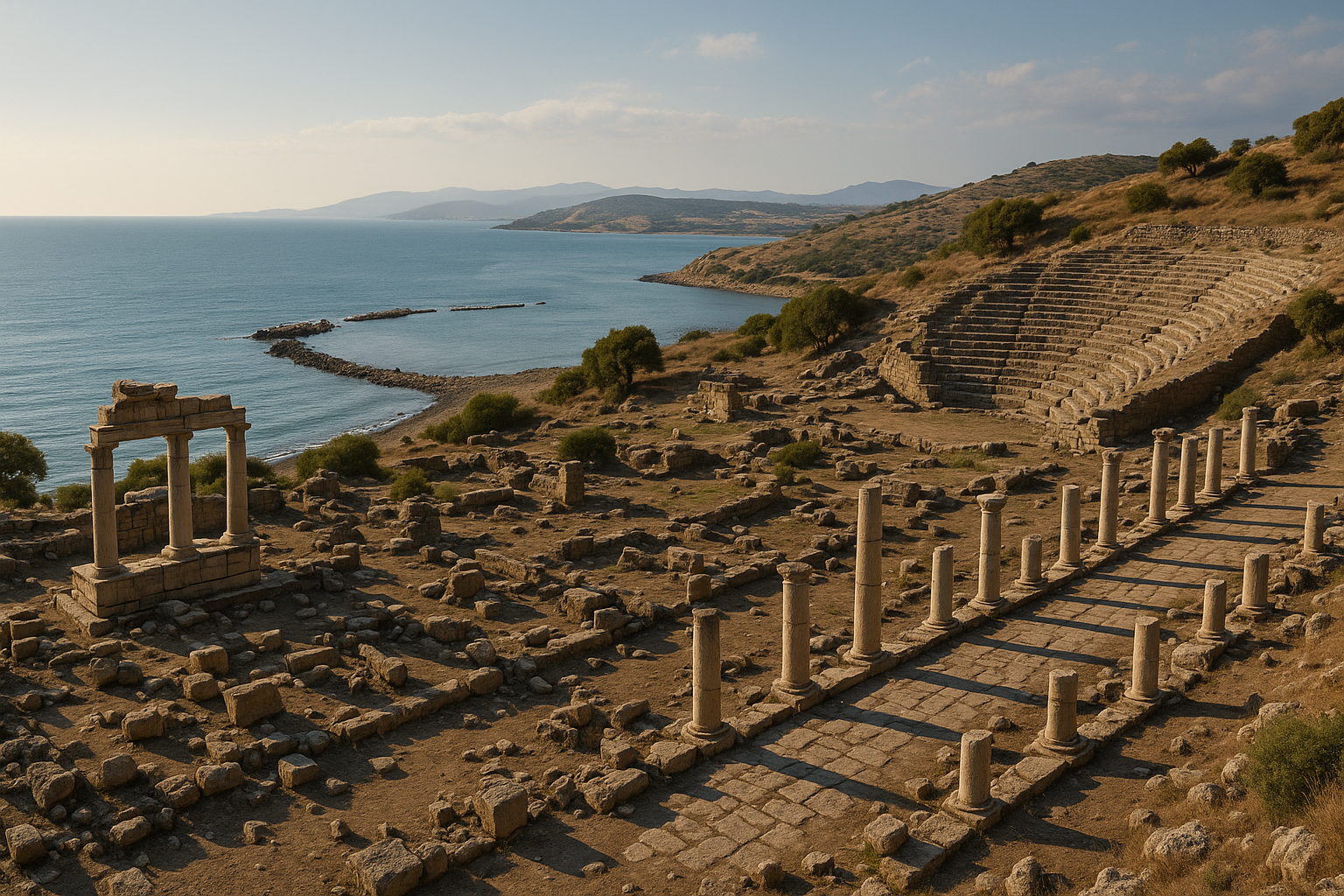
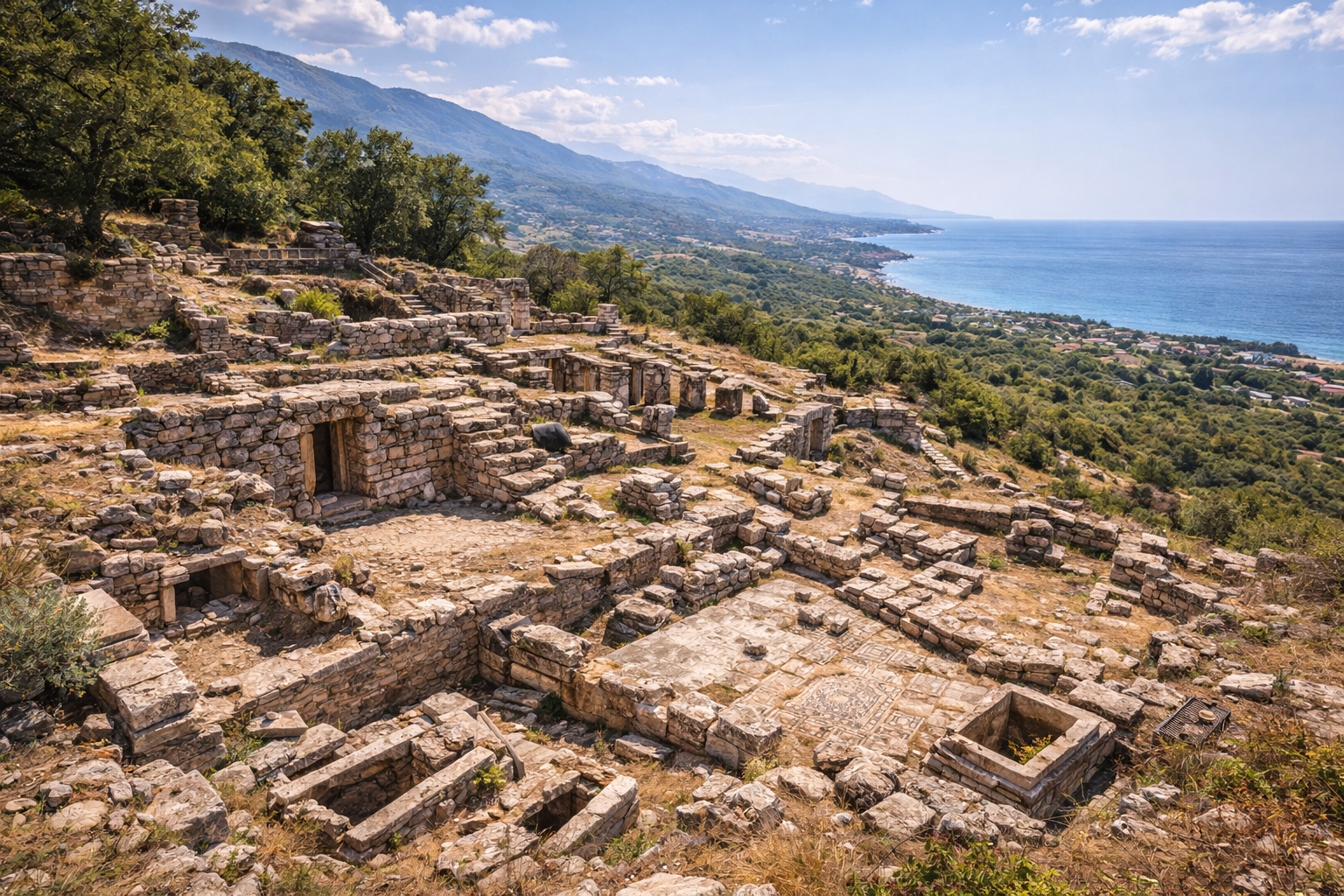
The Asclepieion of Pergamon is one of the most renowned healing sanctuaries of the ancient Greco-Roman world, dedicated to the god of health Asclepius and the goddess Hygieia. Located in a lush, spring-fed valley approximately 3 km southwest of the Pergamon acropolis, near modern Bergama in Izmir Province, the sanctuary functioned simultaneously as a religious temple, therapeutic hospital, spa, psychiatric treatment center, and social club for nearly nine centuries. In the 2nd century AD, it became the workplace of Galen (129--216 AD), the most influential physician of antiquity and personal doctor to Emperor Marcus Aurelius. The Asclepieion's innovative treatment methods -- including dream incubation therapy, hydrotherapy, music therapy, psychotherapy, and theatrical performances as healing tools -- make it a landmark in the history of medicine. Part of the UNESCO World Heritage Site "Pergamon and its Multi-Layered Cultural Landscape" (inscribed 2014), the Asclepieion attracts visitors interested in both ancient history and the origins of modern medical practice.
- Why the Asclepieion Matters
- Geography and Setting
- Historical Timeline
- Major Monuments and Structures
- Healing Methods at the Asclepieion
- Galen of Pergamon
- Archaeological Work
- Visitor Information
- Frequently Asked Questions
- Sources and Further Reading
Why the Asclepieion Matters
-
Birthplace of Holistic Medicine: The Asclepieion pioneered a holistic approach to healing that combined physical treatments (baths, herbal remedies, exercise) with psychological and spiritual therapies (dream interpretation, music, theater, suggestion therapy). This integration of mind and body in treatment predates modern psychosomatic medicine by nearly two millennia. The sanctuary is sometimes described as the world's first psychiatric hospital.
-
Galen's Workplace: Galen of Pergamon (129--216 AD), arguably the most important physician in Western medical history until the Renaissance, began his medical career at this sanctuary. He served as physician to the gladiators before moving to Rome. Galen's anatomical writings, pharmacological theories, and medical philosophy dominated European and Islamic medicine for over 1,300 years.
-
Underground Healing Tunnel: The 70-metre-long cryptoporticus (underground vaulted tunnel) connecting the circular treatment building to the central courtyard is a masterpiece of therapeutic architecture. Holes drilled at regular intervals in the tunnel ceiling admitted shafts of sunlight, while the sound of running water and whispered physician suggestions created a multi-sensory healing environment that modern researchers recognize as a sophisticated early form of environmental and suggestion therapy.
-
UNESCO World Heritage Status: The Asclepieion is part of the broader "Pergamon and its Multi-Layered Cultural Landscape" UNESCO World Heritage Site, inscribed in 2014 (List no. 1457), recognizing its outstanding universal value as a testament to ancient science, architecture, and spirituality.
-
Intact Architectural Complex: Unlike many ancient healing sanctuaries that survive only as foundations, the Asclepieion preserves a remarkably complete architectural ensemble: the Via Tecta (sacred road), propylon, courtyard with stoas, theater, treatment buildings, library, sacred spring, underground tunnel, and circular treatment center. The sacred spring that originally drew worshippers to this spot still flows today.
-
Second Only to Epidaurus: In the hierarchy of ancient Asclepieia (healing sanctuaries dedicated to Asclepius), Pergamon ranked second in importance only to Epidaurus in mainland Greece, the original and most prestigious Asclepieion. However, in terms of surviving architecture, Pergamon's sanctuary is substantially better preserved.
Geography and Setting
The Asclepieion occupies a green, spring-fed valley at the foot of Geyikli Dagi, approximately 3 km southwest of the dramatic Pergamon acropolis. The valley location was deliberately chosen for its therapeutic qualities: abundant fresh water from natural springs, clean air circulating through the valley, shade from surrounding hills, and a peaceful distance from the noise of the city.
Therapeutic Landscape
The sanctuary sits at a lower elevation than the acropolis, creating a symbolic descent from the political and military power of the hilltop citadel to the healing, contemplative atmosphere of the valley. Ancient patients would leave the busy urban center and travel down the Via Tecta (sacred covered road) to enter a space designed for recovery and spiritual renewal. The very act of walking from the city to the sanctuary was considered part of the therapeutic process -- a physical and psychological transition from illness to healing.
The surrounding landscape was planted with sacred groves and gardens, consistent with the ancient medical belief that natural beauty and clean air contributed to healing. Today, the site is partially shaded by mature trees and surrounded by agricultural land, retaining something of its ancient therapeutic atmosphere.
Regional Context
Bergama lies approximately 100 km north of Izmir in the Bakircay (ancient Kaikos) river valley, a fertile agricultural region that has supported continuous settlement since prehistoric times. The city has been an important center since the Hellenistic period, when the Kingdom of Pergamon was one of the wealthiest and most culturally significant states in the Mediterranean world.
Historical Timeline
Foundation Period (4th century BC)
Archaeological evidence confirms that the first temple of Asclepius at Pergamon was established in the 4th century BC, likely inspired by the great Asclepieion at Epidaurus in mainland Greece. The cult of Asclepius -- the divine physician, son of Apollo -- spread rapidly across the Greek world during this period. Pergamon's natural springs and sheltered valley made it an ideal location for a healing sanctuary.
According to tradition, the cult was brought to Pergamon by a man named Archias, who had been healed at the Epidaurus sanctuary and wished to establish a similar institution in his home city. The sacred spring that still flows at the site was the focal point of the earliest worship.
Hellenistic Expansion (3rd--2nd centuries BC)
The sanctuary grew in parallel with the rise of the Kingdom of Pergamon, which became one of the wealthiest and most culturally advanced Hellenistic states under the Attalid dynasty. The Attalid kings -- particularly Eumenes II (r. 197--159 BC) -- were famous patrons of culture, medicine, and scholarship. They invested in the sanctuary's infrastructure, expanding the sacred precinct and establishing the therapeutic programs that would later bring it international fame.
During this period, Pergamon also established its famous library, which rivaled the Library of Alexandria. The intellectual atmosphere of the city attracted physicians, scholars, and philosophers, creating an environment in which medical practice could flourish alongside scientific inquiry.
Early Roman Period (1st century BC -- 1st century AD)
Following the bequest of the Pergamene kingdom to Rome in 133 BC, the Asclepieion continued to develop under Roman patronage. The city of Pergamon became the capital of the Roman Province of Asia, and its healing sanctuary attracted patients from across the eastern Mediterranean. Famous visitors included the orator Aelius Aristides (117--181 AD), who left detailed accounts of his treatments and dream experiences at the sanctuary in his Sacred Tales (Hieroi Logoi).
The Golden Age Under Hadrian (2nd century AD)
The Asclepieion reached its zenith during the reign of Emperor Hadrian (117--138 AD) and the subsequent Antonine period. The monumental architectural complex visible today was largely built during this era, including:
- The Via Tecta (sacred covered road, 820 metres long)
- The monumental propylon (gateway)
- The rectangular courtyard surrounded by Corinthian and Ionic stoas
- The theater (capacity approximately 3,500 spectators)
- The circular treatment building (sometimes called the Temple of Telesphorus)
- The 70-metre underground tunnel (cryptoporticus)
- The library and imperial reception hall
- Bathing pools fed by the sacred spring
This was also the period when Galen (129--216 AD) practiced medicine at the sanctuary, establishing his reputation before moving to Rome.
Late Antiquity and Decline (3rd--5th centuries AD)
The sanctuary continued to function into the 3rd century AD but gradually declined as the Roman Empire entered crisis. The rise of Christianity and the prohibition of pagan healing cults under later emperors brought an end to the Asclepieion's therapeutic activities. The complex was partially dismantled and its stones reused in later construction. However, the concept of healing sanctuaries lived on in the form of Christian hospitals and hospices, some of which were deliberately built near former Asclepion sites.
Major Monuments and Structures
The Via Tecta (Sacred Road)
The approach to the Asclepieion was along the Via Tecta, an 820-metre-long sacred road that began in the lower town of Pergamon, ran alongside the city theater, and led directly to the sanctuary entrance. The final section was a covered colonnaded portico (the literal meaning of "Via Tecta" is "covered road"), creating a transitional space between the urban world and the healing sanctuary.
Walking the Via Tecta was itself considered part of the therapeutic process. Patients underwent a gradual psychological transition as they left the city's bustle and entered the quiet, shaded approach to the sanctuary. The colonnaded sections provided shade in summer and shelter from rain in winter.
The Monumental Propylon (Gateway)
At the end of the Via Tecta, patients entered the sanctuary through a grand propylon (monumental gateway). Passing through the propylon, patients symbolically left behind their worldly concerns and entered a space governed by the divine physician Asclepius. The propylon's architectural grandeur was designed to inspire awe and establish the sacred character of the space.
The Central Courtyard and Stoas
The propylon opened into a large rectangular courtyard surrounded on three sides by elegant Corinthian and Ionic colonnaded stoas (covered walkways). These stoas served as shaded promenades where patients could walk, socialize, and contemplate their treatment. Along the stoas were rooms used for therapeutic consultations, dining, and relaxation. The fourth side opened toward the treatment buildings and sacred spring.
The Theater
In the northwest corner of the courtyard stood a semicircular theater with a capacity of approximately 3,500 spectators. The theater was not merely entertainment -- theatrical performances, musical recitals, and poetic readings were prescribed as therapeutic activities integral to the healing process. The ancient physicians believed that emotional catharsis achieved through drama and comedy had genuine healing power -- a concept that modern psychotherapy validates.
The theater at the Asclepieion is among the best-preserved Roman theaters in western Turkey and is still used for cultural events and concerts during the annual Bergama Festival.
The Library
On the northeast side of the courtyard, a library and imperial reception hall provided intellectual stimulation for patients. Reading and philosophical discussion were considered complementary to physical and spiritual healing. Pergamon's tradition of scholarship -- established by the Attalid kings and their famous library -- continued at the Asclepieion.
The Sacred Spring and Bathing Pools
At the center of the courtyard, pools fed by the sanctuary's sacred spring provided water for ritual purification and therapeutic bathing. The spring water was believed to have divine healing properties, blessed by Asclepius himself. Patients bathed in these pools as part of their treatment regimen. The water was also channeled into the underground tunnel and throughout the complex. Remarkably, the sacred spring continues to flow today, providing a tangible connection to the ancient healing practices.
The Circular Treatment Building (Temple of Telesphorus)
One of the most architecturally distinctive structures in the ancient world, the circular treatment building dates to the 2nd century AD and features a round plan with six perimeter apses on the ground floor. Named after Telesphorus, the child-god of convalescence associated with Asclepius, the building served as the primary treatment center.
The ground floor contained individual treatment rooms in the apses where patients underwent various therapies. The upper level may have served for dream incubation -- the practice of sleeping in the sanctuary in hopes of receiving a healing vision from Asclepius in one's dreams. The circular form may also have had acoustic properties that enhanced the therapeutic use of music and speech.
The Underground Tunnel (Cryptoporticus)
The 70-metre-long cryptoporticus is perhaps the most remarkable feature of the Asclepieion. This vaulted underground tunnel connected the circular treatment building to the bathing pools in the central courtyard. Its design was deliberately therapeutic:
- Holes drilled at regular intervals in the tunnel ceiling admitted controlled shafts of sunlight, creating a dramatic play of light and shadow
- The sound of flowing water echoed through the tunnel from channels running alongside
- Physicians positioned along the tunnel could speak to patients through the acoustically amplified space, delivering therapeutic suggestions while patients walked or rested
- Individual bathing tubs were built into alcoves along the tunnel walls
- Sleeping cubicles at the sides allowed patients to rest in the suggestive darkness
This multi-sensory environment -- combining light, sound, water, and the human voice -- represents one of the most sophisticated therapeutic architectural designs in the ancient world, prefiguring modern concepts of environmental therapy, sensory deprivation therapy, and guided suggestion.
Healing Methods at the Asclepieion
The sanctuary employed a remarkably diverse range of therapeutic approaches that modern medicine would recognize as combining physical, psychological, and social elements:
Dream Incubation (Enkoimesis)
The central healing practice. Patients slept within the sanctuary -- often in the circular treatment building or its alcoves -- hoping that the god Asclepius would appear in their dreams and prescribe a cure. Upon waking, they would describe their dream to the priests/physicians, who would interpret it and design treatment accordingly. Modern scholars see this as an early form of psychotherapy, combining the placebo effect, deep relaxation, and guided healing suggestion. The detailed dream accounts left by patients like Aelius Aristides provide extraordinary insight into this practice.
Hydrotherapy
Bathing in the sacred spring and pools, combined with hot and cold water treatments. The therapeutic use of water addressed both physical ailments and psychological stress. The spring water's mineral content may have provided genuine therapeutic benefit.
Music Therapy
Musical performances and singing were prescribed for various conditions. The theater and enclosed acoustic spaces of the complex provided ideal venues for musical treatment. The ancient physicians understood that music could alter mood, reduce anxiety, and promote relaxation.
Theatrical Therapy
Attendance at comedies and dramas in the theater was considered therapeutic. This is arguably one of the earliest documented uses of art therapy. Aristotle's concept of catharsis -- emotional purification through the experience of tragedy -- was applied practically at the Asclepieion.
Exercise and Diet
Physical training in the courtyard and dietary regimens were prescribed as part of comprehensive treatment plans. Galen himself was a strong advocate of diet and exercise as fundamental components of health maintenance.
Herbal Medicine
Plant-based remedies prepared from local botanical resources formed a pharmacological component of treatment. Galen's extensive pharmacological writings drew on the herbal traditions practiced at Pergamon.
Psychotherapy and Suggestion
Physicians used verbal suggestion, particularly in the acoustically designed underground tunnel. The controlled sensory environment of the tunnel created conditions similar to modern hypnotherapy -- patients in a relaxed, suggestible state received therapeutic messages from unseen physicians. This represents one of the earliest documented forms of environmental psychotherapy.
Votive Offerings
Patients who recovered dedicated small terracotta body parts representing what had been healed -- arms, legs, eyes, ears, and internal organs. These votive offerings served both as thanks to Asclepius and as advertisements of the sanctuary's healing power. Archaeological finds of hundreds of these votives provide direct evidence of the types of ailments treated.
Galen of Pergamon
Galen (129--216 AD) was born in Pergamon to a wealthy architect father named Nikon, who ensured his son received the finest education. Galen's connection to the Asclepieion and his subsequent career make him one of the most important figures in the history of medicine.
Education and Early Career
Galen studied medicine in Smyrna (Izmir), Corinth, and Alexandria (Egypt) -- the three greatest medical centers of the Roman world. He returned to Pergamon at age 28 and was appointed physician to the gladiators at the local arena. This position gave him unparalleled practical experience in trauma surgery, wound treatment, and anatomy. The survival rate of his gladiator patients was reportedly exceptional.
At the Asclepieion
Galen practiced and taught at the Asclepieion, where he developed his holistic medical philosophy. He advocated the integration of philosophical inquiry with clinical observation -- an approach inspired by the sanctuary's own combination of spiritual and physical healing methods. His clinical experience at Pergamon formed the foundation of his later career.
Rome and Imperial Physician
After establishing his reputation at Pergamon, Galen moved to Rome around 162 AD, where he quickly became famous for his medical skill. He was appointed personal physician to Emperor Marcus Aurelius and subsequently served Emperors Commodus and Septimius Severus.
Legacy
Galen's writings on anatomy, physiology, and pharmacology dominated Western and Islamic medicine for over 1,300 years, until the anatomical discoveries of Andreas Vesalius in the 16th century began to challenge his authority. He wrote over 600 treatises on medicine, philosophy, and grammar, of which approximately 350 survive. His system of the four humors (blood, phlegm, yellow bile, black bile) remained the foundation of medical theory throughout the medieval period.
Archaeological Work
Early German Excavations
Archaeological investigation of the Pergamon Asclepieion began during the broader German excavation campaigns at Pergamon in the late 19th and early 20th centuries. The German Archaeological Institute (DAI) conducted initial surveys that identified the sanctuary's location and general layout. The German excavations at Pergamon, which began under Carl Humann in 1878, are among the most important archaeological campaigns in the history of classical archaeology.
Systematic Turkish-German Excavations
Turkish and German teams collaborated on extensive excavation campaigns throughout the 20th century. Key campaigns focused on uncovering the Via Tecta, the propylon, the courtyard stoas, the theater, the circular treatment building, and the underground tunnel. Conservation work has stabilized exposed structures and made the site accessible to visitors.
Key Finds
- The complete architectural plan of the healing sanctuary, from the Via Tecta to the treatment center
- Terracotta votive body parts (arms, legs, eyes, organs) dedicated by healed patients -- providing direct evidence of treated ailments
- Inscriptions documenting treatments, dedications, and the sanctuary's regulations
- Architectural fragments of the Corinthian and Ionic stoas
- Evidence of the water management system that supplied the sacred spring, pools, and tunnel
- Medical instruments and pharmaceutical containers
- Coins and small finds illuminating daily life at the sanctuary
UNESCO Inscription (2014)
In 2014, the Asclepieion was inscribed as part of the "Pergamon and its Multi-Layered Cultural Landscape" UNESCO World Heritage Site (List no. 1457), recognizing the combined significance of the acropolis, the middle and lower city, the Asclepieion, and the surrounding landscape.
Visitor Information
Getting There
The Asclepieion is located on the southwestern outskirts of Bergama, approximately 100 km north of Izmir. From Izmir, take the Izmir-Canakkale highway (E87/O-2) north and exit at Bergama. The Asclepieion is signposted from the town center and is about 3 km from the Pergamon acropolis. The drive from Izmir takes approximately 1.5 hours.
- From Izmir Airport: Approximately 110 km, 1.5--2 hours by car
- From Canakkale: Approximately 200 km south, 2.5--3 hours by car
- By Bus: Regular intercity buses connect Izmir to Bergama's otogar (bus station). Local transport or taxi from the otogar to the Asclepieion.
Best Time to Visit
Spring (April--May) and autumn (September--October) offer the most comfortable conditions. The valley location provides some shade and cooler temperatures compared to the exposed acropolis, but summers can still be very hot (35+ C). Winter visits are possible in Bergama's mild Aegean climate, and the site receives far fewer visitors, offering a contemplative experience.
Duration
Allow 1.5 to 2.5 hours for a thorough visit to the Asclepieion. If combining with the Pergamon Acropolis (highly recommended), plan a full day in Bergama. The acropolis can be reached by cable car (teleferik) from the town center, making it convenient to visit both sites without extensive driving.
What to Bring
- Comfortable walking shoes (the site is mostly flat within the sanctuary complex, making it more accessible than the steep acropolis)
- Sun protection and water (essential in summer)
- A flashlight or phone light for exploring the underground tunnel -- the interior is dark and the atmosphere is genuinely evocative of the ancient healing experience
- A camera -- the architectural remains are photogenic and the tunnel offers dramatic lighting opportunities
Combining with Other Sites
A visit to the Asclepieion should ideally be combined with:
- The Pergamon Acropolis (3 km, accessible by cable car): the dramatic hilltop citadel with its theater (one of the steepest in the ancient world), temples, library foundation, and altar terrace. Allow 2--3 hours.
- The Pergamon Archaeological Museum in Bergama: houses many finds from the excavations including architectural fragments, inscriptions, and small finds.
- The Red Basilica (Kizil Avlu): a massive Roman-era temple complex (originally dedicated to Serapis and Isis) in the center of Bergama, later converted to a Christian church. One of the most impressive Roman structures in Turkey.
- Note: the famous Pergamon Altar frieze (the Great Altar of Zeus) is in the Pergamon Museum in Berlin, Germany.
Ticket Information
- Separate entrance tickets are required for the Asclepieion and the Pergamon Acropolis.
- Museum Pass Turkiye is accepted at both sites and offers excellent value.
- The cable car to the acropolis requires a separate ticket.
Accessibility
The sanctuary is mostly on flat ground and is significantly more accessible than the steep Pergamon acropolis. The underground tunnel involves walking through a low, vaulted passage and is not wheelchair accessible. Information panels along the walking route explain the structures and their functions in Turkish and English.
Frequently Asked Questions
Who was Galen and why is he connected to this site?
Galen of Pergamon (129--216 AD) was born in Pergamon and began his medical career at the Asclepieion, where he served as physician to the gladiators at age 28. He trained in Smyrna, Corinth, and Alexandria before returning to Pergamon. He later moved to Rome, where he became personal physician to Emperor Marcus Aurelius. Galen's writings dominated Western and Islamic medicine for over 1,300 years. His holistic approach to healing was shaped by his experience at the Asclepieion.
What was dream incubation therapy?
Dream incubation (enkoimesis) was a central healing practice at ancient Asclepieia. Patients slept within the sanctuary hoping that Asclepius would appear in their dreams and reveal the cure for their illness. Upon waking, they described their dream to priests/physicians, who interpreted it and prescribed treatment. The practice combined the placebo effect, deep relaxation, and guided suggestion in a sacred setting. The orator Aelius Aristides left detailed accounts of his dream experiences at this sanctuary.
How does the underground tunnel work as a treatment space?
The 70-metre cryptoporticus was designed as a multi-sensory therapeutic environment. Patients experienced: controlled shafts of sunlight through ceiling holes; the amplified sound of running water; and whispered suggestions of physicians whose voices carried through the tunnel's acoustics. Individual bathing tubs and sleeping cubicles along the walls allowed patients to rest in this suggestive atmosphere. The tunnel functioned as an ancient sensory deprivation and suggestion therapy chamber.
Is the Asclepieion part of a UNESCO World Heritage Site?
Yes. Since 2014, the Asclepieion has been part of the "Pergamon and its Multi-Layered Cultural Landscape" UNESCO World Heritage Site (List no. 1457).
Can I visit the acropolis and the Asclepieion in one day?
Yes, and this is strongly recommended. The Pergamon Acropolis (reached by cable car) and the Asclepieion (at valley level) complement each other perfectly. Most visitors spend approximately 2--3 hours at the acropolis and 1.5--2.5 hours at the Asclepieion.
Does the sacred spring still flow?
Yes. The sacred spring that originally attracted worshippers to this location continues to flow today. It provides a tangible connection to the ancient healing practices and the natural therapeutic qualities that made this valley an ideal location for a healing sanctuary.
What are the terracotta body parts found at the site?
Archaeological excavations recovered small terracotta models of body parts -- arms, legs, eyes, ears, and internal organs -- offered as votive dedications by patients who had been healed. A patient cured of an eye disease might dedicate a terracotta eye; someone healed of a leg injury might offer a model leg. These objects provide direct evidence of the types of ailments treated at the sanctuary.
Is the Asclepieion the world's first hospital?
While not a hospital in the modern sense, the Asclepieion is frequently described as one of the world's earliest organized healing centers and is sometimes called the world's first psychiatric hospital due to its pioneering use of dream therapy, music therapy, suggestion therapy, and environmental design for healing purposes. Unlike modern hospitals, treatment was embedded within a religious framework centered on the worship of Asclepius.
Architectural Measurements and Construction Phase Data
Excavations by the German Archaeological Institute (DAI) and subsequent Turkish-German collaborative campaigns have produced precise architectural documentation for the Asclepieion complex. The sanctuary's 18 identified construction phases have been grouped into five major phases for analytical clarity.
Sanctuary Complex: Measured Dimensions
| Structure | Dimensions | Date | Notes |
|---|---|---|---|
| Central courtyard | 110 x 130 metres | 2nd century AD (Hadrianic) | Rectangular precinct surrounded by stoas on three sides |
| Via Tecta (total length) | 820 metres | 2nd century AD | Sacred road from lower town to sanctuary entrance |
| Via Tecta (excavated colonnaded section) | 140 metres long, over 18 metres wide | 2nd century AD | Fully excavated final approach with colonnades on both sides |
| Theatre | 71 m diameter overall | c. 130--140 AD (Hadrianic) | 30 rows total: 15 rows ima cavea + 15 rows summa cavea |
| Theatre orchestra | 15.67 m diameter | c. 130--140 AD | Paved with polychrome marble |
| Theatre seating divisions | 5 cunei per section | c. 130--140 AD | Separated by stairways; estimated capacity c. 3,500 |
| Cryptoporticus (underground tunnel) | 70 metres long | 2nd century AD | Vaulted subterranean passage with ceiling apertures |
| Circular Treatment Building (Temple of Telesphorus) | 26.5 m diameter | 2nd century AD | Two-storey rotunda with 6 perimeter apses on ground floor |
| Temple of Zeus-Asclepios | 23.85 m dome diameter | Mid-2nd century AD | Brick dome modelled on the Pantheon in Rome |
Temple of Zeus-Asclepios: The Pergamene Pantheon
The Temple of Zeus-Asclepios deserves particular attention as one of the most ambitious architectural projects in Roman Asia Minor. Funded by the Roman consul Lucius Cuspius Pactumeius Rufinus, the temple was deliberately designed as a reduced-scale replica of the Pantheon in Rome:
| Feature | Pergamon Temple | Rome Pantheon | Ratio |
|---|---|---|---|
| Dome diameter | 23.85 m | 43.3 m | 1 : 1.82 |
| Construction material | Brick dome | Concrete dome | Different technique, similar form |
| Oculus | Present (open roof eye) | Present | Direct architectural quotation |
| Interior plan | Circular with niches | Circular with niches | Proportional reduction |
The construction of a Pantheon-replica in Pergamon demonstrates both the enormous wealth of the city's Roman-period patrons and the cultural ambition to bring Rome's most iconic architecture to the Greek East. Rufinus's patronage is documented by inscription and represents one of the largest individual building donations known from Roman Asia Minor.
Theatre: Acoustic and Structural Analysis
The Asclepieion theatre's integration into the healing programme makes it architecturally unique among Roman theatres. Unlike standard entertainment venues, this theatre was designed with therapeutic function as a primary consideration:
| Feature | Detail |
|---|---|
| Orientation | Northwest corner of courtyard; audience faced southeast toward the sanctuary |
| Cavea construction | Partially built into hillside, partially supported by masonry substructures |
| Seating material | Local andesite and marble |
| Orchestra pavement | Polychrome marble (opus sectile) |
| Modern use | Still used for cultural events during the annual Bergama Festival |
| Acoustic quality | Exceptional -- speech from orchestra audible in uppermost rows without amplification |
Archaeological Finds: Material Culture Catalogue
Excavations of the Asclepieion have yielded a diverse material assemblage now distributed between the Bergama Archaeological Museum and the Pergamon Museum in Berlin.
| Find Category | Examples | Quantity / Significance |
|---|---|---|
| Terracotta votive body parts | Arms, legs, eyes, ears, internal organs | Hundreds recovered; direct evidence of treated ailments |
| Sculpture | Statue of Asclepius, portrait heads, relief panels | Multiple examples from Hellenistic and Roman periods |
| Inscriptions | Treatment records, dedication texts, sanctuary regulations | Dozens of Greek and Latin texts documenting sanctuary operations |
| Medical instruments | Bronze surgical tools, pharmaceutical containers | Evidence of practical medical procedures alongside ritual healing |
| Coins | Pergamene civic issues showing Asclepius, Hygieia, serpent | Numismatic documentation of the healing cult's iconography |
| Ceramics | Fine tableware, storage vessels, unguentaria (perfume bottles) | Large quantities from all occupation phases |
| Architectural fragments | Corinthian and Ionic capitals, entablature blocks, column drums | From stoas, propylon, and temple structures |
The terracotta votive body parts are of particular medical-historical interest. Statistical analysis of the votives provides a rough epidemiological profile of the patient population: eye ailments, limb injuries, and abdominal complaints appear most frequently, consistent with the common disease burden of the ancient Mediterranean world.
Excavation Chronology: Institutional Record
| Period | Institution / Director | Key Activities |
|---|---|---|
| 1878 onward | Carl Humann / German Archaeological Institute (DAI) | Initial identification of the Asclepieion during broader Pergamon excavations |
| Late 19th--early 20th century | DAI survey teams | General layout survey; location confirmed |
| 1920s--1930s | DAI systematic campaigns | Uncovered Via Tecta, propylon, courtyard stoas; initial documentation of treatment buildings |
| 1950s--1970s | Turkish-German collaborative campaigns | Excavation of theatre, circular treatment building, and cryptoporticus; conservation of exposed structures |
| 1980s--2000s | DAI + Turkish Ministry of Culture | Continued excavation and conservation; water management system documented; visitor infrastructure developed |
| 2014 | UNESCO | Inscribed as part of "Pergamon and its Multi-Layered Cultural Landscape" (List no. 1457) |
| 2020s | DAI + ongoing Turkish teams | Digital mapping (Pergamon Digital Map 2); deep mapping project; geophysical survey of unexcavated zones |
The Deep Mapping Sanctuaries project, a recent digital humanities initiative, has produced interactive spatial models of the Asclepieion complex, allowing researchers to analyse sight lines, movement patterns, and acoustic properties within the sanctuary -- providing new insights into how the architecture shaped the patient experience.
Sources and Further Reading
- UNESCO -- Pergamon and its Multi-Layered Cultural Landscape
- Turkish Museums -- Izmir Bergama Asklepion Archaeological Site
- Turkish Archaeological News -- Asclepieion of Pergamon
- Wikipedia -- Asclepieion of Pergamon
- Madain Project -- Asclepieion at Pergamon
- Via Hygeia -- Asclepion Healing Center Pergamon
- Ancient Origins -- The Mysterious Healing Centre of Asklepion
- One Nation Travel -- Asclepion of Pergamon: Galen's Healing Sanctuary
- Explore Galen -- A Temple of Healing
- Wikipedia -- Pergamon
- Turkish Museums -- History of Medicine: Ancient City of Pergamon