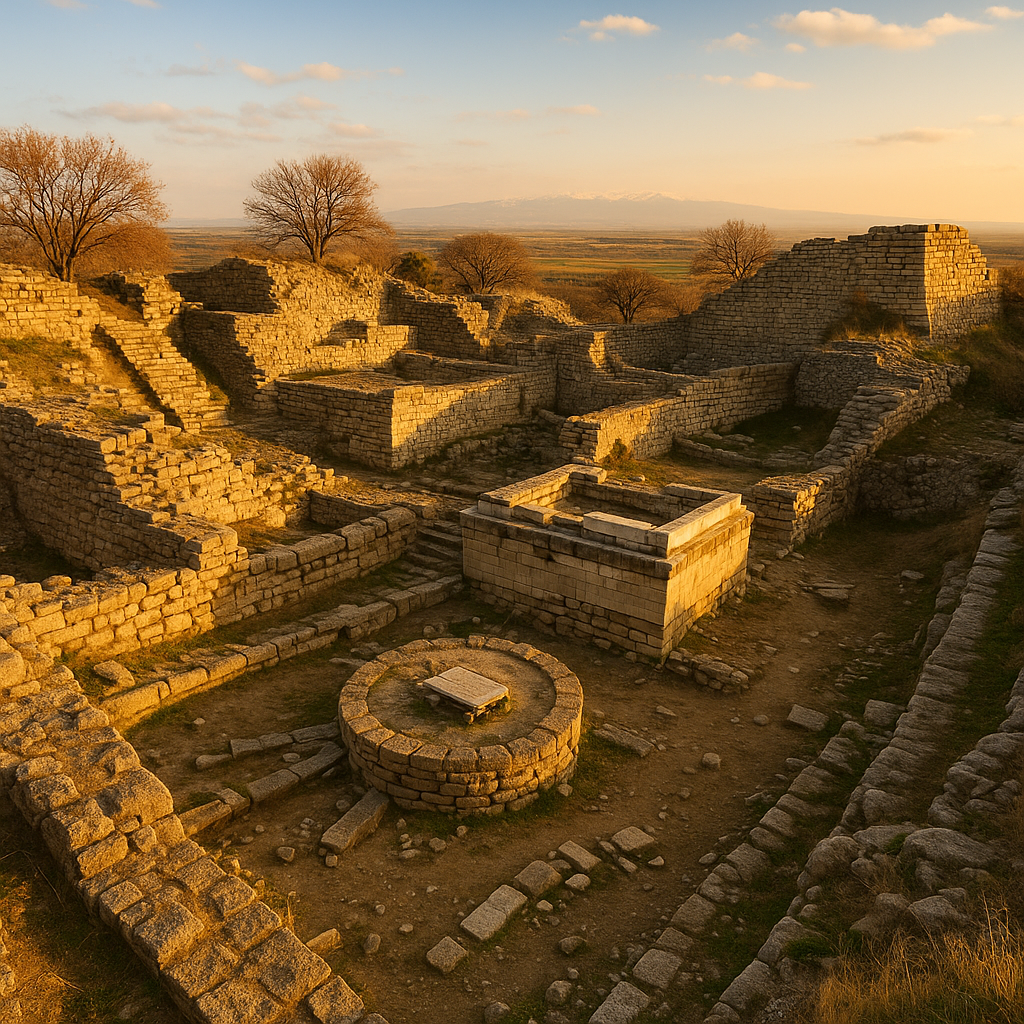
Ancient City of Troy (Hisarlik, Çanakkale)
Quick Summary: The ancient city of Troy is located on Hisarlik Hill near the village of Tevfikiye, about 25–30 km south of the modern city of Çanakkale, in northwestern Turkey. It is best known as the setting of the Trojan War described in Homer’s epics, the Iliad and the Odyssey, and was inscribed on the UNESCO World Heritage List in 1998.
Table of Contents
- Why This Site Matters
- Historical Background and Timeline
- Archaeological Reading Guide
- How to Experience the Site Better
- Seasonal Travel Notes (Including Winter)
- A Story Lens for Visitors
- FAQ
- Sources
Why This Site Matters
The ancient city of Troy is located on Hisarlik Hill near the village of Tevfikiye, about 25–30 km south of the modern city of Çanakkale, in northwestern Turkey. It is best known as the setting of the Trojan War described in Homer’s epics, the Iliad and the Odyssey, and was inscribed on the UNESCO World Heritage List in 1998.
This location is not only an archaeological destination but a long-term cultural record. It helps visitors understand how urban life, trade, belief systems, and political power changed over time in Anatolia.
Historical Background and Timeline
To read this site historically, think in layers rather than a single date: foundation period, expansion phase, transformation under new powers, and afterlife in late antique/medieval memory.
Archaeological Reading Guide
When walking the site, use this order:
- Orientation point – identify topography and strategic placement.
- Signature monument – theater, temple, acropolis, gate, or harbor complex.
- Daily-life layer – streets, workshops, baths, storage, water systems.
- Landscape relation – understand why this city existed exactly here.
This method turns a quick walk into an interpretive visit.
How to Experience the Site Better
- Plan enough time (minimum 2 hours for meaningful understanding).
- Read context before arrival, then verify it against the ruins.
- Use the site as a route anchor, not a one-photo stop.
- Combine architecture with landscape observation for full interpretation.
Seasonal Travel Notes (Including Winter)
- Spring / Autumn: generally best comfort and walking conditions.
- Summer: start early; midday heat can reduce experience quality.
- Winter: often quieter and better for slow reading of the site; check rain/wind and opening-hour changes beforehand.
A Story Lens for Visitors
Imagine arriving here centuries ago at first light: movement at the gates or harbor, voices from market spaces, ritual activity in sacred zones, and administrative life in civic buildings. The remains visible today are fragments of those repeated daily patterns.
FAQ
What makes Ancient City of Troy (Hisarlik, Çanakkale) especially important?
Its importance comes from historical continuity, archaeological visibility, and regional cultural influence.
How much time should I allocate?
Most visitors need 2–3 hours; advanced visits can take half a day.
Is this suitable for first-time archaeology travelers?
Yes. The site can be enjoyed by beginners if visited with a clear route plan.
Is winter a bad time to visit?
Not necessarily. Winter can be excellent for low-crowd exploration if weather is suitable.
What should I prioritize if I am short on time?
The signature monument, one daily-life area, and one strong landscape viewpoint.

